A speck of hope in a fragmented landscape: the story of the Widenham Wetland Protected Environment
By Joshua Weeber, Threatened Amphibian Programme
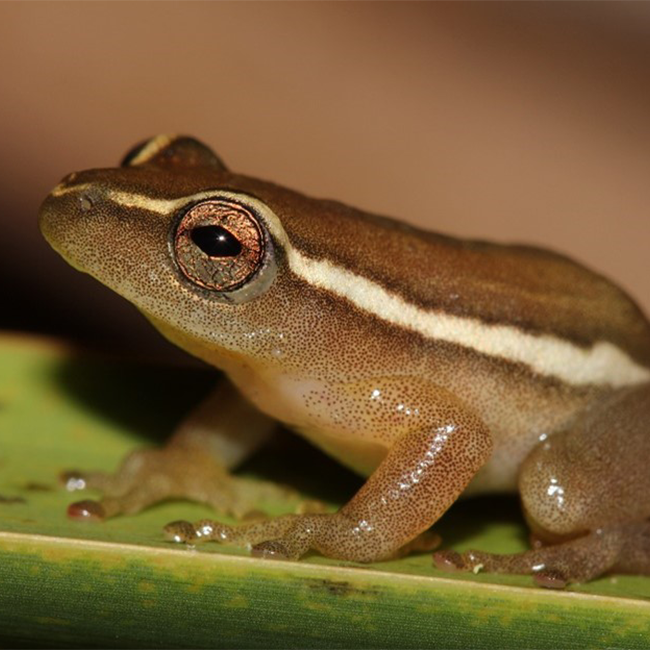
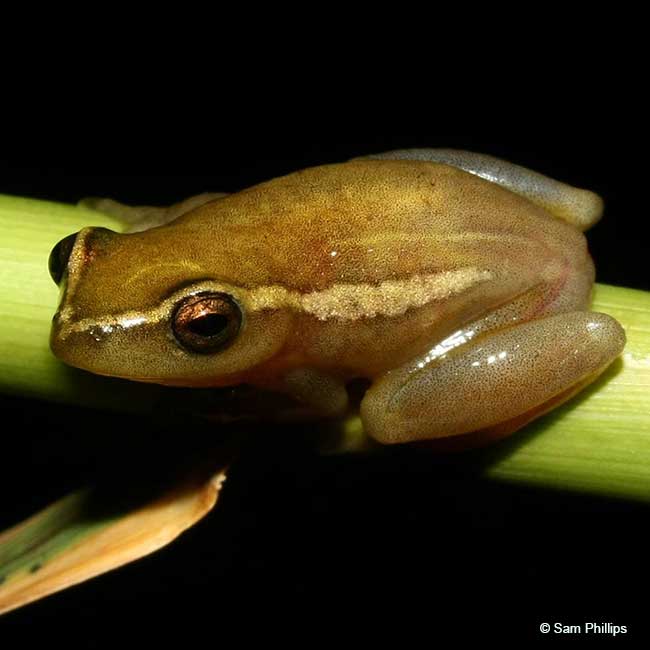
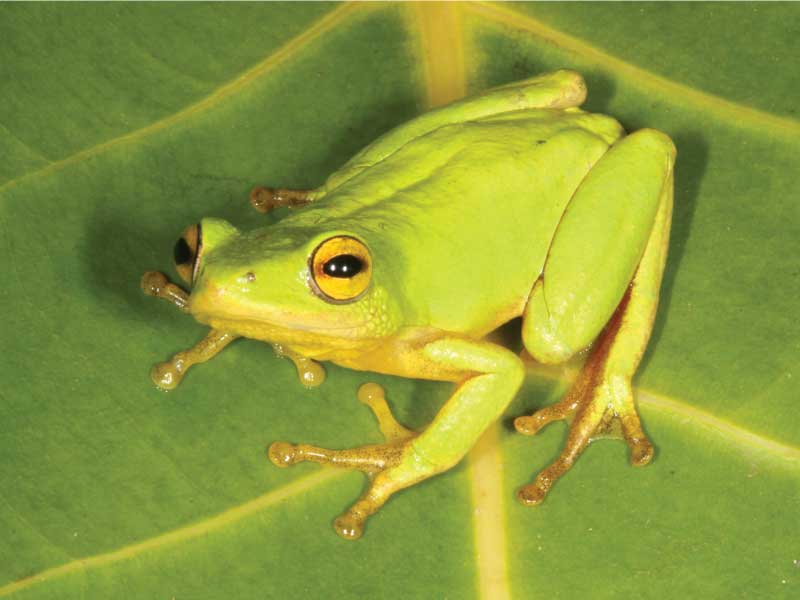
Critically Endangered Pickersgill’ s Reed Frog
The Windenham Wetland Protected Environment on the KwaZulu-Natal south coast has formally been declared.
The story of this Protected Environment began almost a decade ago. In 2015 the Endangered Wildlife Trust (EWT) initiated monitoring programmes for selected, critical wetland habitats supporting the Endangered frog Hyperolius pickersgilli (Pickersgill’ s Reed Frog) in the eThekwini Municipality. One of the selected wetlands was the ‘Widenham Wetland’ located in the suburb of Widenham, immediately south of the town of Umkomaas, approximately 45km south of Durban and within the eThekwini Municipality. The area is home to over 27,400 people with over 7,800 households of which 8.8% are informal dwellings. The site comprises of eight different erven and was acquired by the municipality in 2010 after a proposed residential development on the site was stopped because of the discovery of the then Critically Endangered Pickersgill’ s Reed Frog.
Widenham is a small (~1.6ha) channelled valley bottom wetland that comprises a mix of alien thicket / woodland and herbaceous marshland. It is located within the lower reaches of a small coastal stream system with relatively broad valley-bottom and a gentle longitudinal slope gradient and formed immediately upstream of the frontal dune system characteristic of coastal KZN.
Currently, much of the area within and around the Protected Environment has been transformed, and biennial wetland health assessments since 2015 show that the Present Ecological State (PES) of the wetland is classified as a D, which is Largely Modified. In short, Widenham Wetland represented a small, impacted system surrounded by urban infrastructure that was not a particularly intact state, but one that still provided habitat for a key endangered focal species for the EWT in the province.
In 2019 the EWT initiated actions to protect the Widenham wetland and drive long-term management and rehabilitation interventions that would safeguard this little natural space and the species within it for generations to come. A logical approach to achieve this goal was through Biodiversity Stewardship – an approach to securing land in biodiversity priority areas through entering into agreements with landowners with the intention of securing the biodiversity of South Africa. Fortunately, the wetland was purchased by the municipality, who were key partners in the project. A site assessment indicated that the area qualified for the Protected Environment category provided rehabilitation actions were developed and guided by a detailed Protected Area Management Plan. Working with key stakeholders such as eThekwini Municipality and Verdant Environmental, a detailed rehabilitation and management plan was developed.
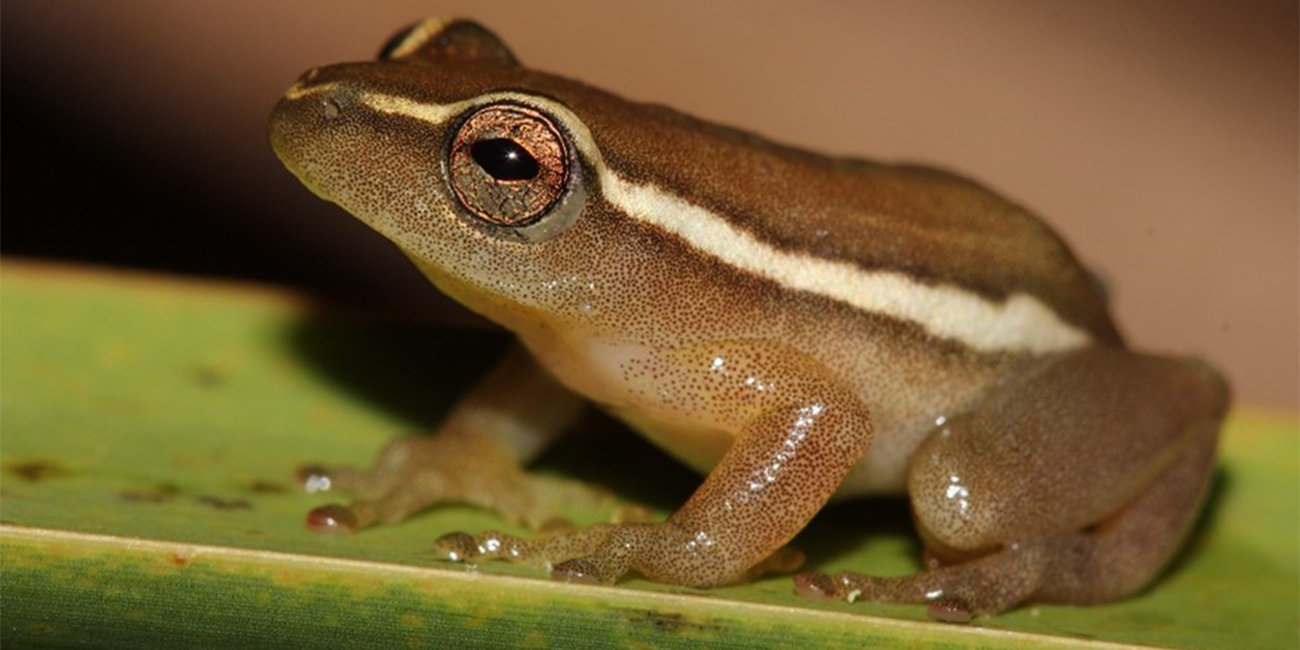
Critically Endangered Pickersgill’ s Reed Frog
After many months of waiting, and assistance from our partners, Conservation Outcomes, the Widenham Wetland was finally gazetted as a Protected Environment on the 27th June 2024. The timing of this achievement has been crucial – the EWT’ s Threatened Amphibian Programme launched an exciting new project in early 2024 aimed at enhancing the ecological integrity of key wetland sites to improve local biodiversity and provide ecological goods and services to nearby communities. One of our priority sites linked to this project is Widenham Wetland, and efforts are already under way to improve the ecological functioning of this site through targeted alien vegetation clearing.
Working with the local municipality we are also in the process of implementing an extensive rehabilitation plan which will include redesigning a section of the wetland and revegetating impacted areas. All of these actions will be monitoring through wetland health assessments as well as passive acoustic monitoring of the isolated subpopulation of Pickersgill’ s Reed Frog that rely on this wetland. We hope our actions will safeguard this little speck of hope into the future.
This work has been in process for many years and would not have been possible without the efforts of Jeanne Tarrant and Cherise Acker, among many others. Similarly, our generous funders have been integral to this conservation success story. We thank Rainforest Trust, Synchronicity Earth, and Anglo American for their support.
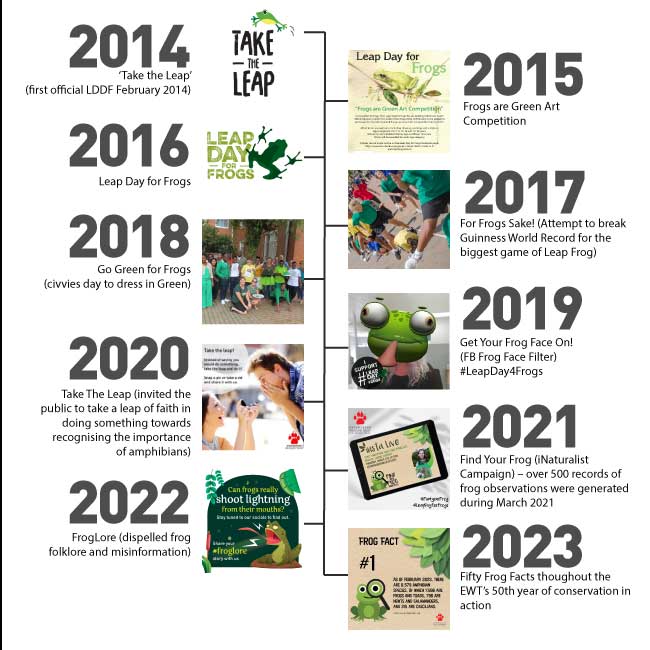
In 2012, volunteer and Public Relations expert Carmen Curtayne and I wanted to do something to highlight both the importance of amphibians in South Africa and the severe threats they face. After much brainstorming, we devised the ‘Leap Day for Frogs’ campaign.
The idea was to create an annual national awareness day on 28 February – tying together the themes of Leap Year, leaping frogs, and taking a leap of faith (doing something demonstrable for frog conservation). We wanted to bring much-needed attention to frogs and their extinction threat. We also wanted to have fun in the name of frogs, encourage the public to get involved in science (citizen science), and celebrate South Africa’ s incredible variety of frog species. With almost half of the world’ s amphibian species experiencing some level of decline, bringing as much attention to frogs as possible has never been more important. South Africa is home to over 130 species – from the Giant Bullfrog (the size of a dinner plate!) to the Micro Frog (the size of your thumbnail), and all shapes and sizes in between. This enormous diversity is mirrored in the wide range of landscapes that frogs inhabit – from coastal wetlands to montane grasslands, gardens, forests, and even deserts.
Frogs are not just long-limbed, leapers. These water-loving amphibians play important roles in our ecosystems by feeding a wide array of other animals and eating vast quantities of insects – i.e. incredible free pest control! They are also important bio-indicators due to their sensitive skins and bi-phasic lifestyles. In other words, if they are around, our environment is healthy. These barometers of life are now the most threatened group of species on Earth, surely a sign of a planet in trouble.
To bring awareness to these very important and beautiful yet threatened creatures, we have devised annual themes over the past ten years for Leap Day for Frogs.
Ten years celebrating Leap Day for Frogs
We celebrated the 10th Leap Day for Frogs this year, which coincides with EWT’ s 50th anniversary. As part of the latter, EWT will share a fun frog fact each Friday throughout the year.
Our theme this February was #CelebrateFrogs, and we reached over 3,000 people directly through over 15 events and outings, with over 165,000 people engaged through the social media campaign. Once again, we partnered with Kloof Conservancy and Iphithi Nature Reserve in Gillitts KZN, where over 150 people participated in various fun learning activities, despite very soggy conditions. We also gave lessons on the importance of wetlands to school learners based close to some project sites, receiving pledges from over 220 children to reduce impacts on frogs and freshwater. We also enjoyed a peaceful evening at the Mount Moreland wetlands, home to the Endangered Pickersgill’ s Reed Frog, with several nature lovers, and a talk and walk at Simbithi Eco-Estate. uShaka Marine World, Joburg Zoo and the National Zoological Gardens in Pretoria hosted educational stands and activities over the weekend of 25 February, engaging over 1,800 people. Other events were held in Bloemfontein, Plettenberg Bay and Howick.
We’ ve designed social media filters and run citizen science observation projects, and in total, reached well over 16,000 people directly through events run either by the EWT or through several partnering organisations, including SANBI, uShaka SeaWorld, North-West University, various KZN Conservancies, University of the Free State, Bloemfontein Botanical Garden and Johannesburg Zoo Amphibian Research Project. Occasionally, we have even had international events – from Wales to Zambia! Our online reach through social media exceeded hundreds of thousands of people and hopefully inspires the next generation of amphibian conservation biologists – or at the very least, highlights some simple behaviour changes that can benefit frogs and freshwater habitats.
Wetlands are important ecosystems that supply essential ecological goods and services (EGS) for wildlife and people. They supply clean water and fertile soil for plants, filter water from upstream, regulate water flow to prevent flooding, store water to ease drought periods, and reduce the effects of climate change, improving ecological and social resilience. Protection and conservation of wetlands are essential to support communities through environmental disasters caused by climate change.
Wetland health and ecological goods and service quality assessments are valuable in determining the ecological state of wetlands to inform conservation management actions. The Endangered Wildlife Trust’ s (EWT) Threatened Amphibian Programme (TAP) aims to show the link between amphibian diversity (i.e. healthy amphibian populations) and wetland habitat health. In other words, if wetlands are in a poor ecological state, amphibian diversity decreases and vice versa. Indirectly, better species and ecological health also support healthy human populations. To this end, we started long-term monitoring protocols in 2016 to determine habitat health and identify amphibian species diversity at four project sites in eThekwini Municipality, KwaZulu-Natal, where the threatened Pickersgill’ s Reed Frog (Hyperolius pickersgilli) occurs.
These sites included Adams Mission, Mt Moreland’ s Froggy Pond, Widenham, and Isipingo. Wetland health scores, EGS scores, and amphibian diversity from each site were compared to determine whether amphibian species richness increases or decreases under different habitat conditions.
Figure 1: Diagram illustrating the correlation between amphibian species diversity and wetland health.
The data showed a significant positive relationship between the amphibian species diversity and Wetland Health assessment scores between the four sites (P-Value 0.04077) (Social Statistics, 2022), as illustrated in Figure 1.
Species composition for each site showed that some species were found across all sites (Figure 2). These included Hyperolius tuberlinguis, Hyperolius marmoratus, Leptopelis natalensis (Figure 3), and Hyperolius pickersgilli was also present at all four sites, but Hyperolius pickersgilli was one of the site selection criteria and as such, expected to be present at all the sites.
Figure 2: Species present according to the number of sites, i.e. Hyperolius tuberilenguis occurs in all four sites while Natalobatractus bonebergi, only occurs in one site.
The study’s results indicate a statistically significant positive relationship between these two variables, demonstrating that amphibian species diversity will decrease as wetland health decreases and vice versa. Reinforcing the value of amphibian species diversity in indicating wetland health. Amphibians may be an effective monitoring tool for managing wetlands within the eThekwini Municipality. Furthermore, the study demonstrates that improving habitat health through restoration or rehabilitation could positively impact amphibian species diversity.
Rough Moss Frog (Arthroleptella rugosa). Photo credit: Johan du Plessis
The Rough Moss Frog (Arthroleptella rugosa) is a Critically Endangered frog species found only on a single mountain range, the Klein Swartberg, in the Overberg district of the Western Cape, South Africa. In 2020 we realized that this little frog was in big trouble. Its habitat was being degraded rapidly by alien invasive vegetation to such an extent that the survival of the only known population of this species was uncertain.
With this realization, the Endangered Wildlife Trust (EWT) approached the IUCN Save Our Species fund for support to implement a critical rapid action intervention to save this population. In 2021, the IUCN Save Our Species answered the plea for assistance with co-funding from the European Union. This support allowed us to develop a firebreak system around this original population of Rough Moss Frogs. This critical intervention supported the planning of an ecological burn in 2022 as a tool to manage an extensive pine infestation that was damaging the population’ s seepage habitat. This was a novel approach to amphibian species conservation on the Klein Swartberg Mountain, not least globally.
During the surveys supported by the SOS project, an additional three populations of this species were recorded on the Klein Swartberg by project partner Bionerds PTY Ltd. This was a welcome discovery, bringing the known populations to four. Two of these newly discovered populations were in well-managed natural habitats, also good news for the species!
On 16 March 2022, the firebreaks and planning for the ecological fire were completed by our contractor, Enviro Wildfire, through the employment of an alien vegetation clearing team from the local community of Caledon. The planned ecological burn took place during the week of 28 March 2022. The ecological burn was intended to eradicate invasive pine trees and allow for the recovery of natural fynbos vegetation, not only for the conservation of the Rough Moss Frog population but also for various other Endangered plants and animals. This intervention will also benefit the local community living in the catchment zone below the Klein Swartberg by increasing the water yield from the mountain draining into the aquatic systems in the seeps and rivers and the agricultural community reliant on these water resources.
Team preparing firebreaks in the Klein Swartberg, Western Cape, South Africa. Photo credit: Johan du Plessis
The burn was successful, with very few invasive alien pine trees remaining. And those that survived will be cleared mechanically in the coming months, alongside the development of a long-term alien vegetation clearing plan covering the full extent of the mountain and supported by project partners, the Klein Swartberg Conservancy and the Fynbos Trust. In addition to the 800 ha planned for the burn, over 4,500 ha of the mountain also burnt, including the three additional Rough Moss Frog population sites discovered during the project. Post-fire monitoring by the team has happily confirmed the presence of Rough Moss Frogs at one of the burn sites. These populations will be continuously monitored over the coming breeding season (June onwards). This monitoring will include post-fire bioacoustics monitoring (recording of frog calls) to compare with pre-fire recordings to document the recovery of these populations in the coming years as habitat is restored.
Southern slope after ecological burn in the Klein Swartberg, Western Cape, South Africa. Photo credit: Johan du Plessis
The project not only achieved its objective of significantly reducing the threat of invasive vegetation to the original population but also forged partnerships, discovered previously unknown populations of a Critically Endangered species and initiated formal habitat protection processes for five properties where the species is now known to occur.
This project is supported by IUCN Save Our Species and co-funded by the European Union. The contents of this publication are the sole responsibility of the Endangered Wildlife Trust and do not necessarily reflect the views of IUCN or the European Union.
Courtney Maiden, Endangered Wildlife Trust MSc Student
Over 750,000 km of roads crisscross South Africa, and the country’ s natural habitats and wildlife are gravely threatened by further road development. Furthermore, with the anticipated increase of vehicles on the roads over the coming years, the likelihood of more wildlife-vehicle collisions is worrying. The Vervet Monkey (Chlorocebus pygerythrus) has adapted to thrive in human-altered landscapes. However, this also means they face many risks from humans and their activities. Vervet monkeys face daily challenges living in an urban environment due to increasing habitat loss and fragmentation. The clearing of treed areas for roads and other purposes forces monkeys to the ground, increasing their risk of being hit by vehicles. An important first step in reducing this outcome is the design of safe and cost-effective structures by which animals can safely cross the road.
Over the past two decades, wildlife crossing structures have been installed to facilitate wildlife movement over or under roads and railways to connect habitats and reduce roadkill. These structures are often custom-designed for each site and according to the needs of the targeted species. Yet, less than a handful of studies look at the effectiveness of different measures in reducing wildlife‐vehicle collisions in South Africa. Moreover, systematic assessments on designing safe and cost‐effective crossing structures for wildlife have not been carried out to date in our country, despite their importance in preventing Vervet Monkeys and other animals from becoming roadkill.
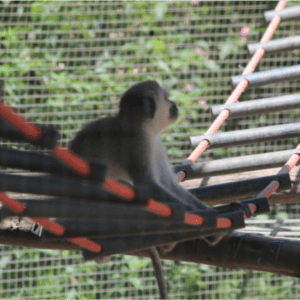
In March 2022, Courtney Maiden from the Endangered Wildlife Trust tested three different canopy bridge designs for Vervet Monkeys to identify one standardised design for the benefit of free‐ranging Vervet Monkey troops. The observational experiments took place at the Centre for the Rehabilitation of Wildlife (CROW) in Durban, where the three bridge designs were installed in two Vervet Monkey enclosures. Testing different canopy bridge designs in an ex-situ environment such as CROW allows us to establish design guidelines that can be used for free-ranging Vervet Monkeys in-situ (in their natural habitat). These ex-situ experiments are vital for understanding how Vervet Monkeys behave on different canopy bridge designs and identifying the most suitable bridge design to increase the likelihood of the bridges being used in the wild.
The bridges were made using polypropylene rope and recycled plastic. The design is adaptable to varying installation lengths, heights, and crossing environments. By observing the monkeys directly and using camera trap footage, we found that the ladder bridge was used most often and showed great potential for being the most suitable design.The positioning of any wildlife crossing structure is equally as important as its design. As the Vervet Monkey is a territorial species with daily foraging paths, installing canopy bridges along preferred movement pathways is vital for maximum benefit. Examining troop territories, crossing areas, and frequency of use can inform the best bridge location. Through the EWT-WTP student mentorship and with help from Wendy Collinson-Jonker (EWT) and Sandra Jacobson (US Forest Service Wildlife Biologist), Courtney has visited potential bridge installation sites in KwaZulu Natal and is currently studying road crossing hotspots to determine where bridges would be most likely to be used as intended.
Once suitable sites have been identified, we can begin the exciting part – testing the design identified as most suitable (the ladder bridge) on free-ranging monkeys. Watch this space for updates! All information and research updates can also be found on Instagram (@wildways_sa), Facebook (Wild Ways South Africa), and EWT platforms.