Help protect Africa's 

A word from the CEO – 50th Celebration

A word from the CEO – 50th Celebration

Word from the CEO

 
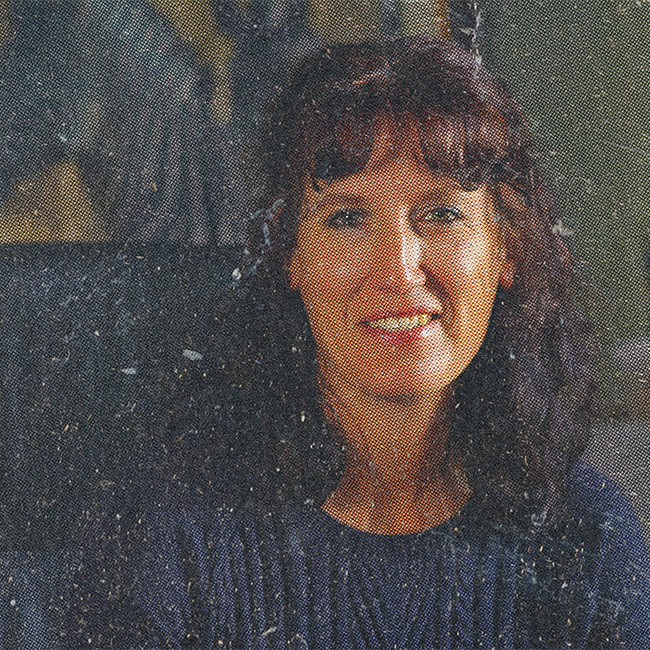
Yolan Friedmann, CEO

On behalf of the Endangered Wildlife Trust Board of Trustees may I welcome you all, on this chilly autumn evening, to this prestigious event, a celebration of 50 years of conservation in action.

Good evening Minister Creecy, Minister for Fisheries, Forests and the Environment. Welcome to David Freeman, First Secretary for Environment, Science, Technology, Health, and Minerals, U.S. Embassy Pretoria.

Good evening to the EWT founders that are here with us tonight Clive Walker and James Clarke and our previous CEOs Dr John Ledger and Prof Nick King, all the way from the United Kingdom.

To our Board of Trustees and the Chairman of the Board, Muhammad Seedat and

To all past Trustees who have played such a pivotal role in forming the EWT, some of whom have travelled many miles to be with us tonight.

Welcome to the many donors, associates, colleagues, friends, members of the media and our highly valued partners who are with us tonight.

And last but never ever least: welcome to the staff of the Endangered Wildlife Trust, past and present. Our greatest assets.

You are all welcome.

Tonight has been in the making for 50 years. I used to think that 50 years was an inordinate amount of time until I too turned 50 just before the EWT did. I can now assure you that 50 is the new 21 and this is not a celebration of a coming of age, but of a youthful spirit, blended with wisdom, a touch of maturity, a dash of streetsmarts, a helping of hope and a LOT of energy still to be spent to realise dreams that are still big enough to scare us, in the words of Ellen Johnson Sirleaf.

 Tonight has been a very special gathering of many remarkable people and a celebration of many remarkable achievements.

The EWT prides itself on instilling hope, and sharing a vision of what our future can be. We do not like to instil a sense of fear, loss or hopelessness when we talk about our natural world. Instead, we prefer to show, with evidence, the difference we can all make when we work together. You’ ve seen firsthand how our work, and with your support, has turned South Africa into the only country in Africa with an increasing population of Cheetah. How Wild Dogs now flourish in Malawi and Mozambique where they had previously gone extinct. How lost species like the Amatola Toad and de Winton’ s Golden Mole have been rediscovered and can now be protected. How rivers can flow when invasive plants are removed and how communities can use this water for their livelihoods, their crops and their general wellbeing.

How populations of Blue Cranes and Cape Vultures have been downlisted due to concerted and targeted conservation effort, and how the Brenton Blue Butterfly was the first species to trigger the declaration of a nature reserve to save just one species. How communities now run conservation-friendly enterprises on their land, and rangers, ecowarriors and businesswomen have been borne out of rural children and their mothers. How hundreds of thousands of hectares of critical habitat are now protected, spanning biomes from the Succulent Karoo to the Soutpansberg and covering the lifegiving rivers, grasslands, wetlands, forests and deserts in between.

In 1973, the world had a human population of 3.9 billion. We have now come to remember the 1970s as a time of activism and the birth of multiple social movements that galvanised action and created momentum for stimulating social change for the decades to come. The environmental movement benefited from this period of awakening and the United Nations Environmental Programme was born, as was CITES, the global wildlife trade convention, the RAMSAR convention for the protection of wetlands and the landmark Endangered Species Act that was passed in the USA. World Environment Day was kickstarted and of course the globally significant UN Conference on the Human Environment was held, catapulting the world towards a slew of environmental agreements that would attempt to safeguard our natural resources and our climate for decades to come.

President Richard Nixon said it for us all when he stated in 1973 that “Nothing is more priceless and more worthy of preservation than the rich array of animal life with which America has been blessed.” It was at this time that way down on the southern tip of Africa, the Endangered Wildlife Trust was born.

Despite all this activity, fast forward to 2024 and the WWF tells us that populations of globally monitored mammals, fish, birds, reptiles, and amphibians have declined by an average of 68%. In Africa alone, the percentage is 66. Our Freshwater systems show the worst, and most rapid decline in quality and species loss. 2023 was the hottest year on record, with extreme weather events causing devastation, globally.

And the world human population has reached 8.1 billion, and is still growing. That is a more than 200% increase in the number of humans and a more than 2 thirds decrease in the number of wild animals left on our planet today. The EWT has done well over the past 50 years. But we have to do more.  

Right now, in the safe havens of our national parks and in our remote wilderness areas and mountain ranges, snares are being set, poisons are being planted and rifles are being loaded. From the African savannahs and deep into our oceans, land is being ploughed up and plastic is being dumped. Rivers are being choked and skyways are stolen from the winged creatures that really do own them.

Every night the EWT staff go to bed dreaming up ways to do more to stop the harm and reverse the trends. Every day they get up and channel every heartbeat into actions that will fight extinction. For 50 years, we have pushing back the tide and finding solutions; this is the thread that binds us and which continues to blur the generational lines, to form one united EWT.

As you have witnessed, the EWT staff, volunteers and trustees have, for 50 years, been the most tenacious, innovative and energetic, and we are defined by an unbreakable spirit that binds us like a steel thread and ignites our purpose. We have literally saved species and changed lives.

To the EWT staff past and present: you are all a force of nature!  Thankyou for the years of unimaginable hard work, sacrifice and souldeep commitment that comes from place that makes you special people, and a privilege for me to serve. Having stepped into the EWT myself, around midway into its story, I look both backwards and forwards from this halfway mark and see many extraordinary people on both sides, that have not just shaped the EWT’ s life but my own too. Thankyou to you all.

To those extraordinary EWTers that will come next and to what we have termed #TheNextFifty. The world will not be an easier place for much of the planet’ s human and wildlife populations. The EWT needs to write a new chapter now, and this book will come with new challenges and opportunities. Many of us here tonight will not be here to witness the commemoration of the EWT’ s centenary but our impact MUST still be felt. We owe it to the next generations of brilliant EWTers to continue in the footsteps of our giant founders and to stay connected to the dreams of what we know can be achieved tomorrow, as we sit here tonight.

This we can all do by leaving our future teams a legacy that goes beyond another doubling of the human population and the loss of more species, but through the establishment of a Fund for the Future that will secure the EWT, our people and our impact, for the wildlife and the communities that they will serve, for decades to still come and for generations not yet born.  

The EWT is launching – in its 50th year – our Fund for the Future to ensure that the EWT never faces the risk of shutting its doors and ending our story, which in many ways, has just begun. On behalf of the EWT’ s FirstFifty founders, CEOs and Chairs of our Board, we invite you to join us to continue our story and make your pledge tonight to the Fund, to secure forever, together. Pledge cards are on your tables and can be handed to any EWT staff member.

Thankyou to the Meterman, The Elizabeth Wakeman Henderson Charitable Fund, Trappers and the Oppenheimer Family for already making their pledges to this fund.

A powerful, impactful conservation strategy, underpinned by financial security and implemented by high performing teams of the best talent. This is the three-pronged approach that will define the next few decades for the EWT and we are developing what we are calling our Future Fit strategy for the NextFifty. This strategy will ensure that we channel our efforts into achieving targets that stretch us and will achieve high impact; that will galvanise cohesive, collective action towards achieving global, and national conservation priorities and which will benefit a maximum range of species, and humans, realistically.

Our Future Fit strategy will simplify our approaches, catalyse new science, engage new partners and embrace a new way of thinking. It will take the EWT into new regions where we will support new partners, and scale our impact. And building on our strengths, our Future Fit strategy will remain firmly rooted in the core principles of the EWT which are to save species, conserve habitats and benefit people.

We will build resilient systems, and develop nature-friendly businesses; we will safeguard the habitats that protect all life, we will prevent more extinctions and we will bring peace to human-wildlife conflict. We WILL halt the loss of biodiversity. 

Our planet may be ailing, but our spirits are not. We are powerful, passionate and energetic. We have solutions and knowledge and we CAN turn the tide.

In the words of António Guterres, Solidarity is humanity. Solidarity is survival.

In the words of the EWT: together we CAN protect forever.

Thankyou for making our birthday so special and for being part of our story.


Yolan Friedmann,

CEO, Endangered Wildlife Trust

 

The Endangered Wildlife Trust Ex-Chairman looks back on 15 years of leadership

The Endangered Wildlife Trust Ex-Chairman looks back on 15 years of leadership

The Endangered Wildlife Trust Ex-Chairman looks back on 15 years of leadership


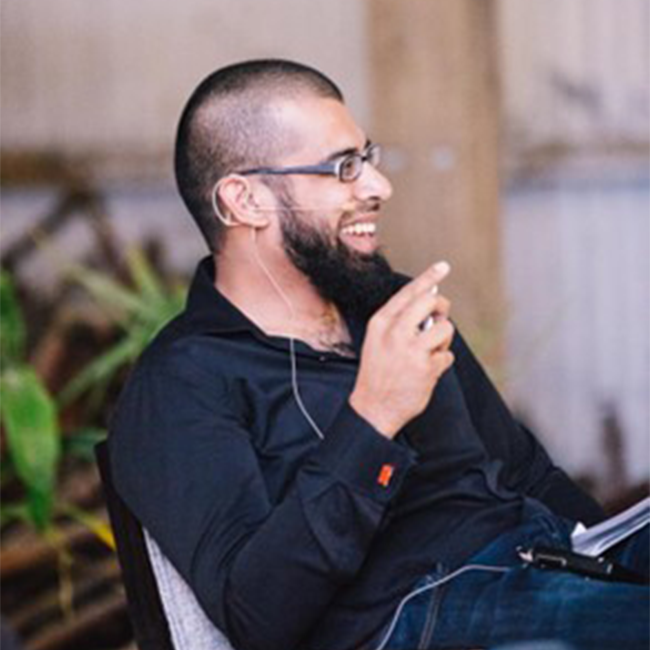
As the Endangered Wildlife Trust (EWT) bids farewell to Board of Trustees Chair Dirk Ackerman, we also welcome him as Deputy Chair of the Board.
In his new position, Ackerman will be supporting newly elected Board Chair Muhammad Seedat during a year-long transition.


Ackerman, who is by no means retiring from playing a key leadership role in one of South Africa’ s most loved conservation NGOs, speaks with fondness of his time as Chair of the EWT Board, assuring all that he will always remain attached to the conservation cause that is close to his heart.

Ackerman, who served as Board Chair for almost 15 years has also been a member of the Board for two decades. His passion for the natural world was developed as a child playing in the bush and accompanying his conservationist neighbour on forays into the veld to identify and locate different species.

His first acquaintance with the EWT was when, as CEO of the Airports Company South Africa at the time, he reached out to erstwhile CEO, Dr John Ledger, a keen birder, about the concerns he had at the way the bird problem at airports was being handled. Ackerman was unhappy at the methods being used by the airports company to rid the runways of birds to reduce bird strikes by planes. This led to the EWT entering a Memorandum of Understanding with the Airports Company SA to employ a variety of environmentally friendly practices to deter birds and other wildlife from ACSA airfields, one of which was the pioneering use of dogs to scare birds away from the airfield. Similar projects were also undertaken by the EWT in collaboration with the SA Air Force at military airports.

Under the leadership of Ackerman and the Board, working closely with CEO Yolan Friedmann, the EWT is today a stable and thriving organisation marked by good governance. It is an organisation that can ably compete internationally through its conservation work, as well as in terms of its credible research and work with communities.

“As we move into the next 50 years of the EWT, the aim is to ensure that as we internationalise the EWT we keep ownership of the Endangered species profile,” Ackerman said.

Ackerman speaks with pride about the decision by the Board to acquire land for conservation. This includes the Soutpansberg Protected Area in Limpopo where more than 1,800 species are now being protected; and where eco-tourism, regenerative agriculture and community development projects are underway. Another land purchase includes the EWT’ s Conservation Campus in Midrand which, as a conservation hub, is showcasing South Africa’ s biomes and is an example of urban conservation to all who visit.

“The old and new EWT, the EWT of the future, is like chalk and cheese. Through hard work, we have improved the capacity of the organisation so that it is now at a point where it can expand and reach new heights, fully able to meet its three objectives: Saving Species, Conserving Habitats and Benefiting People.

“The EWT has proved that it can deliver, that it is proficient and an example of good corporate governance. We can deliver at the coalface of matters of environmental importance. Our objective is to be leaders in science and environmental matters.

Mahatma Gandhi once said: “The greatness of a nation can be judged by the way its animals are treated.”

“I will continue to put my entire heart and soul into making sure that our wildlife is respected; our environment is conserved and the communities that depend on both are thriving parts of our story,” said Ackerman.


A word from the CEO February 2024

A word from the CEO February 2024

Word from the CEO

 
Yolan Friedmann, CEO


Turning 50 brings with it a level of maturity, wisdom and some well-deserved scars on your back, for most people. For the EWT, it meant galvanising action, stimulating energy and consolidating our plans for a more impactful and far-reaching future for all. We are now at an age that means we can pause for a few minutes, celebrate our numerous victories and reflect on how much we have learned from that path we took; but we are also wise enough to know what we need to learn more, reach further and aim higher if we are to ramp up our impact in the face of declining state of our natural world. Numerous reports are published every year that provide ample evidence of the devastating effect of humans and our unquenchable penchant for transforming the planet beyond the threshold of its natural boundaries, with the results being escalating extinction rates, loss of ecosystem services, the warmest days, and years on record, calamitous weather events, life threatening disease transmission and pandemics, and all in all, reduced human resilience in a world that we are changing faster than most species, humans included, can adapt to.

On 12 February 2024, the Conservation of Migratory Species of Wild Animals (CMS) released its first-ever State of the World’ s Migratory Species report which read like a horror story for multiple species whose existence depends on their ability to traverse countries and continents as they have done for millennia, with the changing seasons. The report detailed how nearly 44% of the species listed under the CMS are showing signs of decline and more than 22% are threatened with extinction. Nearly 87% of the fish species listed in the CMS and are threatened with extinction, and the extinction risk for migratory species is growing globally. Humans are doing this to these species, primarily by means of our overexploitation of these species, and the loss of their habitat due to human activity. Climate change, pollution and invasive species are also profoundly impacting most migratory species. In short, humans are killing or removing wildlife from their habitat, at rates faster than they can sustain, and are destroying their habitat and/or making it uninhabitable due to our waste products and greed.

Moving over to the 2024 version of the World Economic Forum annual Risk Report where the picture is not much rosier, even from the perspective of governments and businesspeople and not just scientists. In the 2024 WEF risk report, environmental risks continue to dominate the risks landscape with two-thirds of respondents ranking Extreme Weather as “the top risk most likely to present a material crisis on a global scale in 2024”. Extreme weather has also been viewed as the 2nd most severe risk over the two-year timeframe and nearly all environmental risks feature among the top 10 over the longer term. Younger respondents tend to rank Biodiversity Loss and Ecosystem Collapse, and Critical Change to Earth systems risks far more highly over the two-year period compared to older age groups, with both risks featuring in their top 10 rankings in the short term. Perhaps because they have the most to lose.

Our natural world is not better off as we enter the new year, and with every new year, there is less time to waste. The EWT is spending the first half of our new year rigorously examining our strategic approach, and drafting a cohesive high-level strategy that will see us tackle the most pressing challenges through important goal setting across the thee pillars of saving species, conserving habitats and benefitting people. As a leading conservation agency in southern Africa for five decades, we will continue to remain at the forefront of conservation impact, but we know that our rapidly changing world continually needs new thinking and bigger plans if we are to remain ahead of the extinction tide. We are not afraid of the challenge and we invite you to join the journey of Protecting Forever, Together as you have done for the past fifty years. We cannot rewrite history, but we can influence the future and for us, saving forever starts today.  

May your year ahead be one of prosperity and peace; thank you for being part of the Next50.

Yolan Friedmann,

CEO, Endangered Wildlife Trust

 

Endangered Wildlife Trust welcomes new Board of Trustees Chairman

Endangered Wildlife Trust welcomes new Board of Trustees Chairman

Endangered Wildlife Trust welcomes new Board of Trustees Chairman


The Endangered Wildlife Trust welcomed Muhammad Seedat as the new chair of the Board of Trustees at the end of January.

Elected during the Board meeting, Seedat, enters a seat that will guide the organisation into the next 50 years of conservation and research excellence.

Seedat joined the EWT Board in 2015 and has served on the Audit and Risk Committee and

Remuneration Committee since its inception. A keen hiker, cyclist, social runner, and avid cricket supporter, he believes that the EWT is poised for exponential growth based on the strong and solid foundation built by the previous, and current, leadership and team.

“It is, and will, become a stronger global player and advocate for conservation,” said Seedat. “Speed of change in the world we live in is exponential and we need to embrace that speed to soak up the opportunities that lie before us.”

As the newly-elected chair, Seedat will embark on the EWT re-clarifying its strategy and ensure that, in simple terms, “we understand where we are going, how we are going, but, most importantly, why we are heading to the destination of conservation excellence”.

Seedat explains that Simon Sinek’ s concept of the ‘Power of Why’ determines your purpose.

“Passion drives that purpose. In our pursuit of a better tomorrow, the EWT’ s work is fundamental and critical to the protection of species and habitat so that those who come after us have the opportunity of experiencing what we have the ability to experience,” he said.

In his first 100 days, Seedat aims to set plans in place for a more efficient operation that is geared for growth and the execution of the many opportunities that lie before the EWT. He added that this again is based on the strong foundations that have already been laid.

Although funding remains an issue for non-government organisations, such as the EWT, he believed that the not-for-profit body is well placed to curb this due to the brand that has been built and will continue to strive and thrive.

“Sustainability will always be a concern, but the opportunity is to build diverse income stream.

Donor fatigue remains an international challenge, but it is our aim to become the donee of choice based on the value returns the EWT delivers in terms of its programs and the dream for a better tomorrow,” said Seedat.

He was drawn to the EWT through the work that was being done by the organisation and its “utter importance” within the context of the world of today.

Seedat believes in the need for a better tomorrow, for those who come after us, a better world for our children.

“It would be a travesty if we had to explain to our grandchildren why an animal and species was extinct when we had the ability to prevent such a disastrous case,” said the father of four. “It is of vital importance that we educate our children and make them aware and conscious of how we need to tread lightly on this beautiful planet, so we ensure that their children and grandchildren have the ability to experience what we experience. We also need to educate them as to what the repercussions will be should we not be consciously aware and do all that is possible to minimize the effects of climate change and resultant impact.”

To achieve greater involvement by young people in the environment, requires getting them into the wild so that they can experience the real world “rather than one in front of a screen”.

Working with communities is of vital importance, he said, especially because of the already visible effects of climate change.

“Food security will be one of the most important considerations of the future. No loss of life that is preventable is acceptable. This proves that the EWT’ s community programmes play an important role in advocacy, awareness, and prevention of climate change and of further importance, preservation of our amazing world,” he said.

In every organisation he has got involved in, his aims have been simple – to leave the organisation better than he found it and to begin with the end in mind. His aim is to ensure that the EWT becomes the leading organisation and expert in conservation excellence internationally.

He firmly believes there is a need for scaling up building on the strong foundations that have been laid, and that opportunities multiply if executed efficiently and effectively.

“We need to be focused on excellence in all we do,” said Seedat. “We are on this train together and we need to be moving in the same direction. Culture eats strategy for breakfast, and I implore each and every employee to imbibe and further build the culture of the organisation.

“We need to all be working towards the common vision of the EWT. The Board and I stand behind Yolan as the leader of this organisation, having led and built it over the past years,” said Seedat.

A word from the CEO December 2023

A word from the CEO December 2023

Word from the CEO

Yolan Friedmann, CEO


From the earliest documented history of human life on Earth, mankind has interacted with nature through a variety of systems and relationships. Though not formalised in its practice by early man, one could contend that our use of, and engagement with nature for food, cover, tools and cultural or religious practice over millennia, form the underpinnings of what would lead to what we could call conservation today.

As hunters and gatherers, humans who depended directly on natural resources for their survival, controlled and managed access to natural resources through systems of religious beliefs and the use of resources by traditional healers. In Africa, there were superstitions against killing certain species like hyena, hammerkop or chameleon and people were prohibited from hunting or eating their totem animals. Scarce or valuable products were given to their leaders as gifts. Areas were demarcated for specific purposes, like religious or tribal gatherings and these included sacred forests, burial sites and hills for ceremonies and rituals. Human beings have therefore been assigning restrictions to the use of various animals, plants and areas for all sorts of reasons since the dawn of time.

But humans have also been increasingly exploiting the planet’ s resources, and as human populations have grown, so have our use – and overuse – of many thousands of species, and our depletion of natural systems, globally. To the point where rates of extinction on the planet have been escalating and now threaten to unravel the very fabric of this gloriously diverse, richly wild planet of ours. In response, what has now become known as the Environmental Movement has become a planetary force of its own.

Around the start of the last century, environmental discourse became more formalised and was characterised by issues which map the storyline, such as soil erosion in the 1930s, urban smog in the 1950s, chemicals in the 1960s, resource depletion in the early 1970s, nuclear power in the late 1970s, acid rain in the early 1980s, and the recognition of global ecological issues like ozone depletion and climate change today, documenting a shift in identifying environmental issues from those with local dimensions and impacts to those that form a picture of a planet in peril. It is largely recognised that the Stockholm Conference (United Nations Conference on the Human Environment) held in 1972 was the catalyst of formal environmental protection activities globally, and the 1970s were a busy time with a slew of multilateral environmental agreements entering into force, such as wetland conservation (Convention on Wetlands of International Importance/Ramsar, 1971), wildlife trade (Convention on the International Trade in Endangered Species of Wild Fauna and Flora/CITES, 1973) and migratory species (Convention on the Conservation of Migratory Species/CMS, 1979).

Signifying increasing internationalisation of environmental issues and a growing realisation that resources are limited and require controlled utilisation and compliance mechanisms to ensure their sustainability. It is against this backdrop that, back on African soils, an intrepid trio of conservation visionaries recognised the plight of Africa’ s iconic wildlife and in 1973, embarked on a journey to raise some money, and direct it all into saving perhaps one of the most iconic of all wild animals, the African Cheetah. Little did Clive Walker, James Clarke and Neville Anderson know then, that their desire to safeguard the future of the world’ s fastest land mammal would evolve into the establishment of one the most effective bastions of the conservation of Africa’ s wild spaces, wild animals and the communities that depend on both, over the following half a century.

Towards the end of 2023, the Endangered Wildlife Trust will celebrate 50 years of Conservation in Action. In the fifty odd years that have passed since the world kickstarted the environmental movement, countries have signed more and more environmental agreements and millions of community and civil society organisations have been established to empower people and rally society to save our planet – ironically, from ourselves.

However, our planet is not better off for much of what has been done in the past fifty years and many hundreds of thousands of species have been declared extinct during this time. Before we assume that this cannot be possible, consider just this: researchers have identified that it is possible that 15% of the world’ s 1.25 million mite species had been lost by the year 2020, so for this one taxon alone, we’ re talking tens to hundreds of thousands of extinctions, a number that researchers predict will continue to rise. Add this to the numerous species of orchids, freshwater fish, amphibians, bats, insects, succulents, trees, reptiles, lichens, mammals and birds that have also been declared extinct in recent times, and one can understand why the race against extinction is not just a catchy phrase.

Turning the tide on extinction is what the EWT has been dedicated to doing, since its inception. For many species our work will perhaps never be done, and they may rely on the relentless focus of the future generations of EWTeam members for The Next Fifty and beyond. But their persistence in their natural habitats, as critical components of the ecosystems that give us all life, is cause for celebration that trumps the EWT just turning half a century old. In fact, 50 years is barely a blip on the screen when one considers for how many millennia these species, that humans have doomed to oblivion, took to evolve, and how their essential role in shaping all lifegiving systems on earth, will now be lost forever. Fifty years is really nothing when it comes to nature, so instead of looking back when we celebrate this milestone, the EWT will be focussing on the Next Fifty and The Next Fifty and beyond. We need to be both future fit as an organisation, with the right skills, capacity, resources and ideas to ensure our own survival, and prosperity; and we need to be keeping a watchful eye on what the future may hold and what that means for the wildlife and wild places, that may need us in decades to come. Many species and ecosystems may be quite common or intact today but with a changing climate, increased pollution, ongoing habitat transformation, deforestation and desertification, over-harvesting and let’ s face it: increasing human population size which means more and more resource consumption and landuse change, who knows what the future holds for Mother Nature.

Some man-made threats to wildlife, like overharvesting, human-wildlife conflict and land transformation have not changed for centuries, they have just escalated in terms of scope, scale and speed. Futurists, quoted in New Scientist, suggest that we consider threats like genetically engineered viruses, mass offshore power production, demand for the biomass to make biofuel, synthetic bacteria and biomimetic robots, and when we add this to the loss of pollinators, escalating violence and wars, climate refugees, the possibility of nuclear warfare and ramped up climate-related natural disasters, the future world becomes a tricky place for bees, butterflies and bats.

Fortunately, in the past 50 years the EWT has transitioned from working on large mammals only. to addressing the threats facing all of these species, and more. We are proudly working to save the most expansive and diverse list of species and ecosystems in Africa and to be working among the most diverse variety of communities and stakeholders, from big business and rural farmers to traditional healers and school children. What has not changed in 50 years is our responsiveness to change and those in need. Being future fit is also about resilience internally and the EWT is addressing this by nurturing younger talent, modernising our operating systems, and securing our own persistence, through our Fund for the Future. This will ensure that the EWT will be around for many more celebrations like this, and to provide a lifeline for the species, communities and natural systems that need our help.

Please take a moment to page through the 2023 version of the EWT’ s Integrated Report. You will come across many examples of how the EWT’ s approach to conservation has successfully secured the future of numerous species from frogs and golden moles brought back from the edge of extinction to increasing populations of cheetah, cranes and Wild Dogs in South Africa. You will note our robust framework for measuring impact and our continual use of innovation to push knowledge boundaries and generate better results. We hope that you take pride in our growth in both budget and funding spent on projects. We trust that you will celebrate with us, the highs and lows of a year in which global turmoil escalated, and humanity clawed its way back from pandemics and socio-economic instability. But also, a year in which those with passion, commitment, and a calling to safeguard our planet for generations not yet born, were rewarded with results that pack these pages and give us hope.

It has been my privilege and honour to serve at the helm of the EWT as one of only four CEOs in 50 years, for the past 17 years. Prior to this, the EWT was led by great names in conservation like Dr Nick King (2003- 2006), Dr John Ledger (1985 – 2002) and of course Clive Walker (1973-1985). Together, with many wonderful people who have gone on to become legends in their own right, we have all had a chance to co-mingle our own life stories into that of the EWT and conservation in Africa. For the generations that will still come, and those who will next pick up the baton. May you write a narrative for The Next Fifty that brings back more life to this planet, keeps our African night skies clear and our savannahs bustling with life.

The EWT began as a flicker of light from a small match struck 50 years ago and today, we burn brightly through the torches carried by all our staff, our trustees, our partners, our associates, our invaluable donors, our communities, our fans and our friends. Without you all, we can only look back, but with you, we embrace the future, robots and all, and stride onward to #TheNextFifty.

Yolan Friedmann,

CEO, Endangered Wildlife Trust