
Help protect Africa's 

World Ranger Day celebrated at the EWTs Medike Nature Reserve

World Ranger Day celebrated at the EWTs Medike Nature Reserve

In the field

World Ranger Day celebrated at the EWTs Medike Nature Reserve

By Joe Razwinani, Medike Reserve & Hospitality Manager
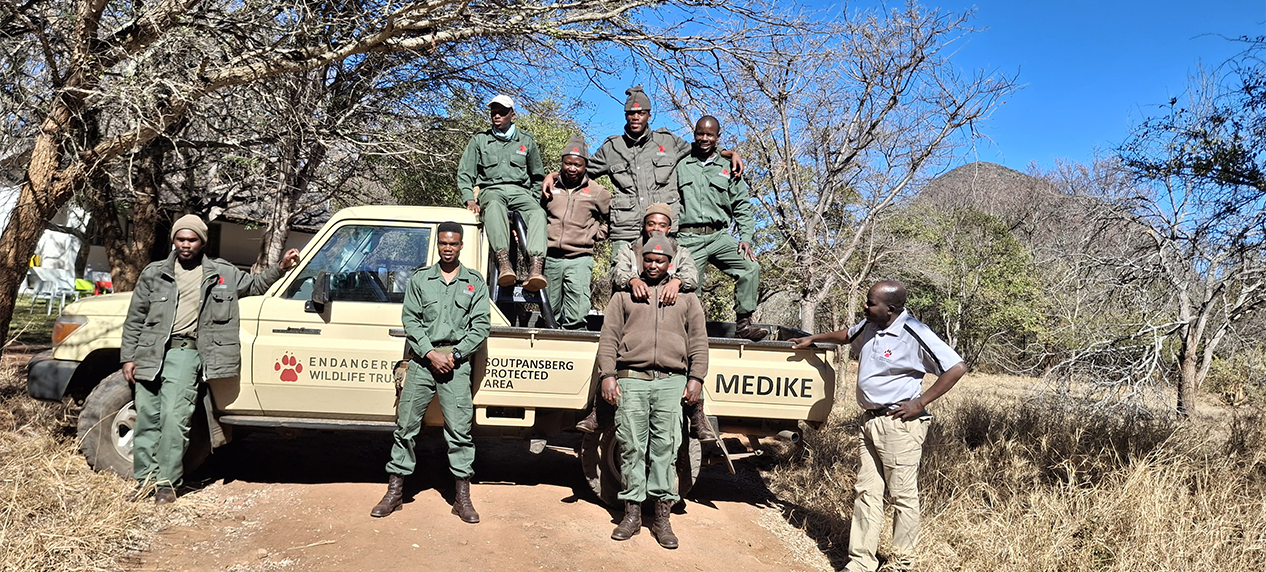
 

World Ranger Day braai celebration with rangers and families


Rangers and support staff at the EWTs Medike Game Reserve in the Soutpansberg marked World Ranger Day on 31 July by demonstrating their abilities and versatility of their work, and sharing insights about their experiences.

World Ranger Day, this year held under the theme “Rangers Powering Transformation”, annually commemorates rangers who have died in the line of duty, honours the hard work and dedication of rangers, and fosters greater understanding and appreciation for the work they do among staff, their families, and local community members.

At Medike as short programme was designed to address ranger’ s families and community members with the aim of educating them about the multifaceted role of a ranger. The programme aimed to shed light on daily ranger duties, promote professional growth, and strengthen the connection between conservation efforts and local communities.

The 2025 Ranger Day celebration began with a ranger drilling demonstration to showcase the discipline, coordination, and teamwork required in field operations. This was followed by individual presentations from rangers, each addressing specific topics. such as anti-poaching strategies, Veld Fire Control, Veld Restoration. Alien Invasive Species Removals, Eco-Tourism and Community Involvement. These presentations not only served as educational tools but also helped build the rangers’ confidence in public speaking. The presentations sparked meaningful dialogue and shifted long-standing perceptions regarding the work of rangers.

Visitors extended their gratitude to the EWT team at Medike for safeguarding the Soutpansberg Mountain. Many were surprised to learn that the mountain is the source of their drinking water. This discovery underscored the vital link between environmental conservation and everyday life. It also inspired greater respect for natural resources and reinforced the importance of environmental stewardship among community members.

One of the community representatives expressed his readiness to alert the EWT about the presence of poachers in nearby villages making a significant step towards integrated conservation efforts, where local residents play an active role in protecting wildlife against the illegal trade.

At the end rangers and their families enjoyed a braai courtesy of the EWTs Support Services who provided vouchers for the social gathering.

This celebration served as a powerful reminder of the transformative potential of conservation when communities are informed, engaged, and empowered.

Saluting Rangers across the World

Saluting Rangers across the World

Saluting Rangers across the World

By Eleanor Momberg, EWT Communications Manager
 

Armed with years of experience and a lifelong passion, rangers are the boots on the ground at the forefront of conservation.

Because they spend their entire working day – and often longer – in the field, they are the eyes and ears of management. This means they are often the first to detect unauthorised entry into a protected area by poachers, medicinal plant harvesters, or even just inquisitive persons. They are also often the first to detect wildlife diseases or other potential issues, and are integral to monitoring and maintaining infrastructure such as artificial water points and pipelines.

Rangers are integral to the daily running of any protected area, and their daily tasks are as varied as apprehending poachers, burning firebreaks to safeguard infrastructure, assisting with management burns to achieve specific ecological goals, controlling alien plants, and guiding guests to ensure an absolutely unforgettable visit to nature, among a multitude of other tasks.

On 31 July, rangers across the globe take a moment to remember and pay homage to colleagues who have lost their lives in the line of duty. This year, the pause is to honour 175 colleagues in 41 countries who lost their lives in the last 12 months. 

The theme for World Ranger Day 2025 is “Rangers, Powering Transformative Conservation.” It is a reminder, says the International Ranger Foundation, that rangers are not only protectors, but changemakers.

“They are essential to achieving the world’ s biggest conservation goals — from the Sustainable Development Goals to Target 3 of the Global Biodiversity Framework: protecting 30% of the planet by 2030,” says the Foundation.

Although rangers typically work in protected areas where their primary focus is conservation, law enforcement and wildlife management, the Endangered Wildlife Trust (EWT) rangers have a different, added, task – restoring the habitats needed for species and people to survive, protecting cultural heritage, and ensuring that the impact people have on the environment does not affect the ability of communities to benefit from their natural surrounds.  

Additionally, rangers’ work has become more holistic, and has seen the introduction of new technologies into their daily routines.  This includes the use of drones.  

Many rangers emanate from communities adjoining, or in close proximity to, the protected areas in which they work. As such, they are ambassadors for conservation – teaching children and adults alike why it is important to conserve both plants and animals. Rangers are a key resource with which to engage communities, ensuring that communities’ voices are also heard and, together with the protected area management, ensuring that common ground can be found and that protected areas and communities can find a mutually beneficial way forward.

As agents of transformation, rangers also look to the future addressing issues such as climate change in community education drives, highlighting the need to mitigate, and adapt to, a changing environment.  

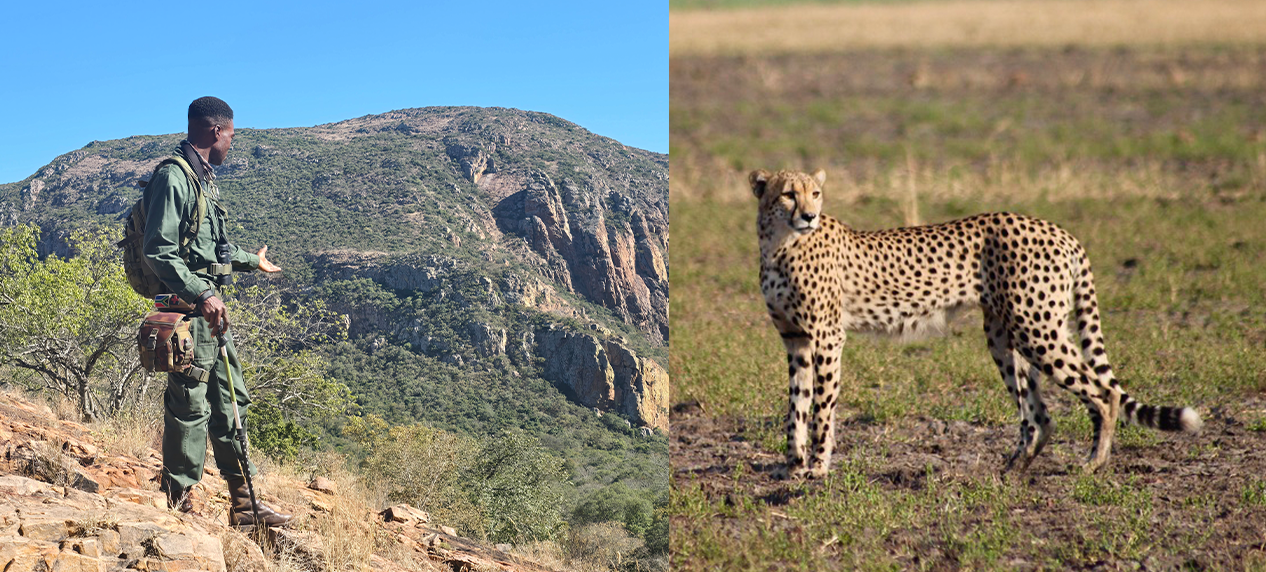
Among the rangers at the EWTs Medike Reserve in the Soutpansberg is Shumani Makwarela, a field guide in the Savanna Strategic Conservation Landscape. He says his work largely entails protecting the biodiversity of the Soutpansberg.  “I also assist to clear alien plants and then do game counts,”  he says.

The Soutpansberg, a recognised as a Centre of Endemism and Key Biodiversity Area, is also a Strategic Water Source Area for both ground- and surface water.  To address the threat of alien invasive species, a team of rangers has been working for the past seven years to remove invasive alien trees from wetlands and mountain catchment streams. 

This has required weeks of work on-site, often camping in remote locations away from their families. Many of these invasive tree strands were in extremely inaccessible areas, making the work even more challenging. Despite these difficulties, our rangers have successfully cleared over 60 hectares of Eucalyptus and Black Wattle from remote mountain areas, resulting in an estimated 30 million litres of water being replenished to the environment annually.

As part of the project, rangers have received training in invasive plant management and received accredited qualifications in First Aid, Herbicide Application, and Intermediate Chainsaw Operation.

But, EWT rangers are not limited to people.  Among these are our vulture “rangers” who, through the use of cutting edge GPS-tracking technology, assist in the location of poisoning events in order to dramatically reduce further wildlife loss, save surviving animals, and enable law enforcement to act quickly.

The Canine Conservation rangers not only work in protected areas to combat rhino poaching, but also support the police, national and provincial environmental authorities to detect illegally traded wild species of plants and animals.  In recent months, our dogs and their handlers have searches hundreds of vehicles for illegal succulents and reptiles at roadblocks, used their noses to sniff out weapons and ammunition and other illegal wildlife products at the entrances and exits to games reserves, searched thousands of parcels and detected numerous snares.

Rangers are an important cog in the business of conservation, and this International Ranger’ s Day we salute the vital role that rangers play in the conservation of our natural heritage.