Help protect Africa's 

Disney SA team get their hands dirty for conservation

Disney SA team get their hands dirty for conservation
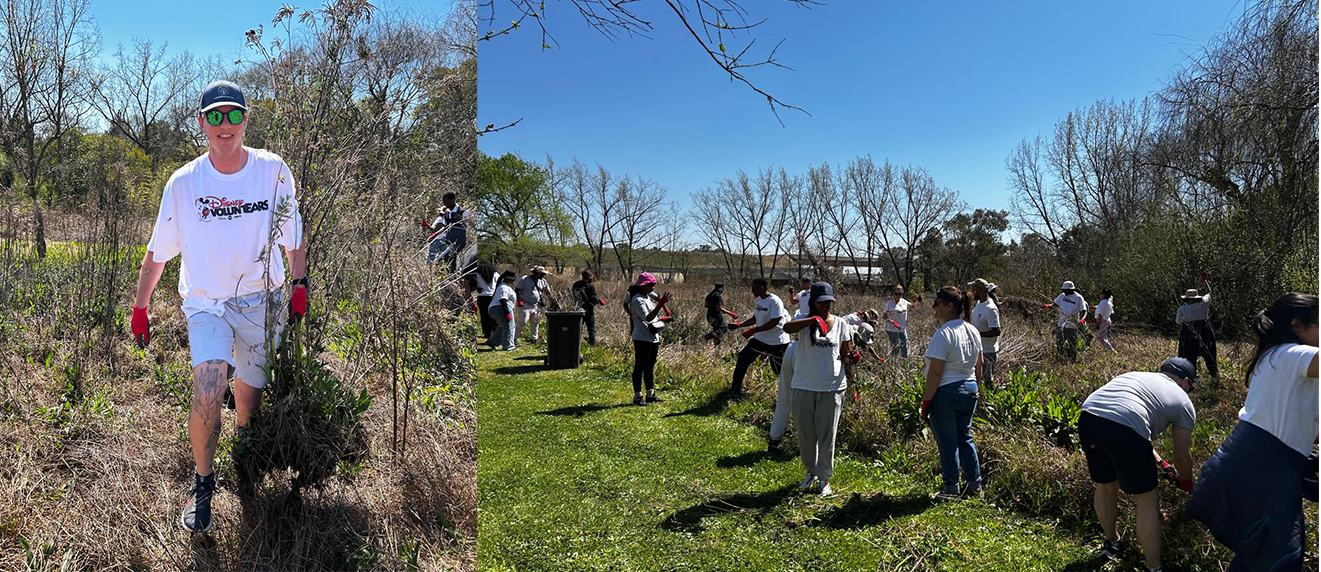
Disney SA team get their hands dirty for conservation


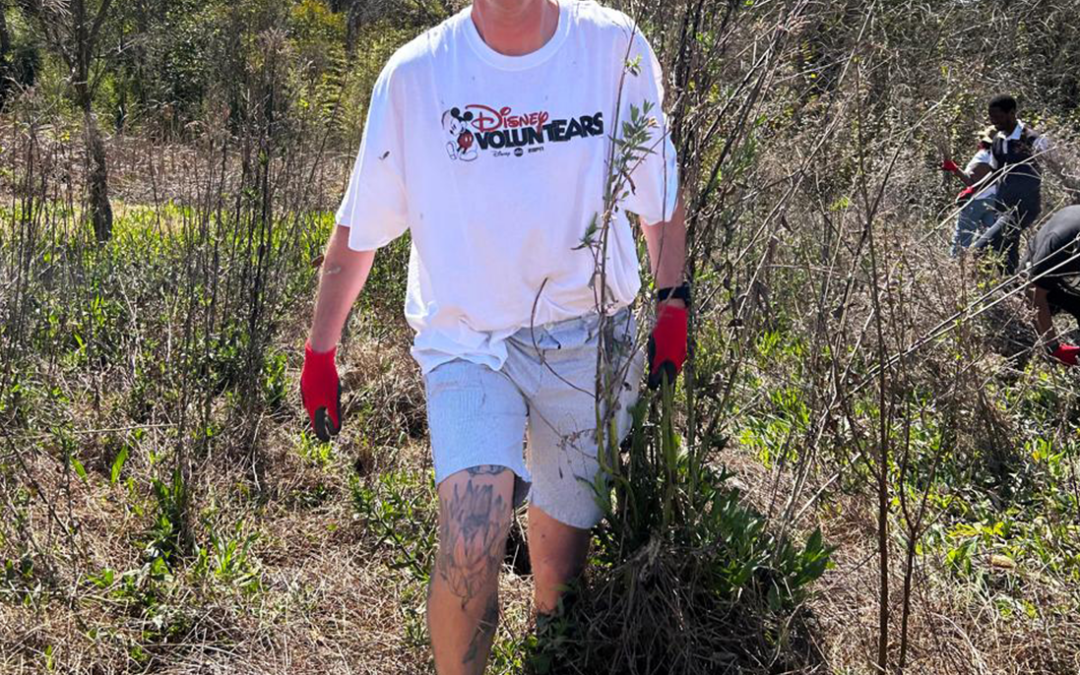
Disney Africa VoluntEARS supporting conservation at the EWT Conservation Campus

In September, a team of more than 50 Disney Africa VoluntEARS visited the Endangered Wildlife Trust’s Conservation Campus and the Cape Town office to perform community service.

Joined by a number of EWT headquarters pack members, the volunteers did a sterling job of clearing and beautifying an area below the Conservation Campus’s parking lot.

Volunteering is an important and enduring part of the Disney culture. Through VoluntEARS, local Disney Africa employees dedicate their time and professional skills to local community projects.  

Before getting their hands dirty at the Conservation Campus in Midrand, the Disney Africa voluntEARS were introduced to the story behind the EWT and the work that happens every day to conserve the habitats both species and people rely on, the protection of Endangered species, and the work to support communities so they can live in harmony with nature. 

The presentation traced the EWT’s beginnings with a single species, the Cheetah, to its broader conservation work today, while highlighting a simple but powerful message: conservation is a team sport.

This was followed by a safety briefing, and the team receiving gloves, spades and pruners from the EWT’s Campus management officials before getting down to the nitty-gritty of alien species removal. 

After spending the morning working in the area close to the wetland and enjoying a braai, the team participated in a creative workshop called Rebrand the Bad Guy: Can We Change the Story about Vultures? 

This session dealt with the vital ecological role vultures play and the threats they face. The Disney team then worked in groups to develop and pitch creative ideas that could help change the way vultures are portrayed and perceived. The concepts were judged and a winning team was selected. 

By giving their time and energy, the Disney Africa volunteers were reminded that even practical actions on the ground can be part of something much bigger, helping protect Africa’s wildlife, wild spaces, and the people who depend on them. We look forward to the Disney Cape Town Community Service Day later this year.
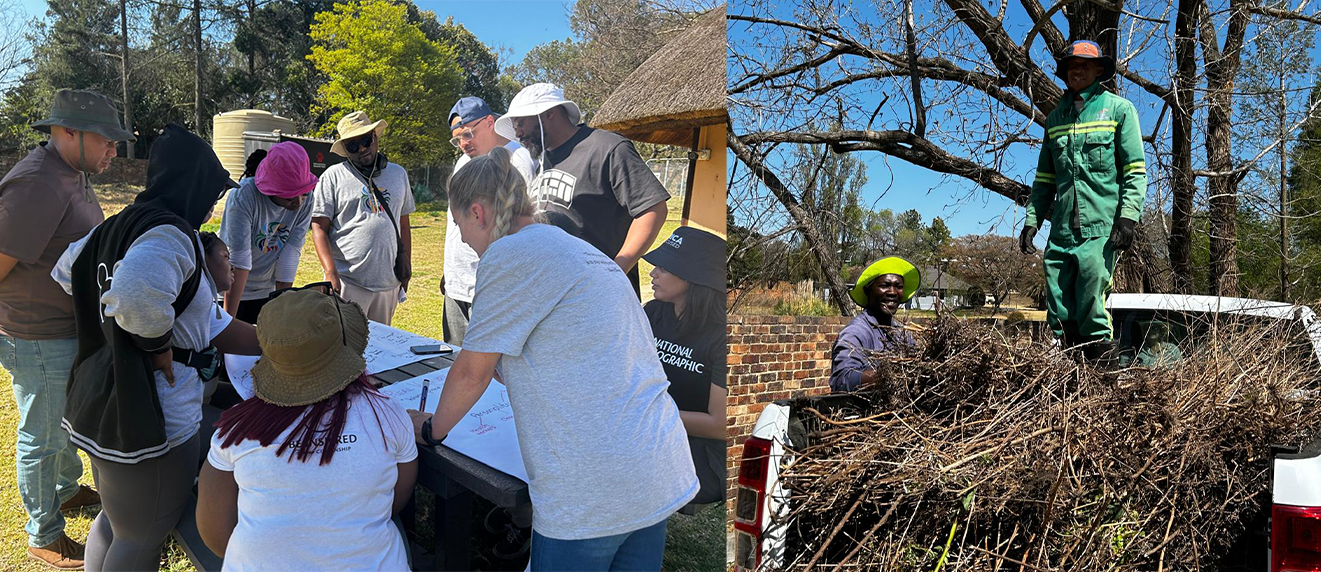
Disney Africa volunteers removing invasive alien plants at the EWT Conservation Campus

Tuks Students reuse invasive alien species

Tuks Students reuse invasive alien species

In the Field:

Tuks Students reuse invasive alien species


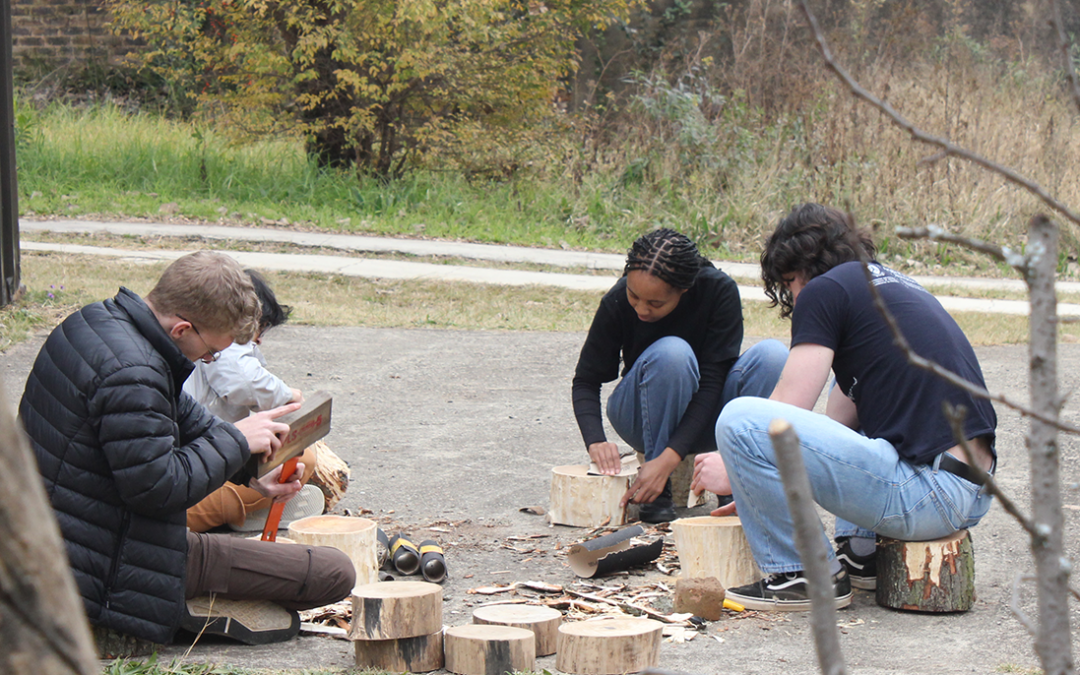
University of Pretoria students preparing invasive alien tree wood for a sensory garden.

A group of four University of Pretoria students recently visited the EWT’ s Conservation Campus in Midrand to collect and process pieces of wood from invasive alien species that had been removed during rehabilitation of the natural environment on the property.  The students – Declan McCullough, Sienna Govind, Palesa Mokoena and Lèhan de Villiers, cleaned pieces of tree of their remaining bark.  These pieces of wood are to be used to create steps to the sensory garden at the University’ s Mamelodi Campus in Pretoria. This garden was opened in 2023 and includes features, surfaces, objects and plants to stimulate the senses through touch, scent, taste, hearing and sight.  The aim of these gardens is improve the health, mood and cognition of visitors.

RMB sensing journey

RMB sensing journey

RMB SENSING JOURNEY

Alison Janicke, EWT Head of Resource Development, AlisonJ@ewt.org.za

As part of the RMB Senior Leaders Programme, leaders are provided with opportunities to step out of their usual arenas, in order to see and experience “sparks of the future” – people and places of innovation and collaboration in service of society as a whole and not just the agenda of a few – and to connect more deeply with those on the edges of the mainstream. They call these “sensing journeys”. Inevitably, such experiences open their eyes, hearts and minds to possibilities not found in the business-as-usual space, and enable a reconfiguration of purpose, relationships, and meaningful action.

A cohort of ten RMB leaders conducted their sensing journey site visit to the EWT on the morning of 20 February. The interactive onsite visit involved an opportunity to engage and participate meaningfully with EWT staff to enable them to get insight into the EWT’ s work and vision. Activities included a presentation covering the work of the EWT, the support received from RMB, and the impact owning our property will have on the EWT in the future; a visit to the wetland on the EWT’ s Conservation Campus,  including a discussion on how to identify alien species, the negative effects of these species, and how to remove the species, followed by an opportunity to navigate the wetland, identify an alien species and remove the species; and a variety of demonstrations of EWT work, including an EWT Conservation Canine detection demonstration.

Celebrating a world of wildlife in the city

Celebrating a world of wildlife in the city

CELEBRATING A WORLD OF WILDLIFE IN THE CITY

Belinda Glenn, EWT Marketing and Communications Manager

BelindaG@ewt.org.za

Late last year, the EWT took the leap and made the move to our forever home in Midrand, in the heart of Giant Bullfrog country. It was only fitting that we would celebrate this exciting new chapter by launching our new home in the build up to Leap Day.

On 26 February 2020, close to 100 donors, partners, members of the media, and other important stakeholders joined us in celebrating the launch of the EWT Gauteng Conservation Campus. The glorious summer day was the perfect backdrop to showcase the six-hectare property, which features a protected wetland and is home to countless species of indigenous flora and fauna. Nestled in the heart of an urban wilderness, the EWT is building a permanent home for conservation on this campus. Yolan Friedmann, EWT CEO, opened the formalities by giving guests some insight into the work of the organisation, and the vision that prompted the journey to our new home in Midrand. While we have only just moved into our new home, and there are still many exciting developments in the pipeline, it was incredible to see how much has already been done to transform the property. Guests were also treated to a few words from Clive Walker, a conservation legend and one of the founders of the EWT, who described the early years of the organisation, and his pride in seeing how far the EWT has come since it began in 1973. Yvette Nowell, from Rand Merchant Bank, one of the key funders of the property, also shared some insight into why the vision of the EWT’ s new home was so compelling.

The final formalities included Dirk Ackerman, Chairman of the EWT Board, taking on ribbon cutting duties to ceremonially declare the Gauteng Conservation Campus open, and the unveiling of a young baobab tree, which symbolises the connection between our home in Midrand, and the properties the EWT owns in the Soutpansberg, as well as the longevity of the EWT’ s impact and the legacy of the Conservation Campus dream which will outlive us all. Guests were then able to discover the property at their leisure, and spend time at each specially set up EWT programme station, where the work of our field staff was showcased. Liquid refreshments courtesy of Painted Wolf Wines, Rare Gin, and Outliers Coffee were most welcome in the afternoon sunshine, as the guests lingered to enjoy the special atmosphere of this wonderful environment.

The Gauteng Conservation Campus is funded by the Hans Hoheisen Charitable Trust and Rand Merchant Bank. Several other partners have contributed significantly to making this dream a reality, including Standard Bank, SpeedSpace, Wiggett Architects, Tiletoria, Ryobi, Duram Paints and The Meter Man.