Help protect Africa's 

The Future Wears School Shoes | Inspiring the next generation of wildlife guardians.

The Future Wears School Shoes | Inspiring the next generation of wildlife guardians.

In the Field

The Future Wears School Shoes 

Inspiring the next generation of wildlife guardians.
Dr Kerushka Pillay, Senior Science Officer in the Conservation Planning and Science Unit
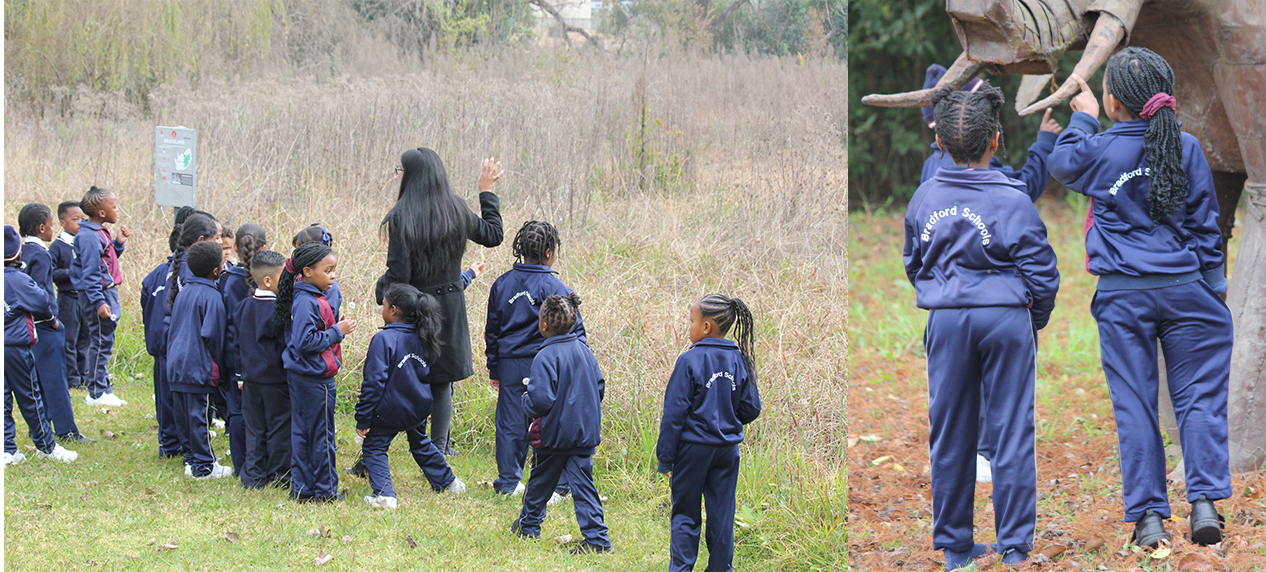
 

Youth conservation education South Africa learners visiting Endangered Wildlife Trust headquarters

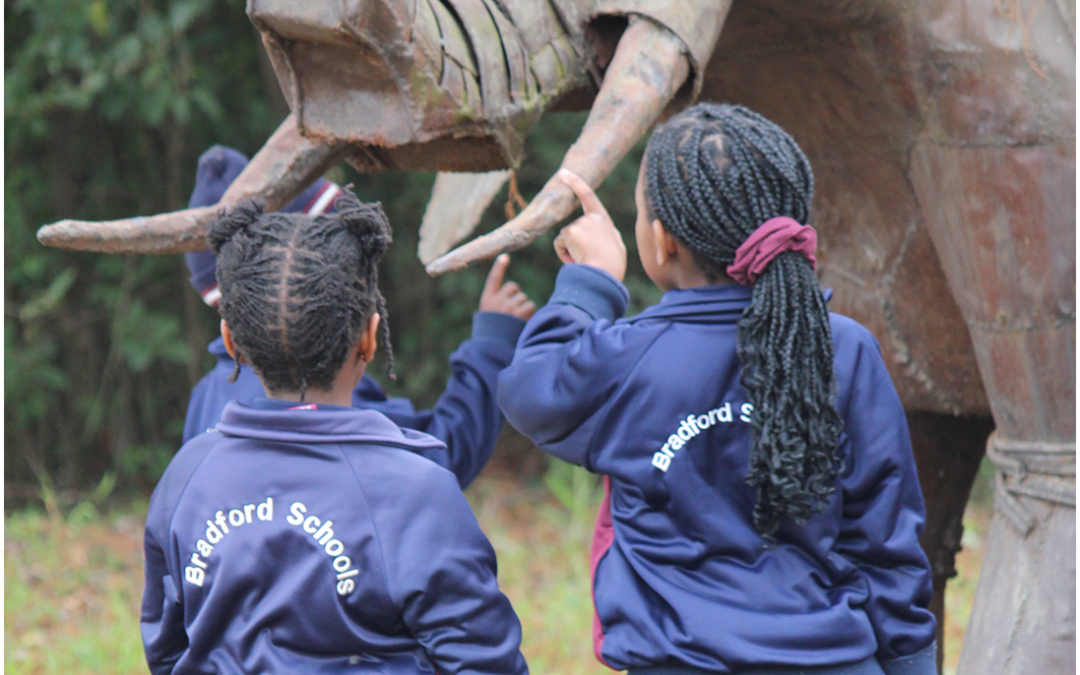
This Youth Day, I had the privilege of welcoming learners from our neighbouring Bradford School to the Endangered Wildlife Trust (EWT) headquarters for a morning of exploration, learning, and conservation. Despite the chilly winter mornings, the learners arrived bright-eyed, enthusiastic, and eager to discover what happens behind the scenes at a NPO conservation organisation.

As we toured the EWT’ s Conservation Campus, the children (grades 1-3) were introduced to the many people who contribute to conservation success, from scientists, field officers, and dog handlers to communications specialists, finance staff, managers, and executives. It was a valuable reminder that conservation is truly a team effort. During our discussion on wildlife and biodiversity, I posed a simple question: “What would happen if there were no animals in the world?” 

The responses were insightful and heartfelt. Learners spoke about the loss of bees and the impact on food production, such as no more Coco Pops for breakfast, while others reflected on the sadness of a world without their beloved pets. Their answers demonstrated a remarkable understanding of how deeply connected people and nature are. The excitement continued with an animal charades game, a sensory nature walk through our urban conservation campus exploring the various biomes of South Africa, and a visit to the river and wetlands. Along the way, learners whispered into the Great Elephant’s ear, sharing promises to protect nature and care for the environment.

One of the highlights was a conservation K9 demonstration by Cliantha Kay and Keisha, a six-year-old Belgian Malinois, who amazed the learners with her ability to detect pangolin scales. As the learners departed with certificates, gifts, and plenty of hugs, I was reminded that the future of conservation begins at the grassroots level. South Africa’s youth are often encouraged to become influencers, entrepreneurs, or athletes, but perhaps some of our future conservationists were among these learners. Their curiosity, passion, and optimism are exactly what our sector needs to protect threatened species and ecosystems for generations to come.
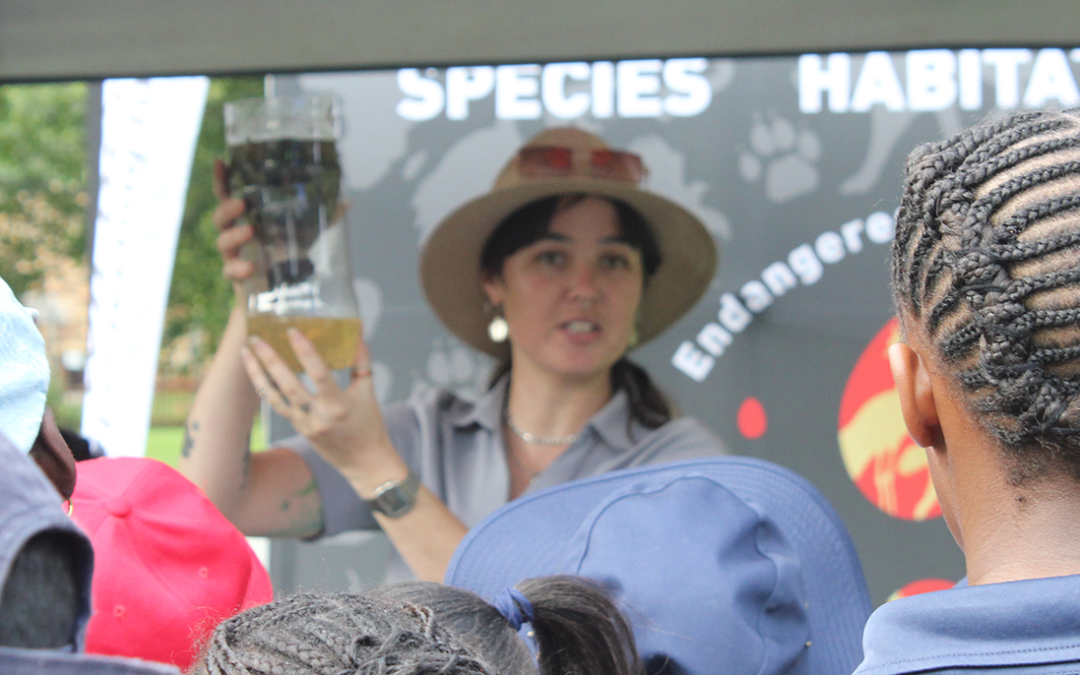
Children learn about water filters during exhibit at Joburg Zoo

Children learn about water filters during exhibit at Joburg Zoo

Children learn about water filters during exhibit at Joburg Zoo

By Eleanor Momberg, Communications Manager, and Jo Bert, Senior Graphic Designer, for the Endangered Wildlife Trust


water conservation education South Africa school children experiment Joburg Zoo

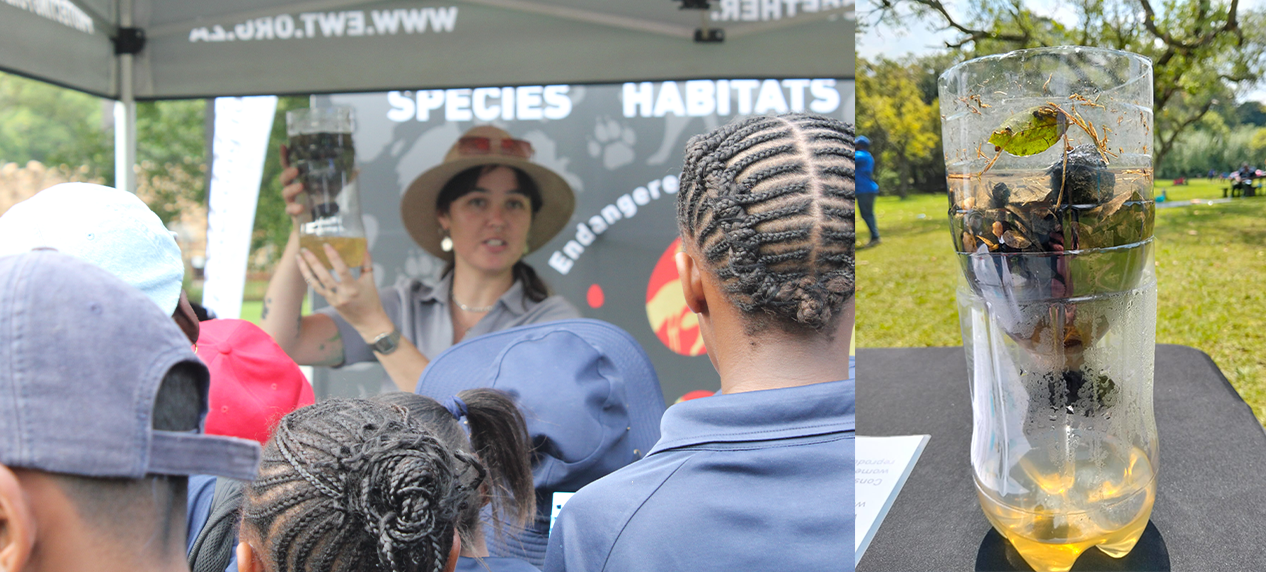
On 19 February hundreds of school children visited the Johannesburg Zoo as part of a Water Day awareness campaign.   The aim was to raise awareness about the importance of water in everyday life.  This included speaking to children about removing waste and alien species from rivers, dams and wetlands.  Some of the classes presented poems and showed off posters.  Many called out Water is Life during the formal programme.   The Endangered Wildlife Trust was among several exhibitors at the event.   Our exhibition comprised two experiments to show the children to physically demonstrate how water collected from a river or dam can be cleaned for safe human use.

What were the experiments?

The first experiment demonstrated a simple filtration system using a two-litre plastic bottle. The bottle was cut in half, with the top section inverted and placed upside down into the bottom. Inside, several layers of material were added, starting with a layer of cloth and cotton wool at the base, followed by fine sand, charcoal, coarse sand, and finally small rocks at the top. When dirty water was poured through the system, these layers filtered out larger contaminants such as leaves, debris, and insects.

While the filtered water appeared significantly clearer, it was explained that it could still contain harmful bacteria, viruses, and other pathogens. Learners were therefore taught that this water would still need to be boiled before it is safe to drink. It was also noted that the water may retain a brownish colour due to natural substances released by plant material, similar to how tea leaves stain water, and that this does not necessarily mean the water is unsafe once properly treated.

DIY water filtration experiment learners South Africa

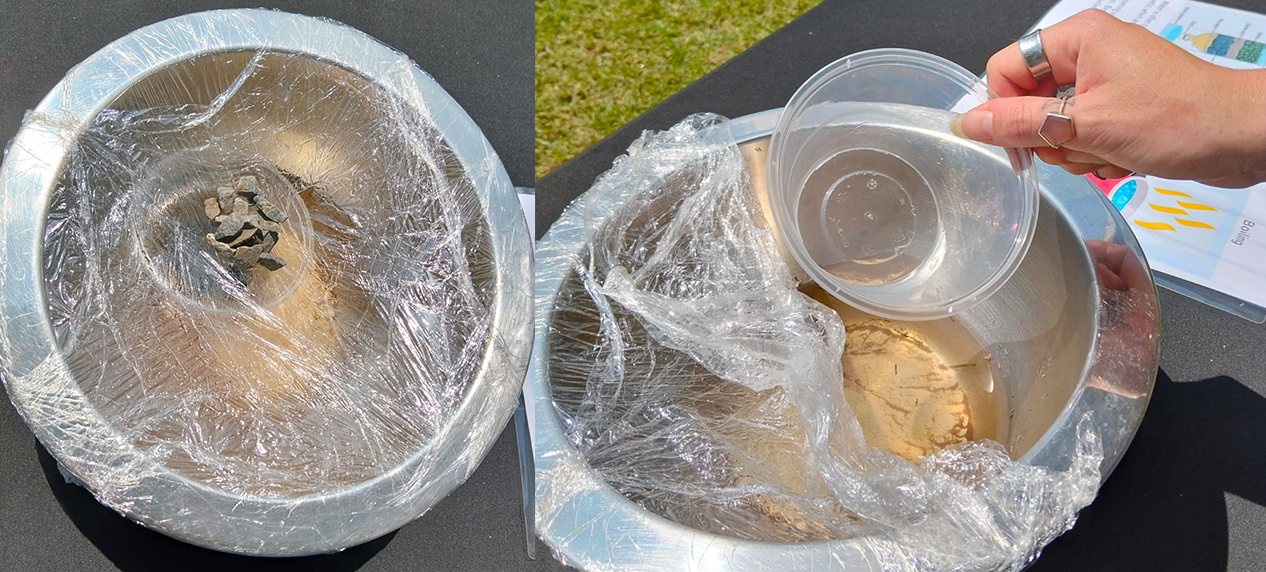
The second experiment illustrated a simple method of extracting clean water through evaporation and condensation. This setup consisted of a large bowl containing dirty or salt water, with a smaller container placed inside it. The bowl was then covered with cling wrap, with a small weight placed in the centre of the covering. As the water in the bowl warmed, it evaporated and condensed on the cling wrap. The weight caused the condensed water to collect and drip into the smaller container below.

This process effectively separated clean water from impurities such as salt, mud, and other contaminants, demonstrating a miniature version of the natural water cycle. Learners were shown how this method could be used to obtain fresh water in challenging conditions, although it was again recommended that the collected water be boiled as an added precaution before drinking.

water cycle demonstration condensation experiment students

Environmental Education and Butterflies – Start them Young

Environmental Education and Butterflies – Start them Young


Environmental Education and Butterflies – Start them Young

By Renier Basson (Senior Field Officer), Drylands Conservation Programme


When you first think of threatened or endangered species, you might immediately picture Rhinos, African Wild Dogs, Pangolins, or even some other charismatic bird, reptile, or amphibian. However, did you know that many insect species in South Africa are also threatened? Most of these insects are found in in the Western Cape, particularly in the Fynbos biome. Among these, butterfly and beetles receive far more attention than any other insect group. All 23 Cape stag beetle species (family Lucanidae, genus Colophon) are currently threatened, primarily due to climate change, habitat destruction, and illegal poaching – yes, even insects are poached!

Regarding butterflies, the most threatened species belong to the families Lycaenidae (coppers, opals and skollies) and Hesperiidae (skippers and rangers). These butterflies are all relatively small and inconspicuous, with tiny, isolated populations scattered throughout the landscape. Some threatened butterflies inhabit areas smaller than 100 square meters! Habitat destruction, mainly caused by alien invasive vegetation and landscape transformation, poses a significant threat to these species in the Western Cape.

To help conserve these butterflies, the Drylands Conservation Programme, in collaboration with Bionerds, has launched projects funded by Disney and Table Mountain Fund. These initiatives aim to protect six butterfly species in the Lycaeinidae family: the Moorreesburg Opal (Chrysoritis thysbe schloszae), Dickson’ s Copper (Chrysoritis dicksoni), Bearded Skolly (Thestor barbatus), Dickson’ s Skolly (Thestor dicksoni warren), Kaplan’ s Skolly (Thestor kaplani), and Strutt’ s Skolly (Thestor strutti). All of these are listed as Critically Endangered, and their populations are rapidly declining. Protecting our threatened butterflies requires safeguarding their habitats, which includes habitat protection activities such as clearing alien invasive vegetation. While physically protecting habitats is crucial, educating the public is equally important!

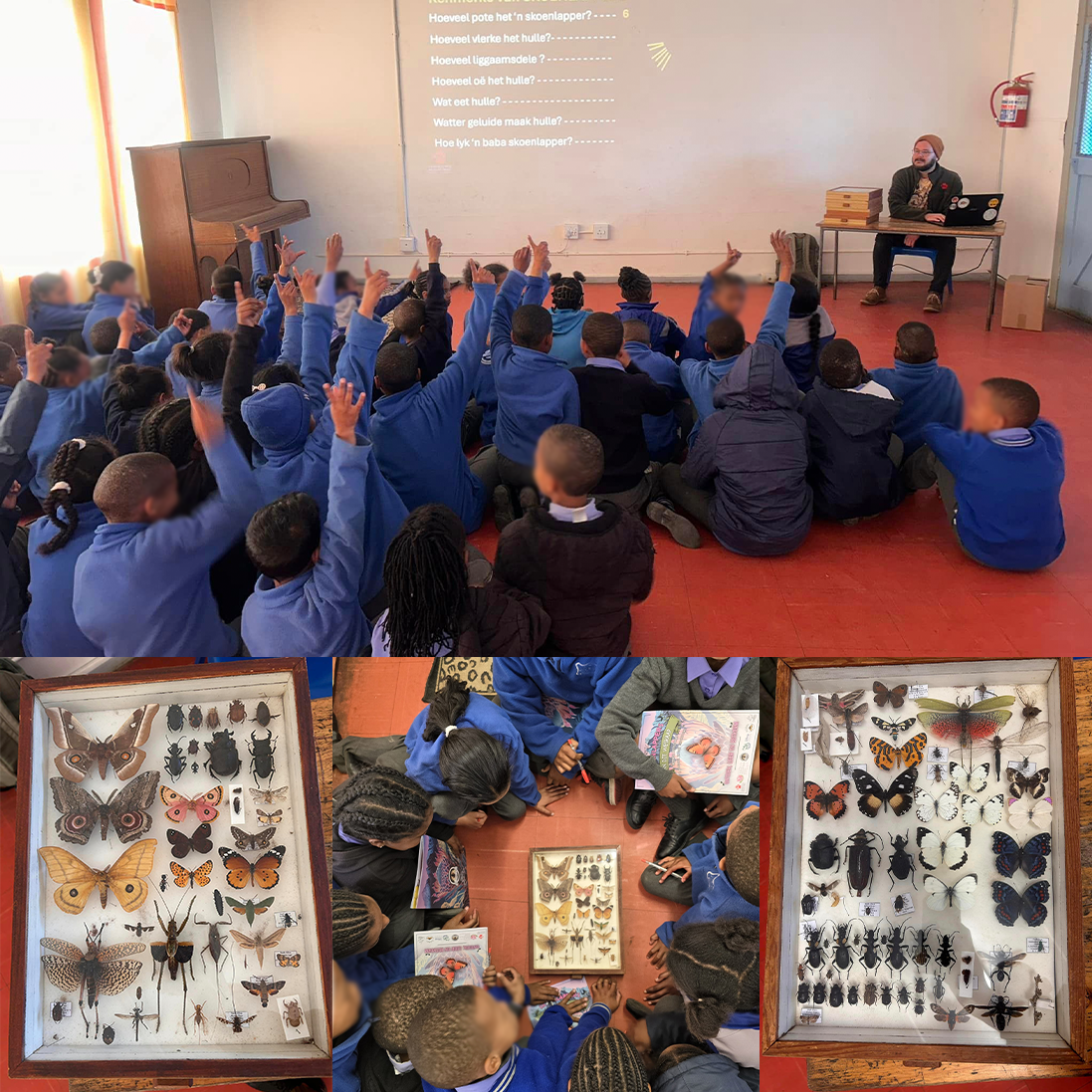
One key component of the project is environmental education aimed at schools near the six butterfly populations. Bionerds has created a colourful, interactive booklet titled “Threatened Butterflies of the Western Cape” for learners from grades 4 to 7. On September 19, Field Officer Renier Basson visited W.F. Loots Primary in Wolseley to present on the ecological importance of butterflies and the threats they face. The Strutt’ s Skolly, found in the area, was a focal point of the presentation. Renier began by explaining, “What is a butterfly?” covering topics from taxonomic classification and morphology to metamorphosis, pollination, and threats. The 51 learners from grades 5 and 6 were engaged and inquisitive, asking numerous questions.

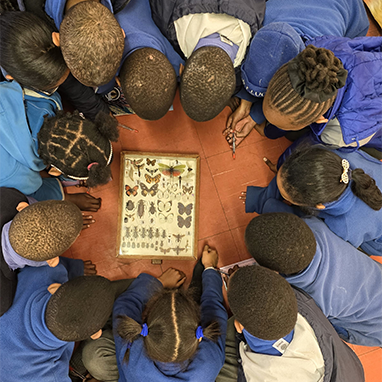
After the presentation, Renier handed out the booklets , and the students eagerly participated by reading important sections aloud. They also answered questions from the first few pages, which sparked curiousity and encouraged them to share their newfound insights. Questions included broad topics like “What do adult butterflies eat?” and “Where do butterflies lay their eggs?” To further engage the students, Renier showcased pinned and framed insects. With five display boxes filled with insects, the learners were divided into groups to maximise their time exploring each box. They had to identify butterflies in the boxes, which proved challenging as some moths closely resemble butterflies. The students were also encouraged to ask questions about the insects they observed. The excitement on their faces as they received new boxes was priceless!

Incorporating environmental education for children into all conservation programmes is essential. Children are curious, enthusiastic, and passionate about nature, making them open to listening about the natural world. Start them young!

A special thanks to our partner Bionerds. This project is made possible through Disney Conservation Fund and the Table Mountain Fund.