Help protect Africa's 

Saving species through habitat conservation: Sungazers

Saving species through habitat conservation: Sungazers

Saving species through habitat conservation: Sungazer Lizards

Bradley Gibbons, Senior Field Officer, ICF/EWT African Crane Conservation Programme

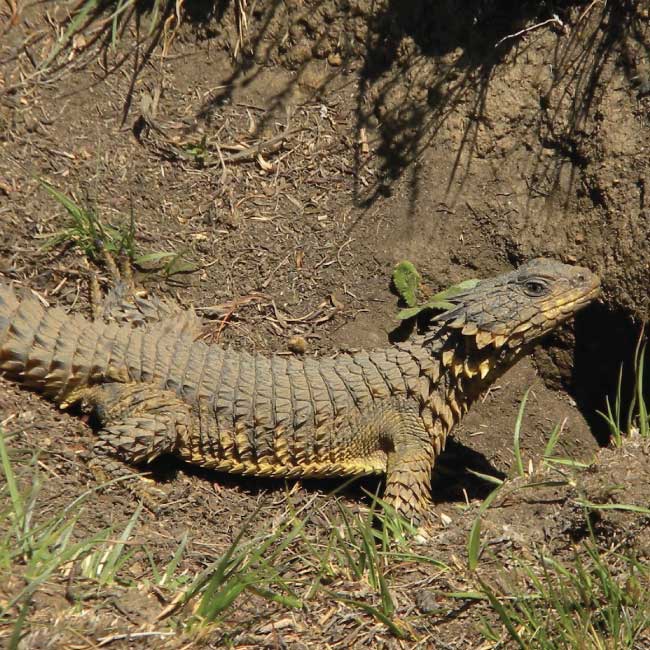
South Africa’ s Free State Province is thought to be home to 95% of the population of Sungazer Lizards (Smaug giganteus), with the remaining population found in Mpumalanga. Sungazers are endemic to South Africa, meaning they occur nowhere else in the world. They were named “Sungazers” because of their habit of standing in the sun in a unique posture with their front legs upright, underside not touching the ground, and faces angled toward the sky. They are given the name “Ouvolk” in Afrikaans, which means “old folk” in English. The theory is that they were given this name due to their dinosaur-like appearance.
Sungazer Lizard outside burrow

Sungazer Lizard outside burrow

Sungazers are threatened because their virgin grassland habitat is being rapidly transformed for agricultural expansion, mining activities, overgrazing, and the collection of individuals for the pet trade or local traditional use. They are found in a specific type of grassland, making them habitat specialists, and they do not translocate easily, with many individuals not surviving the process. Therefore, protecting the habitat that Sungazers depend on is paramount.

Currently, very few sites are protected to conserve Sungazers because approximately 99% of these lizards occur on privately-owned farms and properties. Sungazers are not rock-dependent and construct burrows underground – roughly 45 cm below the ground surface, extending up to 2 metres. The association with the short grass makes it easier for Sungazers to be on the lookout for predators. When danger approaches, their only defence is to run into their burrows. For this reason, they spend a lot of time in their burrows, but if you’ re lucky, you can catch these fascinating dragon-like lizards when they emerge to find food and show their reverence for the sun!

The Endangered Wildlife Trust is working to protect the habitat of the Sungazer Lizard and other threatened species through Biodiversity Stewardship and by reducing threats such as illegal wildlife trade. Visit  www.ewt.org.za to find out more about Sungazers and what you can do to help.

Case study: The Eeram Protected Environment

The Endangered Wildlife Trust (EWT) is currently busy with a project to proclaim the Eeram Protected Environment, and a gazette notice was published at the end of October 2022. This area is located between Warden and Harrismith in the Free State and is 7,398 hectares in size. It will be the first area proclaimed to conserve the Endangered Botha’ s Lark. Not only will this offer protection for this bird, but also for Sungazers and Blue Cranes.
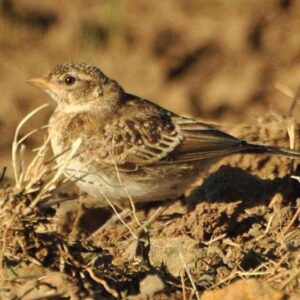
Botha’ s Lark. Photo credit: David Weaver

A protected environment is a form of habitat conservation on privately-owned properties and is an agreement made by a landowner to conserve the biodiversity in the area. The area is proclaimed through the National Environmental Management: Protected Areas Act – No 31 of 2004 (NEMPAA), allowing the farmer to continue farming in a manner that does not compromise the biodiversity and ecology in the declared area.

Grasslands are one of South Africa’ s most endangered biomes, with only 2.5% formally conserved and 60% permanently damaged. These grasslands are critical for the long-term provision of ecosystem services, and all grasslands play this role, even a small farm close to a city. The grassland biome is also in a water production zone and critical to water supply to cities in Gauteng and the Free State. This protected environment will be valuable for conserving threatened species in this important area, including the Sungazer Lizard.

This work is made possible by Eskom Holdings SOC Ltd, Ezemvelo KZN Wildlife, the Ford Wildlife Foundation, the HCI Foundation, Heather Henson, International Crane Foundation Conservation Impact Fund, the African Wildlife Initiative Rapid Action Grant co-funded by IUCN Save our Species (SOS) and the European Union, National Lotteries Commission, Millstream Farm, N3 Toll Concession, Paul L King, Rand Merchant Bank, and the Whitley Fund for Nature.
Secrets of the Soutpansberg

Secrets of the Soutpansberg

Secrets of the Soutpansberg

Cyrintha Joubert, the EWT’ s Soutpansberg Protected Area, Water Conservation Project Coordinator


There are 18 recognised centres of endemism in southern Africa – localised areas with high species diversity found nowhere else. The Soutpansberg Mountain Range is one of these and has the highest plant diversity of all these centres. Many of the Soutpansberg endemic species are rare and threatened. Around 3,000 vascular plant species occur in the 6,800 km² Soutpansberg Mountains. Six biomes are found in the mountains: forest, thicket, savannah, grassland, fynbos, and wetland.

Not only are the species living in the mountains of high conservation value, but they also hold cultural value and have medicinal properties that are sought-after for traditional healing practices and mainstream pharmaceuticals. The EWT strives to conserve these plants in collaboration with partners in the Soutpansberg, ensuring that those who depend on them for any purpose can legally access the species they need sustainably. Here are a few secrets of the Soutpansberg that you may come across should you be lucky enough to visit the area or hike the recently established Old Salt Trail.

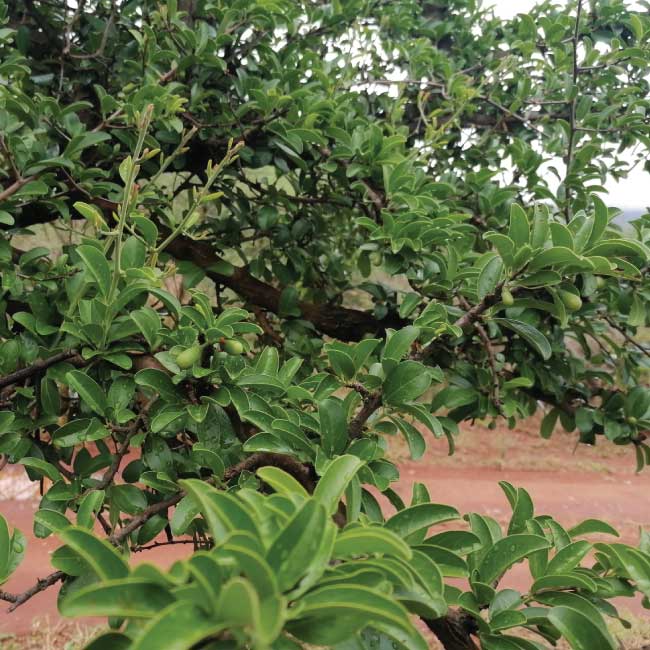
Monkey Orange tree with fruit

Monkey Orange

Strychnos spinosa

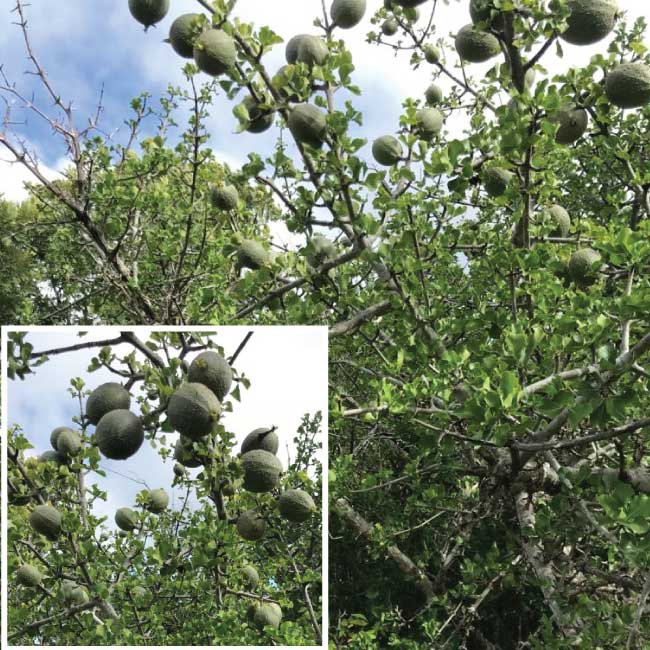
The genus name, Strychnos, is taken from the Greek word for deadly, which refers to poisonous alkaloids contained in the seed integuments. “Spinosa” refers to the spines. The poison strychnine is derived from an Asian species of Strychnos. The seeds should be avoided as they are poisonous or could have purgative effects. The fruit only appears after good rains and has a smooth, hard, yellow look when ripe. Inside the outer ‘shell’ is tightly packed seeds surrounded by a fleshy, edible covering. Most of this plant is used medicinally, with the roots and leaves used to treat certain snake bites. After the seeds have been removed, the dried fruits are used as musical instruments.

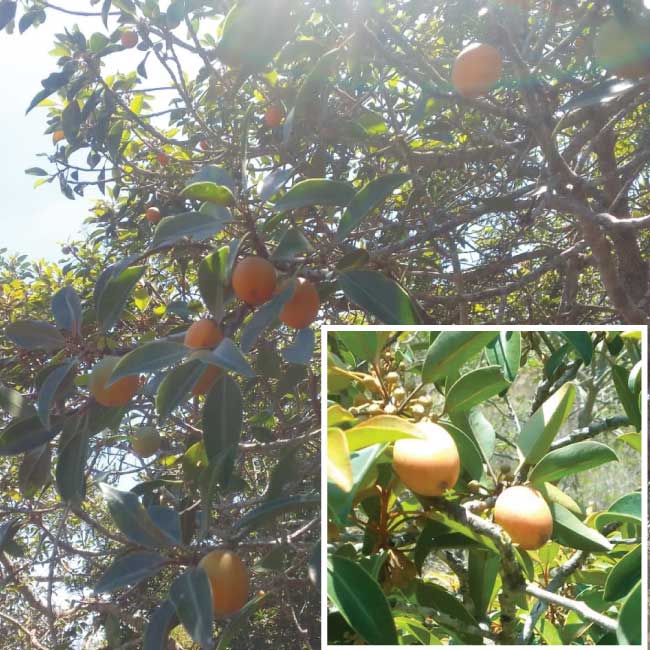
Sour Plum tree

Sour Plum or Monkey Plum

Ximenia caffra

A sour worm with no added sugar! This is an extremely versatile plant, and all parts are used. While the fruit can be eaten fresh, it tastes slightly sour and is often made into jams, desserts, or jellies. As the wood is hard, it is used for making pot handles, firewood, and even for construction purposes. The oil extraction from the seeds has various uses, from cosmetics to the softening of leather. The fruit is high in potassium, and the leaves and roots are used to treat coughs, body pains, and even malaria.

Stem Fruit Tree

Stem fruit

Englerophytum magalismontanum

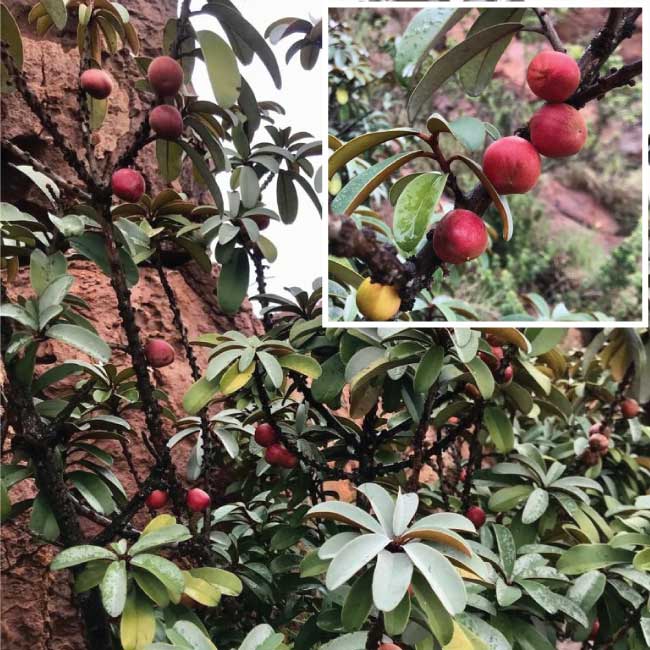
This small to medium-sized evergreen tree has delicious fruits which are extremely high in Vitamin C with a content of 40 mg per 100 g. The fruit is fleshy and contains sticky, milky latex when picked and the skin removed. The tree fruits from December to February. When ripe, the fruit is bright red and can be eaten fresh or used to make jam, wine, and even vinegar. These plants’ roots are also used medicinally to treat rheumatism and abdominal pain. They have beautiful silky golden hairs on the back of the leaves, and the tree has a silvery look from afar.

Stem Fruit Tree

Transvaal Red Milkwood

Mimusops zeyheri

The botanical name is derived from the Greek mimo, meaning ape, and ops, meaning resembling an ape. This might reference the flowers’ colour or the corolla’s shape. This tree is fairly popular amongst humans, birds, and various primates as it has tasty ripe yellow fruit with a high Vitamin C content.

Some more mobile endemic species to find in the Soutpansberg Mountains
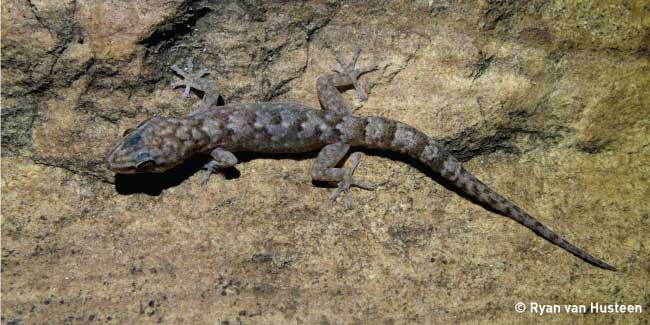
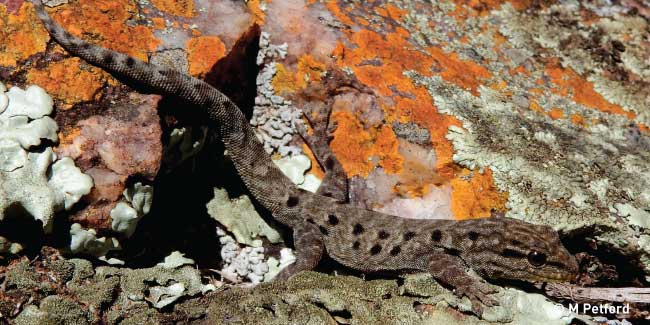
Endemic Pienaar's Flat Gecko

Pienaar's Flat Gecko

Afroedura pienaari

A widespread and abundant gecko that shelters in rock cracks and under loose barks in trees. At night, it forages on rocks, trees, vegetation, and the ground.

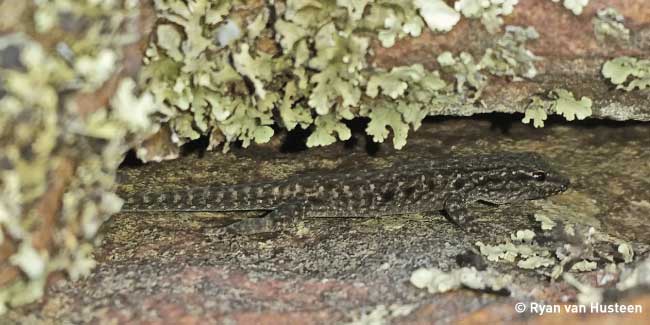
Endemic Cryptic Dwarf Gecko

Cryptic Dwarf Gecko

Lygodactylus incognitus

This shy gecko lives on trees and rocks and is restricted to the higher altitudes in the mist belt.

Endemic Soutpansberg Dwarf Gecko

Soutpansberg Dwarf Gecko

Lygodactylus soutpansbergensis

A shy gecko that lives in the rocky areas throughout the Soutpansberg

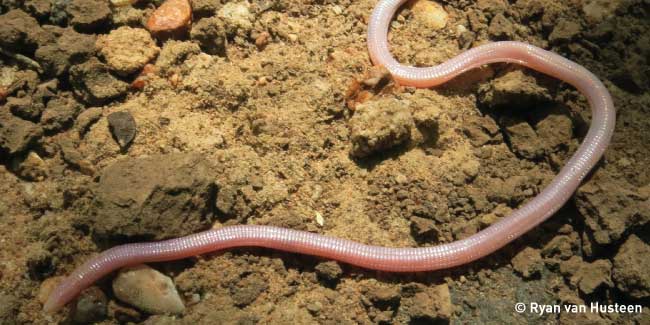
Endemic Soutpansberg Worm Lizard

Soutpansberg Worm Lizard

Chirindia langi occidentalis

This lizard is rarely encountered as it spends its life underground. It is locally common in certain areas and absent in others.

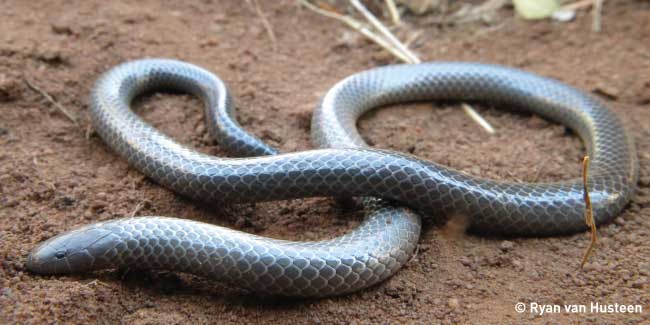
Endemic Soutpansberg Purple-glossed Snake

Soutpansberg Purple-glossed Snake

Amblyodipsas microphthalma ssp. nigra

A near-endemic to the Soutpansberg. These snakes spend most of their time underground and occasionally come to the surface to feed and disperse. They can be found in virtually any habitat, from the hot bushveld areas to the montane grassland on top of the Soutpansberg and throughout the mountain range. Limpopo’ s only near-endemic snake!

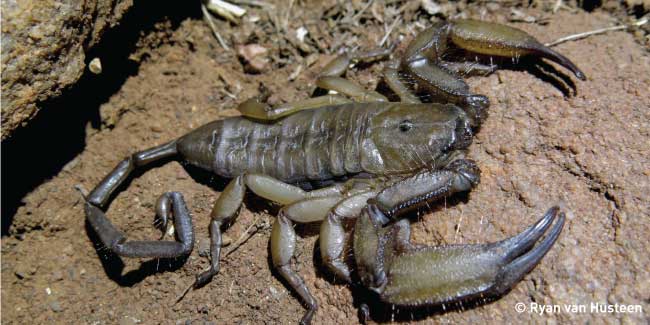
Endemic Soutpansberg-Hadogenes-scorpion

Soutpansberg Hadogenes Scorpion

Hadogenes soutpansbergensis

The only described endemic scorpion in the Soutpansberg. These large flattened scorpions prefer to live in rock cracks and are widespread and abundant in the Western Soutpansberg.

Endemic Soutpansberg Flat Lizard

Soutpansberg Flat Lizard

Platysaurus relictus

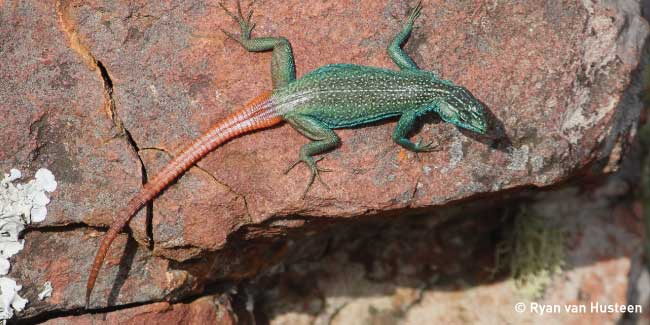
Endemic to the western Soutpansberg, these colourful lizards live on rocks in warm and hot areas. They live in small colonies and feed on insects, fruits, and plants.