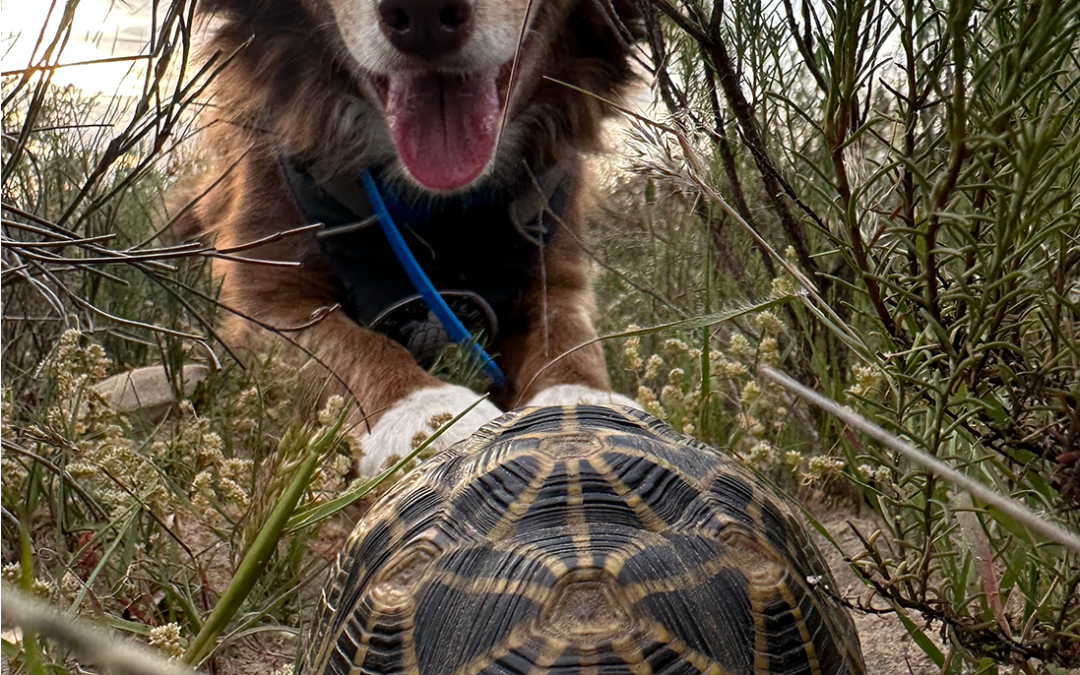
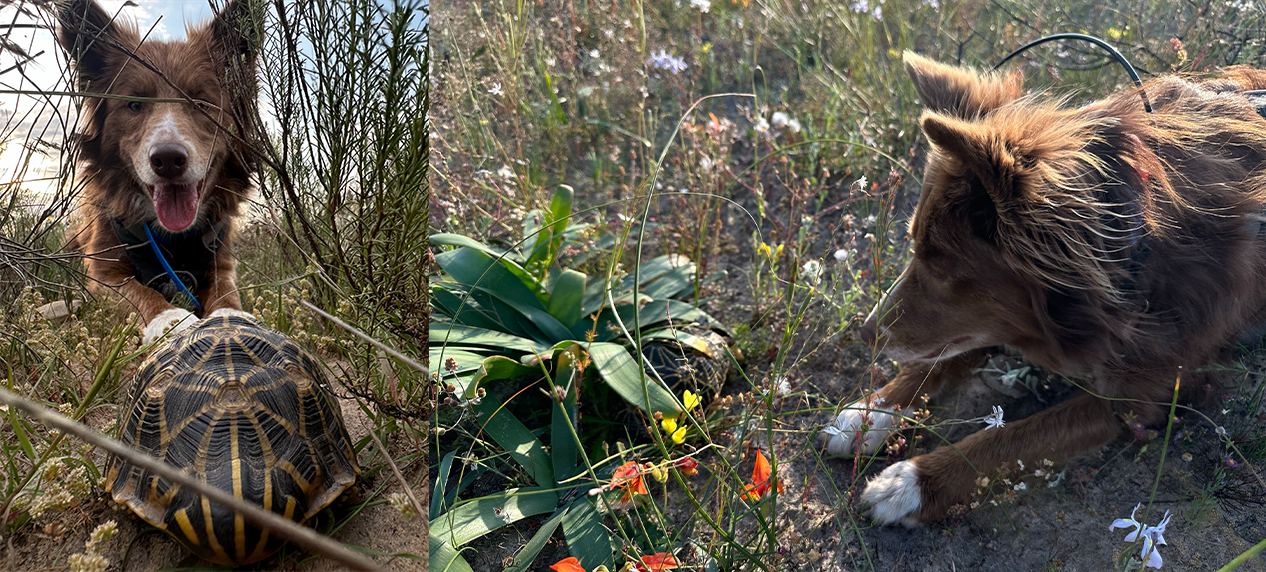
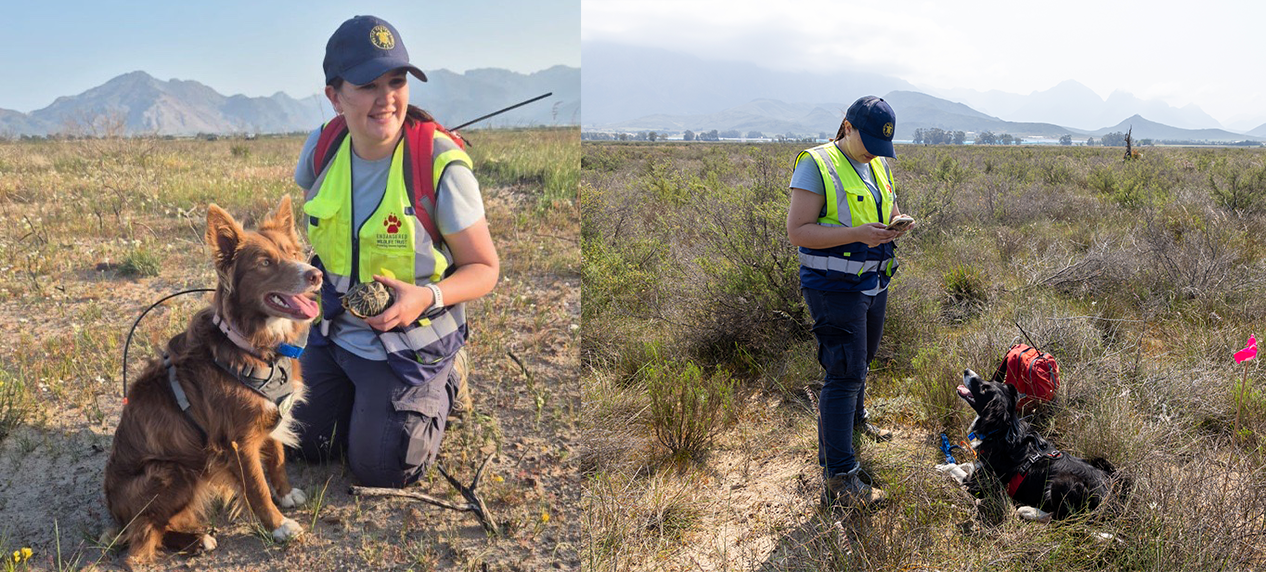
Note: Chelonians includes all tortoise, turtle, and terrapin species. For the purposes of this article, we will use the term “tortoises”.
South Africa is one of the most biodiversity-rich countries in the world and is home to no less than two of the world’ s most well-known botanical biodiversity hotspots, the Succulent Karoo and Fynbos Biomes. However, few people are aware that South Africa also holds the title as the tortoise capital of the world. The country is home to no less than 13 tortoise species, most of which are endemic.
Tortoises in one form or another have been around pretty much forever if you consider that the earliest known turtle lived 260 million years ago. This little lizard-like creature had a unique characteristic: its ribs curved backwards and were exceptionally thick, forming an armoured dome under its skin. Eunotosaurus was to become the ancestor of all tortoises, turtles and terrapins. Scientists put their secret to outliving even the dinosaurs, which disappeared approximately 65 million years ago, to their conservative morphology and time-tested adaptations.
Incredibly, despite their over 200-million-year track-record of survival, globally tortoises are struggling to persist in the modern world under mankind’ s relatively short but deadly reign. The statistics are damning, showing that over 60% of the 357 recognised species have either become extinct or are threatened. Approximately 52% of all assessed tortoise taxa have been classified as Critically Endangered, Endangered or Extinct.
What is driving this global spiral to extinction? Here there are no surprises. The litany of causes is familiar: habitat loss and importantly the degradation of remaining habitat, the impacts of climate change, illegal trade, and a few more locally specific ones, such as uncontrolled fires and electric fencing. However, a relatively new threat that has emerged globally is that of hyperpredation by airborne predators, primarily crows and ravens (part of a group collectively known as corvids).
A recent article by Patrick Moldowan, published in Herpetological Monographs (2023), chronicles the impact of corvid hyperpredation on tortoises globally. Unfortunately, this impact has been poorly documented in many countries, but the evidence is mounting rapidly to demonstrate that without interventions, we will see the extinction of many more tortoise species within our lifetime.
Crows are extremely intelligent, highly adaptable and will eat virtually anything. Crows and ravens have joined the ranks of what are known as subsidised species. Simply put, they are thriving globally on the wide selection of resources human activity has inadvertently provided for them. Their populations are increasing exponentially and expanding into new areas, where they become native invaders.
Hyperpredation occurs when subsidised species exert excessive pressure on prey populations. This effect has been particularly catastrophic for tortoises for several reasons. They are very long-lived but grow and mature slowly and reproduce at a slow rate. Smaller species, like the dwarf tortoises, produce only 1 – 3 eggs a year from the age of around twelve. For a population to remain stable, mature individuals need to reproduce for decades to produce enough offspring that survive to adulthood.
When it comes to crow predation, size matters, as in the case of dwarf tortoises where even adult tortoises are highly vulnerable to crow predation. Crows use their powerful bills to peck through the shells of young tortoises and can fly up with adult dwarf tortoises and drop them onto rocks to break their shells open. The loss of adult tortoises makes the recovery efforts of dwindling populations that much more challenging.
The Endangered Wildlife Trust (EWT), in partnership with Dwarf Tortoise Conservation (DTC) and the Turtle Conservancy (TC) launched a dwarf tortoise project two years ago to locate viable populations and implement conservation action for two species of dwarf tortoises in the Karoo.
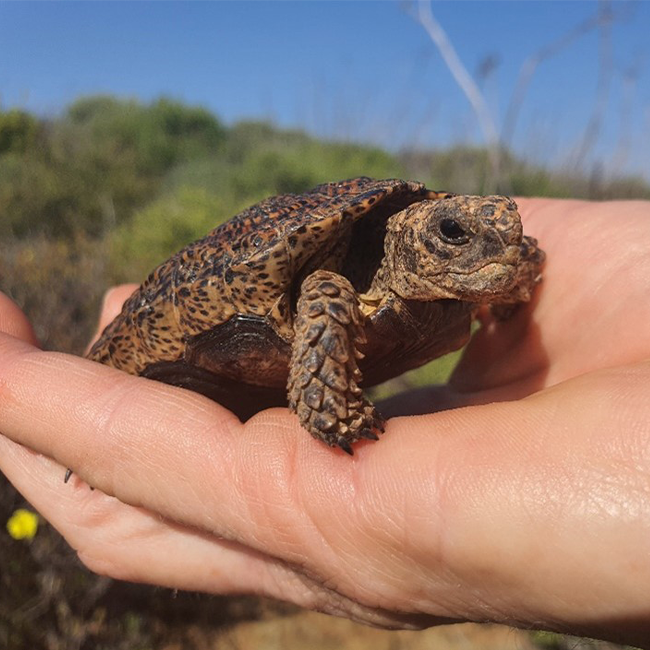
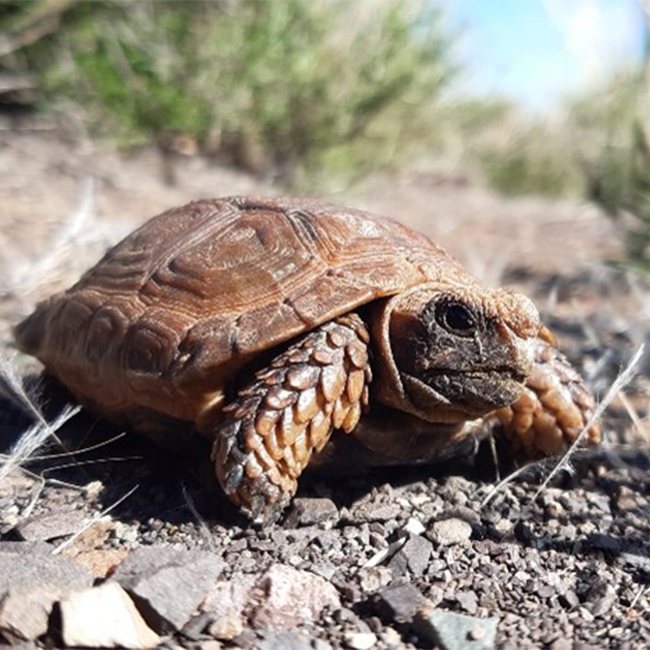
The Karoo is home to nine of the 13 tortoise species found in South Africa. There are five species of dwarf tortoise globally, four of which occur in the South African Karoo and one in Namibia. As their name implies, dwarf tortoises rank amongst the smallest of the tortoise species. In fact, the Speckled Dwarf Tortoise (Chersobius signatus), endemic to Namaqualand, is the world’ s smallest tortoise species, reaching a maximum length of about 10cm. Dwarf tortoise conservation champion and researcher Victor Loehr has spent most of his life unravelling the secret life of these diminutive reptiles, contributing much of what is known about them to the scientific world. Up to 20 years ago scientists regularly surveyed tortoise populations and during Victor’ s early work on Speckled Dwarf Tortoises, they were abundant. However, follow-up work at his study sites 10 years later and his most recent research on the Karoo Dwarf Tortoise (Chersobius boulengeri) has demonstrated an alarming decline in population numbers for both species.
Certainly, the EWT team has struggled to find a single viable population of the Karoo or the Speckled Dwarf Tortoise over the last two years of extensive surveys; these two species are the focus of the initial conservation project. Over 20 surveys have yielded depressingly few live animals; in most cases only shell fragments are to be found. During the most recent survey near Calvinia in April this year, the EWT team recorded the largest number of dead Speckled Dwarf Tortoises at a single location. A total of 45 carcasses were documented under and around a crow’ s nest in a dead tree, with another 10 carcasses recorded on the adjacent slope. Five more were recorded elsewhere on the property, bringing the total to 60 dead Speckled Dwarf Tortoises on one property, many of which were mature tortoises. In stark contrast the team found only two live tortoises. It is important to understand that although tortoises occur in some of South Africa’ s protected areas, this does not mean we can pack up and go home. If the causes of decline, including hyperpredation by crows, are not clearly understood and addressed, their survival in protected areas is not guaranteed and may have already been compromised.
Currently the only species of tortoise in South Africa with a dedicated conservation project is the Critically Endangered Geometric Tortoise (Psammobates geometricus). We urgently need to implement concerted conservation efforts for the other tortoise species, including all the dwarf tortoise species and other relatively small species such as the tent tortoises. The outlook for all these species is grim without specific conservation interventions. The EWT is collaborating closely with local and international tortoise experts, landowners, and provincial conservation authorities, in a race against time to come up with a strategy to protect South Africa’ s remaining dwarf tortoise populations. 20 Years of research in the Mohave Desert, aimed at understanding the raven-tortoise conflict, and to come up with innovative solutions, is helping inform the way forward in South Africa. What is clear though, is that time is running out fast and we cannot afford to be timid in our approach. Tough decisions are going to need to be made when it comes to protecting tortoises from crow predation and any further loss of habitat.
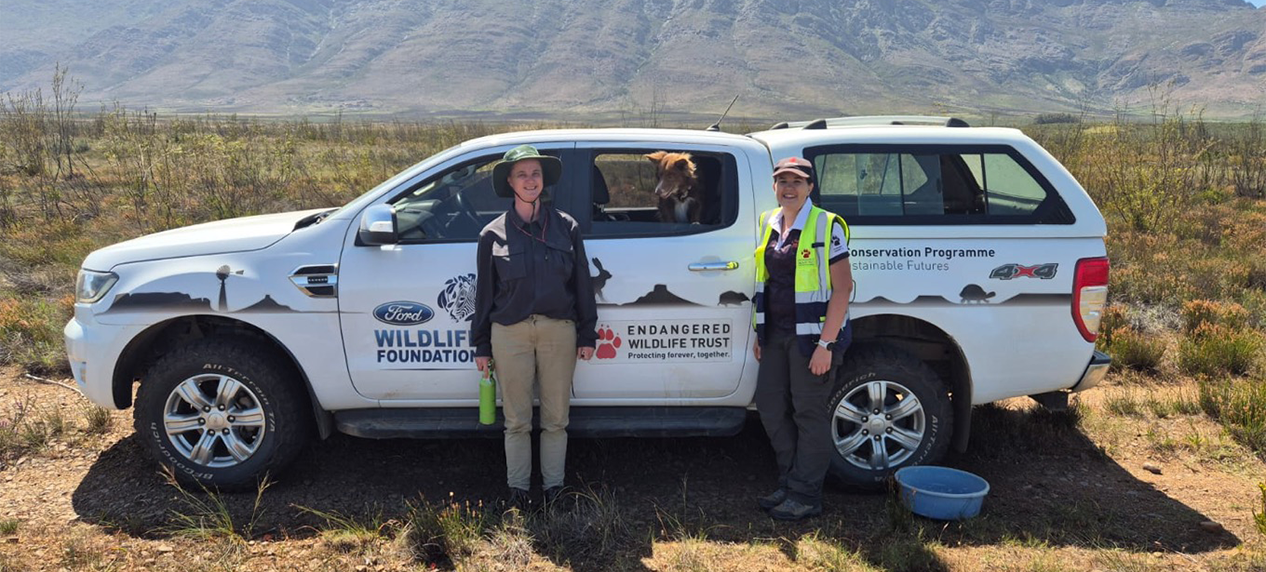
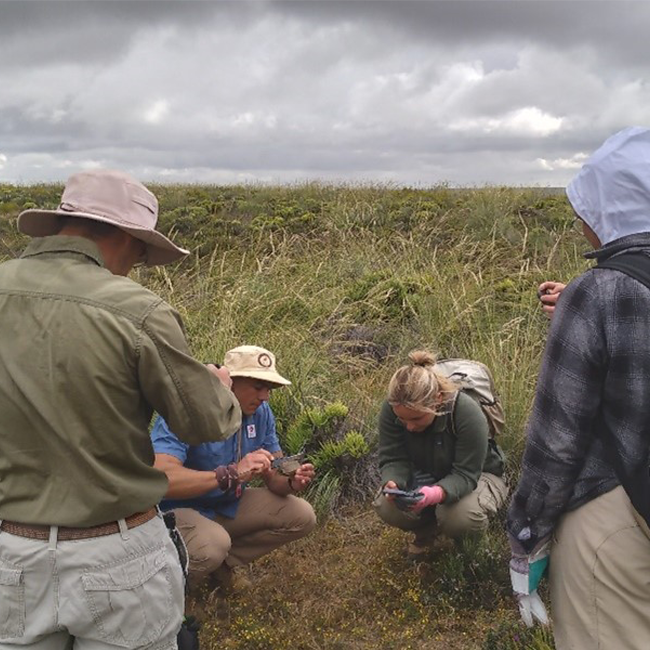
The EWT tortoise conservation work is supported by Turtle Conservancy, Dwarf Tortoise Conservation, Rainforest Trust and the IUCN NL. A special word of thanks to the tortoise survey volunteers, especially the Conservation Biology students from the University of Western Cape and UNISA, and the Ford Wildlife Foundation.
How you can help:
- Manage grazing responsibly.
- Include the ecology of sensitive species in your fire management plan.
- Deter crows; remove unused windmills and telephone poles.
- Raise electric strands at least 25cm above ground, switch power off during the day and install offset wire for larger tortoise spp.
- Drive with care, especially when in the veld.
- Combat wildlife crime by reporting suspicious persons.
- Verify people claiming to do research with the organization the claim to be from.
- Support local conservation initiatives.
All tortoises are protected species and listed under the Convention on International Trade in Endangered Species (CITES) as well as provincial legislation, such as the CapeNature Conservation ordinance of 1974 and National Environmental Management: Biodiversity Act 10 of 2004. It is illegal to collect any tortoise species in South Africa, and they may not be kept as pets without a permit.
-

Speckled dwarf tortoise Picture: JP le Roux
-

Karoo Padloper
-
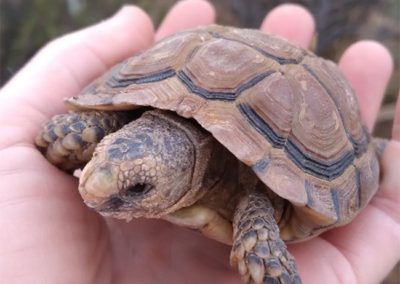
A rare find: A Greater Padloper
-
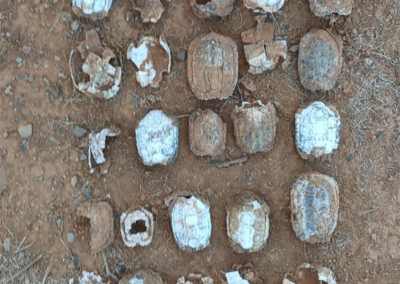
Speckled Dwarf Tortoise graveyard
-

UWC and Unisa students on a field trip to research tortoises in the Karoo