Help protect Africa's 

Searching ships for contraband

Searching ships for contraband

News from the field:

Searching ships for contraband

By Cliantha Kay, K9 Unit dog handler


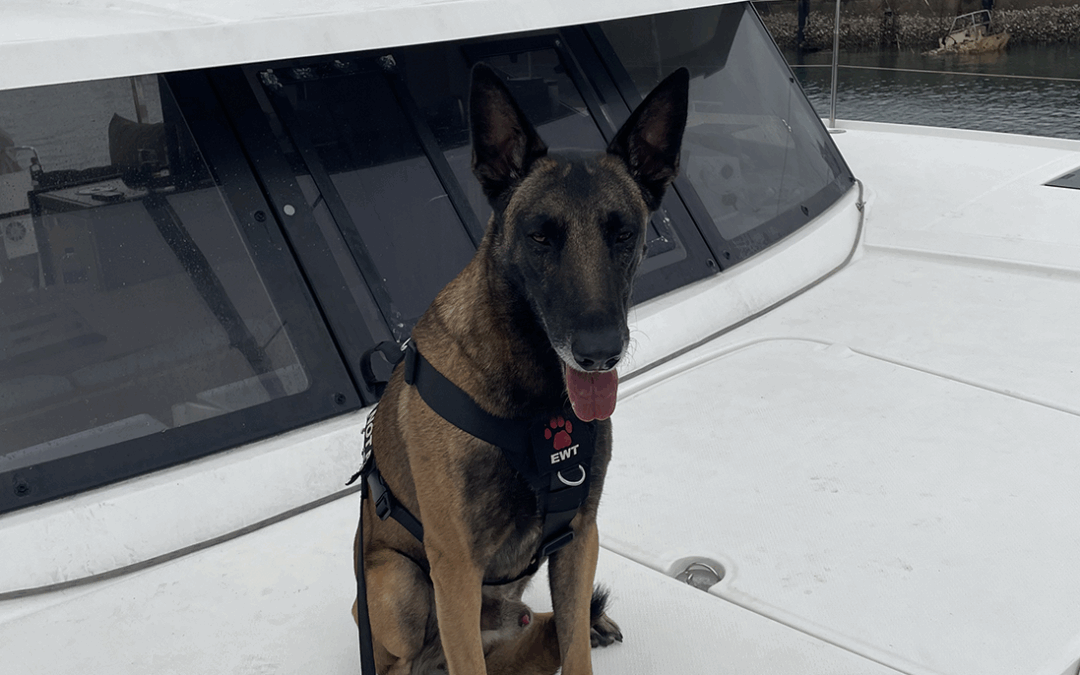
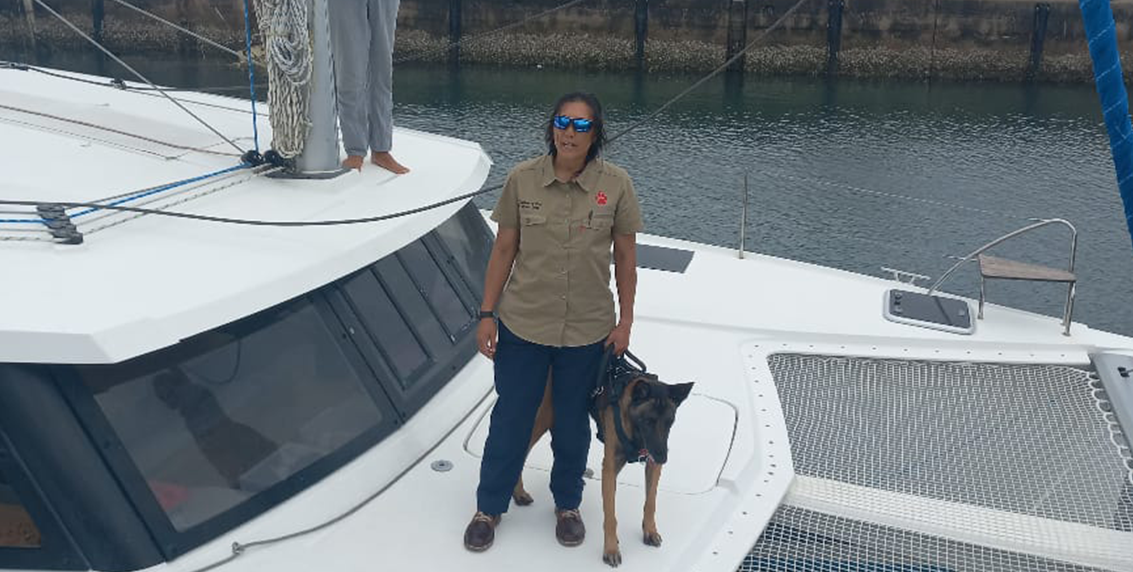
Mufassa the EWT K9 on ship inspection


I do not like heights, my knees get weak and wobbly when I approach a high structure.  But, my K9 companion, Mufassa, keeps me in check.   With my focus firmly on Mufassa we recently walked up the gangway to board a massive coal ship docked at South Africa’ s largest coal terminal.  

Mufassa had never been on a gangway, let alone a ship, and here he was taking it all in his stride, oozing the confidence needed for this job. He has set the bar high for his fellow EWT canines given that he is the first of our esteemed team to board a ship, or work as a detector of wildlife contraband in a harbour.

The EWT was on a joint operation with the Border Management Authority (BMA), South African Police Services (SAPS) and the Department of Forestry, Fisheries and the Environment (DFFE) to support an operation to search coal ships and private yachts in Richards Bay harbour.

True to his nature, Mufassa took the lead in boarding the ships we searched, with the SAPS dog following suite. They scanned the bridge and cabin crew’ s quarters for any endangered wildlife and related products, totaling over thirty rooms and four private yachts. I don’ t think the yachtsmen, all international visitors to South African waters who have been sailing around the world, were expecting to see detection dogs boarding their vessels. Despite the limited space on the yachts and in the confines of the ships, the numerous and narrow stairways, and the amount of people around them, the canines were in their element doing what they do best — sniffing out stuff.

EWT Conservation Canines show their worth during police operations

EWT Conservation Canines show their worth during police operations

EWT Conservation Canines show their worth during police operations

By Eleanor Momberg
 

K9 unit dogs supporting police operations in Western Cape

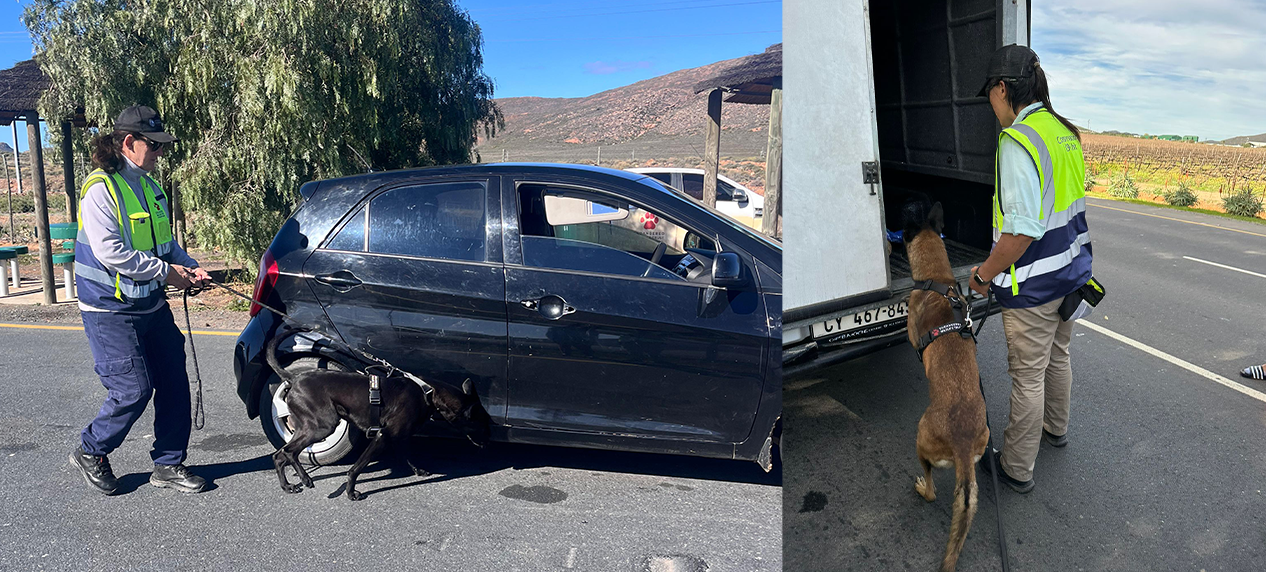
Reaper and Shadi (left) and Mufasa and Cat (right) searching vehicles at Roadblocks


The Endangered Wildlife Trust’ s Canine Conservation Unit recently showed their worth during a joint security operation in the Western and Northern Cape to address the illegal plant trade.

Between 24 June and 12 July, EWT dog handlers Shadi Henrico, Cliantha (known as Cat) Kay and Esther Mathew, accompanied by five working dogs—Ike, Reaper, Kisha, Mufasa and Delta—supported the SA Police Service, the Border Management Agency, provincial environmental departments and Green Scorpions in operations.

This involved travelling more than 7,000 kms in travel over the three-week period, during which they provided support at two vehicle checkpoints, five roadblocks and six vehicle patrols, searching more than 150 vehicles in areas such as Ashton, Touwsrivier, Kamieskroom and Garies.   During these roadblocks, they detected licensed firearms being transported by their owners, and a number of other plant species being transported across the provinces. They also search eight Courier Guy parcel depots and kiosks in Worcester, Swellendam, Robertson, Vredendal and Springbok.

The importance of efforts by the police, the Green Scorpions and provincial conservation bodies, supported by the EWT, cannot be overemphasised at a time when succulent and bulb plant poaching is on the increase in the Northern and Western Cape.   Saving succulent species from extinction is becoming more difficult, especially since many of the Conophytum species are hard to grow.

Information published by Traffic, the wildlife trade monitoring organisation, indicates that more than one million succulents have been illegally harvested in South Africa since 2019.  This represents “650 different species”  which have been seized by authorities.

The Succulent Karoo, spanning the Western, Eastern and Northern Cape, is the most diverse succulent hotspot in the world, and it is under significant threat from escalating poaching of endemic succulent plants that are prized by collectors in Asia and Europe.  It is home to more than 6,000 succulent species, of which around 40% are endemic.

These plants are small and inconspicuous and can be easily hidden in parcels and transported by road and air. Poachers are known to rely on existing postal networks, including private courier companies, to move poached plants across the country to ports of exit.

The EWT presently has five dogs trained and able to detect four of the 10 succulent plant species. But, they are able to indicate the presence of other Conophytum species targeted by poachers.

Plant poaching is often associated with other types of crime, including stock theft.  By remaining flexible and responsive, we were able to assist the SAPS with a variety of operations throughout the region, acting on the intel they received. Logistically, this meant a lot of packing up and settling dogs into new environments, something which our handlers did very well.

It must be mentioned that not all activity was linked to finding criminals.  During the first week in the Western Cape, the K9s received additional and refresher training to keep their noses primed for the detection of plant and animal species that are being illegally traded.

Besides a demonstration of their skills to detect tortoises and conophytums in McGregor,  Ike, Kisha, Mufasa, Reaper, and Delta refreshed their scent detection of conophytums, the succulent species most illegally traded in South Africa at present, during training at the Worcester Botanical Gardens.  The following day, the canines visited Exotic Animal World in the Western Cape to receive training on live Armadillo Girdled Lizards.  This was the first time Mufasa’ s detection skills on a live Armadillo Girdled Lizard were tested, impressing Cliantha, his handler.

At the Namaqua National Park, Shadi, with Reaper and Ike, and Cat, with Mufasa and Kisha, assisted at roadblocks along routes regularly used by plant and reptile poachers, and supported in vehicle searches inside the Park.

The EWT K9 Unit will continue working our dogs on the most relevant illegally harvested plant species to support the authorities in the best way possible. We aim to reduce poaching activities through the interception of illegally harvested plants, thereby disrupting the supply chain, assisting law enforcement agencies in their duties and ultimately bringing criminals to justice.
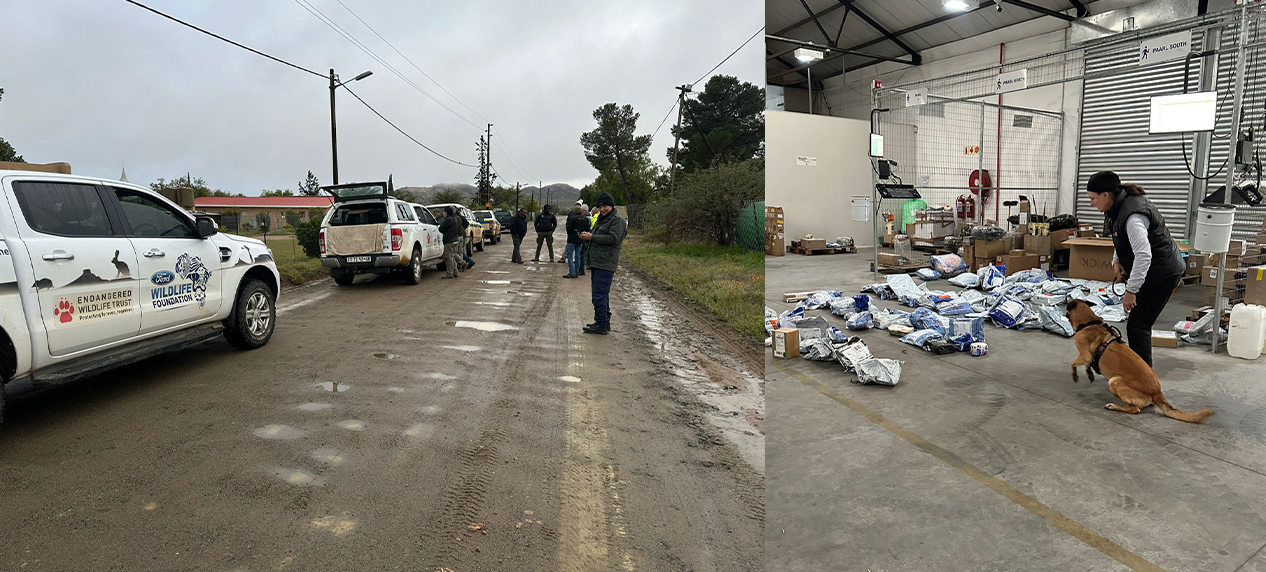
 

EWT Canine Conservation Unit assisting law enforcement in South Africa

Right: Kisha doing parcel searches
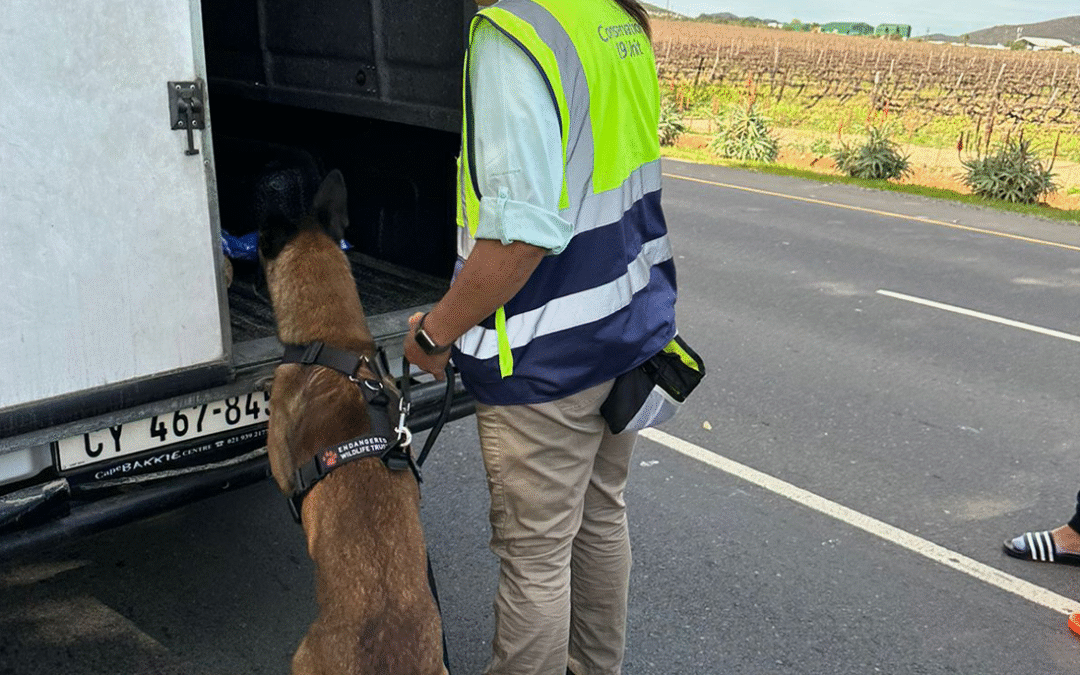
 

The EWT’ s Canine Conservation Unit (CCU) is a special project established to support the conservation efforts of the EWT through scent detection and tracking dog services. The unit is also available as a service provider to our conservation partners, private landowners and other stakeholders, where dogs can perform a variety of priority conservation-focused tasks. This is further supported by the EWT through handler training and certification. There are two types of work done by the EWT’ s K9 unit. Anti-poaching dogs are trained to track people, locate snares, find arms and ammunition, and help with the detection of evidence at crime scenes. Our detection dogs are capable of detecting various plant and animal samples, and thus have a wide range of possible conservation benefits and applications.  In addition to working to detect the illegal export of particularly wildlife products at O R Tambo International Airport (ORTIA), we are continuously exploring new roles for our conservation canines to ensure that the EWT remains recognised as an industry leader in the field of working dogs.

Sparking to save small vertebrates

Sparking to save small vertebrates


Sparking to save small vertebrates

By Darren Pietersen, EWT Medike Reserve Manager & Ecologist.

Fences are ubiquitous structures, especially in South Africa, but increasingly across Africa. They are used to keep wildlife in (or out, depending on the farmer) of a property. They demarcate land parcels, help to keep livestock and wildlife off of roads, prevent the spread of diseases, and are used for security.

There are also many types of fences – non-electrified fences, game fences, cattle fences, Bonnox fences and, of course, electrified fences.

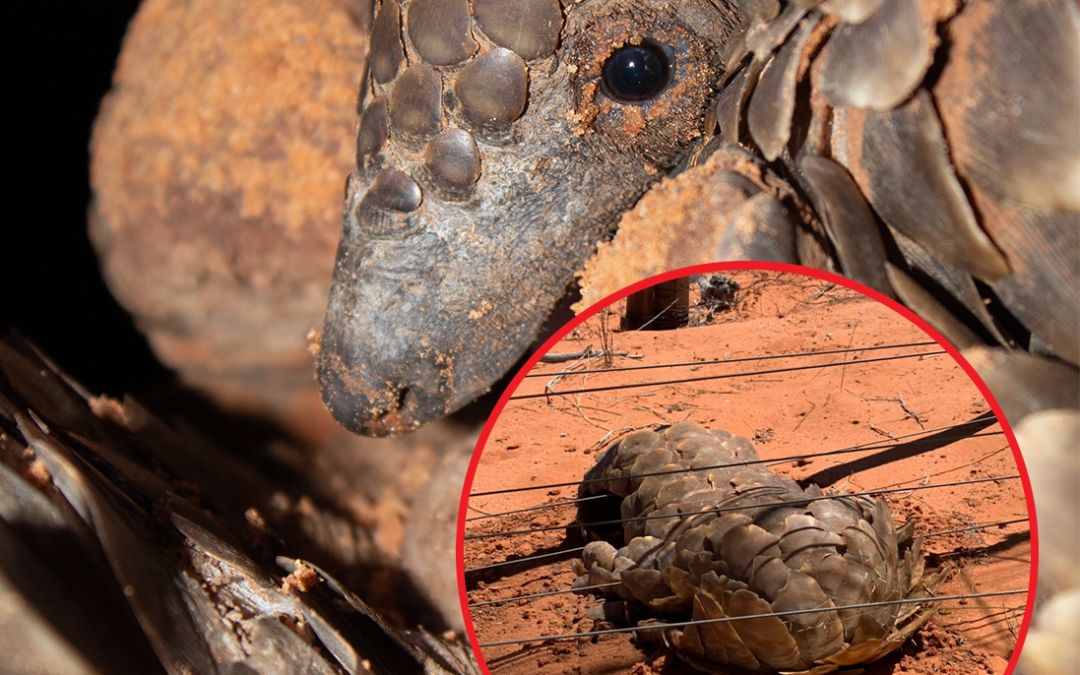
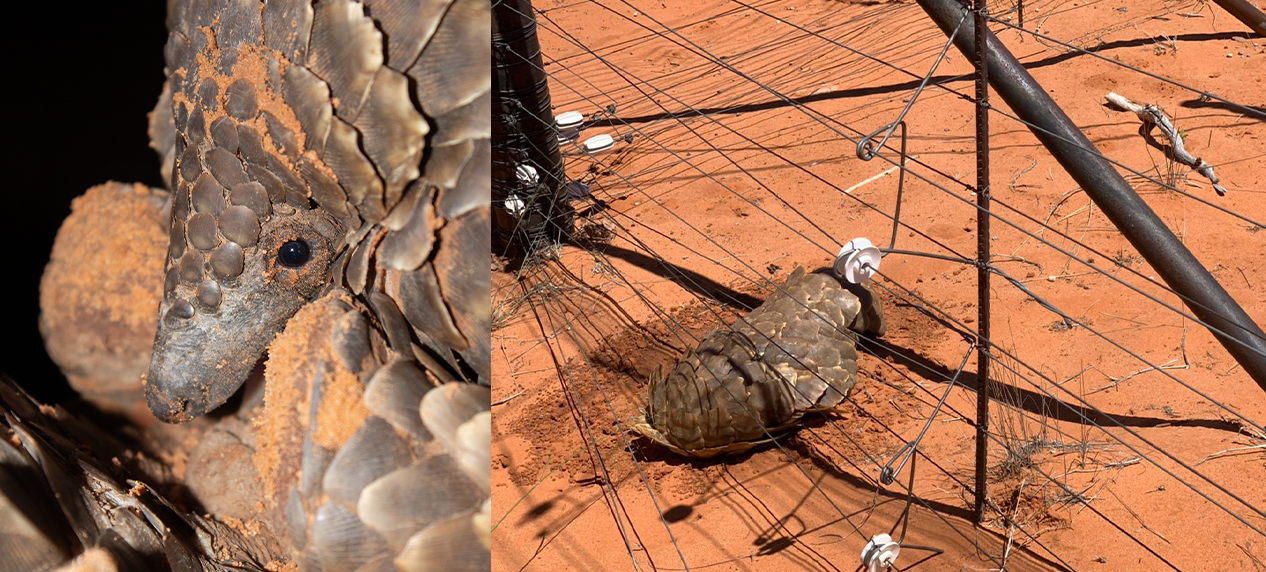
Electrified fences are mainly used around protected areas to keep wildlife in, thereby minimising human-wildlife conflict. They are also found around game farms to contain animals and keep intruders out. If constructed correctly, fences work really well for their intended purpose. But, there is also a dark side to electrified fences – they are silent killers.

While working for the Endangered Wildlife Trust during his studies Wits University in the mid-2000’ s, Andrew Beck examined the impact of electrified fences on wildlife across South Africa. Andrew estimated that in the region of a whopping 30,000 reptiles, predominantly tortoises, are killed on electrified fences in South Africa annually. An earlier study, and several subsequent studies, have similarly highlighted the high toll taken on tortoises by electrified fences, although not quantifying the overall threat.

And it is not just tortoises that are bearing the brunt. It has been long known that pangolins are also affected by electrified fences, but it was not until 2016 that colleagues and I quantified this threat.

Based on available evidence, we estimated that in the region of 1,000 Temminck’ s Pangolins are killed by electrified game fences in South Africa annually. And that’ s just part of the story, given that there are an increasing number of livestock farmers fitting electrified strands to their fences in attempts to exclude Black-backed Jackal and Caracal from their farms. If we include the mortalities on these livestock fences as well, then around 2,000 Temminck’ s Pangolins are killed by electrified fences in South Africa alone every year. That is 20–40 times more Temminck’ s Pangolins killed on electrified fences than by trade in South Africa annually.

This is a serious conservation concern, because electrified fences have already resulted in the local population decreases and extinctions of tortoises (and perhaps pangolins) in some regions.

Yet the solution can be bizarrely simple – and cheap. Extensive fieldwork has indicated that by raising the lowest electrified strand to 300 mm above the ground (rather than the 250 mm or lower demanded by most provincial legislation), mortalities of all species can be reduced by up to 95%. Some large, well-established Big-5 reserves such as the Associated Private Nature Reserves raised their lowest electrified strands more than 10 years ago. And not a single pangolin or tortoise mortality has been recorded along these raised sections since. Just as importantly, they recorded no increase in predators or other animals leaving the reserve.

Most provinces have legislation governing the construction of electrified fences, and discussions need to be had with the relevant authorities to get this legislation amended where necessary. A further contributing factor is that the insurance industry apparently also has their own specifications for electrified fences, and if a fence does not meet their standards then a claim for any losses incurred will be denied.

Because one solution will rarely work in all situations, we have also undertaken extensive field trials with partners including Stafix, JVA, Pangolin.Africa, WESSA and The Kalahari Wildlife Project to design smart energisers that can prevent or reduce electrified fence mortalities. We produced two prototypes – a larger unit aimed at the wildlife industry and a smaller unit aimed at livestock farmers. In short, these energisers monitor the current on the electrified wires and have the ability to automatically switch off the current to specified wires for a pre-determined period of time, affording any trapped animal time to extricate itself from the fence. Although the initial results were positive and some farms reported no fence mortalities while running these units, other farmers commented that the system was too complicated, with the result that it was not maintained or used properly. However, the EWT believes that this system does have merit, and hopefully in time a workable, cost-effective version can be designed.

Changing the fence configuration could have inadvertent negative consequences, however. This could include large carnivores (Cheetah and African Wild Dog in particular) leaving reserves, resulting in human-wildlife conflict. There is no point in solving one problem just to create another one, and finding an effective solution that works for all species will require input from the wildlife and livestock industries, species specialists, conservationists, fence manufacturers and fence installers.

Overall, though, the evidence of the threat posed by fences remains and effective solutions are known. Because of this we are working to engage with all relevant role players to try and arrive at a workable solution to protect not only our megafauna and carnivores, but also our smaller species.


Wild Dogs rescued from snares

Wild Dogs rescued from snares


Wild Dogs rescued from snares

By Ronja Haring, field officer, Carnivore Conservation Programme


The dangers emanating from snaring for bushmeat and the importance of monitoring wildlife for threat mitigating was again highlighted during the most recent call-out by the EWT’ s Carnivore Conservation Programme’ s field officers.

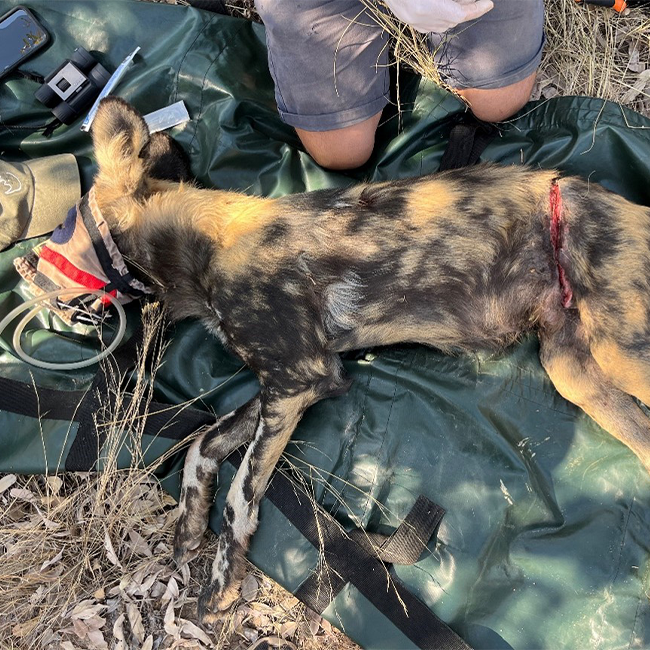
We were informed that a Wild Dog with a snare around its waist had been spotted outside the western boundary of the Kruger National Park. The dog is from one of the dispersal packs that we monitor closely and due to the GPS collar, we were able to track them down without delays.

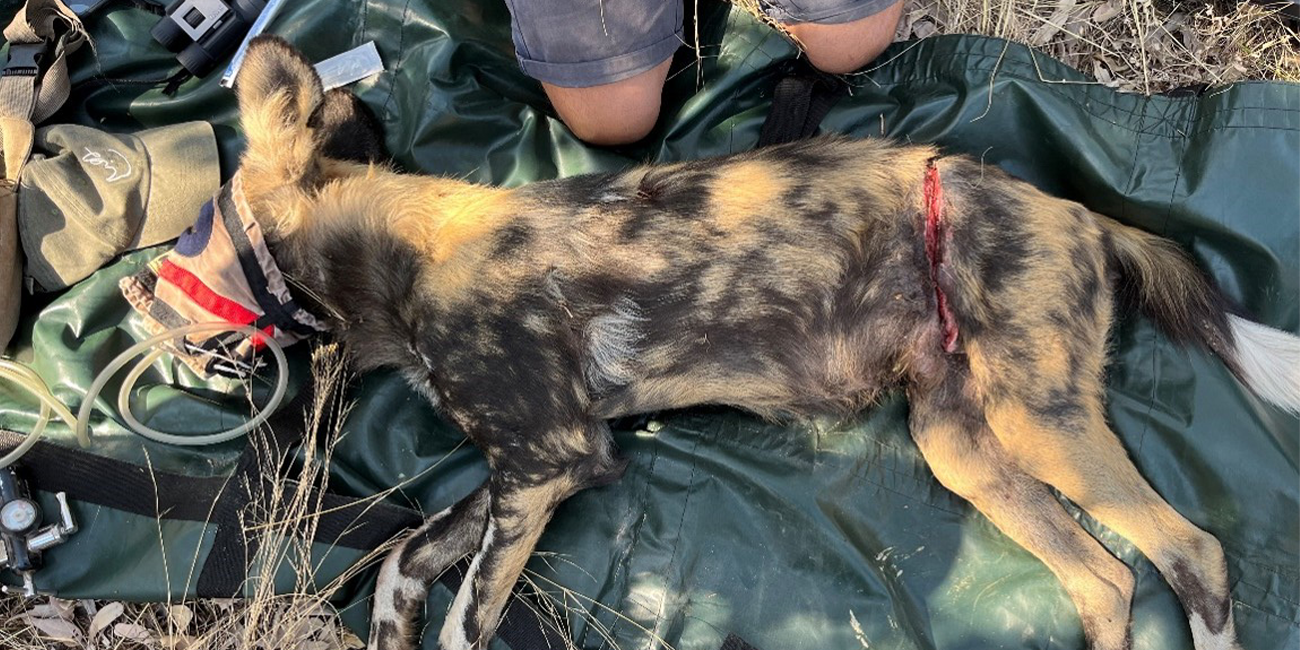
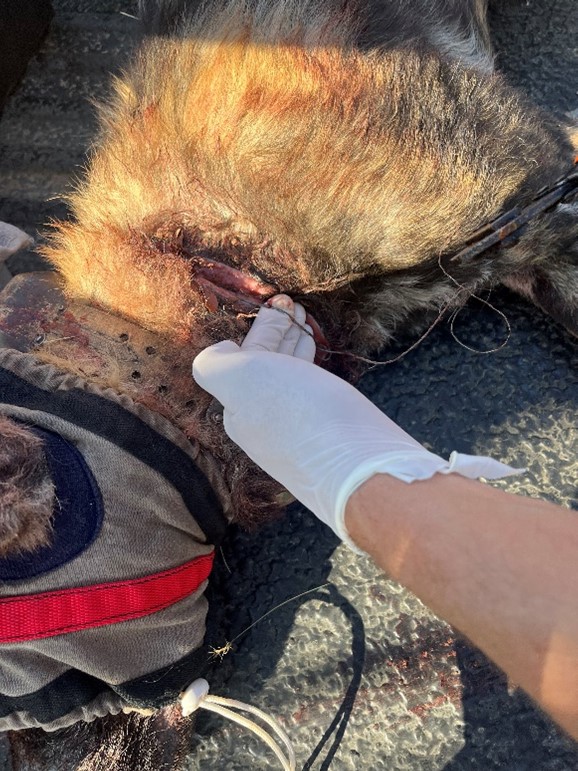
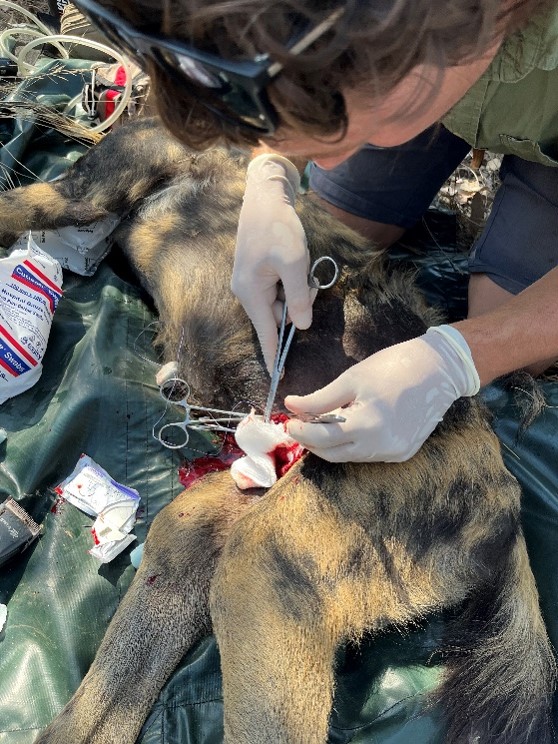
Fortunately, we could dart and free him of the snare. Although the snare cut deep and some stitches had to be put in place, no vital organs were injured.

Alarmingly though, we realised that he was not the only dog with a snare. We struggled to make out how many of the five dogs in this pack were affected as our window to act was closing. So we promised to return soon to treat the remaining dogs. 

Shortly after, we were back in the field to continue where we had left off. Once we located the dogs, we grabbed our binoculars and had a close look at each individual. It is easy to spot the big, slashing wounds. But in the beginning fresh wounds from snares are difficult to sport because they are sometimes so subtle, even though they rarely stay that way. Often, once the snare has broken through the skin, which serves as a natural protective barrier, severe damage is caused in a short time. 

We were soon facing the fact that this mission wouldn’ t be an easy one because three  more dogs had to be caught and treated. Strategically and with enormous patience, we managed to dart all three of them in one go.  

Considering that 4 of the 5 dogs were affected, the entire pack could have easily been wiped out. Dedicated to protecting our endangered wildlife, we will do everything in our power to mitigate these threats and respond to emergencies.

The dogs treated by a veterinarian in the veld are all recovering well.