Help protect Africa's 

Raptors in Decline: What One Researcher’s Roadside Observations Revealed

Raptors in Decline: What One Researcher’s Roadside Observations Revealed

Raptors in Decline: What One Researcher’ s Roadside Observations Revealed

By Ronelle Visagie, Birds of Prey Unit
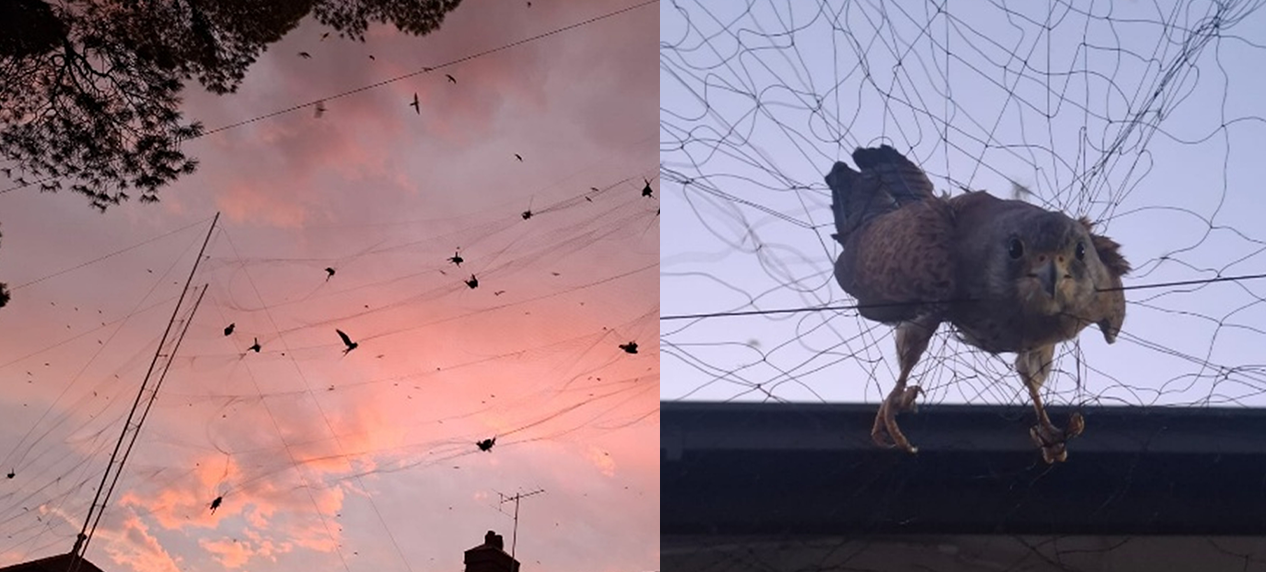
 

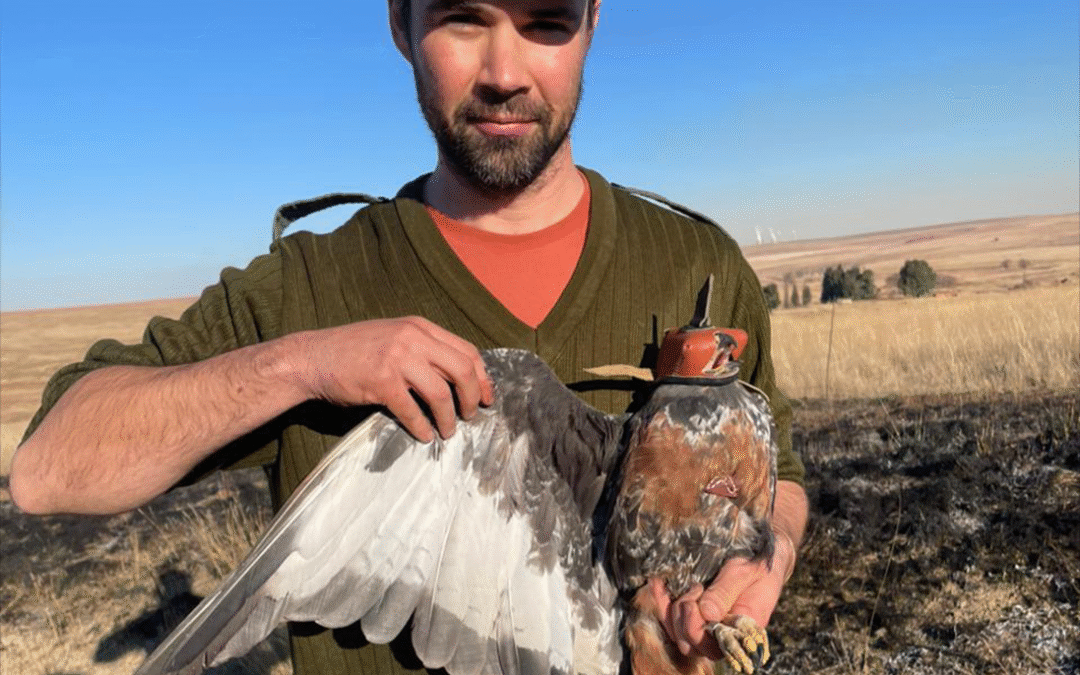
Left: Jackal Buzzards in Middelburg district. Right: Data tracking

Left: Jackal Buzzards in Middelburg district. Right: Data tracking

A study of long-term road surveys undertaken by Ronelle Visagie, field officer in the Birds of Prey Unit, has been referenced in a new research report revealing widespread declines in South Africa’ s raptors and other large birds.  Ronelle co-authored the report published by the University of Cape Town.

How did the survey come about?  Here is Ronelle’ s story:

I was recently asked to share the story behind a study I co-authored that revealed widespread declines in raptor numbers across South Africa. The data behind the research came from an unexpected source: the many kilometres I’ ve driven while working for the Endangered Wildlife Trust (EWT).

My work involves a lot of time on the road. I regularly travel long distances to investigate power line incidents involving birds, and in 2019 I began monitoring 400 vulture nests in the Kalahari. From my home to Askam—where that fieldwork begins—is about 600 km. Much of the monitoring takes place along the Kuruman and Molopo Rivers and near Van Zylsrus. I’ ve also spent years travelling through the region for the Vulture Safe Zone project.

Because I often drove the same long routes, I started looking for something productive to do while travelling. I realised that I could record the raptors I saw along the roads. Using the CyberTracker app on my phone, I began logging every bird of prey I encountered. The system is simple and effective: it allows you to record the species, age class and behaviour of each bird, while automatically storing the GPS coordinates.

From that point on, every work trip became an opportunity to collect data. Whenever I drove anywhere, I recorded the raptors I saw along the way. I also noted roadkills, which can provide insight into wildlife populations and threats. Interestingly, I’ ve noticed that roadkills seem to have decreased over time, possibly because people increasingly collect them for food.

Over the years, the kilometres added up. Between 2009 and 2025, I drove over 500,000 km for my work with the EWT. Along the way, I built up a large dataset of roadside raptor observations.

A few years ago, I presented this dataset at the EWT’ s Birds of Prey Conference in Swadini, Limpopo. In the audience was Assistant Professor Arjun Amar from the University of Cape Town. After the talk, he approached me and asked whether one of his students, Santiago Zuluaga, could analyse the data and develop it into a scientific paper.
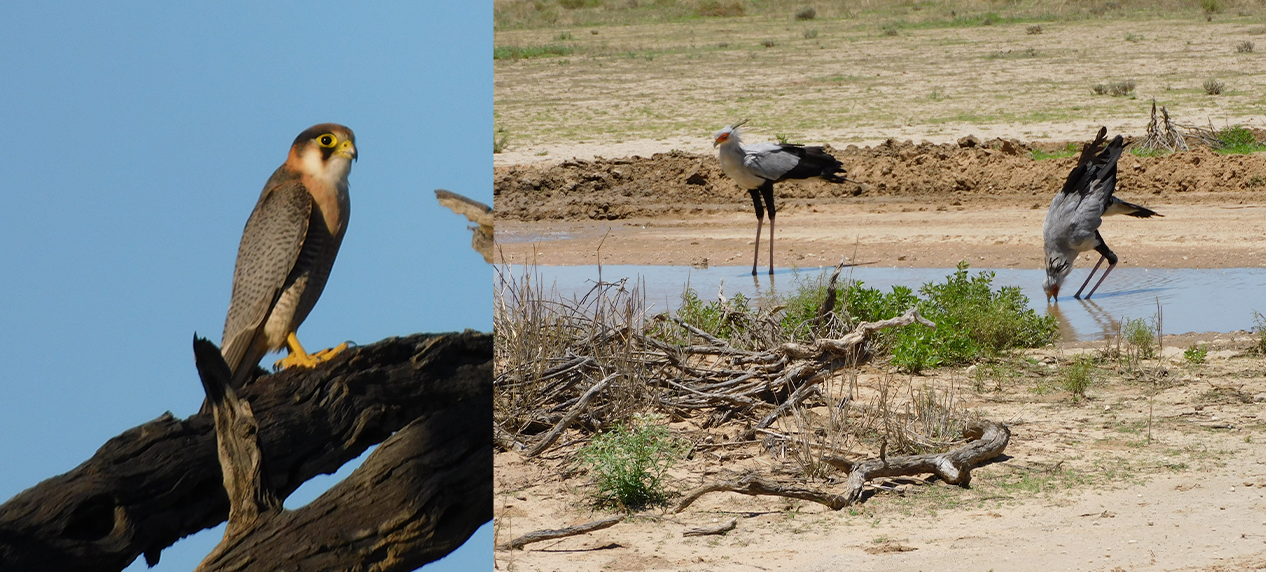
Red-necked Falcon in KNP and Secretary birds drinking water in the road

Left: Red-necked Falcon in KNP. Right: Secretary birds drinking water in the road

The results were sobering. The analysis showed that half of the raptor species I recorded had declined over the study period.

This matters because raptors play a critical role in ecosystems. They help regulate populations of animals such as rodents and dassies, preventing these species from becoming overly abundant. Vultures perform an equally essential service by removing carcasses from the landscape, helping to limit the spread of disease.

Some of the declines we observed are likely linked to human activities. In parts of the Northern Cape and Free State, certain raptors are persecuted because they occasionally catch chickens or lambs. Poisoning is also a growing threat, and unfortunately poisons are often easy to obtain. Owls appear to be particularly affected by this.

Addressing these challenges requires working with the people who share the landscape with these birds. When I travel through farming areas, I spend time talking with farmers to understand their concerns and look for ways to help reduce conflict. I also visit schools to talk to children about why raptors are important and the threats they face.

Studies like this help highlight the scale of the problem. Raptors are declining, and yet they provide vital services that keep ecosystems functioning. The more we understand these trends, the better we can work together to protect these remarkable birds.

The article can be accessed here: https://doi.org/10.1016/j.biocon.2026.111764.
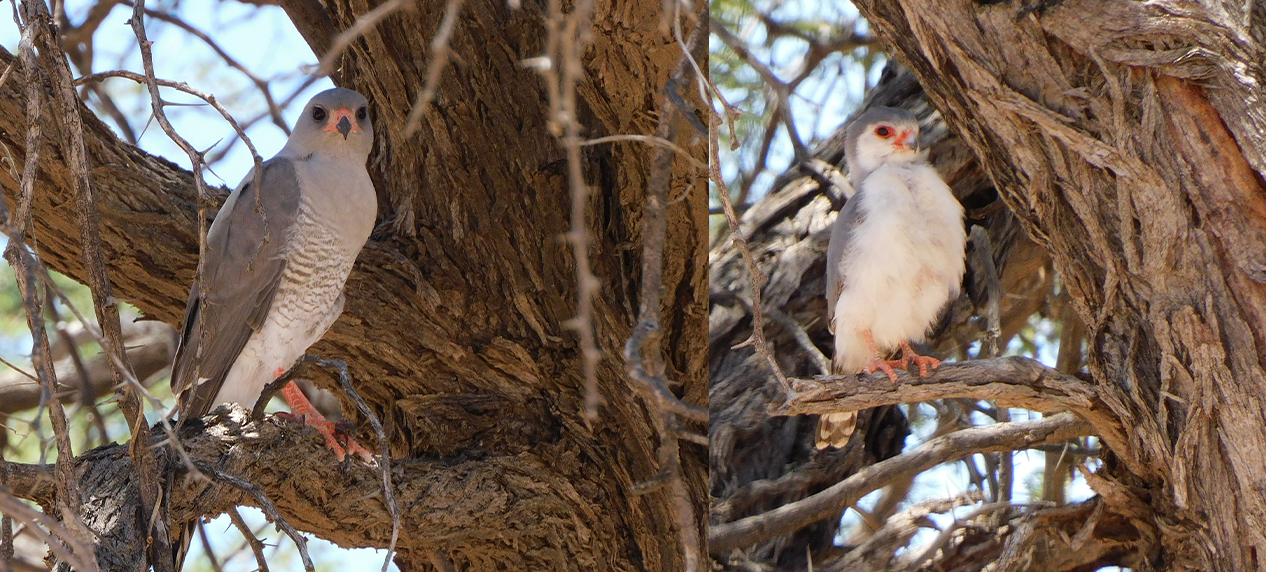
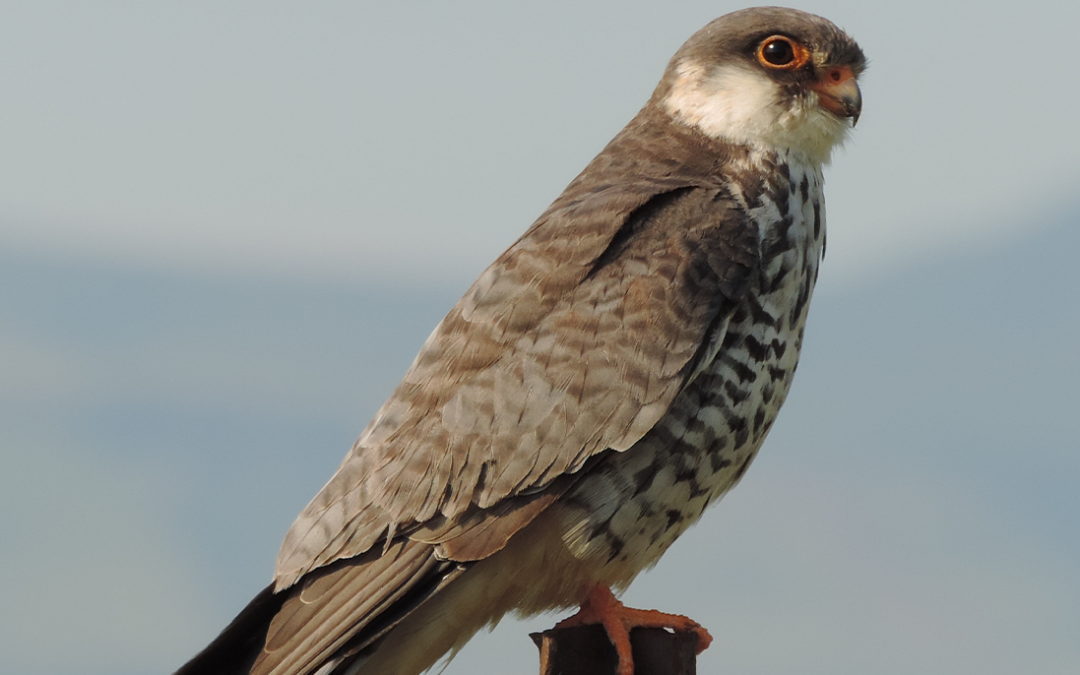
Left: Gabar Goshawk in KNP. Right: Pygmy Falcon in KNP

Left: Gabar Goshawk in KNP. Right: Pygmy Falcon in KNP
Breeding of Blue Cranes lower in intensive agricultural landscapes

Breeding of Blue Cranes lower in intensive agricultural landscapes

Breeding of Blue Cranes lower in intensive agricultural landscapes

By Eleanor Momberg


Blue Crane breeding Western Cape wheatlands habitat

Blue Cranes breed less successfully in the Western Cape Wheatlands than in their traditional range, highlighting a potential ecological trap for South Africa’ s national bird.

This is concerning for this stronghold of the Blue Crane (Grus paradisea) population, and might explain why numbers have been declining for the last decade,  a paper entitled Reduced Blue Crane Grus paradisea breeding productivity in intensive agricultural landscapes, states.

The research, published in the Journal of African Ornithology, Ostrich, compared the breeding of Blue Cranes in the Western Cape wheatlands in the Overberg and Swartland, Karoo and eastern grasslands of South Africa.  It found that the birds bred more frequently in the grasslands and the Karoo than in the Overberg or Swartland.

The Swartland pairs were found to fledge chicks half as often as Overberg, grasslands and Karoo pairs indicating that low breeding productivity and recruitment could explain the declining Blue Crane population in the Western Cape wheatlands and that the region has become “an ecological trap for the species”.

By engaging with landowners to reduce nest disturbances, promoting chick-safe water troughs to prevent drownings and reducing fence entanglements by improving fence designs could result in more efficient and successful breeding, the report states.

The findings, the report states, highlight the challenges and complexities with conserving the remaining biodiversity in transformed or novel landscapes where species, such as the Blue Crane, require sustained and intensive management to maintain their population.

In 2025, the Blue Crane was uplisted from Near Threatened to Vulnerable in the Red Data Book of Birds reflecting growing concern about the future of the species, and underscoring the critical role of the Overberg region in renewed efforts to protect the birds.

The uplisting states that the reasons behind the dramatic decline in the Overberg over the past 14 years included disturbance during the breeding season, collisions with power lines, entanglement in farm fencing and baling twine and poisoning – often from substances intended for other species. In addition, shifts in agricultural practices over the past decade, including minimum till and increased canola production, altered the landscape, reducing the availability of suitable feeding and breeding areas for cranes.

As a result of the uplisting, the Endangered Wildlife Trust (EWT), through its partnership with the International Crane Foundation (ICF), has increased its efforts to conserve the Blue Crane, with a strong focus on the Western Cape and Karoo.

Decades of successful conservation interventions yielded positive results in KwaZulu-Natal and the Northern Cape, thus the shift in attention to populations in the Western Cape.

Blue Cranes are endemic to South Africa, with a small population found in Namibia, making these the world’ s most range-restricted crane. There are less than 30,000 of these birds left in the world.

Efforts to safeguard the Blue Crane in the Western Cape include intensifying work with communities and farmers to restore habitats, and addressing threats posed by energy infrastructure.

This research in the Western Cape was made possible by support from Leiden Conservation Foundation & Hall Johnson Fellowship


Link to article: https://doi.org/10.2989/00306525.2025.2604223

** Christie A Craig, , Bradley K Gibbons, Tanya Smith, Glenn I Ramke and Peter G Ryan

Wings and Wind: Tracking Birds to Guide Safer Wind Energy Development in Mpumalanga

Wings and Wind: Tracking Birds to Guide Safer Wind Energy Development in Mpumalanga

Wings and Wind: Tracking Birds to Guide Safer Wind Energy Development in Mpumalanga

By Matt Pretorius, Project Manager Wildlife & Infrastructure
 

Mpumalanga Province is emerging as a key area for wind energy development in South Africa.

As the country accelerates its shift towards renewable energy and gradually moves away from coal, the demand for suitable locations to build new wind farms is growing rapidly. However, some of the areas with the best wind resources in Mpumalanga are also home to threatened bird species that are prone to collisions with wind turbines.

South Africa’ s energy system is under pressure. Many coal-fired power stations are old and due to be decommissioned, while past delays in the completion at large-scale power projects like Kusile and Medupi made it difficult to meet rising electricity demand. Although load-shedding has become less frequent, the need for alternative energy sources remains urgent. With other wind-rich areas reaching grid capacity, developers are now turning to Mpumalanga for new opportunities.

At the same time, conservationists have raised concerns about the impact of wind turbines on birds. Some species are particularly vulnerable to collisions with turbines, as highlighted in the recent ‘Summary of Bird Monitoring Reports from Operational Wind Energy Facilities in South Africa’ by BirdLife South Africa. Some of these species of conservation concern in Mpumalanga are endemic to the region and are listed in the 2025 Regional Red Data Book of Birds of South Africa, Lesotho and Kingdom of Eswatini (Red Data Book – BirdLife South Africa).

To address this issue, the Mpumalanga Department of Agriculture, Rural Development, Land and Environmental Affairs (DARDLEA) appointed the Endangered Wildlife Trust (EWT) in 2024 to undertake the Mpumalanga Bird Flyways Research Project. This collaborative initiative, led by DARDLEA, also involves the Mpumalanga Tourism and Parks Agency (MTPA) and Birdlife South Africa (BLSA). The aim of the partnership is to gather essential data on bird movements to understand the flyways and flight patterns of birds of conservation concern in Mpumalanga in order to ensure informed decision making with regards to renewable energy projects in the province—in particular wind energy facilities.

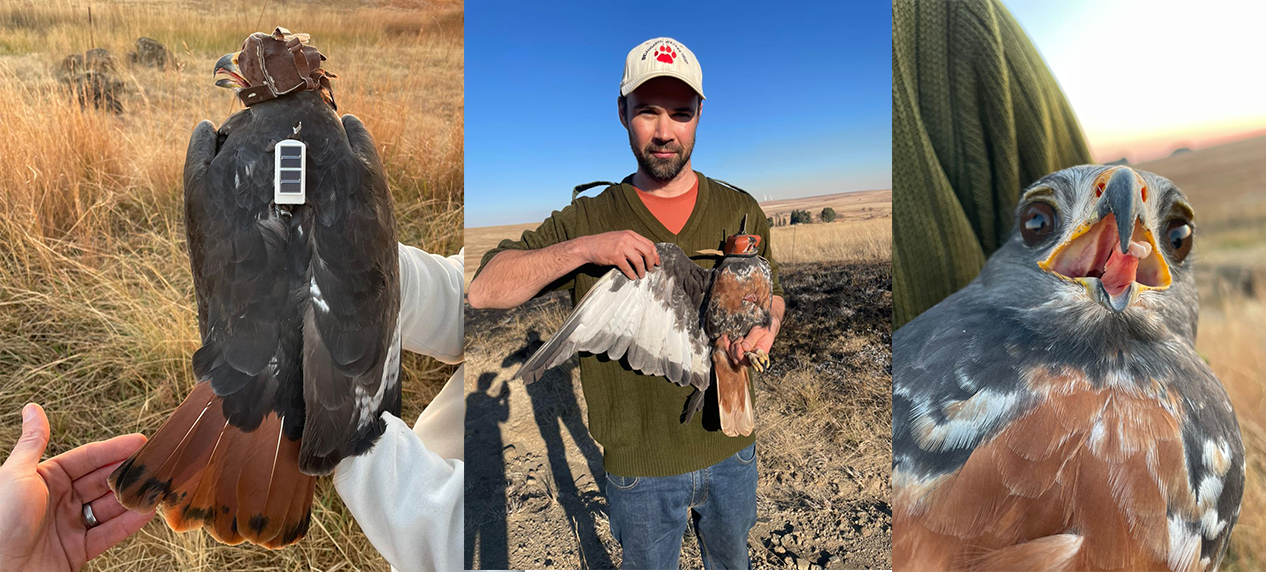
The project involves fitting lightweight GPS tracking devices to 12 priority bird species that are particularly susceptible to colliding with wind turbines. These include Greater and Lesser Flamingos, Martial Eagle, Cape Vulture, Jackal Buzzard, Grey Crowned Crane, Blue Crane, Wattled Crane, Blue Korhaan, White-bellied Korhaan, Denham’ s Bustard, and Secretary Bird. Notably, three of these species—the Blue Korhaan, White-bellied Korhaan, and Denham’ s Bustard—have never been tracked before, and several others have not yet been tracked in Mpumalanga.

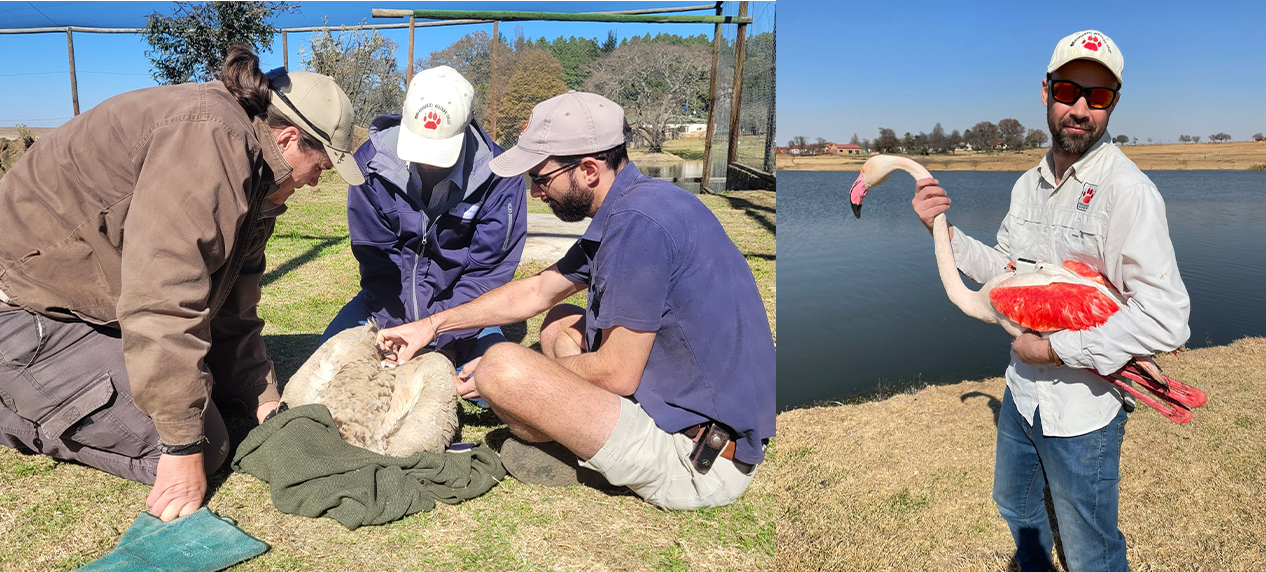
Since the project began in September 2024, 15 birds have been fitted with GPS tags, including seven Jackal Buzzards, four Greater Flamingos, two Blue Korhaans, and a Cape Vulture. These devices are already providing valuable insights into bird behaviour, revealing not only where species move, feed, and breed, but also bird flight path patterns indicating heights and patterns that these birds are following when in flight. Some species, such as Blue Korhaans, appear to remain within small home ranges, while others, such as Flamingos and Buzzards, travel widely between provinces.

These data will be used to map regular flyways and flight paths, as well as home ranges, and be used to develop detailed species-specific sensitivity models. These tools may also help decision-makers and developers avoid high-risk areas when planning new wind energy projects.

Some mitigation strategies are already being explored, such as Shutdown-on-Demand (SDOD) systems that temporarily stop turbines when birds are detected nearby. However, these systems have limitations. For example, many Flamingos fly mainly at night, and most existing SDOD systems are not capable of identifying nocturnal flights.

The Mpumalanga Bird Flyways Research Project is a groundbreaking initiative as it is the first state-funded project of its kind in South Africa. Hopefully it will serve as a model for other provinces to follow. By combining scientific research with conservation planning, the project is helping to ensure that the country’ s renewable energy future does not come at the cost of its rich and irreplaceable birdlife.