Help protect Africa's 

Battle of the Bullets: The Lead-free awareness drive by South Africans for South Africans.

Battle of the Bullets: The Lead-free awareness drive by South Africans for South Africans.

Battle of the Bullets: The Lead-free awareness drive by South Africans for South Africans.

Danielle du Toit, Vulture Safe Zone Officer, Birds of Prey Programme.
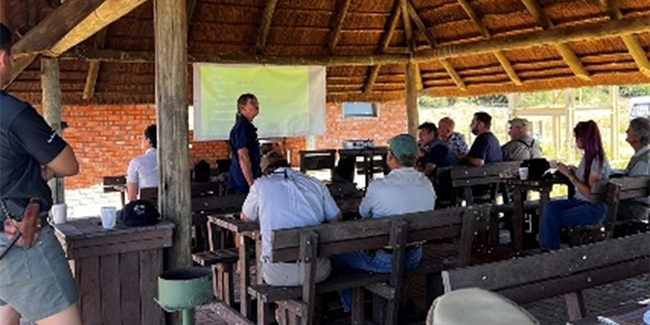
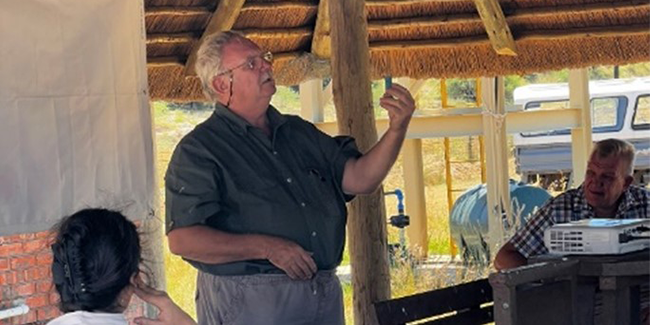
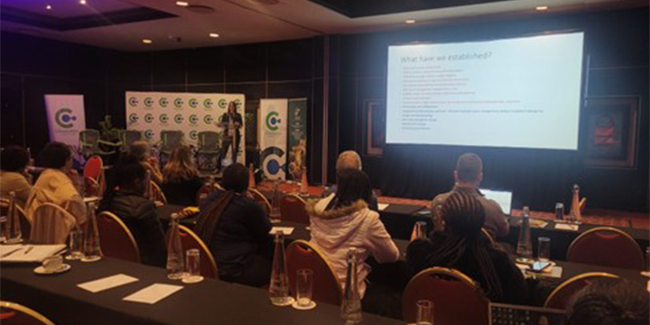
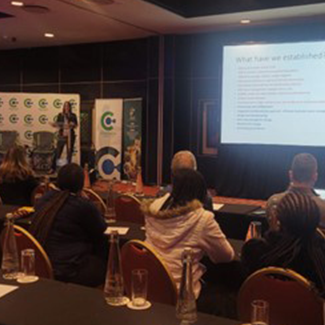
Ronelle Visagie speaking to delegates about vulture conservation

The EWT Vulture Safe Zone project objectives include reducing and ultimately eliminating the threats to vultures within project areas. Among many other dangers is lead poisoning; a serious threat to vulture populations and other species across the globe.

Poisoning in its many forms is the leading cause of population decline in vulture species. Although both intentional and unintentional poisonings have resulted in huge knocks to vulture numbers in single incidents, lead poisoning can be considered a quiet killer.  It is a  silent destroyer of which few people appreciate the serious impact it has on, for example, scavenging species like vultures.

Lead poisoning is caused when lead is ingested and allowed to enter the blood stream reaching vital organs and the animal’s bones. It can cause an array of ailments including, but not limited to, decreased coordination, decreased fertility, bone fragility, organ disease and failure and eggshell fragility.

Vultures are usually slowly poisoned by lead when carcasses of animals shot with lead ammunition are fed on by these scavenging birds, either in the veld, at carcass dump sites or vulture restaurants. The skulls of animals harvested through head shots and which have been thrown into these dump sites are of particular concern as lead fragments are highly concentrated in those parts.

Vultures are also susceptible because their entire digestive system is highly acidic (unlike humans, which have alkaline mouths and saliva). This causes the lead to break down easily into  smaller particles which are quickly taken up into the bloodstream. Studies have shown that the lead causing this poisoning is indeed from lead ammunition.

(For more on this, read: van den Heever, L., Elburg, M.A., Iaccheri, L. et al. Identifying the origin of lead poisoning in white-backed vulture (Gyps africanus) chicks at an important South African breeding colony: a stable lead isotope approach. Environ Sci Pollut Res 30, 15059–15069 (2023). https://doi.org/10.1007/s11356-022-23209-z )

The EWT’s Vulture Safe Zone project came up with Battle of the Bullets initiative to address what we call ‘the threat behind the threat’. It was established to not be prescriptive in its nature, but has rather taken the form of a round table where all role players within the ammunition and conservation circles are brought together to determine how all can benefit, or be benefitted by, opening a conversation around the latest science in conservation and lead-free bullet ballistics.

In February 2023, the EWT and partners, BirdLife South Africa and SA Hunters, with major input from our ballistics specialist, Kobus du Plessis, hosted the 3rd Battle of the Bullets at the Rooifontein Shooting Range in Kimberley. This location was chosen because lead poisoning of the resident vulture populations was shown to be some of the highest in the country.


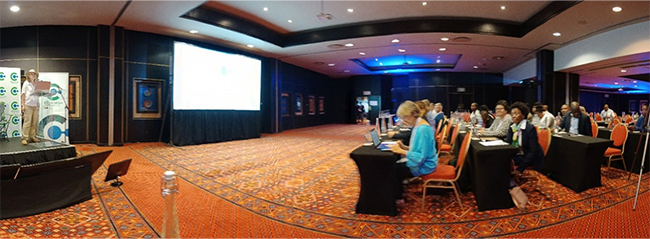
Attendees at Battle of the Bullets in Kimberley
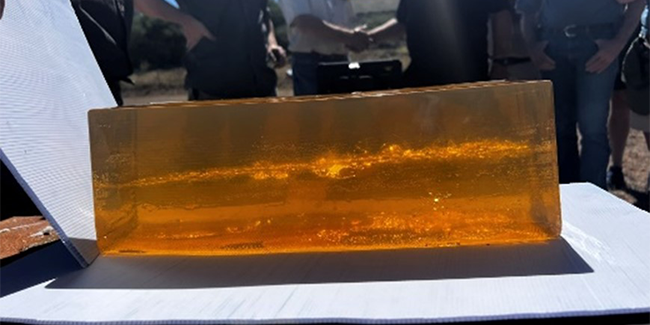
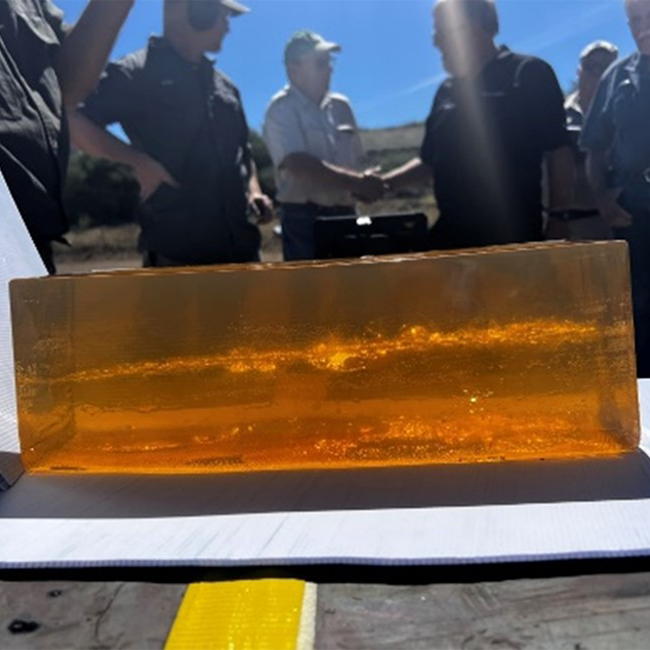
Gelatin targets are used to visibly show the bullet energy transferrence and trajectory

Ronelle Visagie presenting speaking to delegates about vulture conservation

The day started with presentations from the EWT’s Ronelle Visagie who spoke about her work in vulture conservation in the Northern Cape, followed by Linda van den Heever of Birdlife SA who presented her study on lead poisoning in vulture species. Schalk van der Merwe, formerly of the Endangered Species Unit, discussed what to do if one came across a potential poisoning.

Linda van den Heever’s presentation was hugely important as it not only simplified the jargon used in science for the average person, but also revealed just how bad the lead poisoning situation is. This then begged the question, if lead is so bad, what are the alternatives?

For many years, lead free ammunition and bullets have been assumed to be unreliable, costly, and inaccessible. Many have complained that the bullet does not perform according to what the user needs. However, we are now seeing a steep increase in the quality of lead-free ammunition. South African manufacturers are testing, retesting and constantly improving their products for the South African hunter and shooter — for South African conditions.

Kriek Bullets and Impala Bullets demonstrated different ammunitions on different targets to show just how well they performed under various circumstances – from distance, to accuracy, to impact. They tested lead ammunition versus lead free ammunition in each demonstration. It was easy to see that the bullets were performing well in every scenario presented and showed that users can have peace of mind when choosing to use lead free alternatives.

The Battle of the Bullets not only provides the latest information and science on lead poisoning and lead free bullets to attendees, but also highlights the link between vulture conservation and the hunter.  February’s event once again proved that by leaving assumptions at the metaphorical door, and entering into the day with an open mind, we could all learn something new while supporting conservation efforts and local manufacturers.


Special thanks to Ekapa Mining, Esther van der Westhuizen, Ruan Maré and their team for hosting the day at Rooifontein Shooting Range and for your support of our event. 

Cobus du Plessis discussing the various types of ammunition
Tackling the scourge of nappies and sanitary waste

Tackling the scourge of nappies and sanitary waste

Tackling the scourge of nappies and sanitary waste

By Cherise Acker-Cooper, Hugh Tyrrell and Professor Catherina Schenck, 04 March 2024

Nappies and/or sanitary pads, officially known as Absorbent Hygiene Product (AHP) waste, are fast becoming one of the most serious social and environmental health issues because of poor waste management in South Africa¹.

The problem is rooted in an ever-increasing population and a failing municipal service crippled by a lack of capacity and resources to effectively reach rural, informal and backyard dwellings, typically home to the most vulnerable in South Africa. Quantifying AHP waste within these dwellings is complex due to limited availability of data. Essentially, the quantity and related volume and weight of AHP waste makes it difficult for municipalities to collect and discard at landfills.

However, based on estimates, we can approximate that about 5.8 billion nappies² and 540 million³ sanitary products are being generated within rural and informal dwellings. If one considers that 37% of households in South Africa⁴ do not receive regular waste service, the enormity of the problem becomes alarming.

This approximate quantification is based on unverified statistics but does reveal the need to 1. provide evidence to quantify the scope of AHP waste in informal and rural dwellings in SA; 2. quantify AHP user demographics of AHP’s, and 3. Determine impact AHP’s waste discarded outside the municipal system has on the people and their environment.


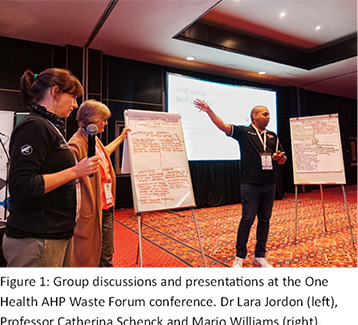
Towards this, the Endangered Wildlife Trust together with Conservation South Africa, Kruger to Canyons, the University of Pretoria and the University of the Western Cape established the One Health AHP Waste Forum (OH-AWF) in 2020. To date, the forum has over 40 members which are comprised of numerous academic, public, private, and civil institutions and organisations who have banded together to develop a strategic approach to address AHP waste. This forum’s approach centres on sound knowledge for effective decision making and therefore, between 2020 – 2023, we have conducted and coordinated numerous research studies to build our understanding around the AHP system dynamics within informal and rural communities. Outcomes of these studies reveal key insights paving a pathway towards sustainable AHP waste management.


This pathway for change was mapped by OH-AHF members during a mini conference funded by the National Research Foundation and held in association with the Conservation Symposium 2023 between the 6 – 8 November 2023 at the Wild Coast Sun, Port Edward, Eastern Cape. Priority action was determined, focusing on communities in rural, informal and backyard dwellings in which we will seek to:


  1. Improve the current municipal AHP waste management system.
  2. Work with key stakeholders to explore the circular economy in disposable AHP’s.
  3. Explore opportunities to mainstream reusable products.
  4. Initiate educational programmes to promote safe and responsible AHP waste disposal practices.
  5. Contribute to informing principals on appropriate technological AHP waste management solutions.

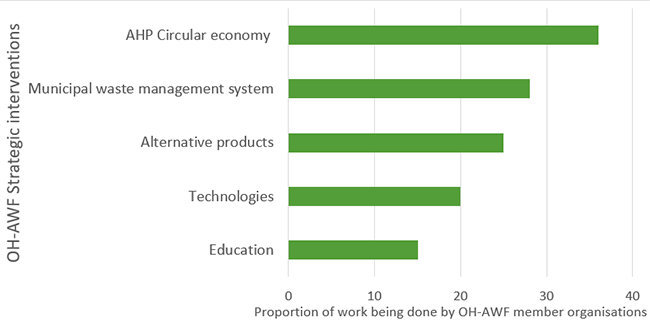
These key objectives was formulated into a three-year strategy (2024 – 2026) to guide the OH-AWF and inform AHP waste management industry role-players in SA. Towards the achievement of the strategy, the forum members are already implementing a number of activities to address AHP waste (Figure 3), while the EWT continues to monitor AHP waste in the eThekwini Municipal area where we have employed a Catchment Waste Officer who is working with local community leaders in Adams Rural to improve AHP waste removal.

Figure 3: Proportion of work being done by OH-AWF member organisations to address AHP waste in South Africa.

However, the success of this strategy to reduce the health and environmental impacts of AHP waste outside of formal dwellings in SA is dependent on strong partnerships and collaboration between the public, private and civil sectors of society.  

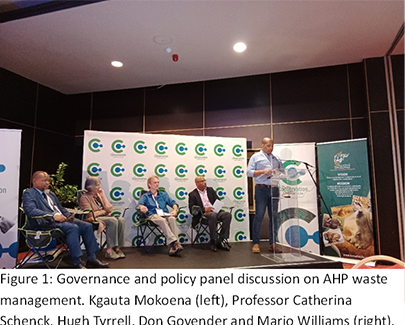
Attended by representatives from the Endangered Wildlife Trust, Conservation South Africa, Kruger to Canyons Biosphere Region, University of Pretoria, University of the Western Cape, ERS, Aquila Environmental, Green Edge Communications, Kimberly-Clark,  Biddykins South Africa, Lindon Corporation, TASC, The Untshayelo Foundation, the Western Cape government and the Department of Forestry, Fisheries and the Environment.

For more information, please contact Cherise Acker-Cooper on sturdyroutes101@gmail.com or Professor Catherina Schenck on cschenck@uwc.ac.za

Cherise Acker-Cooper delivers a presentation on the implementation of the project in South Africa

EWT looking into new technologies to curb rhino poaching

EWT looking into new technologies to curb rhino poaching

EWT looking into new technologies to curb rhino poaching

By Eleanor Momberg


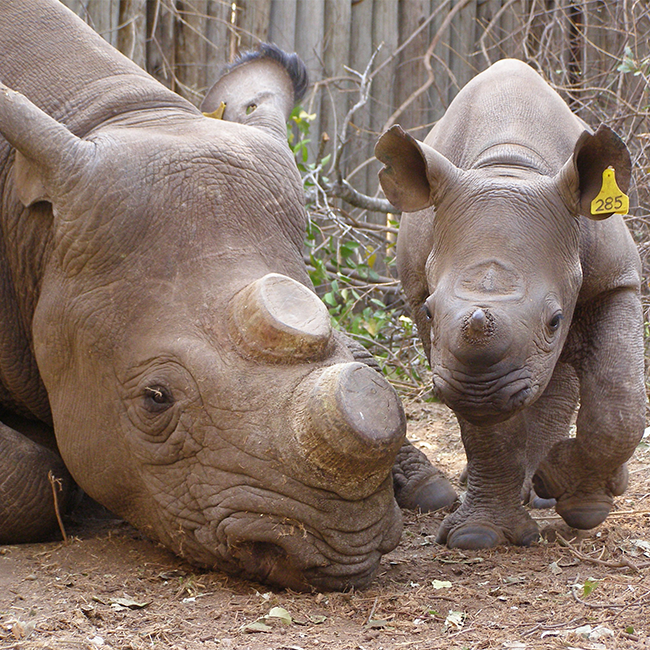
The Endangered Wildlife Trust continues to work on ways to unlock new technologies to curb the onslaught on South Africa’s rhino population, says Louwrens Leeuwner, Senior Conservation Manager: Business and Wildlife.

Reacting to the recent poaching of rhino in Limpopo, days after the release of the 2023 rhino poaching statistics, Leeuwner renewed an appeal to the public to come forward with any information about the killing of the iconic animals, and to support the authorities in dealing with poaching incidents as this may “ultimately be the only way” to deal with the problem. 


Forestry, Fisheries and the Environment Minister Barbara Creecy announced earlier in February that 499 rhino were poached across South Africa in 2023, more that 60 percent of which were killed in KwaZulu-Natal.   This is an increase of 51 rhino poached compared to 2022.  Of the pachyderms killed, 408 were poached on state properties and 93 on privately owned land.

“The pressure again has been felt in the KwaZulu-Natal (KZN) province with Hluhluwe-iMfolozi Park facing the brunt of poaching cases losing 307 of the total national poaching loss. This is the highest poaching loss within this province. While KZN recorded 49 arrests and 13 firearms seized, multi-disciplinary teams continue to work tirelessly in an attempt to slow this relentless pressure,” said Creecy.

Kruger National Park (KNP) recorded a 37% decrease from 2022 with a total of 78 poached in 2023. No rhinos were poached in other national parks.

Creecy commended the work being done by the Hawks in several regional and transnational engagements to enhance the government’s integrated approach to combat wildlife trafficking.

She said responsible partnerships between the public and private sectors, and the financial and transporting sectors remains critical in combating international wildlife trafficking. The approach is not exclusive to South Africa but is followed within the region and transnationally. Working with the transit and end user countries in South-East Asia, especially with the People’s Republic of China, Singapore, Qatar, Malaysia and Vietnam.

Ashleigh Dore, Wildlife and Law Senior Project Manager at the EWT said wildlife crime was having huge impacts on South Africans.

“It is a personal attack on our heritage so all wildlife crimes need to be taken seriously,” she said.

Dore added that rhino poaching was a prime example of transnational organised crime, or transnational wildlife crime.  “I think people need to  understand how complex it is responding to transnational organised crime and understand the different levels and roleplayers in syndicates.   When we look at poachers we are looking at people operating at the first level. But there are other levels of wildlife crime that need consolidated efforts and we see that globally,” she said.

In the meantime, the wildlife crime monitoring group, Traffic, reports that a Singapore court has convicted South African national, Gumede Sthembiso Joel, for rhino horn smuggling and sentenced him to two years in prison.   This was the maximum terms allowed for the offence under the law at the time of his arrest in 2022 when he was nabbed smuggling 20 pieces of rhino horn from Johannesburg to Laos via Singapore.

Science snippets: The Impact of Habitat Loss on Mammal Populations

Science snippets: The Impact of Habitat Loss on Mammal Populations

Science snippets: The Impact of Habitat Loss on Mammal Populations

By: Erin Adams and dr Lizanne Roxburgh

Habitat loss and degradation are among the leading causes of population decline for species worldwide. The main issue is the conversion of natural ecosystems to croplands, rangelands, forests and infrastructure. However, it has been difficult, up to now, to accurately assess on a large-scale what role habitat loss has played in the recent range declines of animal populations. In a recent publication, co-authored by EWT scientists*, they compared current and past (from the 1970s and 1980s) distribution ranges of mammals to understand the reasons as to why those ranges might be smaller today, and specifically whether their ranges are smaller due to habitat loss and degradation.

The scientists produced distribution maps for 475 land-dwelling mammals from 50 years ago – the “past range” – and for today – the “retained range”. By subtracting the two, they calculated what they called the “lost range”. They then compared the proportions of habitat available for the species in the lost range compared with the retained range. Habitat refers to areas suitable for the species to live in.

The scientists found that for 59% of species, their lost ranges have less habitat available to them compared to their retained ranges. This suggests that the ranges for these spaces have shrunk due to habitat loss.

The scientists also ran analyses in order to determine which factors influence the amount of habitat available.  The most important factors that negatively affected habitat availability were conversion of land to rangeland and high density of livestock. Intensive livestock grazing reduces the amount of food available for herbivores and granivores, leads to changes in vegetation structure, which affects small mammals, and reduces the prey available for carnivores. This study shows the importance of protecting habitats from human activities in order to conserve remaining habitat. For those species where lost ranges have a similar amount of habitat left compared to retained ranges, this gives hope for species recovery if other threats, such as hunting and persecution, can be reduced.

*Pacifici, M., Cristiano, A., Lumbierres, M., Lucherini, M., Mallon, D., Meijaard, E., Solari, S., Tognelli, M. F., Belant, J. L., Butynski, T. M., Cronin, D., d’Huart, J.-P., Da Re, D., de Jong, Y. A., Dheer, A., Fei, Li, Gallina, S., Goodrich, J. M., Harihar, A. … Wiesel, I. (2023). Drivers of habitat availability for terrestrial mammals: Unravelling the role of livestock, land conversion and intrinsic traits in the past 50 years. Global Change Biology, 29, 6900–6911. https://doi.org/10.1111/gcb.16964

Powerlines May Be A Cause Of Ludwig’s Bustard Population Declines

Powerlines May Be A Cause Of Ludwig’s Bustard Population Declines

Powerlines May Be A Cause Of Ludwig’s Bustard Population Declines

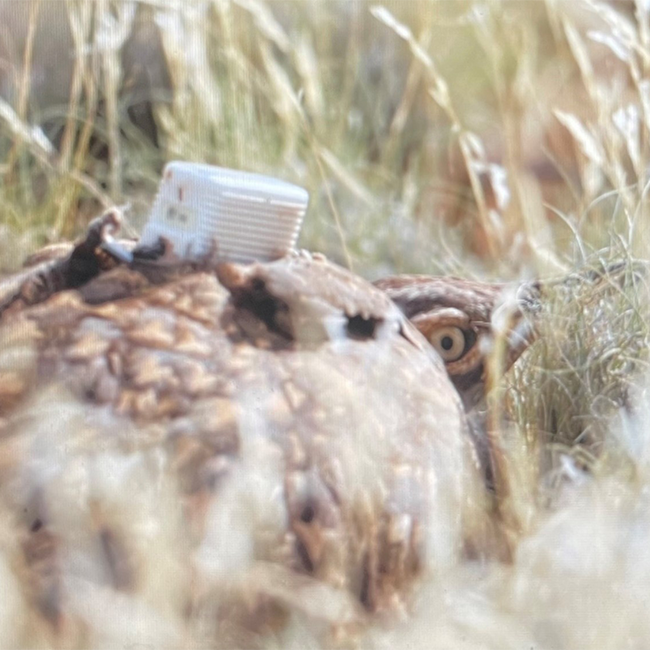
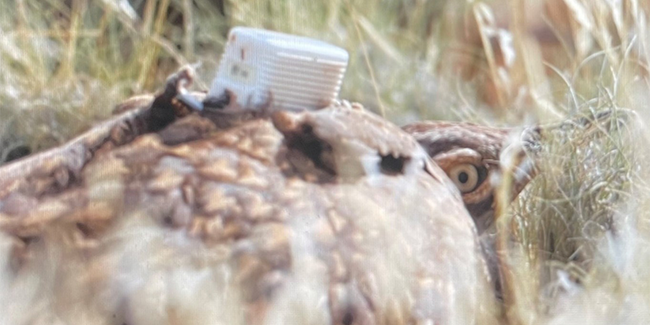
Figure 1: An incubating Ludwig’s Bustard female, fitted with a white GPS tracking device, sits tightly on her nest.

Collisions with overhead power line cables are thought to be the main driver of apparent population declines of the Ludwig’s Bustard (Neotis ludwigii).

Endangered Ludwig’s Bustard populations are assumed to be decreasing, with a  more than 50% reduction expected over the next three generations.

At present, transmission line collision mortality rates of 1.12 bustards per kilometre per year are alarmingly high given the extent of these lines throughout their range. The species remains a research priority for the partnership between the Endangered Wildlife Trust and South Africa’s power utility, Eskom.  The Partnership has found after a 10-year transmission line marking experiment that mitigation is ineffective for the Ludwig’s Bustard and for bustards in general.

Bustards are the one group of birds for which effective mitigation measures are yet to be demonstrated in southern Africa. Conservation options are limited to the  further development and testing of new marker types and to burying overhead power line cables. A new power line marking experiment, for which four novel marker types are being tested, is showing some very positive results: no new Ludwig’s Bustard mortalities having been recorded since the marking of experimental sections of a transmission line in the Karoo in February 2022.

A well-informed estimate of the extent to which power line collisions affect the survival of the species is needed to justify significant future investment in conservation efforts. Such an estimate requires better information about Ludwig’s Bustard breeding biology, movement ecology and population dynamics. Some of the most basic parameters of these aspects have not yet been answered empirically, as the species is notoriously shy and difficult to study in the field. Luckily, advances in certain technologies present new tools that may enable us to fill these knowledge gaps.

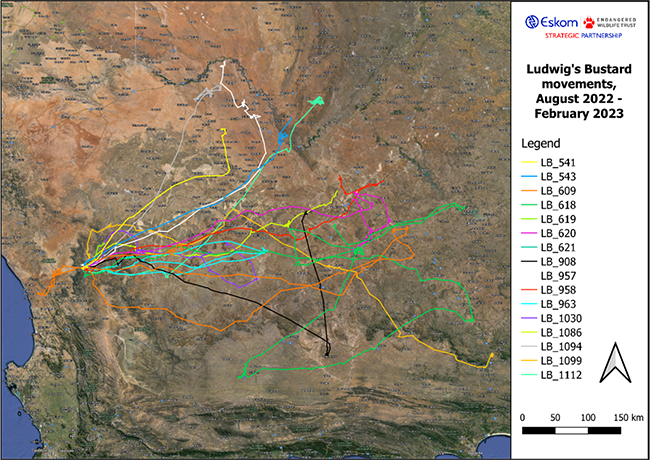
To help us answer some of these questions, a Ludwig’s Bustard GPS-tracking study, the ‘Karoo Ludwig’s Bustard Project’, was initiated in 2022. Extensive trapping efforts resulted in a sample of 16 adult birds being captured and fitted with GPS trackers in the past two years. Our goal has been to focus on female birds to obtain information about their breeding parameters.

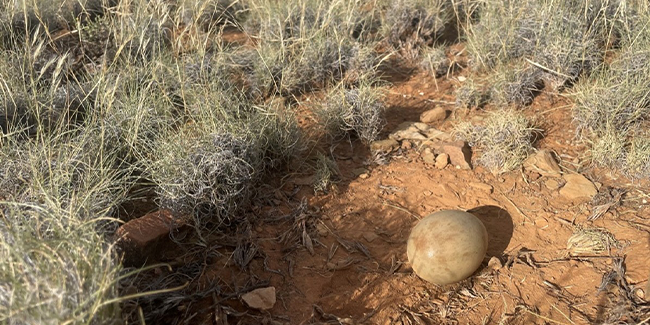
Since the first birds were captured in August 2022, we have been following up on GPS signals that may indicate nesting activity. This was unsuccessful until 2 February 2023 when one of the GPS-tagged females was found incubating a single large egg. The bird was well camouflaged and we only managed to detect her at a distance of less than three metres. 

When she flushed from her nest, we were able to install a remote camera to monitor the nesting. We are now very eager to retrieve the camera to view the photographs captured in the field.

We hope to encounter more nesting attempts to collect the data required for a population viability analysis. Through this exercise we will hopefully be able to model the impact that power line collision mortalities have on the survival of the South African Ludwig’s Bustard population –  information that will help direct the focus of our current and future research.


Figure 2: The movements of 16 GPS-tagged Ludwig’s Bustards, August 2022 – February 2024.

Figure 1: An incubating Ludwig’s Bustard female, fitted with a white GPS tracking device, sits tightly on her nest.

To help us answer some of these questions, a Ludwig’s Bustard GPS-tracking study, the ‘Karoo Ludwig’s Bustard Project’, was initiated in 2022. Extensive trapping efforts resulted in a sample of 16 adult birds being captured and fitted with GPS trackers in the past two years. Our goal has been to focus on female birds to obtain information about their breeding parameters.

Since the first birds were captured in August 2022, we have been following up on GPS signals that may indicate nesting activity. This was unsuccessful until 2 February 2023 when one of the GPS-tagged females was found incubating a single large egg. The bird was well camouflaged and we only managed to detect her at a distance of less than three metres. 

When she flushed from her nest, we were able to install a remote camera to monitor the nesting. We are now very eager to retrieve the camera to view the photographs captured in the field.

We hope to encounter more nesting attempts to collect the data required for a population viability analysis. Through this exercise we will hopefully be able to model the impact that power line collision mortalities have on the survival of the South African Ludwig’s Bustard population –  information that will help direct the focus of our current and future research.

Figure 3: A single, large Ludwig’s Bustard egg.