Help protect Africa's 

Synergies and Trade-Offs in the effort to save our natural world: the Global Biodiversity Framework, the Sustainable Development Goals and the Climate Action Goals

Synergies and Trade-Offs in the effort to save our natural world: the Global Biodiversity Framework, the Sustainable Development Goals and the Climate Action Goals

Synergies and Trade-Offs in the effort to save our natural world: the Global Biodiversity Framework, the Sustainable Development Goals and the Climate Action Goals

Namita Vanmali and Ian Little

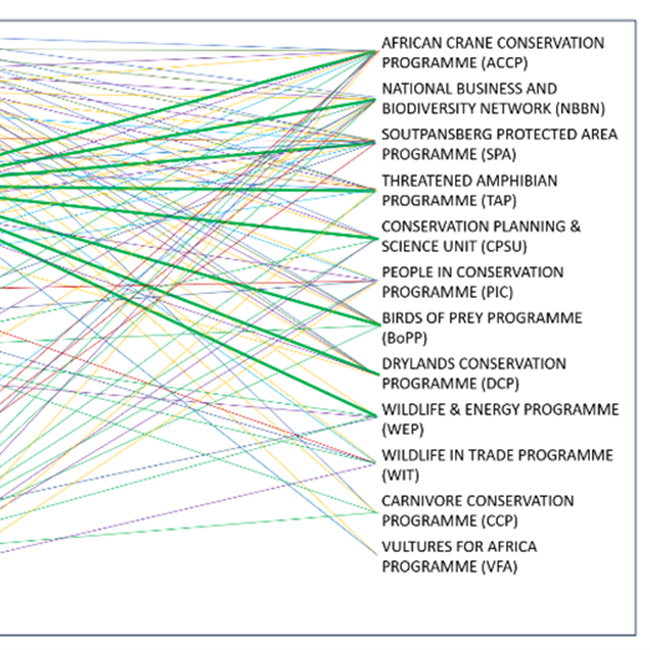
An illustration of the multiple linkages and alignment between the EWTs programmes and the Global Biodiversity Framework targets, with the specifically climate change relevant links in bold green.

Climate change is now widely recognised as a key driver of biodiversity loss, and although they are inextricably linked, historical approaches to policies addressing biodiversity loss and climate change have often treated these challenges separately. This divergence traces back to the independent conventions established during the 1992 Rio Earth Summit—namely, the Convention on Biological Diversity (CBD) and the United Nations Framework Convention on Climate Change (UNFCCC). Over time, an increasing alignment of mechanisms within these frameworks and recognition of the impacts of climate change on biodiversity has allowed for better integration of strategies and enabled a more holistic approach to addressing these associated challenges. A significant milestone in this integration occurred recently at COP27 in Sharm el-Sheikh, where specific sections were dedicated to oceans, forests, and agriculture for the first time. This cross-pollination of strategies is paramount in achieving the objectives of climate mitigation and biodiversity conservation. “Nature-based solutions” (NbS) have been put forward as a unifying mechanism for achieving conservation and climate goals, underscoring the importance of safeguarding both environmental and social interests. The IUCN defines NbS as “actions to protect, sustainably manage, and restore natural and modified ecosystems that address societal challenges effectively and adaptively, simultaneously benefiting people and nature. They target major challenges like climate change, disaster risk reduction, food and water security, biodiversity loss and human health, and are critical to sustainable economic development”.

The Global Biodiversity Framework (GBF – 2022) provides a comprehensive roadmap for biodiversity conservation for the coming decade, outlining actions to halt biodiversity loss and promote sustainable ecosystem management. Comprising 23 action-oriented global targets to be achieved by 2030, it serves as a critical milestone on the journey toward overarching biodiversity conservation goals. Targets 1-8 focus on reducing threats to biodiversity, 9-13 emphasise meeting people’s needs through sustainable use and benefit sharing, and targets 14-23 focus on providing tools and solutions necessary to implement the GBF effectively. By addressing threats to biodiversity and boosting ecosystem resilience, GBF Targets 1-8 strongly align with goals for climate change adaptation, with target eight specifically focussed on minimising the impacts of climate change on biodiversity. There is an emphasis on expanding protected areas, halting species losses and managing invasive species impacts using holistic climate strategies. GBF Targets 2, 10, 11, 15 and 16 all align with climate change adaptation goals by emphasising sustainable resource use, ecosystem restoration and improving ecosystem service provision. While GBF Targets 13-23 emphasise the integration of biodiversity considerations into various sectors, policies, and resource mobilisation efforts, which aligns with climate change mitigation and adaptation goals.

How you can help our cause:
DONATE VIA EFT:

The Endangered Wildlife Trust

FNB Rosebank (Branch code: 253305)

Account number: 50371564219

Use Reference: Climate Action

An illustration of the multiple linkages and alignment between the EWTs programmes and the Global Biodiversity Framework targets, with the specifically climate change relevant links in bold green.

While there is obvious synergy between the targets of biodiversity conservation and climate change mitigation and adaptation, there can be misalignments and tensions between the two. Conflicting land use priorities may cause trade-offs between GBF Targets and climate goals. While GBF Targets 1, 2 and 3 concentrate on spatial planning and ecosystem restoration, achieving climate goals may require land for renewable energy infrastructure and bioenergy with carbon capture and storage (BECCS) projects requiring large-scale land use, which can and does conflict with biodiversity conservation efforts. The EWT has developed a number of resources to guide and streamline decision-making to minimise these biodiversity conflicts, and strongly supports renewable energy as opposed to the continued use and extraction of fossil fuels. Further, since climate action goals prioritise carbon sequestration to meet emission reduction goals, current reforestation and afforestation practices can negatively impact biodiversity if restored ecosystems serve climate mitigation instead of biodiversity conservation. Targets 8–13, which concentrate on sustainable resource use for people, can be at odds with critical Sustainable Development Goals (SDGs). Restricting access to resources in protected areas, for instance, may impede Poverty Reduction and Zero Hunger SDGs in some communities that rely on the land for agriculture or resource extraction. This conflict is also seen within the GBF targets 5 (Ensure the sustainable use and trade of wild species) and 9 (Protect & encourage customary sustainable use), where traditional use of wildlife resources is very often difficult to manage sustainably as a result of high demand for threatened resources and socio-economic pressures on rural communities.

While GBF Targets 14-23 theoretically align with implementation methods for climate change adaptation, challenges arise in practice where socio-economic pressures and needs conflict with conservation priorities and resource allocations. These challenges include potential competition for resource allocation, funding, land use and opposing interests within various sectors. Balancing short-term economic gains with long-term environmental benefits remains a complex and nuanced task. Integrated strategies that control possible conflicts are required to navigate these trade-offs successfully. The GBF targets and climate action goals both seek a just transition towards sustainability. However, misalignment between the GBF targets, climate adaptation, and SDGs often stems from divergent priorities between emission reduction, environmental preservation and broader development objectives.

Globally the financial cost of the transition to renewable energy dwarfs the funding required for biodiversity conservation. While it is imperative that the world prioritises a move away from reliance on fossil fuels, it is equally important that we recognise the parallel importance of conserving our biodiversity assets. The global narrative around the protection of our environment and commonly used terms like “Nature-based Solutions” should not allow the energy transition agenda to overshadow the biodiversity conservation crisis in terms of financial resource allocation and ongoing global dialogue
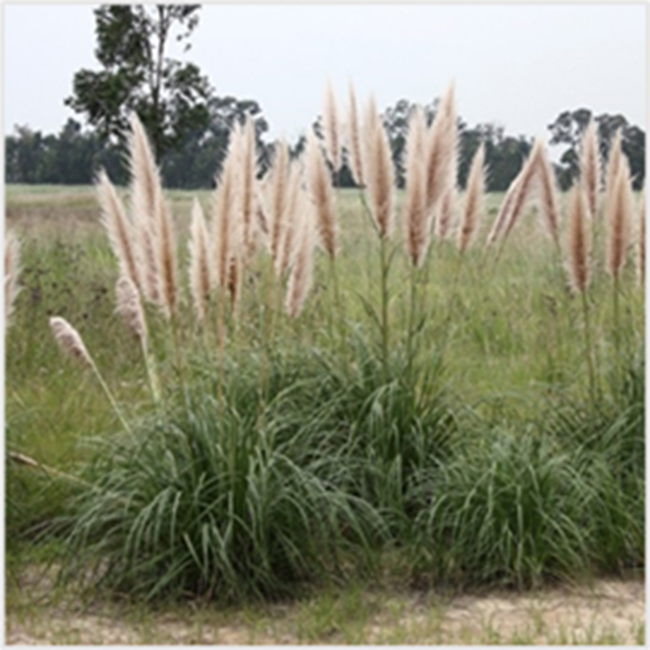



The Unseen Threat of Pampas Grass in South Africa

The Unseen Threat of Pampas Grass in South Africa

The Unseen Threat of Pampas Grass in South Africa

Dr Kerushka Pillay, the EWT’ s WILDLIFE IN TRADE PROGRAMME

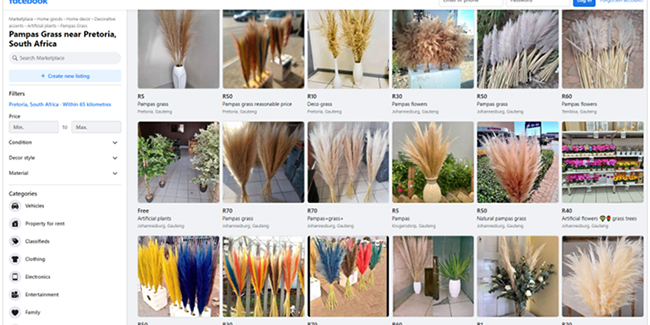
Pampas Grass, celebrated for its graceful plumes and enchanting presence, has found its way into countless South African homes and events, adorning weddings, and birthday parties and featured in bespoke interior decor. Its feathery inflorescences add an air of elegance and grace that many find irresistible. Yet, lurking beneath its captivating exterior is an ecological menace that demands our attention. The threat of Pampas Grass in South Africa is highlighted below, providing you with the basic knowledge and understanding of this unseen alien invasive species.

NB: Pictures used without permission from the internet


Pampas Grass: A Brief Overview

Common Name: Pampas Grass
Scientific Name: Cortaderia selloana, C. jubata (Poaceae family)
Alternative Common Names: Pampasgras; silwergras (Afrikaans)
Native range: South America – Argentina, southern Brazil, Uruguay, Paraguay, Argentina and Chile
Invasive Status in South Africa: CARA 2002 – Category 1a; NEMBA – Category 1b. Sterile cultivars or hybrids are not listed

Appearance and Origins

Hailing from the Pampas regions of South America, Pampas Grass is a robust tussock grass with a striking presence. Its clumps can reach impressive diameters of up to 3.5 meters, while its towering flowering stalks may soar to a height of 4 meters. The leaves of this grass are characterised by their greyish or bluish-green hues, often forming a V-shape in cross-section with rough margins. But the defining feature that captures our imagination is undoubtedly the feathery silvery-white to pink or mauve inflorescences that grace its presence from February to April.

Legislation of the Unseen Invader

In South Africa, Pampas Grass is regarded as an invasive species of serious concern. Classified as a Category 1a invasive species under the Conservation of Agricultural Resources Act (CARA) of 2002 and falling under Category 1b of the National Environmental Management: Biodiversity Act (NEMBA) National List of Invasive Species, this invasive menace has firmly established itself in the Western Cape, Eastern Cape, KwaZulu-Natal, and Gauteng provinces. According to CARA 2002, residents who fail to comply with a contravention notice could be fined R5 000 or sent to jail for up to two years, or both penalties, for a first conviction. This could be doubled at a second or subsequent conviction.

How you can help our cause:
DONATE VIA EFT:

The Endangered Wildlife Trust

FNB Rosebank (Branch code: 253305)

Account number: 50371564219

Use Reference: WIT

Historical and Present-Day Uses

In some mining areas, particularly those with soil erosion issues, Pampas Grass was employed for soil stabilisation on mine dumps. The dense root system and vigorous growth of Pampas Grass helped prevent erosion, reduce soil loss, and stabilise the soil on mining waste piles.

Pampas Grass is a highly sought-after ornamental plant with a multitude of decorative uses. Its tall stature and striking, feathery plumes make it a favourite in gardens and landscapes, where it serves as a captivating focal point, privacy screen, or windbreak. Pampas Grass plumes, prized for their beauty, are often featured in dried flower arrangements, adding elegance to interior decor and event settings, including weddings and special occasions. Additionally, its versatility extends to seasonal and holiday decor. However, while Pampas Grass is cherished for its aesthetics, it should be used responsibly, as it can be invasive in certain regions, necessitating proper management to prevent ecological harm.

Modes of Propagation and Spread

Pampas Grass employs two primary mechanisms for its relentless spread. Firstly, through seeds, the plant produces an abundance of them in an open panicle, allowing these seeds to be carried away by the wind. This ease of dispersion enables Pampas Grass to colonise new areas with astonishing efficiency. Secondly, beneath the surface, Pampas Grass extends its reach through rhizomes  (underground stems) that facilitate the formation of new clumps nearby. This subterranean network plays a vital role in its rapid expansion.

The invasive character of Pampas Grass presents a significant threat to ecosystems, causing habitat displacement as it competes vigorously with smaller indigenous grass species for vital resources such as water, sunlight, and nutrients, disturbing the delicate balance of local ecosystems. Furthermore, the sale and utilisation of Pampas Grass plumes, often laden with seeds, directly fuel the expansion of this invasive plant. This not only demonstrates environmental irresponsibility but also constitutes an illegal activity when used as decorative accessories for weddings, events, or decor.


What can you do?

  • Familiarise yourself with the legislation
  • If you manage your own land, keep it clear of Pampas Grass
  • Do not buy Pampas Grass from nurseries
  • Purchase faux, synthetic and fake Pampas for ornamental purposes
  • Report any Pampas sales to the authorities

While Pampas Grass may initially appear to be a charming addition to your home or event decor, it is imperative to recognise the potential harm it poses to South Africa’s precious natural environment. Responsible usage and a commitment to avoiding Pampas Grass are fundamental steps in safeguarding our native ecosystems. Let us make informed choices to ensure that the beauty we seek in our decorations does not come at the expense of our invaluable wildlife and habitats. Together, we can protect South Africa’s rich biodiversity from the silent threat of Pampas Grass.

Contact the EWT for more information.


Adverts featuring Pampas Grass for sale.


The Fragility of Africa’ s Lions

The Fragility of Africa’ s Lions

The Fragility of Africa’ s Lions

Samantha Nicholson, the EWT’ s Carnivore Conservation Programme


The African Lion (Panthera leo) is an iconic and culturally significant species, valued by both global public sentiment and local communities in many regions. Lions hold ecological value as apex predators, with their removal from ecosystems leading to adverse and long-lasting ecological consequences. Additionally, lions contribute to the economies of countries through tourism, attracting both photographic tourists and trophy hunters.
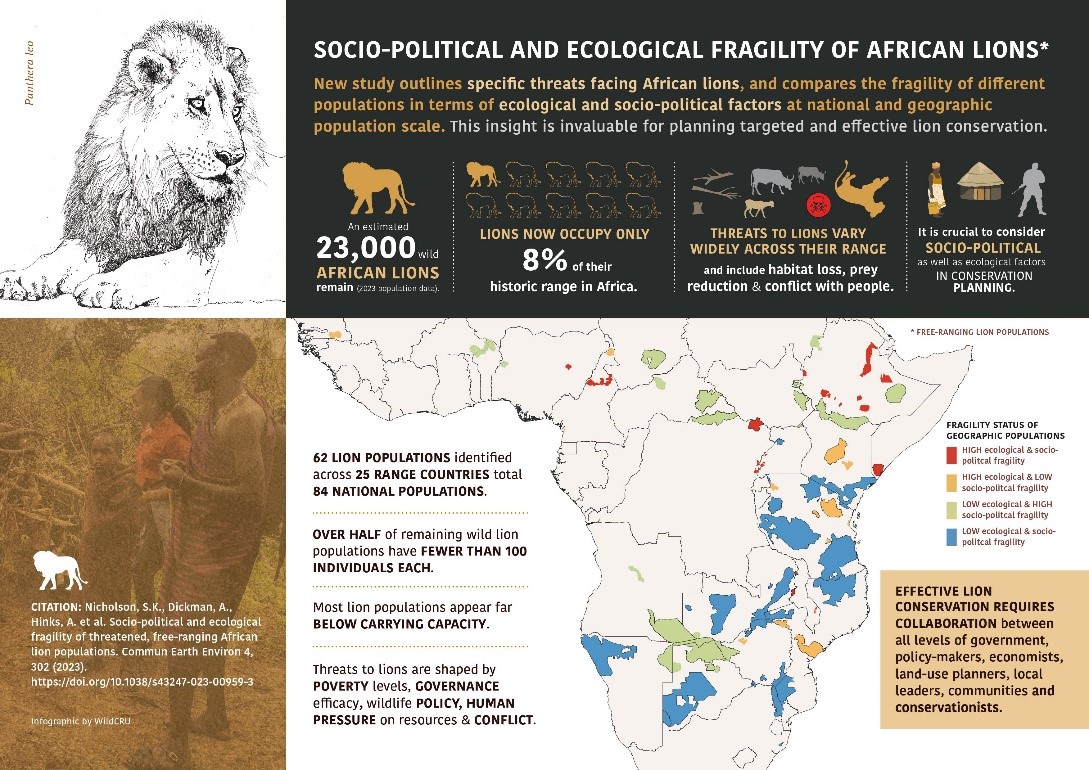
However, lion populations have dramatically declined over recent decades, with the most recent estimates suggesting 20,000 to 25,000 wild lions remaining in Africa, and they have been extirpated from 92% of their historical range. As such, effective conservation efforts are urgently needed, but the lack of comprehensive knowledge about specific threats and the socio-political contexts has hindered progress. The underlying drivers of lion threats are complex, involving socio-political factors such as poverty, governance (including corruption), wildlife policies, human pressures, and armed conflicts.
A recent study conducted a comprehensive assessment of the fragility of lion populations across their African range, considering both ecological and socio-political factors. The study first identified and mapped wild African Lion populations. The researchers then created two general categories of population fragility, ecological and socio-political, and identified factors in these two categories that may influence the survival of wild lions. For example, a smaller lion population or higher densities of people and livestock were factors contributing to higher ecological fragility, while higher corruption or lower GDP per capita would contribute to greater socio-political fragility. Once calculated, both socio-political and ecological factors were combined into a single overall fragility index, and each lion population was compared relative to all others. The fragility score does not suggest which lion populations deserve protection or funding. It does, however, highlight the varying ecological and anthropogenic pressures facing different population and which populations may require relatively more resources (financial or other) to conserve.

How you can help our cause:
DONATE VIA EFT:

The Endangered Wildlife Trust

FNB Rosebank (Branch code: 253305)

Account number: 50371564219

Use Reference: CCP LIONS


The combination of these two indices provided some interesting comparisons. Some populations may ultimately have similar fragility scores, but they are driven by different threats. Thus, while on the surface, the lone lion populations in Sudan and Benin may appear similar, they likely require different levels of investment and perhaps even different types of intervention for conservation to succeed. Pouring money into conserving Sudan’ s lions may be relatively ineffective unless the socio-political factors such as the civil war are dealt with first. Thus, stakeholders, investors and conservation groups must be aware of these differences when approaching lion conservation and evaluating how much money, time or other investment may be needed to see success.
Our study revealed that Maze National Park in Ethiopia was identified as the most ecologically fragile population at both a geographic and national level. This can largely be attributed to intense edge effects from high densities of both cattle and people. When assessing at the national level, Cameroonian and Malawian lion populations were most ecologically fragile due to their small populations and isolation from other lion populations. Somalia was the most fragile lion range country from a socio-political perspective. Maze National Park and Bush-Bush (Somalia) were found to be the most fragile overall when ecological and socio-political fragility scores were combined.
Conservation is needed more than ever. Our study showed less than half of the 62 known remaining free-ranging wild African Lion populations have over 100 lions. African Lions remain in only 25 countries and nearly half of these nations have fewer than 250 individuals. Eight countries now house only a single wild lion population. Although lions are estimated at between 20,000 and 25,000 individuals, there is concern that these small populations and countries with few individuals will disappear.
These findings emphasize the need for more nuanced and precisely targeted lion conservation plans, considering both ecological and socio-political dimensions. As lions teeter on the brink of extinction, this research serves as a vital resource for informed conservation efforts. By considering ecological and socio-political factors, this model offers insights into factors affecting population persistence and successful conservation action.

Nicholson, S.K., Dickman, A., Hinks, A. et al. Socio-political and ecological fragility of threatened, free-ranging African lion populations. Commun Earth Environ 4, 302 (2023).

https://doi.org/10.1038/s43247-023-00959-3