From Participation to Ownership: KwaMkhize Community Leads the Way in community conservation
From Participation to Ownership: KwaMkhize Community Leads the Way in community conservation
Samson Phakhati, senior field officer in the African Crane Conservation Programme
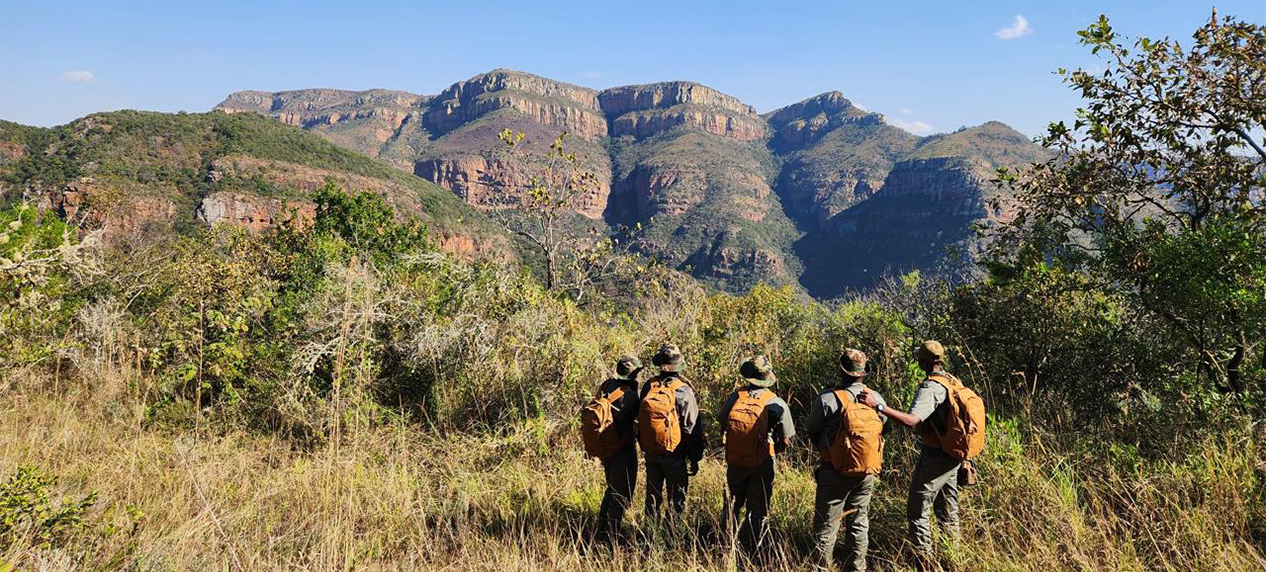
The last week of August marked a significant milestone for the KwaMkhize community and the partnership between the Endangered Wildlife Trust (EWT) and the International Crane Foundation (ICF) with the launch of the KwaMkhize community’s second community-led spring project.
For seven years, this partnership has focused on strengthening community resilience and self-reliance through an ecosystem goods and services approach. Together with community members, the organisations have explored priorities ranging from rangeland management and land-use planning to spring protection, financial literacy and food security.
The work is taking place in an area of exceptional importance for cranes. KwaMkhize is a recognised crane hotspot where flocks of more than 100 Wattled Cranes can be seen, alongside Grey and Blue Cranes. In such a landscape, the relationship between healthy ecosystems, sustainable land use and resilient communities is especially important.
Yet achieving meaningful conservation outcomes requires more than identifying areas of ecological importance. It requires an approach that recognises the knowledge, priorities and aspirations of the people who live on and care for the land. Building through facilitation, not prescription
Land-use discussions can be particularly sensitive in areas governed by traditional leadership. Recognising this, the EWT/ICF partnership deliberately adopted an approach centred on facilitation rather than prescription.
Rather than arriving with predetermined solutions, the partnership supported the community in identifying its own priorities and exploring practical ways to address them. Spring protection emerged as an important catalyst.
What began as a focus on protecting vital water sources created opportunities for broader conversations about land-use planning, stewardship, natural-resource management and the community’s long-term priorities.
This approach has helped create space for community members to take an increasingly active role in shaping conservation and development decisions.
Today, the results of this long-term engagement are becoming increasingly visible. The KwaMkhize community has set aside more than 1,000 hectares of natural grassland for ivestock grazing and conservation—an important step towards protecting valuable habitat while supporting sustainable livelihoods.
But perhaps an even more powerful demonstration of progress came pm 23 August with the launch of the community’s second community-led spring protection project.
This time, the community did not simply participate in a project initiated by external partners. It independently mobilised and raised R50,000 towards materials, preparatory work and labour. That achievement represents much more than a financial contribution. It demonstrates growing confidence, collective action and ownership. It shows that the community is increasingly able to identify its own needs, mobilise its own resources and draw on its own knowledge and capacity to turn priorities into action.
A model for self-reliance
The spring protection project is therefore about far more than protecting a source of water. It represents what can happen when communities are supported to lead rather than simply participate. It demonstrates that conservation can become a vehicle for strengthening citizenship, resilience and self-reliance when communities are given the space and support to determine their own priorities. For the EWT and ICF, the journey with KwaMkhize reinforces an important lesson: lasting conservation outcomes are strongest when they are rooted in local ownership.
The goal is not simply to deliver projects in communities. It is to build the relationships, knowledge and confidence that enable communities to lead their own conservation journeys long after an individual project has ended. KwaMkhize is showing what that transition can look like—from participation to ownership, from external support to local mobilisation, and from consultation to collective action.

Crafting their own destiny
The progress made over the past seven years is a powerful reminder that resilience cannot simply be delivered from the outside. It is built through relationships, shared knowledge, practical action and the confidence to take ownership of the decisions that shape a community’s future. The KwaMkhize community is increasingly demonstrating that capacity. As the community continues to protect its natural resources, manage its land and invest its own resources in local priorities, it is helping to build a future in which conservation and community wellbeing reinforce one another.
This is what community-led conservation can achieve: not communities participating in someone else’s vision, but communities crafting their own destiny. The EWT and ICF are immensely encouraged by this journey and proud to walk alongside the KwaMkhize community as it continues to lead the way.
** The EWT would like to thank the N3TC and Paul King Foundation for their support.