Help protect Africa's 

CAREERS IN CONSERVATION – Caitlin Smith

CAREERS IN CONSERVATION – Caitlin Smith

Caitlin is an Intern with the EWT’s Conservation Planning & Science Unit. Here is a little bit about Caitlin’s journey to a career in conservation.

Job title:  Conservation Planning & Science Intern

What do you do in your day-day work? I will be assisting in the Mammal Red List project

Location: Cape Town

Where did you grow up? Cape Town

What are your hobbies/things you like to do in your spare time? Reading and baking

Any pets? None

Favourite animal and why: Giraffes, they are so beautiful and unique!

Favourite food? Chocolate

Pet peeve? Loud chewing

Why did you want to work for the EWT? Zoology is my first love, and getting a chance to learn more about mammals while assisting with Mammal Red List assessments is something I am very excited about.

What excites you about this new position? Learning how to put together Red List assessments

What are you passionate about? Many things; giraffes, chocolate, reading/watching Harry Potter

What’ s the best advice you’ ve ever received, and who did it come from? Just be yourself, my Mom

What is your go-to feel-good song? Any ABBA song!

Science Snippets: Science through the 50 Years: the species we work on

Science Snippets: Science through the 50 Years: the species we work on

Science Snippets: Science through the 50 Years: The Species We Work on

Erin Adams and Lizanne Roxburgh, the EWT Conservation Planning And Science Unit

The Endangered Wildlife Trust (EWT) is celebrating its 50th anniversary, and we are reflecting on our remarkable contributions to scientific discovery over this period. Formed in 1973, the EWT was made up of species-focused working groups. These groups included the Vulture Study Group, the Carnivore Working Group, and the Elephant Survey and Conservation Programme (ESCP).
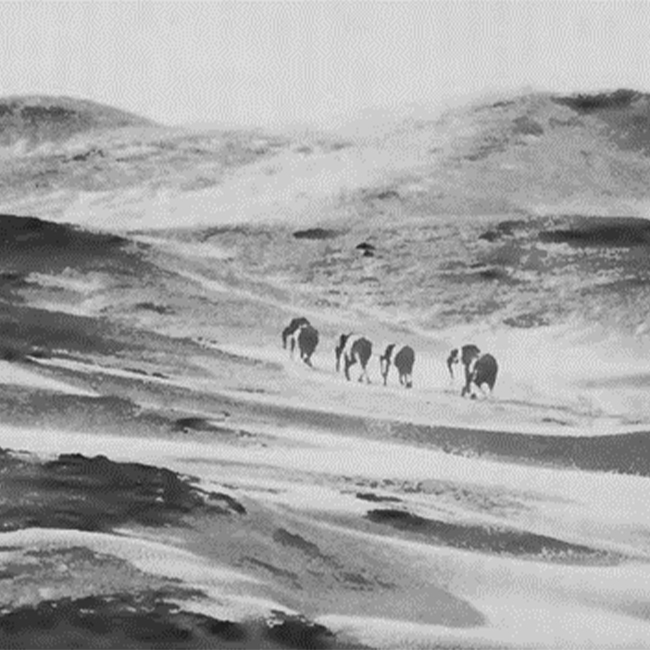
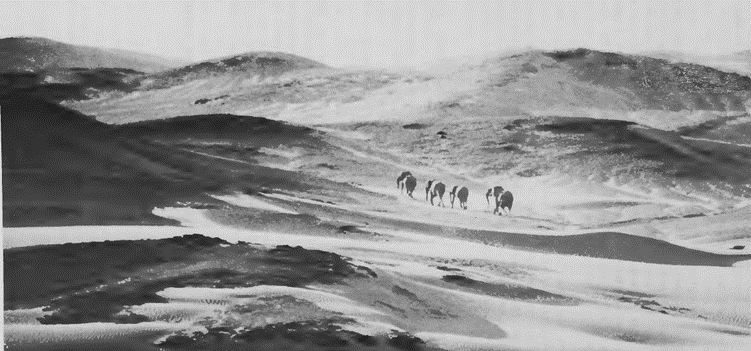
In the early 1980s, the EWT focused on elephant translocation into new reserves. The ESCP played a key role in relocating elephants from conflict areas in Namibia to the Pilanesberg National Park. Another study focused on the distribution and numbers of desert elephants in north-western Namibia. Towards the end of the 1980s, the EWT started working on cranes under the Highveld Crane Group. During the 90s, the EWT’ s crane work expanded throughout South Africa’ s important crane strongholds.

vintage photo of elephants in the desert

Figure 1. The desert-dwelling elephants of north-western Namibia (credit: C. Walker, 1982).

From the early 2000s, the EWT shifted its focus to carnivores, including Lions, Honey Badgers, Cheetahs, and Wild Dogs. Research on these species took place across southern Africa, including the Kalahari and Kruger National Parks. The EWT’ s crane work has also expanded through a formal partnership with the International Crane Foundation, and the crane group became known as the African Crane Conservation Programme.
In the 2010s, research and publication of our results became vital for the EWT, resulting in approximately 130 publications. The species of interest expanded to include frogs, oxpeckers, Riverine Rabbits, and Ground Hornbills. The Threatened Grasslands Species Programme, which studied grassland ecosystems and its resident species such as the Blue Swallow and the Oribi, was also prominent during this time. Other important topics investigated were the threats to species, including road mortalities, livestock predation, wildlife poisoning, and bird-powerline collisions.
Even though it is only three years into the 2020s, the EWT has already recorded 96 publications, highlighting the organisation’ s commitment to conducting valuable research and ensuring the dissemination of information to our audiences. The focus remains on employing robust sampling techniques to benefit the survival of threatened species. The EWT provides biodiversity data for scientific research and action and reviews environmental impact assessments in South Africa. We have also conducted studies on ranchlands to understand their biodiversity. Furthermore, the organisation has placed a greater emphasis on wildlife and law and business and biodiversity. It is also expanding into more cryptic but equally threatened species, such as Golden Moles, Dwarf Tortoises, and Colophon Beetles.
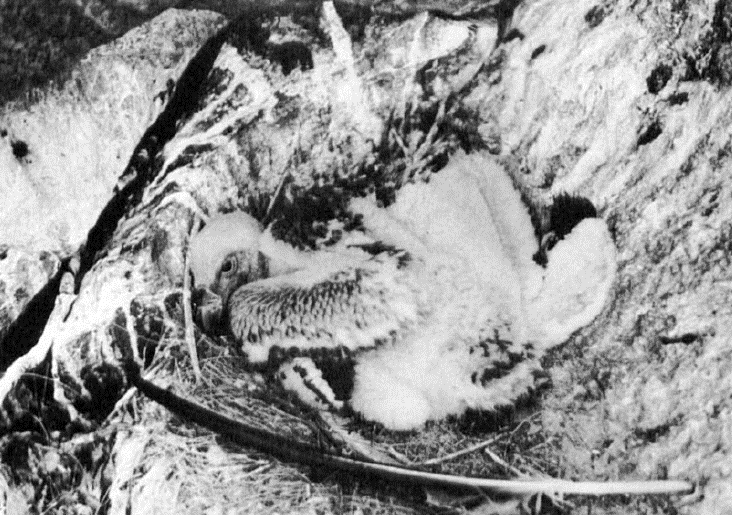
Throughout its history, the EWT has consistently prioritised the conservation of vultures. These birds remain a primary focus through the Birds of Prey and the Vultures for Africa programmes.

vintage photo of a cape vulture chick in the nest

Figure 2. A 51-day-old Cape Vulture chick (credit: P. Richardson, P. Mundy and I. Plug, 1986)

Conscious Conservation

Conscious Conservation

Conscious Conservation: why knowing where species are is crucial for protecting them

Oliver Cowan, the EWT’ s Conservation Planning and Science Unit
How can we protect what we do not fully understand?

That is the key question driving our work on ‘uplisting’ species considered Data Deficient according to the IUCN Red List Assessment Criteria (See Box 1). The Conservation Planning and Science Unit has been working with experts across different taxonomic groups (Amphibians, Reptiles, and Mammals) to identify Data Deficient species most likely to need protection and enhanced conservation efforts (See Box 2). If a species is ‘uplisted’ to a threat category, then it is afforded some form of protection by law, and its presence must be taken into account during the Environmental Impact Assessment process (See Box 3).

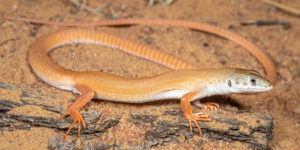
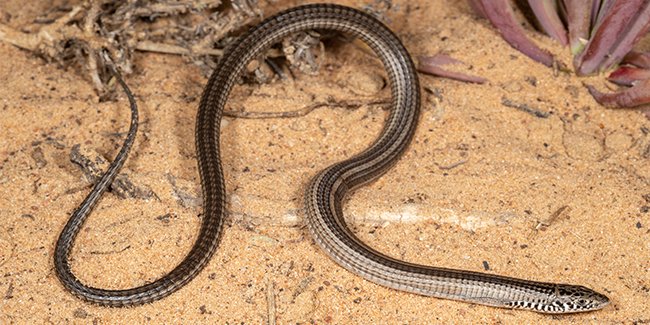
One species identified early on as requiring urgent work was the Orange Sandveld Lizard (Nucras aurantiaca). Sometimes referred to as Lambert’ s Bay Sandveld Lizard, the species had only been captured once when farm workers caught two individuals from a location just outside of Lambert’ s Bay on the West Coast of South Africa in 2005. Having never seen an animal like it, the farmer sent the specimens to the provincial conservation body, whereafter they arrived at Stellenbosch University, after which it was formally described. Since then, it has only been recorded once – by a   camera trap set up by researchers looking for something else entirely – in 2011 on a farm 20 km northeast of the original locality.

Its apparent scarcity has made it an almost revered species among the Southern African herpetological community. However, the need for more records has more important implications than merely ticking it off one’ s ‘lifer’ list. The habitat in which the species is known to occur has undergone substantial historical transformations, much due to agriculture, and in more recent years, a slew of mining developments have occurred along the West Coast. Indeed, in 2022, a right to prospect for phosphate ore was granted that encompassed both known localities. The need to gather the data to uplist the species is thus crucial to ensure it is safeguarded against irresponsible development.

With this in mind, a team of some of the country’ s top herpetologists from the South African National Biodiversity Institute (SANBI) and Bayworld Museum joined the EWT for two weeks of intensive surveys in November 2022. Braving the summer heat, storms, and deep sand roads, they employed a combination of pitfall traps, drift fences and active searching to find additional records and information that may shed light on the lizard’ s ecology, habitat requirements, and population dynamics. Their hard work was rewarded with three more occurrence records, all from a single site adjacent to the camera trap site where the species was recorded. The data gathered from this survey will be used to conduct an updated Red List assessment later this year, with the likely outcome that the species will be placed in the Vulnerable or Endangered category. Once the assessment has been reviewed, the species will be incorporated into the Environmental Screening Tool and accounted for during subsequent development proposals.

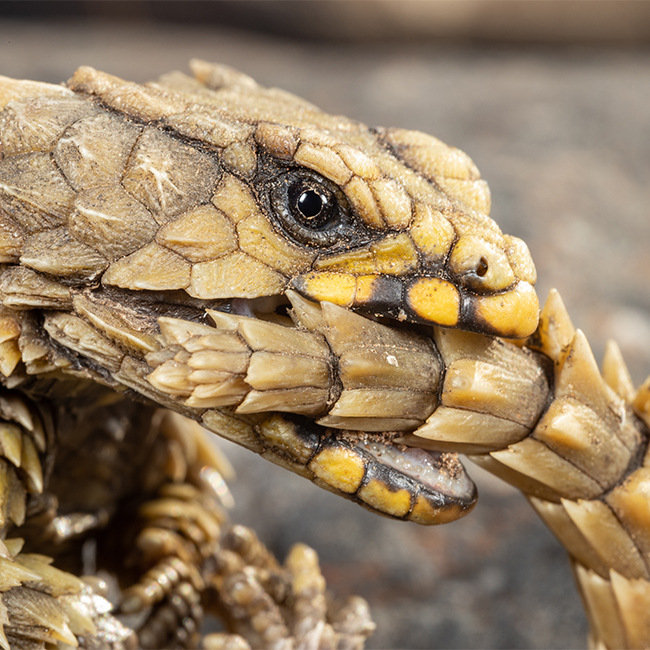
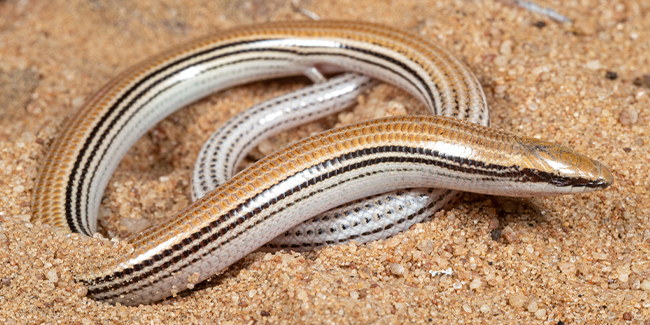
In total, 37 amphibian and reptile species were recorded on this highly successful trip, including species of conservation concern such as the Endangered Kasner’ s Dwarf Burrowing Skink (Scelotes kasneri) and the Near Threatened Armadillo Girdled Lizard (Ouroborus cataphractus), as well as a potential range expansion for the Cape Long-tailed Seps (Tetradactylus tetradactylus).

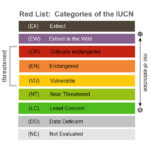
Box 1 IUCN Threat Categories

 The different Red List categories as defined by the IUCN

Established in 1964, the International Union for Conservation of Nature’ s (IUCN) Red List of Threatened Species has evolved to become the world’ s most comprehensive information source on the global extinction risk status of animal and plant species. Species experts assess species according to set criteria considering population dynamics, ecological and habitat requirements, and past, current and future threats to ultimately assign a species into an extinction risk category.

Box 2: Data Deficient Animals in South Africa

The Data Deficient Orange Sandveld Lizard (Nucras aurantiaca) – photo credit: Chad Keates

“Data Deficient” is an IUCN Red List Category assigned to species where there is not enough information to conduct an extinction risk assessment. Listing of species in this category indicates that more information is required and acknowledges the possibility that future research will show that threatened classification is appropriate. In South Africa, there are currently seven Mammal, five Amphibian, seven Reptile, and one Butterfly species listed as Data Deficient.

Box 3: Environmental Screening Tool

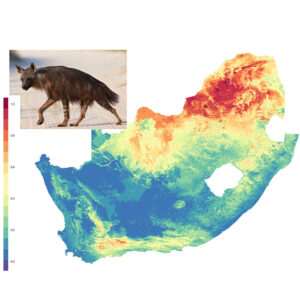
An example of a species distribution model – Brown Hyena (Parahyaena brunnea) – which informs the Environmental Screening Tool Animal Layer

The National Environmental Screening Tool is an online tool which contains, amongst other things, spatial information on the distribution of plant and animal species of conservation concern, that is regionally listed as Vulnerable, Endangered, or Critically Endangered according to the IUCN criteria. By law, the tool must be used in the screening process for any proposed development in the scoping phase of the Environmental Impact Assessment process. The EWT collaborated with SANBI and Birdlife South Africa to create and collate the animal and plant layers used in the tool.

The EWT would like to thank the Anglo-American Foundation for funding this project, our expert collaborators (particularly Dr Krystal Tolley at SANBI and Werner Conradie from Bayworld Museum), and of course, the landowners for kindly allowing access to their properties, supporting our work, and being at the forefront of protecting the biodiversity of the region.   

Science Snippets: Can farming actually save threatened species?

Science Snippets: Can farming actually save threatened species?

Science Snippets: Can farming actually save threatened species?

Christie Craig, the ICF/EWT African Crane Conservation Programme

As human development and global change accelerate, natural ecosystems are under immense and ever-growing pressure. In some cases, ecosystems are altered to such an extent that they can be considered novel. Intensively farmed areas are an example, and these novel ecosystems affect biodiversity. As conservation biologists, we anticipate this would spell disaster for wildlife, particularly threatened species, but this isn’ t always true.

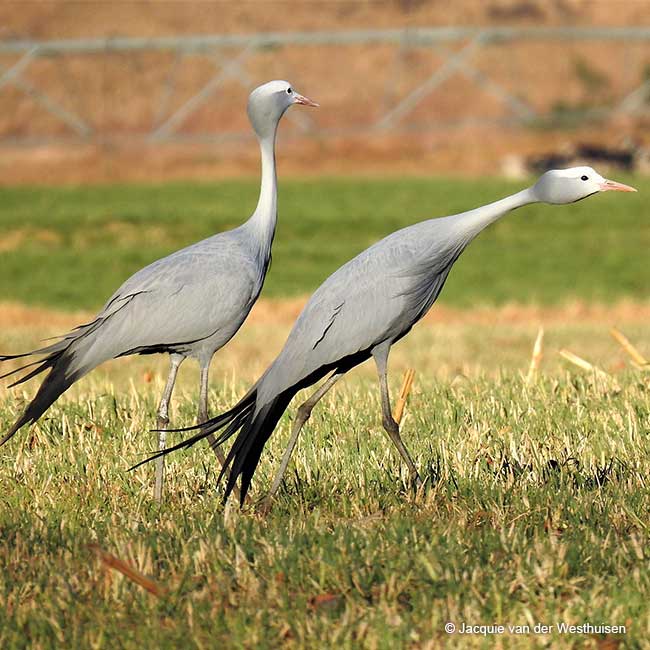
We have seen this in the case of South Africa’ s National Bird, the Blue Crane (Anthropoides paradiseus). In the 1990s, alarms were raised as this species was declining rapidly in their natural range, the eastern grasslands and the Karoo, due to grasslands being degraded and transformed for agriculture and forestry and other threats such as poisoning and powerline collisions. Interestingly, however, on the other side of the country, in the Western Cape wheatlands, Blue Cranes responded to agricultural transformation in a remarkably different way. In the early 1900s, when people began clearing fynbos (generally unsuitable habitat for Blue Cranes), Blue Cranes started to move into the Western Cape. Since then, the population has boomed in this area. Today, 50% of all Blue Cranes in the world are found in this novel ecosystem.

Conservationists were concerned because it is challenging to conserve wildlife in highly transformed landscapes like this. We have seen Blue Crane numbers decline rapidly once before, and we were concerned that this could happen again if something shifted in the Western Cape wheatlands. Intensively farmed landscapes are dynamic and influenced by social factors such as farmers’ decisions, politics, economics, and climate change. In modern conservation, many are moving away from crisis management and taking a ‘fighting fires’ approach by being more proactive and foreseeing risks to prevent species declines before they happen and to maintain conservation success. With this in mind, the African Crane Conservation Programme set up a PhD project to investigate the Blue Crane’ s conservation status, specifically focusing on understanding threats in the Western Cape wheatlands.

PhD candidate & Western Cape Field Officer Christie Craig has spent the last four years conducting this research and is in the process of wrapping up her thesis. Bringing all these data together, we now have a clearer picture of the state of the Blue Crane population. Over the last 30 years, we have seen an overall recovery in Blue Crane numbers, with the current national estimate obtained from aerial surveys at 44,500 Blue Cranes, which is 44% higher than the last estimate in 2002. This recovery was largely due to increases in the Western Cape wheatlands in the 1990s and early 2000s, as shown by citizen science data, i.e. Coordinated Avifaunal Roadcounts. Aerial surveys have also shown increased numbers in KZN, thanks to continued conservation action. However, the Blue Crane numbers in the grasslands are still a small remnant of what they used to be. Looking at the South African Bird Atlas Project data, we see changes in Blue Crane reporting rates, which tell us how many cranes there are. These data show that several areas of the eastern grasslands no longer have cranes, compared to the 1980s (in red, Figure 1). We hope Blue Crane numbers will recover to their full potential in the grasslands with continued conservation.

The Blue Crane’ s adaptation to wheat and pasture agriculture in the Western Cape has been their saving grace and aided their recovery. However, we have some concerns that this population is no longer thriving. Analysis of citizen science data shows that the population trend changed from positive to negative in 2010, and since then, Blue Crane counts have declined by 22% in the Overberg. If this decline is sustained, we could see the national population decline by an estimated 53% over the next 37 years. We do not know whether these declines will continue at this stage, and we are monitoring the population carefully. We cannot pinpoint a single reason for this decline, but we know from research that Western Cape breeding success is lower than it used to be and lower than the Blue Cranes in the Karoo and grasslands. In the Karoo and grasslands, EWT field workers have documented an average fledgling rate of 1.01 chicks/pair (95% confidence intervals = 0.82-1.24) in the grasslands and 1.02 chicks/pair (95% CI = 0.76-1.35) in the Karoo. Western Cape Blue Cranes only fledge an average of 0.64 (95% CI 0.42-0.95) in the Swartland and 0.81 fledglings/pair (95% CI 0.57-1.12) in the Overberg. The agricultural landscape can be challenging for breeding Blue Cranes as they attempt to breed in the dry season, when wheat is being harvested, and there is a lot of disturbance in fields. Other threats to Blue Cranes, once they fledge, include powerline collisions and poisoning.
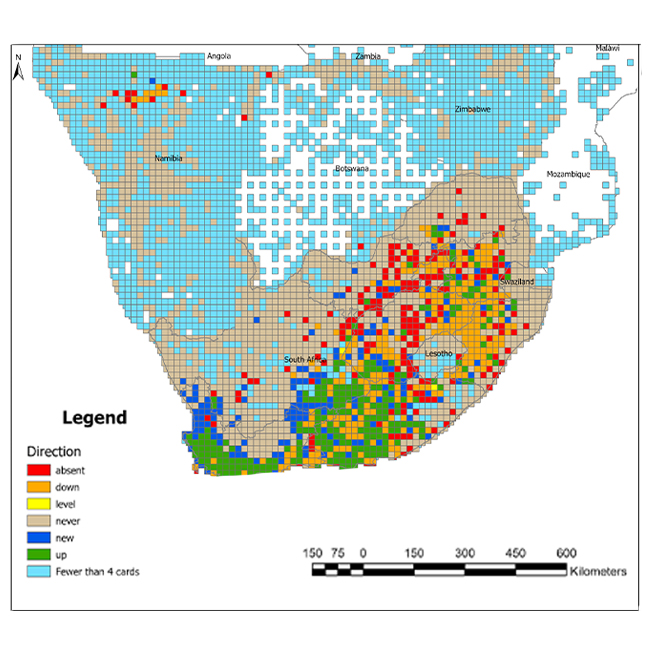
Map showing Blue Crane reporting rates in SABAP1 vs SABAP2

Figure: Comparison of Blue Crane reporting rates in SABAP1 vs SABAP2, indicating Quarter Degree Grid Cells (QDGCs) where cranes have never been recorded (never), where they were recorded in SABAP1 but weren’ t in SABAP2 (absent) and vice versa (new), and where they were recorded in both projects, the direction of reporting rates from SABAP1 to SABAP2 (down, level or up). QDGCs with fewer than four cards in either project are indicated in blue.

Now that we have data on the population trends and threats, we will feed this directly into conservation action. The first step is to develop a conservation plan. We will host a workshop in the coming months, bringing together all the stakeholders and experts to develop a conservation planning document and implementation strategy.

This work is kindly sponsored by Neuwied Zoo, Jacksonville Zoo, Safari West, Nashville Zoo, and the Leiden Conservation Foundation. The PhD research was funded by the Leiden Conservation Foundation, Eskom & the Hall-Johnson Fellowship.


Science Snippets: Cape Vultures blowing in the wind

Science Snippets: Cape Vultures blowing in the wind

Science Snippets: Cape Vultures blowing in the wind

Modelling the threat of wind energy production plants for the vulnerable Cape Vulture

Erin Adams and Lizanne Roxburgh, the EWT Conservation Planning and Science Unit

Across Africa, wind energy offers opportunities to reduce national dependency on fossil fuels, increase energy security, and reduce greenhouse gas emissions. But what happens when these clean energy production sites cut through the distribution of a threatened species? In South Africa, wind energy farms overlap significantly with the flying patterns of Cape Vultures, and a recent publication* co-authored by EWT scientists quantified the risks posed by wind energy development facilities to Cape Vultures.

Wind energy is one of the fastest-growing forms of renewable energy, but it can result in the direct mortality of birds by collision with turbine blades. Large soaring species like vultures are particularly vulnerable to collisions. Cape Vultures are classified as Vulnerable on the ICUN Red List and are endemic to southern Africa. Using GPS tracking data collected from 68 Cape Vultures over twenty years, and the location of 167 core colonies and five roost sites, scientists could determine how at risk the Cape Vultures were to collisions with wind turbines. Complex modelling was done to see how the birds are likely to travel around their environment and determine the potential for collisions. Within this, they could measure how much the vultures overlapped with current wind farms and aimed to expand this to be used when planning future wind energy sites.

The scientists found that the models could accurately predict Cape Vulture movement patterns. The resulting maps produced were also able to quantify how much of a threat wind energy production plants posed to Cape Vulture colonies in South Africa. The results of this work can assist wind energy stakeholders in identifying high-risk areas and planning new developments accordingly. In future, the scientists recommend expanding this work into other regions of Africa to include other threatened vulture species, such as Rüppell’ s Vulture in East Africa.

*Cervantes, F., Murgatroyd, M., Allan, D. G., Farwig, N., Kemp, R., Krüger, S., Maude, G., Mendelsohn, J., Rösner, S., Schabo, D.G., Tate, G., Wolter, K., & Amar, A. (2023). A utilisation distribution for the global population of Cape Vultures (Gyps coprotheres) to guide wind energy development. Ecological Applications, e2809. https://doi.org/10.1002/eap.2809