The African Crane Conservation Program (Endangered Wildlife Trust/ International Crane Foundation Partnership) Drakensberg project is uniquely placed in the foothills of the majestic mountains of the Eastern Escarpment.
The Great Escarpment is a significant geographical feature characterised by high cliffs, steep slopes and higher inland plateaus. It separates the higher interior plateau from the lower narrow coastal strip and is an area of high biodiversity and endemism, and equal cultural diversity.
Across this landscape there are a range of focal species and non-focal species that are impacted by poison incidents or background chemical toxicity. Further to this, there are underlying health risks to human well-being associated with the illegal use of chemicals. This discipline is an understudied topic and is a very complex space to work in.
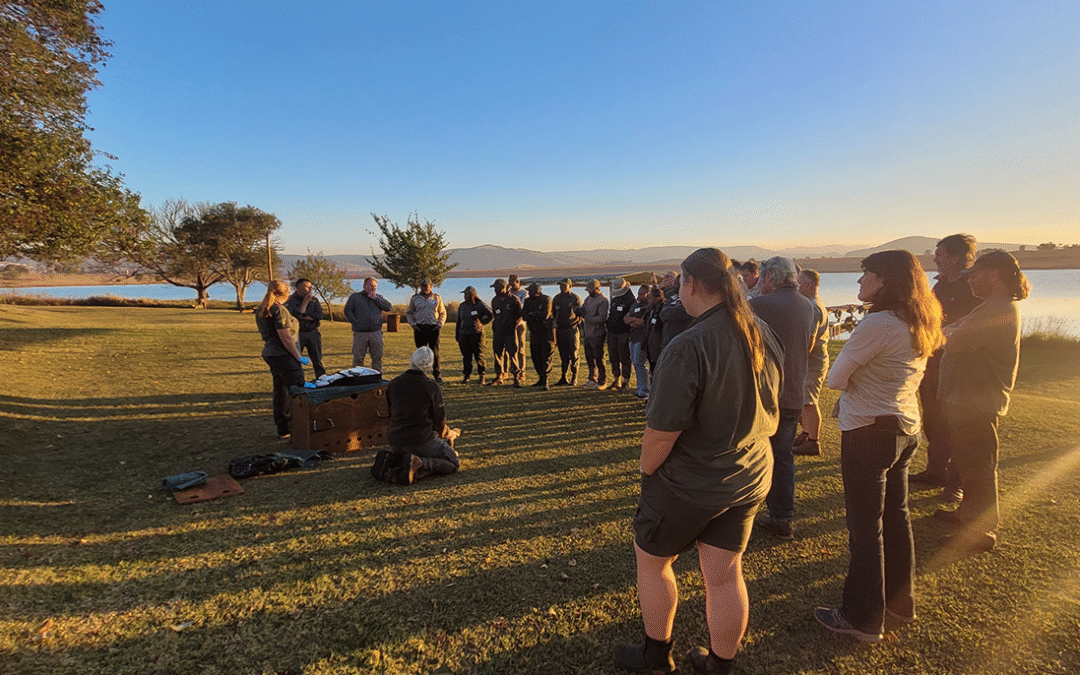
Recently, my colleague Samson Phakathi and I were invited by the Ezemvelo KwaZulu-Natal Honorary Officers (a dedicated group of volunteers committed to support EKZN Wildlife provincial Wildlife Authority) to present a wildlife poison mitigation workshop.
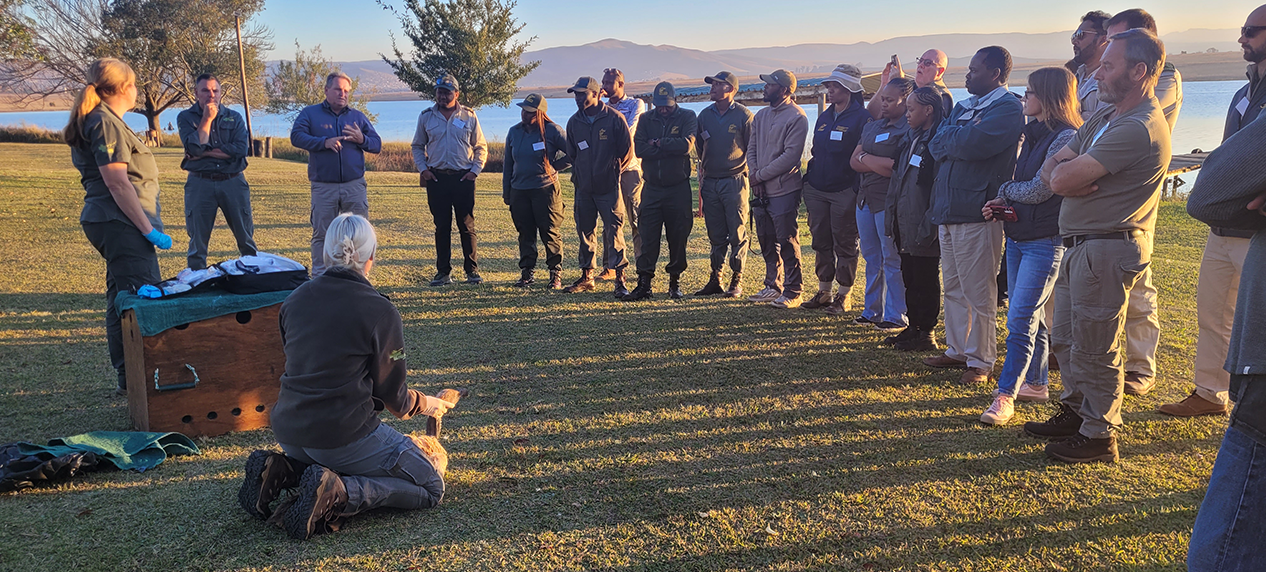
The three-day workshop aimed to educate attendees on the signs of wildlife poisoning, personnel protection, what action should be taken and how to collect evidence for a criminal case. The more than 40 attendees included representatives of NPO’ s, KZN Wildlife Honorary officers, professional forensic experts, and Environmental Management Inspectorate members (EMI), and a couple of former law enforcers. It served as a refresher to some individuals, but the majority were there to hear about the impact of poisoning on wildlife for the first time.
As always in conservation it is paramount to ensure that the correct individuals are working together for the benefit of our landscape. Connecting individuals from diverse backgrounds is not always easy, but it is necessary for conservation success. Besides hosting a social event as a means of building working relationships, local wildlife rehabilitation centre, FreeMe, demonstrated how to respond to live wildlife poison cases, and the importance of handling during poisoning cases. Investipol, a professional investigation and spill response unit, shared their knowledge and experience, while the Ezemvelo KZN Wildlife officials discussed the difficulties of implementing existing laws.
The outcomes of this event were multi-dimensional and included the expansion of the poison response team, new connections made for long-term collaboration, a greater understanding of localised community poisoning events and a direction to raise awareness about the incorrect use of chemicals. From this event two more workshops were requested in Northern and Central KZN. We are grateful to every individual who participated and we look forward to seeing the difference in our landscape.
** The EWT would like to thank the Paul King Foundation and N3tc for their support.