The passion and insights of EWT Youth about conservation
The passion and insights of EWT Youth about conservation
June 16, 2026, marked the historic 50th anniversary of the 1976 Soweto Uprising. This protest by youth was a defining moment in South Africa’s journey to democracy. While older South Africans remember the events of 16 June, not all of today’ s youth are aware of its significance.
At the Endangered Wildlife Trust, most of our youth work in the field as conservationists. These are young people who are actively involved in the protection of wildlife and ecosystems contributing to a sustainable future for people and planet.
For the EWT, youth are the future leaders and decision-makers. They are the generation that will inherit environmental challenges, which means they need to be empowered to deal with long-term sustainability concerns. Conservation is not just about wildlife; it supports livelihoods, food security and community well-being. Having youth in our pack brings innovation, creativity and, in some instances, a fresh look and infectious passion for a future, healthy world.
Kutlwano Mokgoro, a legal officer, shared that biodiversity is the very tapestry of Earth. “A world without animals, water or clean air would resemble the bleak, lifeless future shown in WALL-E, where Earth has become an uninhabitable wasteland covered in waste and devoid of thriving ecosystems”.
In this edition of Conservation Matters, we bring you the views of four young people working in a variety of fields provide an insight into their work, the impact they have, and the future.
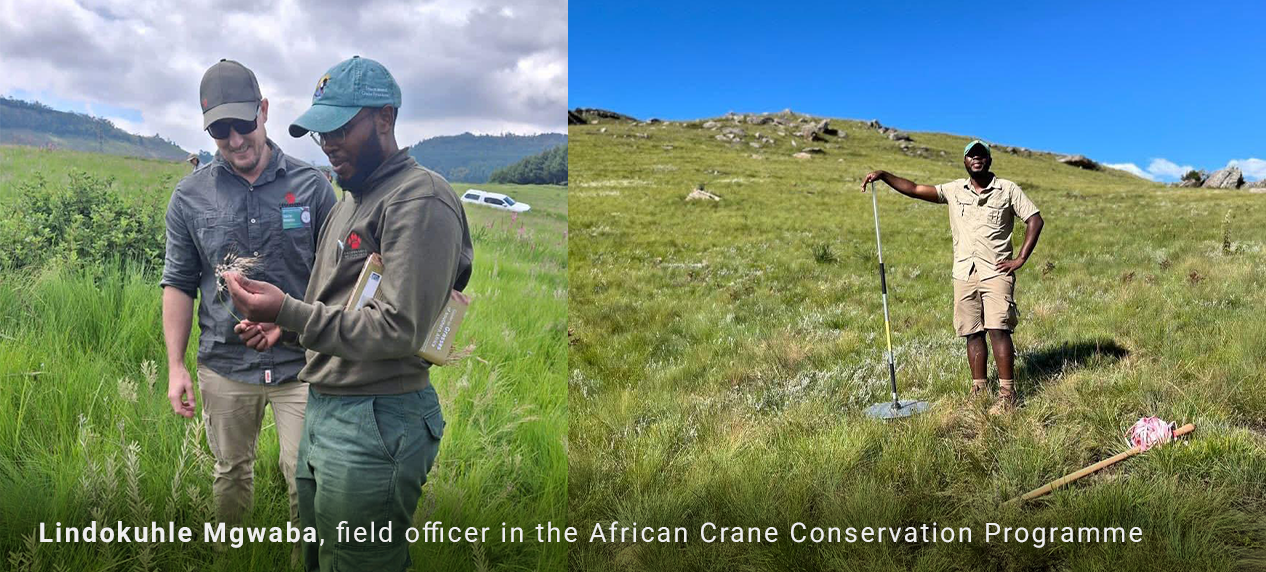
Lindokuhle Mgwaba, field officer in the African Crane Conservation Programme
The thorn prickles, crunching, cracking, and crinkling cadence of Acacia pods prancing to the gambol of the hoofed wanderers. Phalanges dipped in mire reciting the language of the mud hoppers. The sky’ s voice in anguish screams across the savanna, oh, the golo ghost of the night constantly amplifying the trauma. The blanket of consolation offered by the chorus rising in the branches and the dawn dusted in fire and glare sends the ghost to slumber. Spiritual trances traversing realms and amalgamating dialects of the earth and sky. My umbilical cord lies in the Dukuza of the thornveld.
Spiritual upbringing laid down the core principles of protecting and nourishing iMvelo. However, conservation and ecology interests were born of a range of factors: an inquisitive nature, passion, climate change, personal experiences, and sustainability. The main contributing factor is the awareness of a single reality: Spirituality and Indigenous systems were not going to survive as a single entity; they required input from multiple parties to directly and indirectly protect the very vessel on which the systems are reliant.
The younger generations are the tillers of hope in the land plagued by greed and overutilisation of natural resources. The contemporary youth are at risk of inheriting ǃGâi with a hostile climate, water scarcity, unproductive soils, biodiversity loss, polluted air, and food scarcity. Therefore, the call to action must come NOW! Earlier than any other generation before them.
Environmental awareness is the seed of all possibilities in achieving conservation goals. However, various studies have shown that it has a low success rate. That calls for a drastic change in how we view and approach awareness. It has become predictable, characterised by long PowerPoint presentations in closed doors. It is time to be more actionable, demonstrative methods, in practice lessons, maximise modern marketing strategies in the form of social media and gaming, sufficient support systems and inclusivity through integrating indigenous knowledge.
My role involves field tasks, data collection and management, wildlife and habitat monitoring, stakeholder engagement, and supporting conservation projects. These are very fulfilling tasks, but despite operational and logistical challenges associated with any role, the single most challenging aspect for me is the realisation that we are fighting a losing battle on so many fronts, definite extinctions on the horizon, immense pressure from multiple industries, volatile global political landscapes impacting funding routes, etc.
However, it’s not all doom and gloom; the role comes with exciting highlights, such as spending time in nature and observing wildlife, and most fundamentally, hearing how communities view conservation and the EWT from their perspective.
Endangered Wildlife Trust represents a platform that covers various biodiversity conservation key areas and community-based conservation. This combination creates an interface of operating in species and habitat protection, productive agricultural systems, alleviating livelihoods, human wildlife coexistence, research, and education. These aspects are all in accordance with my values directed towards protecting indigenous systems and supporting revenues that promote sustainable productivity and improving the livelihoods of rural communities. Therefore, I would highly recommend working for the EWT on these grounds.
However, I fear that conservation careers are becoming largely unsustainable in the light of economic market fluctuations. Therefore, anyone coming in the sector needs a clear understanding of that fact and position themselves to be useful in multiple branches of the greenbelt.
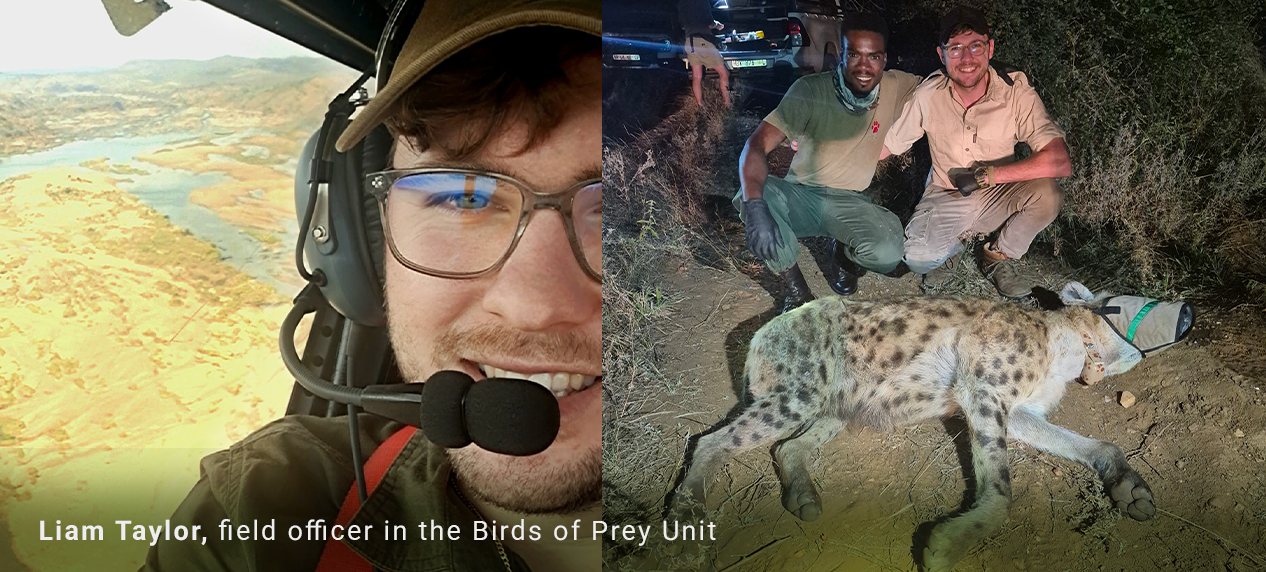
Liam Taylor, field officer in the Birds of Prey Unit
Growing up, I always wanted to work in the bush with wildlife. Reading about Gus and Margie Mills studying hyenas in the Kalahari, or Bruce Bryden confronting poaching in the Kruger, fuelled my aspirations for this lifestyle. My passion for nature is intrinsic; it is not merely a component of my career, but rather the driving force behind everything I do and care about. A world without vultures circling overhead, the evening chorus of Scops Owls and bushbabies, or the sight of fresh leopard tracks in the morning sand would feel sterile, diminished, and contrary to how our natural world should be.
As a young conservationist, I admittedly enjoy the thrill. Whether walking through Big Five country to monitor raptor nests or flying low over remote wilderness in a small aircraft, no two days are ever the same. However, conservation is about far more than adventure. Some of the most rewarding moments come from rescuing wildlife affected by human activities and seeing those animals return to the wild. Watching the movements of a rehabilitated vulture with a GPS tracker, knowing that you played a role in giving that individual a second chance, is incredibly fulfilling.
I chose to work for the Endangered Wildlife Trust because of its long-standing reputation, proven conservation impact, and commitment to protecting species and ecosystems across Africa. The EWT provides opportunities for young conservationists to contribute meaningfully to real conservation outcomes. Through the organisation’s established relationships and credibility, I have been fortunate to work alongside reserve managers, wardens, ecologists, and veterinarians, despite having far fewer years of experience than many of them.
Entering the conservation sector was not easy. Opportunities within the NGO world are limited compared to many other professions, and breaking into the field required perseverance, continuous learning, and developing a broad range of skills. Conservation also comes with daily challenges, such as watching habitats or animals die without letting that destroy your zeal and drive or dealing with wildlife poisonings in the middle of the night. Yet these challenges make the successes all the more meaningful.
I would wholeheartedly recommend both conservation as a career and the EWT as an organisation. Conservation offers the opportunity to make a tangible difference while working in some of the most remarkable places on Earth. Working for the EWT has allowed me to contribute to meaningful conservation initiatives while continuously learning from dedicated professionals who share a common goal: ensuring that future generations inherit a world rich in wildlife and natural heritage. And honestly, doing something so fun for such a good cause, is just so awesome!
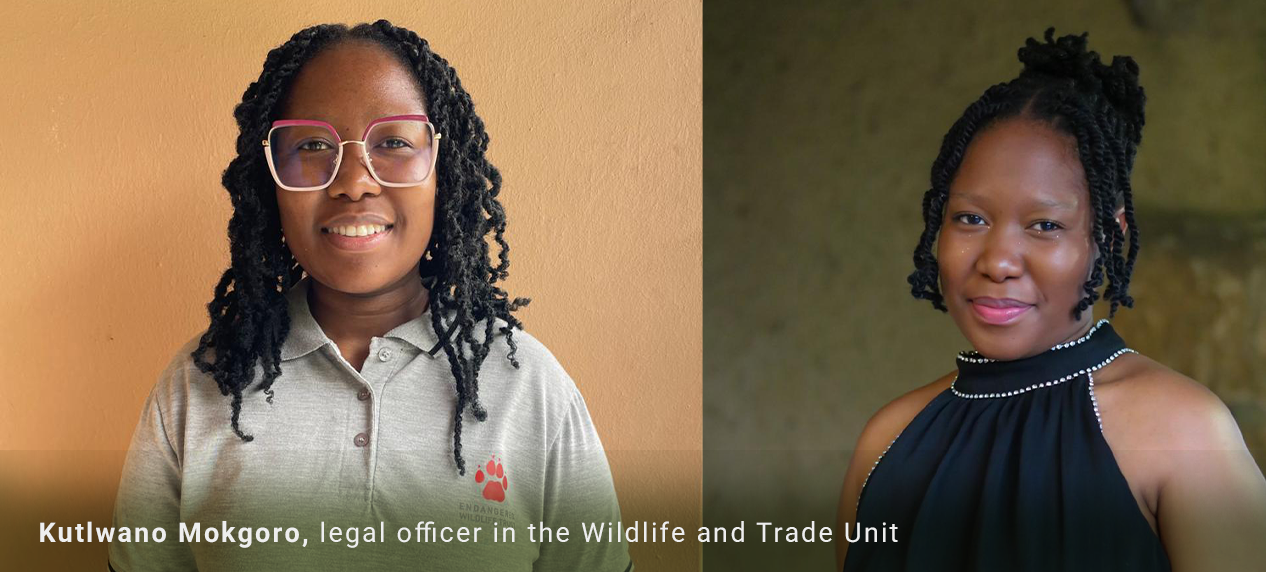
Kutlwano Mokgoro, legal officer in the Wildlife and Trade Unit
When people think about conservation, they often imagine scientists and rangers tracking wildlife in remote landscapes or researchers studying ecosystems. While these roles are essential, conservation requires many different abilities and professions. As a lawyer at the Endangered Wildlife Trust, I have found a way to meaningfully contribute to protecting South Africa’ s natural heritage.
My decision to work for EWT was driven by a belief that environmental justice and social justice are deeply connected. Growing up as a black, young woman with a disability, I became aware of how unequal access to resources, opportunities, and healthy environments can shape people’ s lives. I wanted to use my legal training to highlight some of these challenges while helping to protect biodiversity for future generations.
The law plays a crucial role in conservation. Environmental legislation provides the framework for protecting endangered species, regulating land use, combating wildlife crime, and ensuring that development takes place sustainably and responsibly. Without strong laws and effective enforcement, conservation efforts are undermined by illegal activities such as poaching, habitat destruction, and pollution.
As a lawyer, I help interpret legislation, support policy development, and ensure that conservation initiatives comply with legal requirements. In many ways, the law serves as one of conservation’ s most important tools. Working at the EWT has shown me that conservation is not only about animals and ecosystems; it is also about people. Effective conservation requires collaboration between scientists, lawyers, economists, teachers, communicators, and community leaders. My role allows me to bridge legal processes and conservation goals, helping to create practical approaches that benefit both nature and society.
As someone from a background that is often underrepresented in the environmental sector, I am particularly passionate about increasing diversity in conservation. Representation matters. When young people see professionals who look like them and share similar experiences, they are more likely to believe that they too can make a difference. Being a black woman with a disability has given me a unique perspective on meaningful inclusion and participation, resilience, and the importance of ensuring that all voices are heard in decision-making processes.
I would love to see more young black people from different fields become involved in environmental issues. No matter the profession, there is a place for you in conservation. The environmental challenges we face today are complex and require multidisciplinary solutions. Protecting our planet is a collective effort and we must all answer the call.
My experience at EWT has reinforced my belief that everyone has something valuable to contribute. By bringing together diverse skills, perspectives, and lived experiences, we can build a stronger and more inclusive conservation movement for South Africa and beyond.
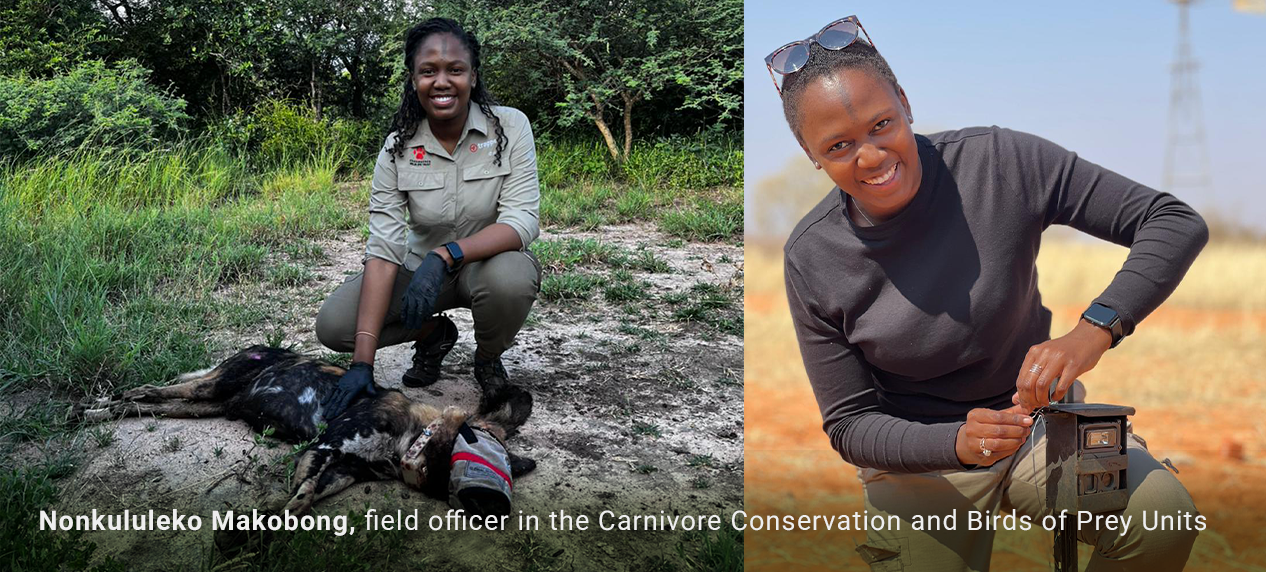
Nonkululeko Makobong, field officer in the Carnivore Conservation and Birds of Prey Units
My name is Nonkululeko Makobong, better known as Nonku, and I am a conservationist. Conservation is important to me because it helps protect the incredible wildlife and natural ecosystems that support life on Earth. Every species plays a role in maintaining healthy environments, and it is our responsibility to ensure that future generations can experience and benefit from nature just as we do today.
Youth Day reminds me of the courage and sacrifice of the young people on 16 June 1976. To me, it is not only a day of remembrance, but also a reminder that young people have the power to influence change in their communities and in the country. As a young conservationist, I see Youth Day as a reminder that creating positive change is not limited to politics. Contributing to wildlife conservation, environmental education, and protecting South Africa’s natural heritage is another way of serving my country.
Environmental awareness is especially important for young people because they will inherit the challenges facing our planet, including climate change, habitat loss, and biodiversity decline. By educating younger generations, we can inspire them to become responsible stewards of the environment and empower them to make sustainable choices.
My work as a Field Officer for the Carnivore Conservation Unit and the Birds of Prey Unit involves monitoring wildlife, collecting field data, assisting with research projects, responding to conservation challenges, and supporting efforts to protect threatened species.
One of the biggest challenges in my daily work is balancing the needs of wildlife conservation with human activities. Working in remote areas, dealing with unpredictable weather, and tracking dangerous animals can also be demanding.
The job comes with many exciting adventures. I have participated in wildlife captures and relocations, tracked large carnivores in the field, and assisted with vulture conservation projects. Some of the more nerve-racking moments have included working close to lions and other dangerous wildlife, where safety and teamwork are essential.
I would highly recommend a career in conservation and working for the Endangered Wildlife Trust (EWT). Conservation offers the opportunity to make a real difference for wildlife and ecosystems while continuously learning and experiencing new challenges. Working for the EWT is particularly rewarding because it brings together passionate people dedicated to protecting South Africa’s biodiversity and creating a future where people and wildlife can coexist.
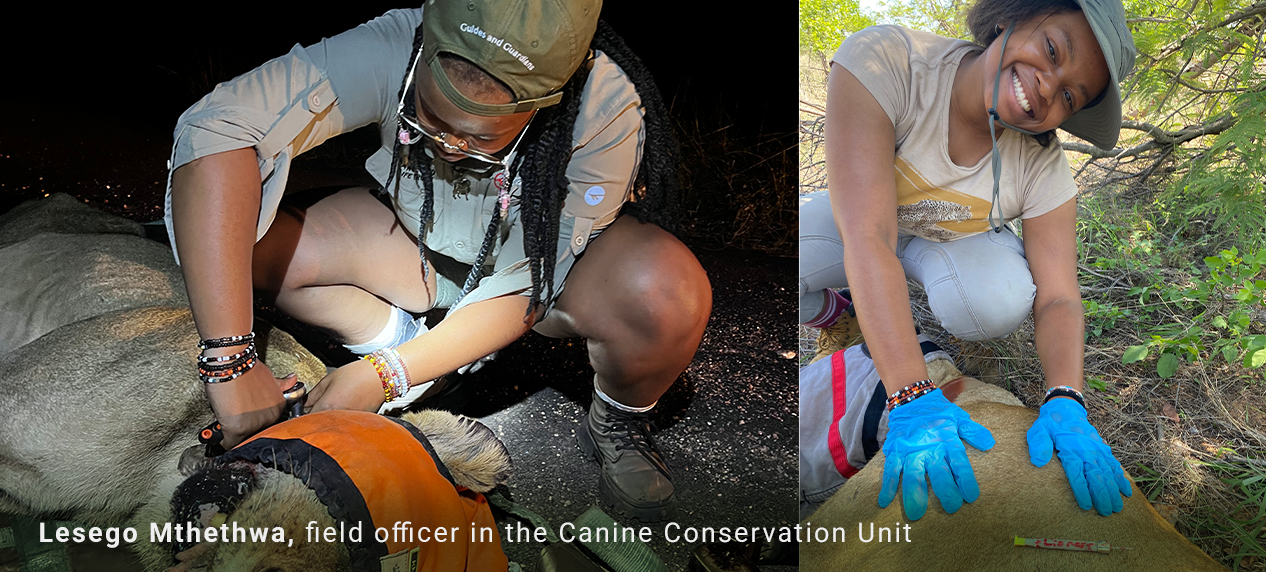
Lesego Mthethwa, field officer in the Canine Conservation Unit
For me, conservation has always been more than protecting wildlife – it is about protecting people, livelihoods, and our shared future.
I grew up with strong ties to Acornhoek, where my mother’s family relied on crops and livestock for both food and income. From an early age, I learned that caring for the environment is essential, because healthy ecosystems support healthy communities. When our environment thrives, so do our crops, livestock, and people.
This understanding shaped my passion for conservation and reinforced the importance of environmental awareness among younger generations. Young people will inherit the responsibility of protecting our natural heritage, and by connecting them to nature, we empower them to become informed decision-makers and future conservation leaders.
Today, I work as a Field Officer in the Carnivore Conservation Unit at the Endangered Wildlife Trust (EWT). While my primary focus is lion conservation, my role has expanded to include community engagement and environmental education. I also work with CSA Scouts as an Assistant Scout Leader, where I help deliver the Carnivore Culture curriculum to inspire young people to value wildlife and understand the importance of conservation.
Like many women in conservation, I face challenges every day. Being a young Black woman in a male-dominated field means I am often underestimated because of my age, size, or gender. There are times when I feel I have to work twice as hard to prove myself. However, these experiences have strengthened my determination to create space for more young women in conservation and show others that they belong in this field.
Despite the challenges, the rewards are extraordinary.
One of the proudest moments of my career was collaring my first lion in Kruger National Park. Having grown up visiting the Kruger, it was a surreal experience to move from admiring these animals as a child to actively contributing to their protection.
Another unforgettable experience came during a follow-up monitoring for that same male lion. Accompanied by two rangers, we lost the tracking signal and unexpectedly came face-to-face with the lion and his brother. For what felt like the longest ten seconds of my life, we stood eye-to-eye with the two males, unsure of what would happen next. Thankfully, they ran off, leaving us with an incredible story and an unexpected visual sighting.
I would wholeheartedly recommend conservation as a career. It brings you closer to your identity, your culture, and your environment while teaching you resilience, adaptability, and purpose.
Working for the EWT has been a dream come true. I first discovered the organisation on social media in 2017 and immediately fell in love with its work. Joining the EWT in 2024 as the first Black woman in the Carnivore Conservation Unit was both exciting and overwhelming. Although I had limited experience straight out of university, the EWT invested in my growth and gave me opportunities to succeed.
Through their support, I completed my Track and Trails course, and at just 25-years-old, I will be hosting my first girls’ empowerment camp for young women in the communities where I work.
For me, conservation is not just a career—it is a calling. It is about protecting wildlife, empowering communities, and inspiring the next generation to become custodians of our natural world.