Help protect Africa's 

A New Chapter for Pilanesberg’s Cheetahs

A New Chapter for Pilanesberg’s Cheetahs

News from the field:

A New Chapter for Pilanesberg’s Cheetahs

By Olivia Sievert, Project Coordinator, Cheetah Conservation Project
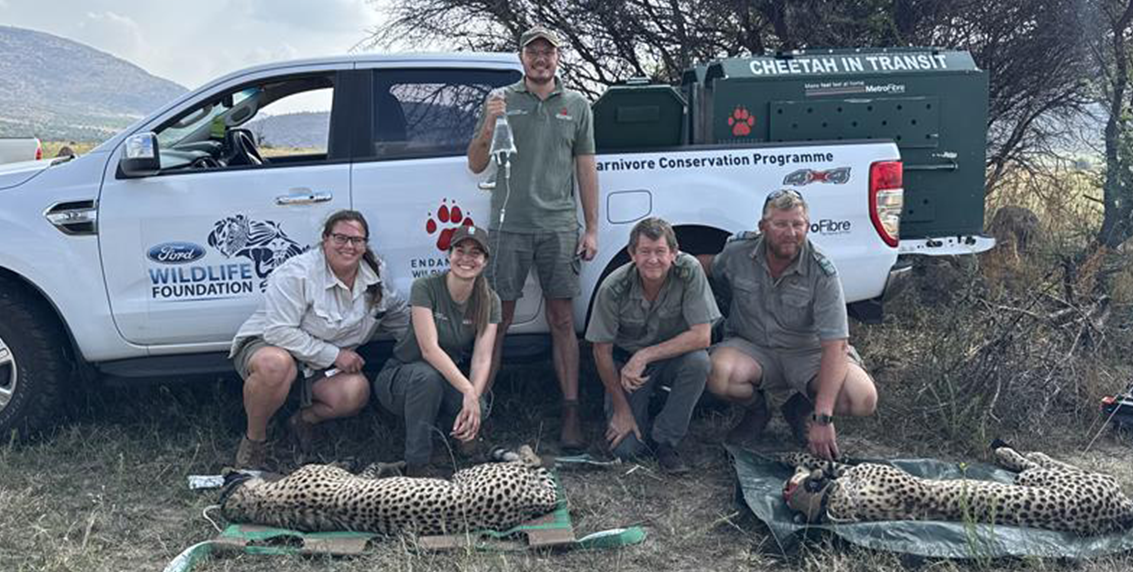
 

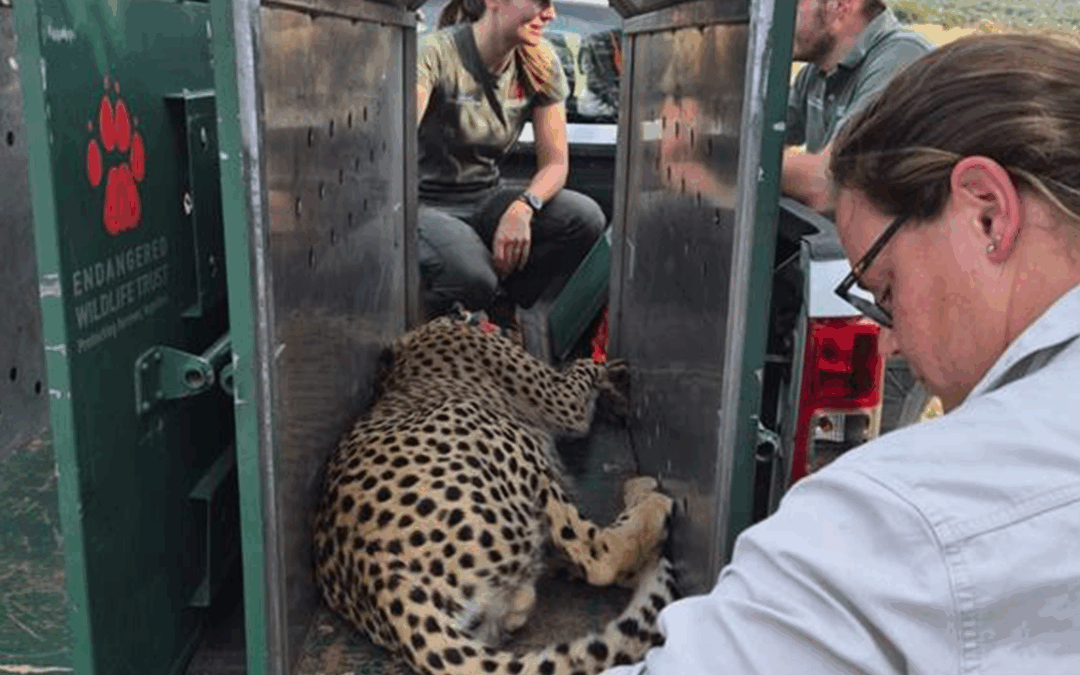
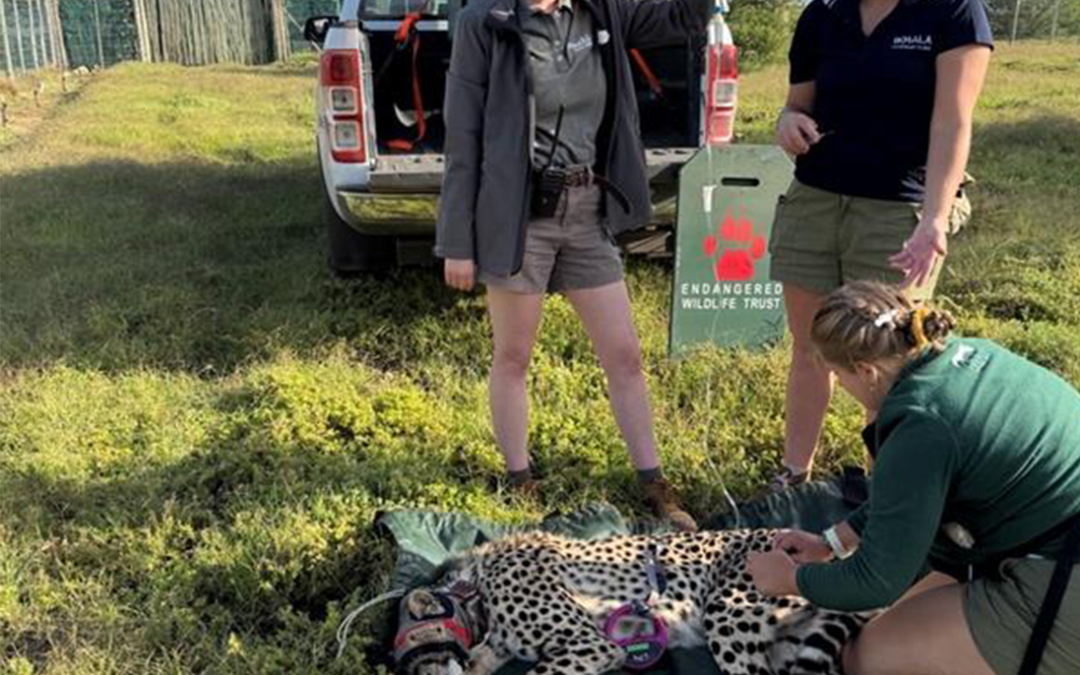
EWT team capturing cheetahs for relocation


In November, our team successfully relocated two young male cheetahs from Pilanesberg National Park to Shambala Private Game Reserve, a move designed to strengthen the genetics and long-term health of Pilanesberg’s thriving cheetah population.

The EWT has a proud, long-standing partnership with Pilanesberg, collaborating across numerous conservation projects. Cheetahs have long captured the hearts of visitors here, especially the beloved Rain, introduced in 2014. Though Rain passed away in 2023 at the remarkable age of 12, her daughters, Tale and Mapula, continue her legacy. Tale alone has raised nine cubs to independence, including these two young males who have now begun their own journey.

Before their relocation, the brothers spent months honing their hunting skills and embracing their natural independence, a vital step before translocation. Once they were ready, it was time for the delicate task of capture and relocation. Easier said than done! Between high spring heat, unpredictable sightings, and tight veterinary and logistics schedules, patience was essential.

When the perfect conditions finally arrived – cool, overcast weather and a sighting near Pilanesberg Centre – the teams sprang into action. But, as cheetahs do best, the brothers disappeared just as quickly. A drone was deployed to aid in the search, sweeping the surrounding area for any sign of the brothers. Just when spirits began to dip, a short game drive revealed the pair resting calmly in an open, recently burned area, ideal for a safe and efficient operation.

Within minutes, both males were darted, examined, and securely loaded into transport crates with minimal stress. After a smooth journey, they arrived safely at Shambala, where they are now settling into a temporary holding boma. They will remain in the boma for 3-4 weeks allowing them to adjust to the sounds and smells of their new home, before the gates are opened and they are released to join a female already on the reserve.

This move marks a special reunion of sorts for Shambala, which previously hosted males from Rain’s first litter for nearly six years. Now, her grandsons will continue her bloodline in the same reserve, full-circle moment in her legacy. For Pilanesberg, attention now turns to welcoming a new coalition of males to ensure continued breeding with Tale and Mapula. Together, these efforts reflect a shared vision: healthy, growing cheetah populations that will inspire and delight generations to come.
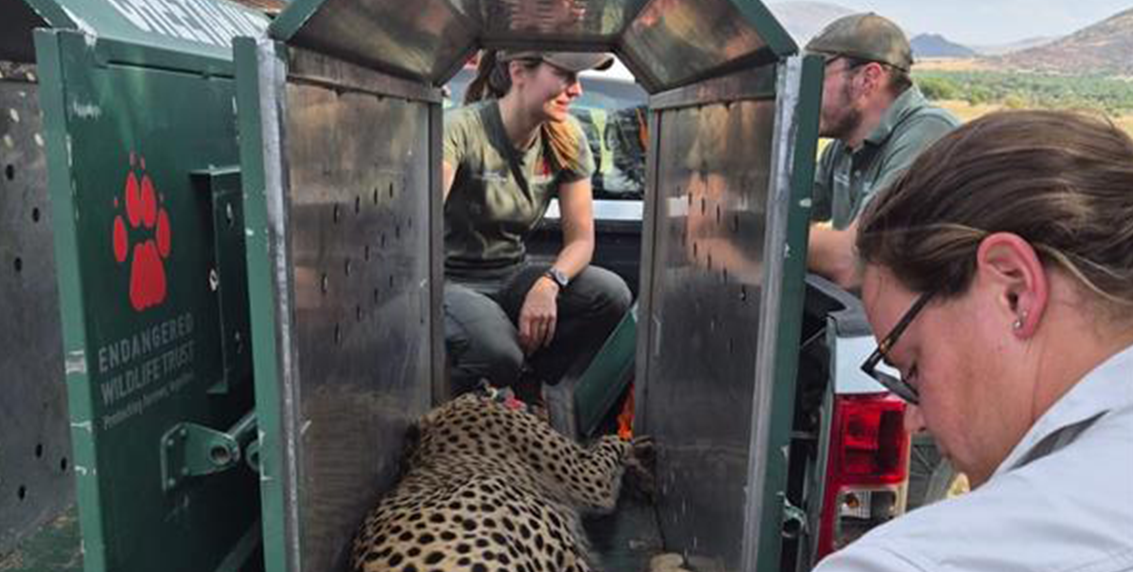
cheetah transport crates during Pilanesberg relocation

2024 closed with the longest and shortest cheetah relocations of the year

2024 closed with the longest and shortest cheetah relocations of the year


2024 closed with the longest and shortest cheetah relocations of the year

By Olivia Sievert


The Endangered Wildlife Trust’s Cheetah Range Expansion Project closed out 2024 with three relocations of four cheetahs as part of our ongoing efforts to manage the southern Africa Cheetah Metapopulation. And, they were the shortest and longest relocations of the year!

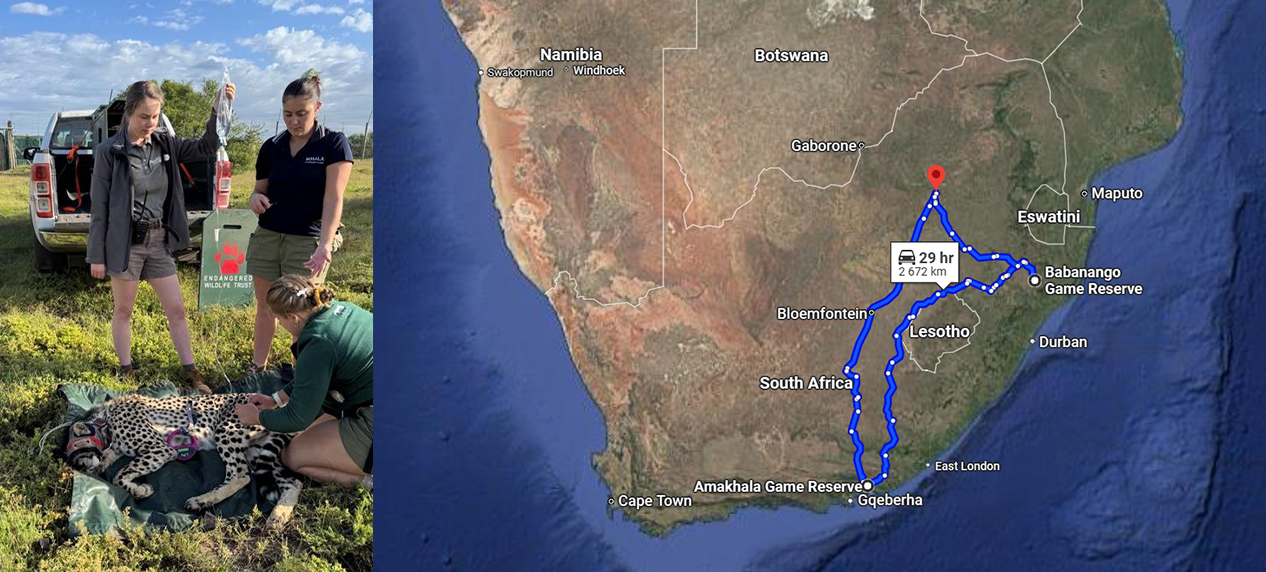
While most of our relocations are within regional or provincial clusters, long-distance moves are occasionally necessary to maintain genetic integrity or promote healthy population demographics. This was the case with our recent relocation of a female cheetah from Amakhala Game Reserve in the Eastern Cape to Babanango Game Reserve in KwaZulu-Natal. This incredible journey covered over 1,140 km, approximately 14 hours of travel for the Cheetah. To ensure the success of this relocation, I covered a roundtrip distance of 2,672 km taking me across six provinces over just three days!

After spending a month acclimatising in the boma, this female cheetah was released into the wider reserve just after the festive season and, we are happy to report that she is doing well.

Babanango Game Reserve, a 20,000 ha landscape undergoing a significant rewilding effort as part of a community agreement conservation project, has made tremendous strides in recent years. Following the reintroduction of two male and two female cheetahs in 2021-2022, the reserve is eager to continue growing its cheetah population and positively contribute to the conservation of species. The addition of this female will strengthen the population, which welcomed five cubs towards the end of the year.

However, to finish off the year we also undertook our shortest relocations. These two “cluster-based” relocations were less than 100 km of travel each. This highlights the importance of our work, enabling dispersal between protected areas that are otherwise isolated from each other, surrounded by a sea of anthropogenically altered landscapes. The two relocations in question took place from Manyoni Game Reserve, one of our long-standing partners in Cheetah conservation.

In recent years, Manyoni’s Cheetah population has flourished, with approximately 11 breeding adults currently thriving on the reserve. But, this success brings with it numerous challenges, including managing genetic diversity, ensuring sufficient prey availability, and preventing sub-adult dispersal beyond the reserve boundaries. To address these challenges in 2024, we worked closely with Manyoni’s Management Team and Wildlife ACT, who assist with monitoring the Cheetah on the reserve, to identify suitable individuals for removal. As such, three dispersing sub-adults were identified as having a high risk of inbreeding and were earmarked for removal.

Searching for new homes for Cheetahs is one of the hardest parts of the relocation process. It involves finding a reserve that ideally has similar habitats, predator dynamics, and unrelated Cheetahs to promote genetic diversity. Fortunately, Manyoni’s cheetahs carry unique genetics, offering an opportunity to strengthen KwaZulu-Natal’s cheetah population.

Partnering with Ezemvelo KZN Wildlife and Wildlife ACT, two ideal reserves were identified to receive these animals: Mkuze Valley Wilderness and Hluhluwe-iMfolozi Park.


Amakhala to Babanango


Mkuze Valley Wilderness

As part of our ongoing efforts to revitalise non-breeding Cheetah populations within South Africa’s Cheetah Metapopulation, we have been collaborating with Mkuze Valley Wilderness on an exciting restoration project. This 14,000 ha reserve comprises two protected areas: Mkuze Falls Game Reserve, which initially reintroduced Cheetahs in 1998, but has seen almost no breeding success in 25 years, and Ven Africa, a former cattle farm now transformed into a pristine Cheetah habitat through an ambitious rewilding project.

When we began the Cheetah restoration work with Mkuze Valley Wilderness in early 2024, only one male Cheetah roamed the reserve. Since then, we’ve introduced a second male, who has adapted remarkably well, and at the end of the year we were able to introduce one of the three Cheetahs that was earmarked for translocation from Manyoni Game Reserve – a two-year-old female now named Naledi. As with the vast majority of Cheetah translocations Naledi was temporarily held in a boma to allow her to acclimatise to her new surrounding and cut her homing instinct to Manyoni. Over the festive season she was released into the reserve and is doing extremely well in her new home – hunting primarily duiker and young wildebeest!


Hluhluwe-iMfolozi Park (HiP)

As one of the largest reserves within South Africa’s Cheetah Metapopulation, this 96,000 ha protected area also hosts one of the Metapopulation’s largest population of Cheetah– roughly 20 breeding adults.

As part of the overall species management in the park the Cheetah are closely monitored to understand the dominant genetic lineages allowing us to adaptively manage the population by relocating individuals at high risk of inbreeding off the property or choosing to bring in new genetics strategically. At present the vast majority of males on the property are singletons. As such, it was decided that the best course of action for the population was to introduce a strong coalition of new genetic lineage to the reserve to ensure more genetically unique breeding opportunities.

We were delighted to finally make this happen at the end of the year when we introduced two of the three Cheetah from Manyoni – a coalition of brothers that are completely unrelated to any Cheetah in the HiP. The males have since been released into the larger reserve and are doing very well.

This relocation highlights the power of collaboration in conservation. The effort brought together Manyoni Game Reserve, EWT, Wildlife ACT, and Ezemvelo KZN Wildlife, ensuring every decision was backed by the best available data.

We extend our heartfelt gratitude to Manyoni Game Reserve for the donation of these Cheetah through the EWT’s Cheetah Range Expansion Project and to all our partners for their roles in planning, capturing, and relocating these Cheetahs. Together, we are securing a brighter future for southern Africa’s Cheetah populations.


** The EWT would like to thank Metrofibre and Ford Wildlife Foundation for making this work possible by funding our Cheetah Range Expansion Project.