Help protect Africa's 

Careers in Conservation – Eugene Greyling

Careers in Conservation – Eugene Greyling

CAREERS IN CONSERVATION – Eugene Greyling

Eugene is a Field Officer with the EWT’s Carnivore Conservation Programme. Here is a little bit about Eugene’s journey to a career in conservation with the EWT.

Job Title: Carnivore Conservation Field Officer

What do you do in your day-day work? No day is quite the same. I am primarily assigned to the Range Expansion Project. My responsibilities vary between looking after predators in the EWT Holding Facility/Boma, community consultation and relations, assisting and advising with relocations, post-release monitoring of translocated predators, partner engagement, and a wide variety of other interesting tasks.     

Location: Welgevonden Game Reserve, Waterberg, Limpopo

Where did you grow up? I have been privileged enough to experience best of both worlds – I was raised in the farming community of Oudtshoorn in the Western Cape but moved to Dubai in the United Arab Emirates during my early high school years. 

What are your hobbies/things you like to do in your spare time? I volunteer as a wildland fire practitioner and enjoy working with snakes. I also never say no to a good road trip or hike, and travel as often as possible.

Any pets? I wish, if only I was allowed to have any. That’ s the trade-off to living on a nature reserve I suppose.

Favourite animal and why:  I’ ve spent the last couple of years working on leopards, so I think it is fair to say that I have developed a soft spot for them. However, I think this might be a slightly unfair question to ask any wildlife ecologist. 😃

Favourite food? There are very few things that can compete with a good butter chicken in my opinion. Of course, there is always a proper braai as well.

Pet peeve?  When people throw rubbish out of their car window, or anywhere else for that matter, with the expectation that someone else will clean up after them. Also, weak coffee.

Why did you want to work for the EWT? As a well-established organisation that sets the standard in innovation, research, and well-informed applied conservation across Southern Africa, I believe there is no better environment than the EWT to learn from, develop within, and contribute to as an early-career wildlife ecologist. With a holistic, integrated strategy that recognises not only species, but also landscapes and the people that share in those landscapes, the approach of the EWT is something I deeply resonate with. Ultimately, I believe that the EWT provides the ideal platform to be able to remain curious and to make a real collaborative difference, and that is what I am here for.

What are you passionate about?  I am convinced that every person has the ability within to influence those around them, be that by means of real, honest conversation or by virtue of exemplary actions. Often, I find myself standing in awe of the long-term impact that individual change can have on a community, and in turn on the natural environment. Therefore, I enjoy seeing people grow and develop and being part of that process, even though my first love has always been Mother Nature. During the past few years of studies and time spent volunteering with several conservation organisations, I came to realise that the biggest long-term influence we can have is by targeted education in communities where we can plant a seed that will drive local change from within – tackling problems using solutions crafted together that empower and benefit stakeholders for the greater good of the ecosystem. After all, conservation is about people. In order to ensure that we make a positive impact as conservationists, be that by means of education or effective adaptive management of landscapes that facilitate biological diversity, we need to be sure that the change we instil is accurately informed. Thus, I find myself in the realm of ecological research, with a particular passion for animal behaviour and socio-ecological dynamics, including human-wildlife coexistence and spatial ecology.

What’ s the best advice you’ ve ever received, and who did it come from? “Listen with the intent to understand, not to respond” – I believe it is a quote by Stephen Covey, but my granddad was the one to share this wisdom with me.

What is your go-to feel-good song? Bubble Toes by Jack Johnson

What excites you about this new position? Every day out in the field brings new and exciting challenges – it never becomes monotonous. Having the privilege to be able to learn from a great group of experienced colleagues, as well as the opportunity to travel as part of my work, is also very exciting.
Science Snippets Is the neighbourhood going to the dogs?

Science Snippets Is the neighbourhood going to the dogs?

SCIENCE SNIPPETS
IS THE NEIGHBOURHOOD GOING TO THE DOGS?

Samantha Nicholson, Lion Database Coordinator, EWT Conservation Science Unit  

Carnivore species that overlap in their use of space, food or habitat are called sympatric carnivores, and competition for resources between these species can lead to conflict and death. To avoid this, species have adapted a wide range of different behavioural mechanisms to share resources, and to survive in their shared environment.

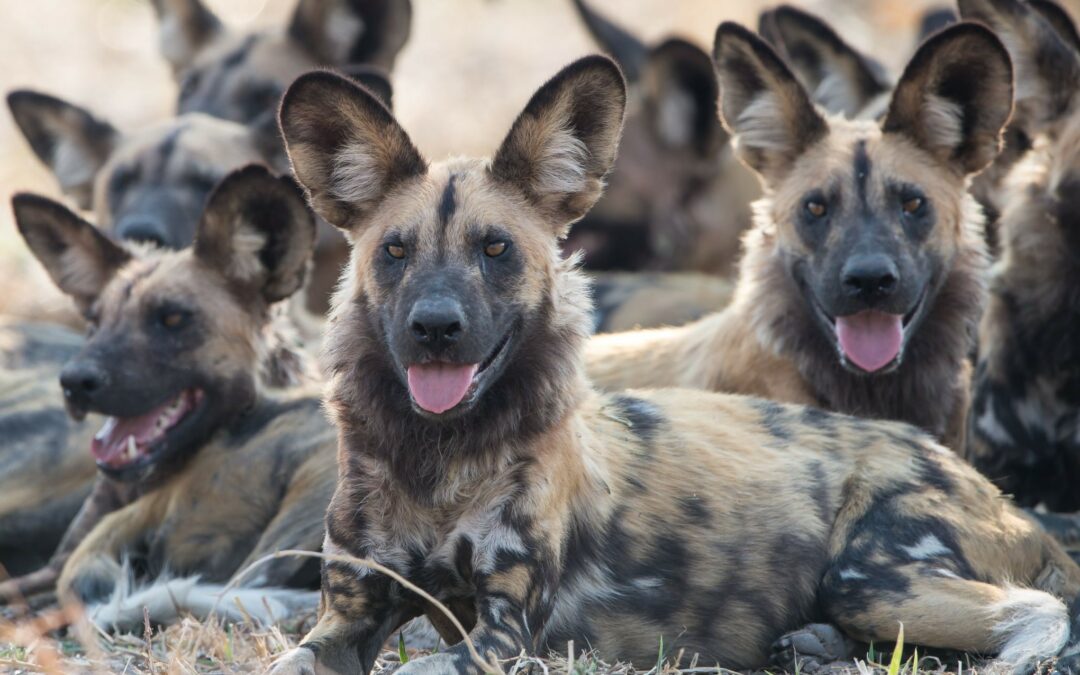
Spatial partitioning is one such mechanism, where one species will avoid an area based on another carnivore’ s presence or population density. For example, among large carnivores, Lions will kill African Wild Dogs when they come into close contact, and as a result, Wild Dogs will actively spatially avoid areas where there is high Lion activity or density. Small carnivores will exhibit the same behaviour in avoidance of other carnivores. An example of this is Cape Foxes, which spatially avoid jackal core areas when foraging as they are often killed by jackals. However, some species will not exhibit this behaviour, even though there is competition. For example, neither Black-footed Cats nor Bat-eared Foxes avoid jackal core areas, even though jackals frequently kill them.

In this study, we set out to investigate the spatial relationship between Black-backed Jackals and large carnivores, to determine whether jackals use spatial partitioning at different scales to coexist with Lions and Wild Dogs. Our study was conducted in Venetia Limpopo Nature Reserve (VLNR) in Limpopo Province (South Africa). At the time of the study (2008) VLNR had a wide array of large carnivore species including Lion, Leopard, Cheetah, Spotted Hyena, Brown Hyena and Wild Dog. VLNR is a small reserve enclosed by an electrified predator-proof fence. Radio collars were fitted to three jackals from three different family groups to obtain location data. One jackal actually moved to another family group during the course of the study, which gave us data for an additional family group. At least one male and two females from each of the three Lion prides, and one dog from the single Wild Dog pack were collared.

Using the location data obtained from the collars, we calculated the annual home-range sizes of the study animals, as well as their core areas. We then compared the overlap between the three species at the home-range level (hereafter, broadscale) and the core areas (hereafter, fine scale). We found that the annual home-range sizes for the jackal groups ranged between 2.7 and 9.0 km2 while the annual home range of the pack of Wild Dogs was 339.5 km2. The annual home ranges of the three Lion prides ranged between 112.8 and 208.5 km2. Our data showed that the extent of spatial partitioning between jackals and both Wild Dogs and Lions depended on the scale at which we were looking.  At the broadscale, jackals did not exhibit spatial partitioning with either of the large carnivores, meaning that there was extensive overlap between home ranges. However, when we looked at the fine scale, we found that jackals did appear to exhibit spatial partitioning. This was to be expected as both Wild Dogs and Lions kill jackals if presented with the opportunity.

Nonetheless, our study yields the first evidence of spatial partitioning between jackals and two large carnivores, and we hope future researchers will examine spatial partitioning between these species under a variety of environmental conditions across Africa, to help build a more complete understanding of their interactions.

Reference: Kamler, J. F., Nicholson, S. K., Stenkewitz, U., Gharajehdaghipour, T. & Davies-Mostert, H. T. 2020. Do black-backed jackals exhibit spatial partitioning with African wild dogs and lions? African Journal of Ecology.

A word from the CEO – May 2020

A word from the CEO – May 2020


A WORD FROM THE CEO

Yolan Friedmann, EWT CEO

yolanf@ewt.org.za

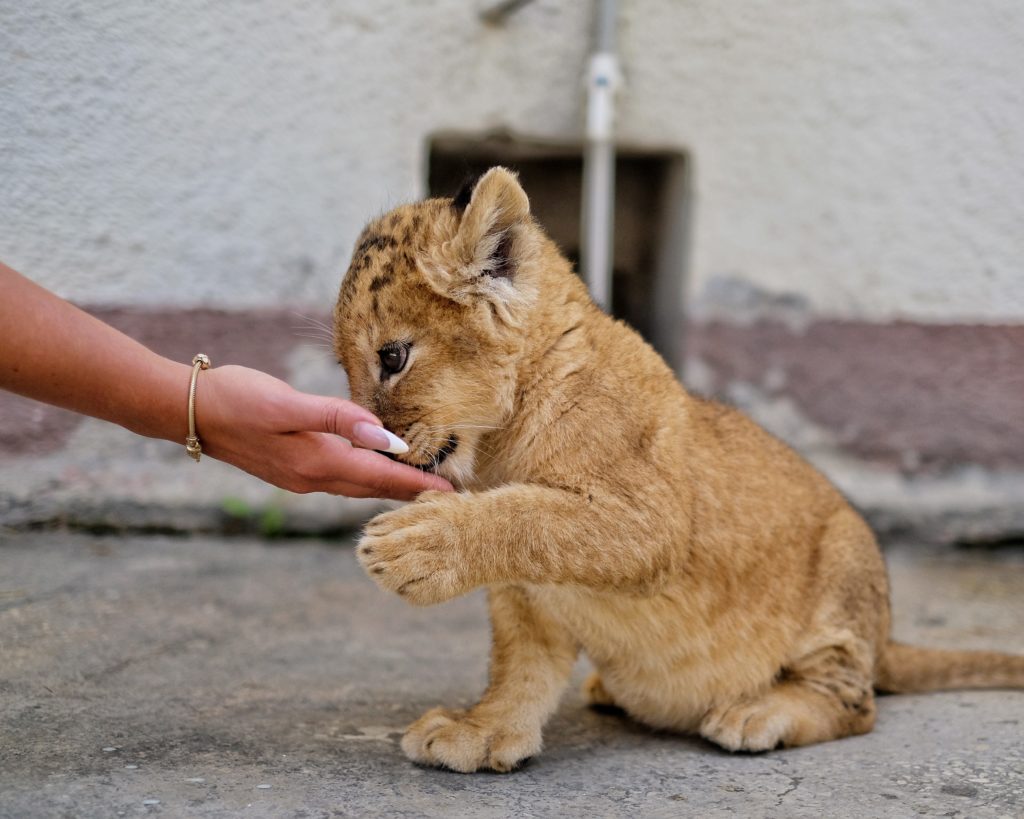
For a number of years, South Africa has seen an ongoing increase in in the number of facilities that claim to be wildlife rehabilitation or rescue centres, or even to have wildlife breeding ‘for conservation’ as their purpose. In the meantime, the majority of them are nothing more than commercial operations that masquerade as conservation centres, with financial gain for profit, being their main driver. The public has been duped into believing that lionesses frequently abandon perfectly healthy cubs, which then need to be rescued and bottle fed by well meaning, pound (or dollar) paying volunteers. The public has been paying for years to see camps of Cheetahs and Wild Dogs with the narrative being that they have been rescued from farmers who may have shot them, or from roads on which they may have been killed. The public has also been told that the always-present number of cubs and pups (and other wildlife offspring) is so that these new generations can be introduced into the wild to ‘save the species’ . And for all of this, the public has been asked to pay. Whether for ‘educational’ family visits or through donations and fundraising asks, the public has been supporting a large number of these institutions for decades.

The trouble is that many of these facilities are in fact breeding and selling wildlife for commercial gain, supplying a multitude of zoos, wildlife dealers and private collectors, globally. This in itself is not necessarily a problem for the EWT, and you may in fact ask why the EWT would even care, given that we are not a welfare organisation. The trouble is, these institutions do not tell the unsuspecting public the truth and they don’ t declare up front that the animals that they are paying to see are in fact often being bred or raised for sale to one of various institutions along the global wildlife supply chain. Furthermore, the so-called ‘rescue’ of animals that may have been shot or killed on roads is also problematic. The reality in South Africa today is that many wild species are exposed to being killed in human-wildlife conflict situations but removing them never solves the problem and certainly doesn’ t enhance the protection of the species when increased range and tolerant landowners is what needs to be the goal. Finally, there is no conservation plan for any carnivore species and almost no other wildlife species in our country that requires the intentional breeding of additional animals, for release.

The problem is in fact a lack of space for many, already-wild animals and captive bred animals compound the situation. So, consider the truth exposed when, as a result of the COVID induced national lockdown, and the closure of the borders and airlines, which have rendered many of these facilities unable to trade in their animals. Suddenly we are seeing packs of Wild Dogs, high numbers of Cheetahs and Lions and a range of other captive bred wildlife that cannot be traded and which are costing too much to keep and who may not be sold anytime soon, being offered for ‘conservation purposes’ , release or threatened with euthanasia. In some cases, the public is again being asked to help fund the upkeep of the animals. It is true that the facilities have also been hard-hit by the lack of gate takings and visitor income and it is also true that most facilities do in fact need to sell animals in order to cover costs. Again, the EWT is not necessarily against this. What we are, however, against is the lack of transparency, the lack of honesty about the destination of many of the animals being bred, the lack of accountability by some, as to the final destination of the animal (this may be at the end of its life and not just the end of its initial journey), and the ongoing misinformation to the public about the role of captive bred wildlife for genuine conservation value. What we are against is the use of wild caught animals to bolster the genetics of a captive population for commercial breeding purposes and what we are against is the rampant wildlife trade that exploits wildlife and the public, but lets everyone involved believe that they are saving a species.

If one thing stems from the COVID crisis, then let it be a more honest society that is more accountable for how we treat our natural world and its wildlife. It is not just the illicit wildlife trade that needs to be vanquished, but the legal trade must also be checked and better controlled in order to account for the impact it may have on wild populations, the impact on public funding and the impact on supporting markets that commodify wildlife with no benefit to the conservation of free living species. Until we have this in place, we urge the public to be aware that what you see may hide another truth that you also have a right to know.

The EWT is not against a legal, sustainable, and controlled trade in wildlife that benefits wild populations and their habitats. For more on our position on the matter see https://ewt.org/resources/perspectives/