Help protect Africa's 

Environmental Education and Butterflies – Start them Young

Environmental Education and Butterflies – Start them Young


Environmental Education and Butterflies – Start them Young

By Renier Basson (Senior Field Officer), Drylands Conservation Programme
 

When you first think of threatened or endangered species, you might immediately picture Rhinos, African Wild Dogs, Pangolins, or even some other charismatic bird, reptile, or amphibian. However, did you know that many insect species in South Africa are also threatened? Most of these insects are found in in the Western Cape, particularly in the Fynbos biome. Among these, butterfly and beetles receive far more attention than any other insect group. All 23 Cape stag beetle species (family Lucanidae, genus Colophon) are currently threatened, primarily due to climate change, habitat destruction, and illegal poaching – yes, even insects are poached!

Regarding butterflies, the most threatened species belong to the families Lycaenidae (coppers, opals and skollies) and Hesperiidae (skippers and rangers). These butterflies are all relatively small and inconspicuous, with tiny, isolated populations scattered throughout the landscape. Some threatened butterflies inhabit areas smaller than 100 square meters! Habitat destruction, mainly caused by alien invasive vegetation and landscape transformation, poses a significant threat to these species in the Western Cape.

To help conserve these butterflies, the Drylands Conservation Programme, in collaboration with Bionerds, has launched projects funded by Disney and Table Mountain Fund. These initiatives aim to protect six butterfly species in the Lycaeinidae family: the Moorreesburg Opal (Chrysoritis thysbe schloszae), Dickson’ s Copper (Chrysoritis dicksoni), Bearded Skolly (Thestor barbatus), Dickson’ s Skolly (Thestor dicksoni warren), Kaplan’ s Skolly (Thestor kaplani), and Strutt’ s Skolly (Thestor strutti). All of these are listed as Critically Endangered, and their populations are rapidly declining. Protecting our threatened butterflies requires safeguarding their habitats, which includes habitat protection activities such as clearing alien invasive vegetation. While physically protecting habitats is crucial, educating the public is equally important!

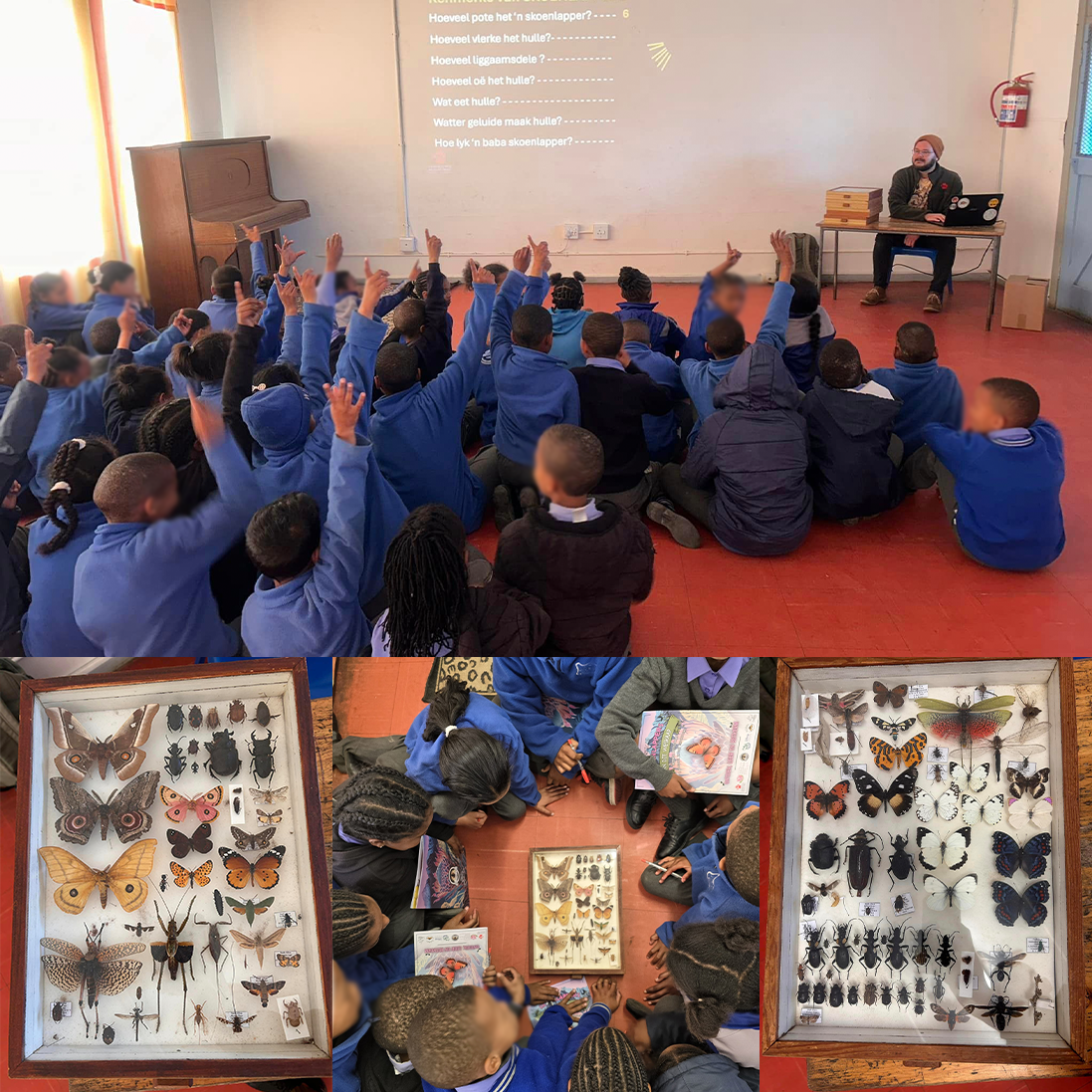
One key component of the project is environmental education aimed at schools near the six butterfly populations. Bionerds has created a colourful, interactive booklet titled “Threatened Butterflies of the Western Cape” for learners from grades 4 to 7. On September 19, Field Officer Renier Basson visited W.F. Loots Primary in Wolseley to present on the ecological importance of butterflies and the threats they face. The Strutt’ s Skolly, found in the area, was a focal point of the presentation. Renier began by explaining, “What is a butterfly?” covering topics from taxonomic classification and morphology to metamorphosis, pollination, and threats. The 51 learners from grades 5 and 6 were engaged and inquisitive, asking numerous questions.

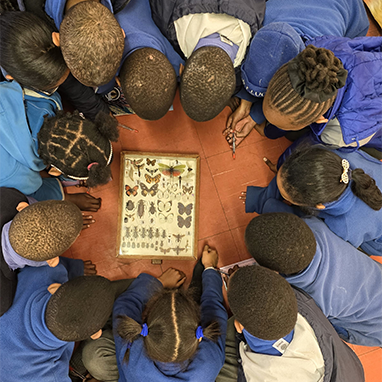
After the presentation, Renier handed out the booklets , and the students eagerly participated by reading important sections aloud. They also answered questions from the first few pages, which sparked curiousity and encouraged them to share their newfound insights. Questions included broad topics like “What do adult butterflies eat?” and “Where do butterflies lay their eggs?” To further engage the students, Renier showcased pinned and framed insects. With five display boxes filled with insects, the learners were divided into groups to maximise their time exploring each box. They had to identify butterflies in the boxes, which proved challenging as some moths closely resemble butterflies. The students were also encouraged to ask questions about the insects they observed. The excitement on their faces as they received new boxes was priceless!

Incorporating environmental education for children into all conservation programmes is essential. Children are curious, enthusiastic, and passionate about nature, making them open to listening about the natural world. Start them young!

A special thanks to our partner Bionerds. This project is made possible through Disney Conservation Fund and the Table Mountain Fund.
EWT Exploring Peru

EWT Exploring Peru


EWT Exploring Peru


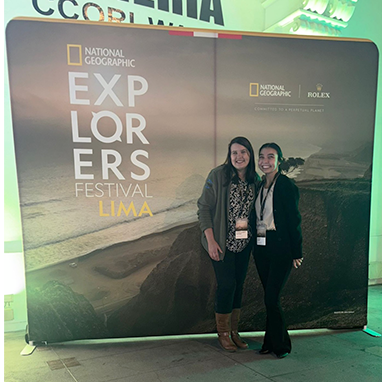
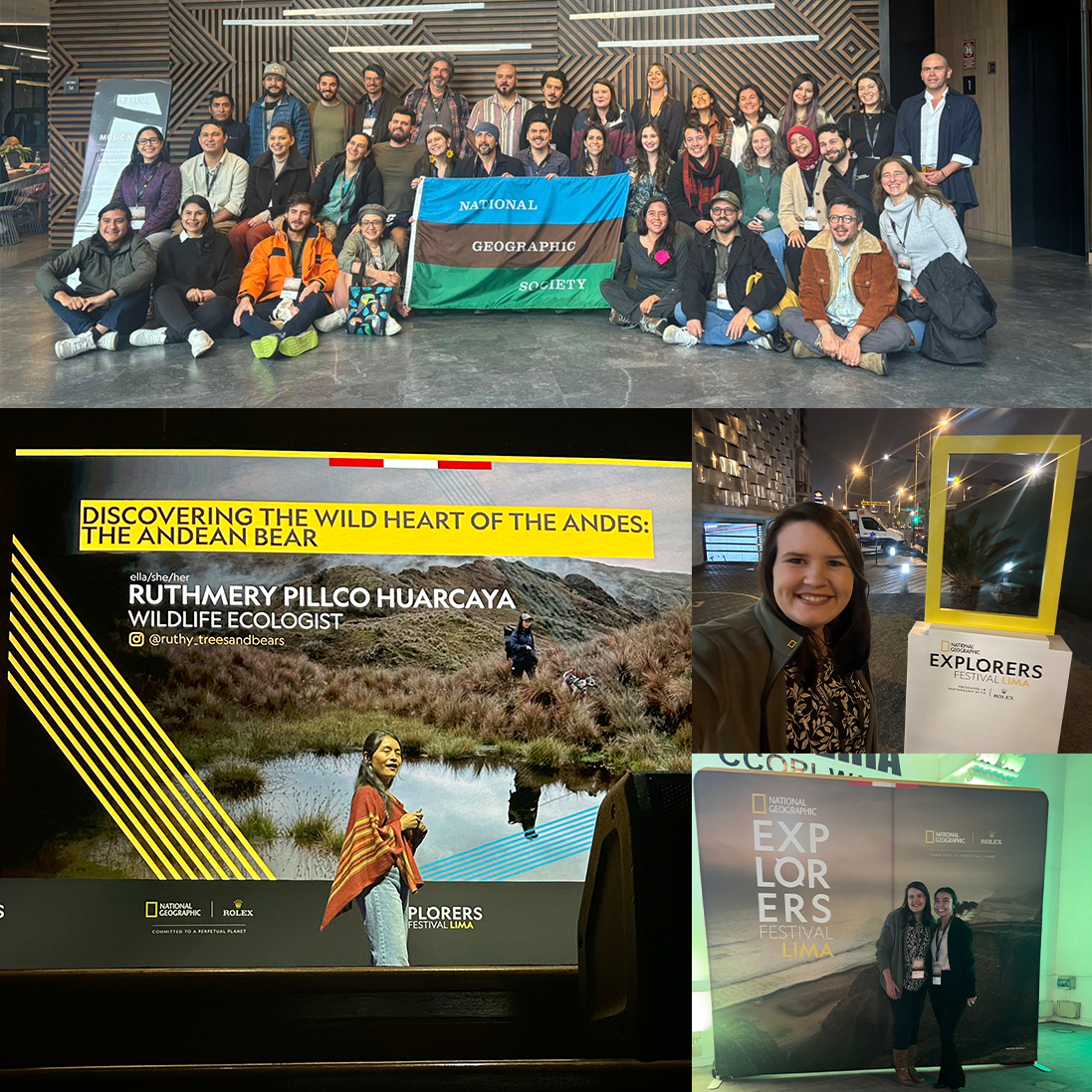
Esther Matthew, the EWT’ s Senior Specialist Conservation Officer, became a National Geographic Society Explorer in 2018 for her work with a scent detection dog to help conserve the Critically Endangered Riverine Rabbit. A few months ago, Esther was selected as one of three explorers to serve as a hub coordinator for the Southern Africa Hub. The hub includes all explorers form South Africa, Lesotho, Eswatini, Mozambique, Namibia, Zimbabwe and Botswana.

As part of her new role, she received the incredible opportunity to attend a hub coordinator training workshop and Explorer Festival in Lima, Peru! Esther expressed her excitement, saying, “It was an amazing opportunity and experience I will never forget!”. This marked her first visit to South America and her attendance at an international Nat Geo Explorer Festival. The festival showcased the remarkable National Geographic explorer project in the Amazon, along with many other fascinating topics. Esther represented EWT and the Southern Africa hub at the event, where she met many explorers from around the world. She returned with more knowledge about coordinating groups and established many valuable networking contacts.
The EWT is proud to have three National Geographic Explorers on our staff. Alongside Esther, the other two explorers are Kulani Nyakane, Field Officer of our Carnivore Conservation Programme and Dr Gareth Tate, Programme Manager of the EWT’ s Birds of Prey Programme.

CAREERS IN CONSERVATION – Caitlin Smith

CAREERS IN CONSERVATION – Caitlin Smith

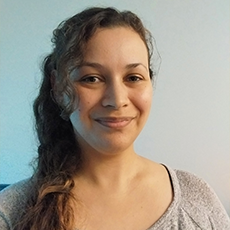
Caitlin is an Intern with the EWT’s Conservation Planning & Science Unit. Here is a little bit about Caitlin’s journey to a career in conservation.

Job title:  Conservation Planning & Science Intern

What do you do in your day-day work? I will be assisting in the Mammal Red List project

Location: Cape Town

Where did you grow up? Cape Town

What are your hobbies/things you like to do in your spare time? Reading and baking

Any pets? None

Favourite animal and why: Giraffes, they are so beautiful and unique!

Favourite food? Chocolate

Pet peeve? Loud chewing

Why did you want to work for the EWT? Zoology is my first love, and getting a chance to learn more about mammals while assisting with Mammal Red List assessments is something I am very excited about.

What excites you about this new position? Learning how to put together Red List assessments

What are you passionate about? Many things; giraffes, chocolate, reading/watching Harry Potter

What’ s the best advice you’ ve ever received, and who did it come from? Just be yourself, my Mom

What is your go-to feel-good song? Any ABBA song!

CAREERS IN CONSERVATION – Jacquie Van der Westhuizen

CAREERS IN CONSERVATION – Jacquie Van der Westhuizen

CAREERS IN CONSERVATION – Jacquie Van der Westhuizen

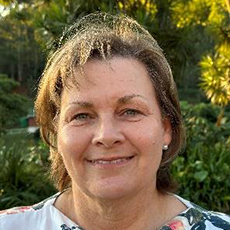
Jacquie is a Field Officer in the Drakensberg. Here is a little bit about Jacquie’s journey to a career in conservation.

Job title: Drakensberg Field Officer

What do you do in your day-day work?  My day to day work takes me to the most beautiful locations looking for cranes, checking on the nests, connecting and building relationships with farmers and creating awareness about the cranes and their habitats

Location: I am based in the KZN Midlands and Drakensberg but I will travel to find cranes anywhere between here and Timbuktooooo.

Where did you grow up? I was born and grew up in Zimbabwe on a cattle ranch, where I had an idyllic childhood and where my love for conservation began.

What are your hobbies/things you like to do in your spare time? I love being outdoors and will take any opportunity to be in a game park or looking for cranes.  I also love taking photos.

Any pets? We have two very needy dogs – a German short haired pointer and a Hungarian Visla.

Favourite animal and why: My favourite animal is an elephant, reminds me of my mom who was the matriarch of our family.

Favourite food? Prawns

Pet peeve? When people put their plates next to the dishwasher instead of inside the dishwasher.

Why did you want to work for the EWT? Because I feel like I could contribute to making the environment a better place.

What excites you about this new position? Making a difference to the environment and being part of a team of like minded people.

What are you passionate about? I love my family!

What’ s the best advice you’ ve ever received, and who did it come from? Whatever you do in life, do it properly, don’t do a half job because life is short and you only live once!

What is your go-to feel-good song? Summer of ’69

CAREERS IN CONSERVATION – Julia Van der Riet in London

CAREERS IN CONSERVATION – Julia Van der Riet in London

CAREERS IN CONSERVATION – Julia Van der Riet in London

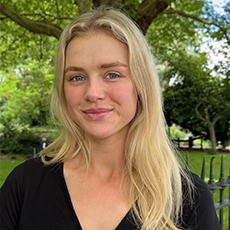
Julia is a Volunteer fundraiser in the UK for the EWT. Here is a little bit about Julia’s journey to a career in conservation.

Job title: Volunteer fundraiser in the UK

What do you do in your day-day work?  I’ ll be meeting with UK-based potential donors to get support for different areas of the EWT, likely beginning with the Eye in the Sky project and Soutpansberg. As well as helping with marketing efforts

Location: London

Where did you grow up? Cathedral Peak, Drakensberg

What are your hobbies/things you like to do in your spare time? Hiking, running/walking with a good podcast on, painting and cooking.

Any pets? 2 rescue dogs, Monty & Phoebe who live with my parents in SA.

Favourite animal and why: Fish eagle, their call must one of the most beautiful sounds in the world. Or tortoise, for their determination and endearing characteristics.

Favourite food? Pasta

Pet peeve? Litter

Why did you want to work for the EWT? To contribute towards making a difference in the natural world – something I talk about regularly but haven’ t yet put into practise in a significant way.

What excites you about this new position? The opportunity to find creative ways of getting people to care more deeply about conservation in Africa, and in turn perhaps globally.

What are you passionate about? Knowledge and expanding my own; sharing and deepening my appreciation for nature.

What’ s the best advice you’ ve ever received, and who did it come from? When I’ m stressed, my father’ s advice is to get up, go for a walk or write down your thoughts, and approach the situation with a fresh perspective.

What is your go-to feel-good song? Walk of Life by the Dire Straits or Sedona by Houndmouth