Help protect Africa's 

DNA HAS ITS SAY:  COLOPHON BEETLE POPULATIONS MORE WIDESPREAD

DNA HAS ITS SAY: COLOPHON BEETLE POPULATIONS MORE WIDESPREAD

DNA HAS ITS SAY:  COLOPHON BEETLE POPULATIONS MORE WIDESPREAD

By Samantha Theron, Conservation Researcher at the EWT
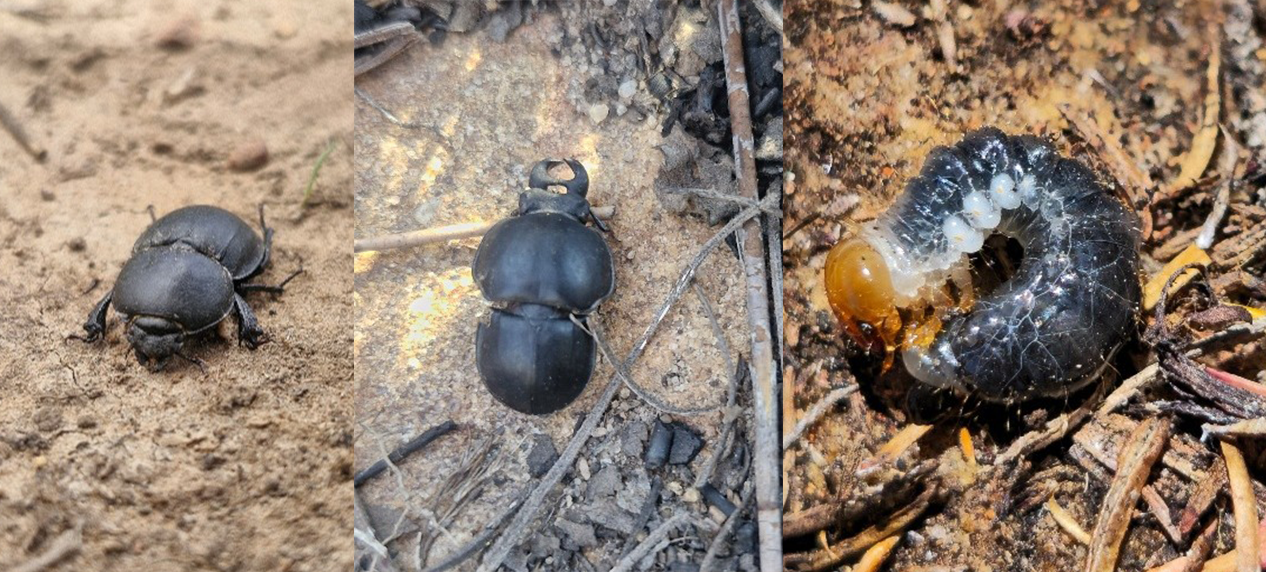
 

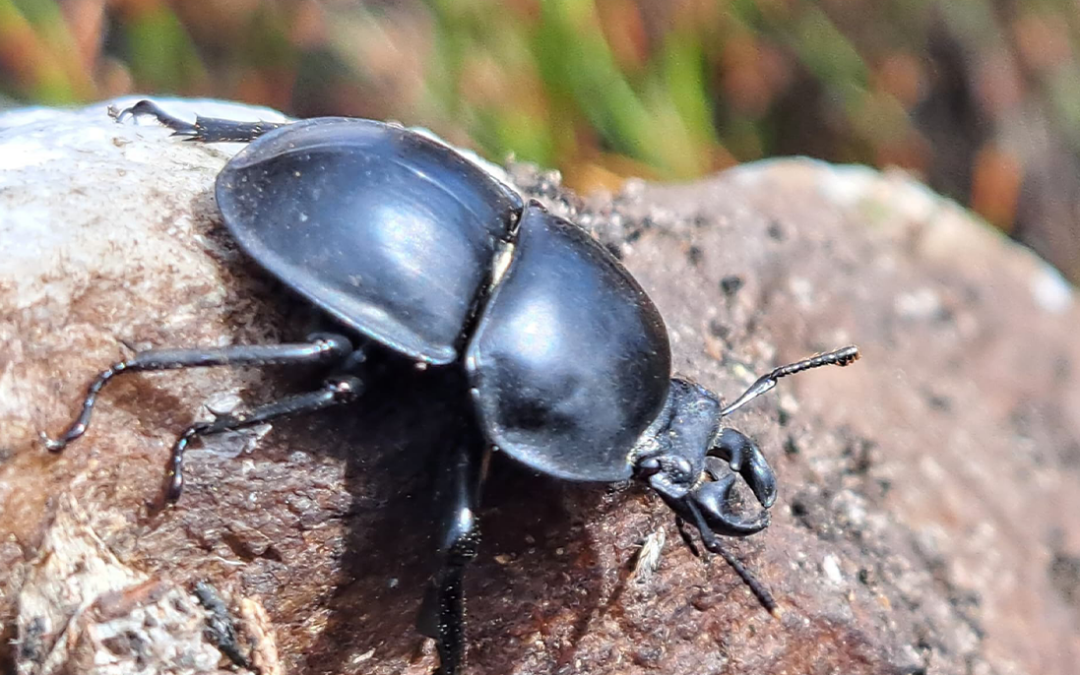
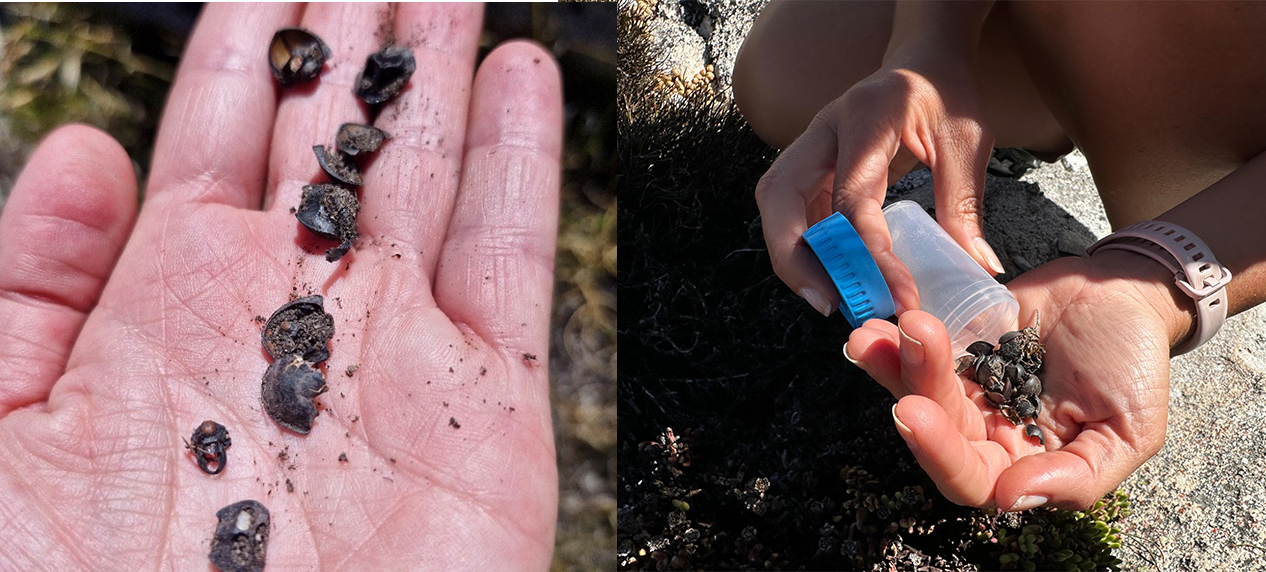
Colophon nagai beetle fragments collected for DNA analysis

Left: Intact Colophon beetle remains found on the second survey. Center: Colophon fragments found on the third survey. Right: Live Colophon larvae found on the first survey.

Good news for a Critically Endangered Cape Stag Beetle: Recent DNA analyses of specimens from our high-altitude surveys of Cape Stag Beetles reveal that Nagai’ s Cape Stag Beetle (Colophon nagai), is more widespread than we previously thought. This means that the threat of extinction may not be quite as imminent for this species as we had feared.

Over the past two years (2025 and 2026), the EWT’ s Drylands Conservation team has conducted multiple field surveys across several mountain peaks in search of two species of Cape Stag Beetles (Colophon eastmani and C. nagaii) that are threatened by climate change, wildfires, and illegal collection. Cape Stag Beetles are high-altitude specialists and can serve as flagship species for high-altitude ecosystems, highlighting the challenges faced by organisms that have been driven upslope in response to changing environmental conditions. As climate change continues to alter these environments, mountaintop habitats – or “islands in the sky” – may shrink even further, increasing the risk of extinction for these high-altitude specialists. Furthermore, hotter, drier conditions resulting from climate change have resulted in an overall increase in the frequency and intensity of wildfires.

As soil dwellers, Colophon beetles are able, in some instances, to survive devastating fires. But, altered fire regimes, such as climate change- and human-induced changes in the frequency and intensity of fires, may pose significant threats to their existence.  This year, our project aimed to investigate the impact of altered fire regimes on Cape Stag Beetles, while extending our search for Colophon nagai eastwards from the historical site. Ultimately, our aim has been to improve fire management plans and response protocols to protect Colophon habitat by mitigating the threat of human-induced changes in fire regimes.

Our 2025 surveys revealed multiple new sites for Colophon eastmani, and we were able to update the distribution of the species and conduct a threat assessment for the IUCN Red List, listing this species as Endangered. However, for Colophon nagaii we found nothing but a few beetle remains at the historical site, also known as the type locality – the only location from which the species is known. Thus, we feared the species may already be extinct, with one plausible explanation being that a 2017 wildfire may have wiped out this population. We drafted the first IUCN Red List assessment for Colophon nagaii, listing it as Critically Endangered.

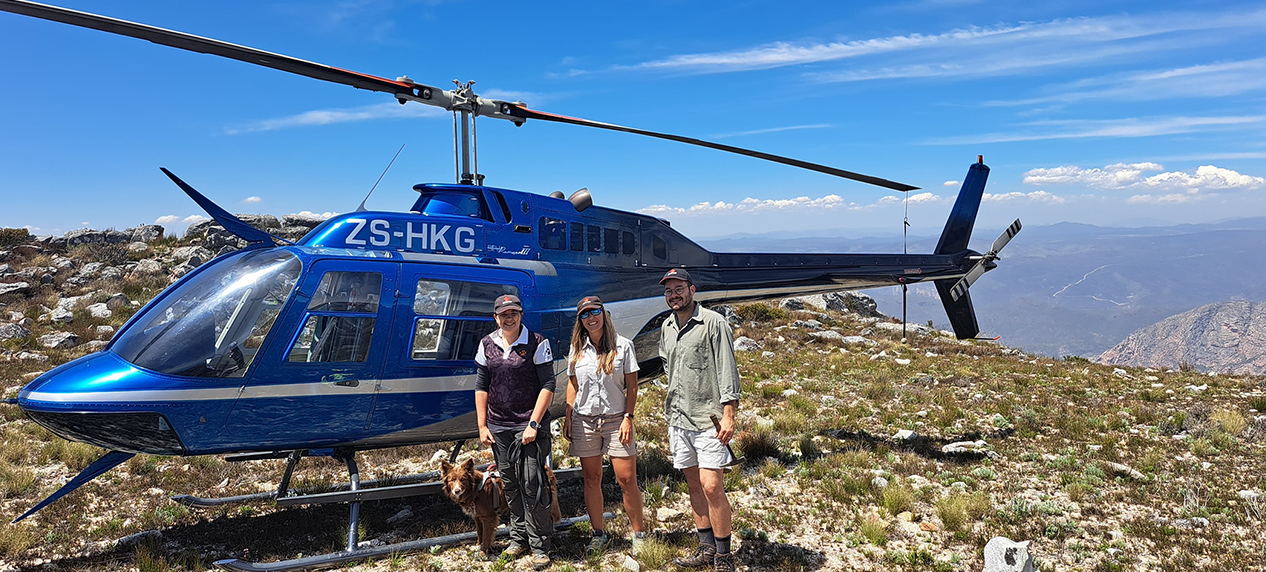
Last year, our surveys included two helicopter-assisted survey expeditions, in which Ross Air flew us to various previously unsurveyed and otherwise inaccessible mountain peaks to search for these beetles. We found the use of the helicopter extremely beneficial to the efficiency and feasibility of the surveys.  Thus the reason for ensuring the use of the helicopter again this year.
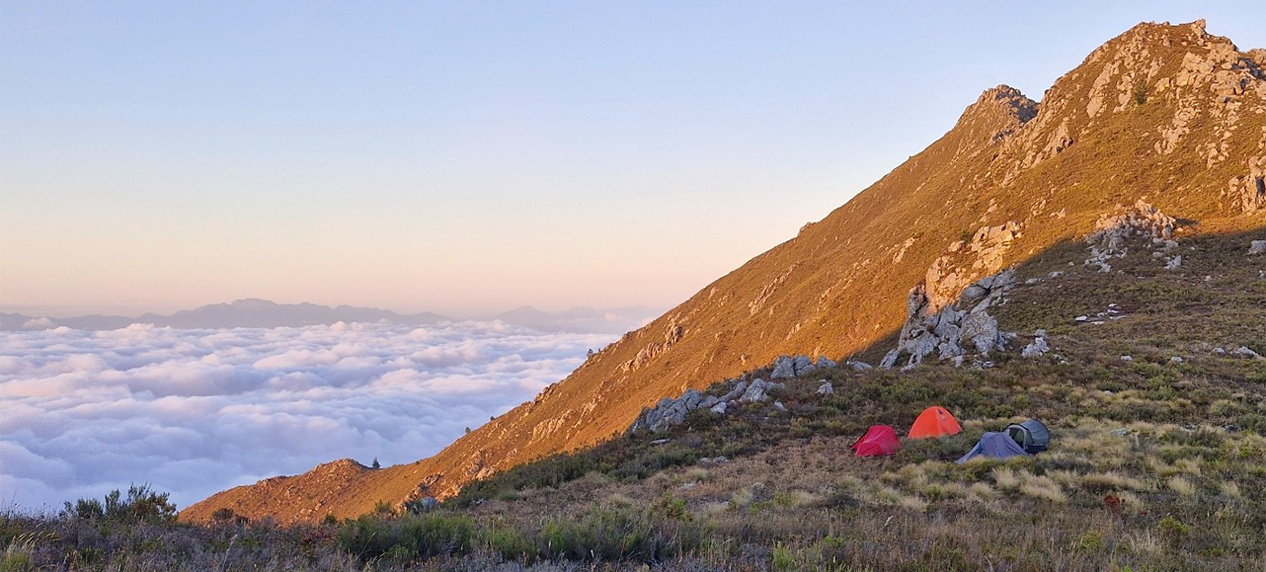
Cape Stag Beetle conservation survey on remote mountain peaks

The expedition team camped at the top of the mountain range.

We conducted three field surveys. The first was a five-day expedition, in which three members of our team went up in a helicopter, along with food and camping gear, and continued on foot to survey five mountain peaks along a 20km stretch of the mountain range throughout the five-day period. These peaks represented five of the eight peaks we had set out to survey this year. The helicopter further assisted with moving us and our camping gear to a new camping spot on the third day, collecting us again on the last day. During this trip, we found evidence of Colophon in the form of beetle remains/fragments at multiple sites, as well as live Colophon larvae at two sites, indicating that the population is still viable.

On the second survey, we visited two peaks, one of which represents the historical C. nagai site. We had aimed to visit this site in the beetle’ s active season (November – March), as our previous survey did not take place during this period, which could explain why we had previously failed to detect recent signs of Colophon at the historical site. This time we found multiple Colophon beetle fragments, at least one of which was still perfectly intact and exposed on the surface of the ground. We suspect that we arrived just at the tail-end of the beetles’ active season, as we did not encounter any live beetles. We also found beetle fragments on the second peak, which is adjacent to the type locality and approximately 2 km further along the mountain range.

A third survey was conducted at the last of the eight peaks we had set out to survey this year. We had initially planned to survey this peak during the first helicopter-assisted survey, but were unable to due to poor weather conditions on the last day. This final survey also revealed evidence of Colophon presence in the form of beetle remains near the peak.

During this survey, we collected beetle fragments from two sites for genetic-based species identification. In addition, Colophon fragments that were collected last year, on a peak that lies roughly midway between the two species’ (C. nagai and C. eastmani) known distributions, and for which the species’ identity was unknown, were also genetically analysed for species identification.

The results revealed that the fragments from both sites to the east of the historical C. nagai site, as well as those from the unknown site to the west (midway between the two species), represent C. nagai. This is an indication that the species is in fact more widespread than we previously thought.

In May this year, we hosted a workshop in Montagu, inviting landowners and representatives of the local Fire Protection Agency to discuss Cape Stag Beetle conservation and stewardship options and assess fire management plans and response protocols.  Looking ahead, we will be distributing new fire management guidelines, specifically focussed on safeguarding key habitats for the species, to all relevant stakeholders. Two of the landowners have indicated their willingness to declare formal protection of Cape Stag Beetles on their properties, and we will be initiating these processes in due course. Protecting these remarkable and elusive insects and the habitats they depend on is essential, not only for their long-term survival, but also for advancing research on the impacts of climate change on species across the Karoo and Fynbos biomes.

The EWT thanks the Mohamed Bin Zayed Species Conservation Fund, Mapula Trust, Ross Air and the landowners for their support in this project.
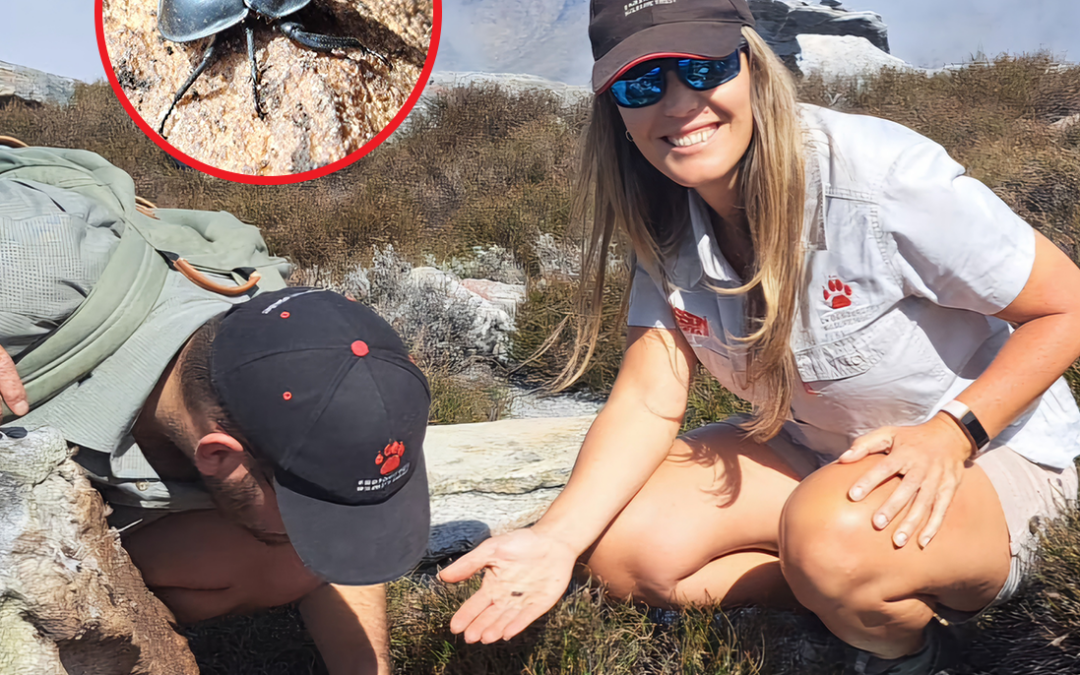
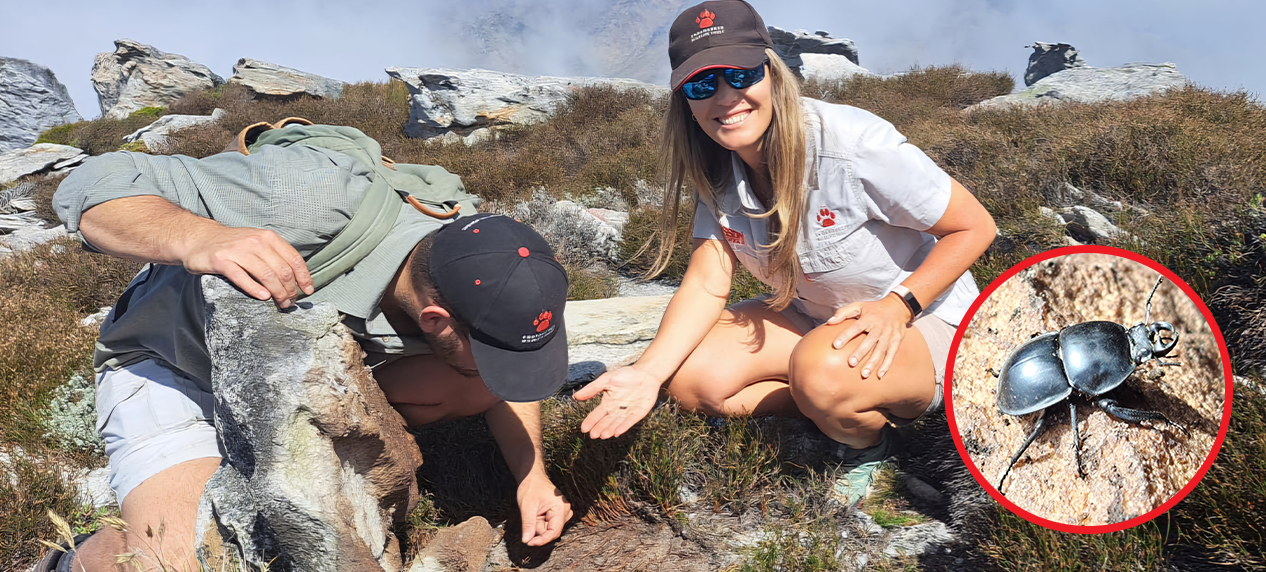
Searching for rare, threatened beetles on high-altitude mountain peaks

Searching for rare, threatened beetles on high-altitude mountain peaks

In the field

Searching for rare, threatened beetles on high-altitude mountain peaks

By Dr Samantha Theron, Conservation Researcher in the Drylands Strategic Conservation Landscape


researchers surveying remote Karoo mountain ecosystem

Boarding a helicopter to search for a beetle rarely seen by anyone besides keen mountaineers, has proven helpful in determining whether two species of these extraordinary insects continue to persist in the mountains of the Western Cape.

Last year (2025), the EWT’ s Drylands Conservation team, including myself, field officers Handré Basson and Esther Mathew and scent detection dog, Delta, took to several mountain peaks in search of two species of Cape Stag Beetles (Colophon eastmani and C. nagaii) that have become seriously threatened, not only by climate change and wildfires, but also by illegal collection. We undertook numerous field surveys, including two helicopter-assisted survey expeditions, in which pilot Jaco Vermeulen flew us to six previously unsurveyed and otherwise inaccessible mountain peaks, to search for these beetles.

Our survey had four objectives.  The first was to conduct field surveys to gain a better understanding of the species’ distribution and habitat condition. The second, to ensure habitat protection for both species, which included engaging the relevant landowners to establish legally-binding protected areas for the beetles. Thirdly, to ensure steps are taken to protect these species, and that conservation management plans are drawn up and implemented in collaboration with the landowners. The fourth aim was to update the known distribution of the two Colophon species and to conduct IUCN Red List threat assessments for both species.

Conserving these unique insects and their habitat is necessary to ensure their continued survival, and also to support further research on the impacts of climate change on species across the Karoo and Fynbos biomes. Cape Stag Beetles can act as flagship species for high-altitude ecosystems, in which certain species, like these flightless beetles, have been forced to migrate to higher ground in order to survive. With the ongoing effects of climate change, these mountaintop habitats, or “islands in the sky”, could be further reduced, thereby increasing the risk of extinction for these high-altitude specialists.

Cape Stag Beetle specimen fragments

Cape Stag Beetle specimen fragments

The surveys

The EWT team was joined by three landowners on the first of the two helicopter-assisted expeditions last year, in which we surveyed three of our six target peaks.

The habitat on the first peak was found to be unsuitable for Colophon, and we quickly moved on to the second peak, where we found evidence of the beetles’ presence in the form of beetle fragments. Because it was only the start of the beetles’ active season, we presumed that the fragments we found were the remains of the previous year’ s beetles. Furthermore, a recent intense wildfire, may have had a severely negative impact on the beetle population on the peak.

At the third peak, which is the highest of the six, we immediately started finding lots of beetle fragments – evidence of a healthy population.  We found fragments of roughly 40 individual beetles, and after a few hours of searching, we found two live beetles! We noted the vegetation cover, which was healthier and higher than the previous sites, indicating that the fire had not reached this peak.

During the second helicopter-assisted expedition, we surveyed three peaks, finding the habitat on one unsuitable for the beetles.  A survey of the second peak revealed indications that a fire had ravaged this peak in the last year or two. Only a few fragments of roughly four individual beetles were found during our three-hour survey. The beetles need damp soil to survive, and most of this peak was dry. The heat was also unbearable at times, and with little cover on the exposed mountaintop, we found ourselves seeking shelter from the heat in the shade of the helicopter.

Moving to the last, and second-highest of the six peaks, which had also been affected by a recent fire, we found both old- and fresh fragments of beetles on the peak. Unfortunately, the habitat at this location was noticeably disturbed, with pieces of wood, metal and wires lying around.  There also appeared to have been oil spills. In total, we found fragments of roughly 18 individual beetles on this peak.

Our time on the mountain peaks delivered a number of other interesting finds, including a Skolly Butterfly (Thestor sp.), Hex Protea Chafer (Trichostetha dukei), Tradouw Mountain Toadlet (Capensibufo tradouwi), Creeper Scorpion (Opsitacanthus diremptus), the unusual Arid Rainspider (Paraplystes sp.), Male Firefly (Lampyris sp.) and the Conbush Rainspider (Palystes kreutzmanni).  Several lizard and scorpion species were also recorded.

In addition, Colophon fragments were found on another peak we surveyed on foot, roughly midway between the two species’ known distributions. The species identity of these fragments is unknown, and further surveys will be required to collect genetic material to determine the identity of this population.

Helicopter landing on Western Cape mountain peak for beetle survey

In summary…

This project revealed multiple new sites for Colophon eastmani, and we were able to update the distribution of the species and conduct a threat assessment for the IUCN Red List, listing this species as Endangered. Conversely, for Colophon nagaii we found nothing but a few beetle remains at the historical site (type locality), confirming that the species is only known from a single location, and may already be extinct. It is possible that a fire which swept over the peak in 2017 may have wiped out this population. We have drafted the first IUCN Red List assessment for Colophon nagaii, listing it as Critically Endangered.

The EWT would like to thank the Mohamed Bin Zayed Species Conservation Fund, Mapula Trust, Ross Air and the landowners for their support in this project. Using a helicopter has proven to be a game-changer for this type of survey.  Without it, we would not have been able to take our scent detection dog, Delta, up to these sites, nor survey so many sites in one day. Two of the landowners have indicated their intention to declare formal protection of Cape Stag Beetles on their properties, and we will be initiating these processes in due course.
Despite increased threats to their survival, Cape Stag Beetles continue to persist.  As soil dwellers, they are able, in some instances, to survive devastating fires, but altered fire regimes, poaching by insect collectors, and habitat reduction resulting from climate change, continue to pose threats to their existence.  This year we are continuing our field surveys and associated research to assess the impacts of altered fire regimes and other threats on these insects, and to implement further long-term conservation measures to protect the species and their habitats.

Environmental Education and Butterflies – Start them Young

Environmental Education and Butterflies – Start them Young


Environmental Education and Butterflies – Start them Young

By Renier Basson (Senior Field Officer), Drylands Conservation Programme


When you first think of threatened or endangered species, you might immediately picture Rhinos, African Wild Dogs, Pangolins, or even some other charismatic bird, reptile, or amphibian. However, did you know that many insect species in South Africa are also threatened? Most of these insects are found in in the Western Cape, particularly in the Fynbos biome. Among these, butterfly and beetles receive far more attention than any other insect group. All 23 Cape stag beetle species (family Lucanidae, genus Colophon) are currently threatened, primarily due to climate change, habitat destruction, and illegal poaching – yes, even insects are poached!

Regarding butterflies, the most threatened species belong to the families Lycaenidae (coppers, opals and skollies) and Hesperiidae (skippers and rangers). These butterflies are all relatively small and inconspicuous, with tiny, isolated populations scattered throughout the landscape. Some threatened butterflies inhabit areas smaller than 100 square meters! Habitat destruction, mainly caused by alien invasive vegetation and landscape transformation, poses a significant threat to these species in the Western Cape.

To help conserve these butterflies, the Drylands Conservation Programme, in collaboration with Bionerds, has launched projects funded by Disney and Table Mountain Fund. These initiatives aim to protect six butterfly species in the Lycaeinidae family: the Moorreesburg Opal (Chrysoritis thysbe schloszae), Dickson’ s Copper (Chrysoritis dicksoni), Bearded Skolly (Thestor barbatus), Dickson’ s Skolly (Thestor dicksoni warren), Kaplan’ s Skolly (Thestor kaplani), and Strutt’ s Skolly (Thestor strutti). All of these are listed as Critically Endangered, and their populations are rapidly declining. Protecting our threatened butterflies requires safeguarding their habitats, which includes habitat protection activities such as clearing alien invasive vegetation. While physically protecting habitats is crucial, educating the public is equally important!

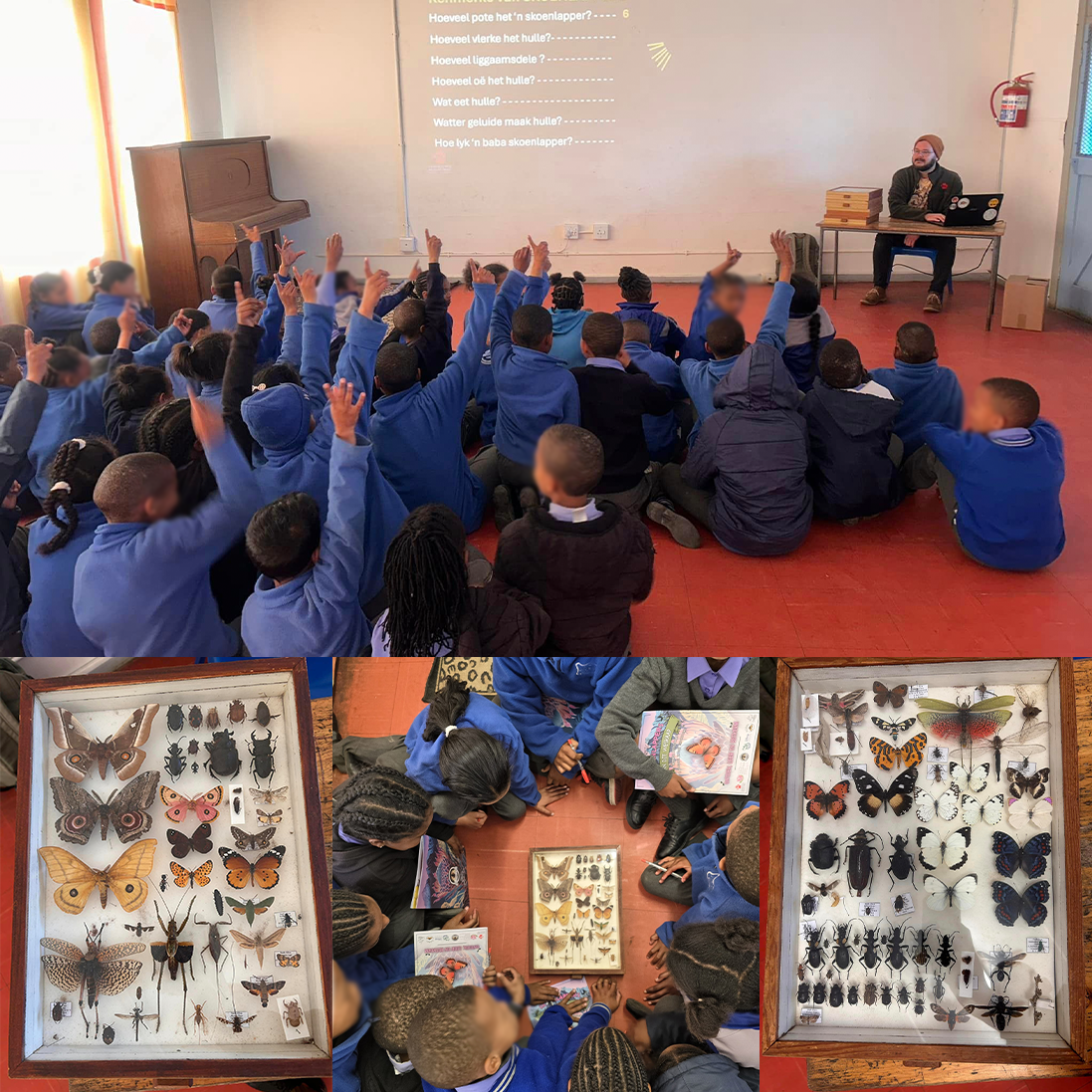
One key component of the project is environmental education aimed at schools near the six butterfly populations. Bionerds has created a colourful, interactive booklet titled “Threatened Butterflies of the Western Cape” for learners from grades 4 to 7. On September 19, Field Officer Renier Basson visited W.F. Loots Primary in Wolseley to present on the ecological importance of butterflies and the threats they face. The Strutt’ s Skolly, found in the area, was a focal point of the presentation. Renier began by explaining, “What is a butterfly?” covering topics from taxonomic classification and morphology to metamorphosis, pollination, and threats. The 51 learners from grades 5 and 6 were engaged and inquisitive, asking numerous questions.

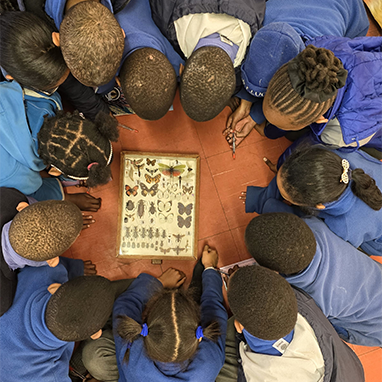
After the presentation, Renier handed out the booklets , and the students eagerly participated by reading important sections aloud. They also answered questions from the first few pages, which sparked curiousity and encouraged them to share their newfound insights. Questions included broad topics like “What do adult butterflies eat?” and “Where do butterflies lay their eggs?” To further engage the students, Renier showcased pinned and framed insects. With five display boxes filled with insects, the learners were divided into groups to maximise their time exploring each box. They had to identify butterflies in the boxes, which proved challenging as some moths closely resemble butterflies. The students were also encouraged to ask questions about the insects they observed. The excitement on their faces as they received new boxes was priceless!

Incorporating environmental education for children into all conservation programmes is essential. Children are curious, enthusiastic, and passionate about nature, making them open to listening about the natural world. Start them young!

A special thanks to our partner Bionerds. This project is made possible through Disney Conservation Fund and the Table Mountain Fund.