
Help protect Africa's 

Blue Crane Conservation: Protecting South Africa’ s National Bird

Blue Crane Conservation: Protecting South Africa’ s National Bird

Blue Crane Conservation: Protecting South Africa’ s National Bird

By Dr Christie Craig, Conservation Scientist
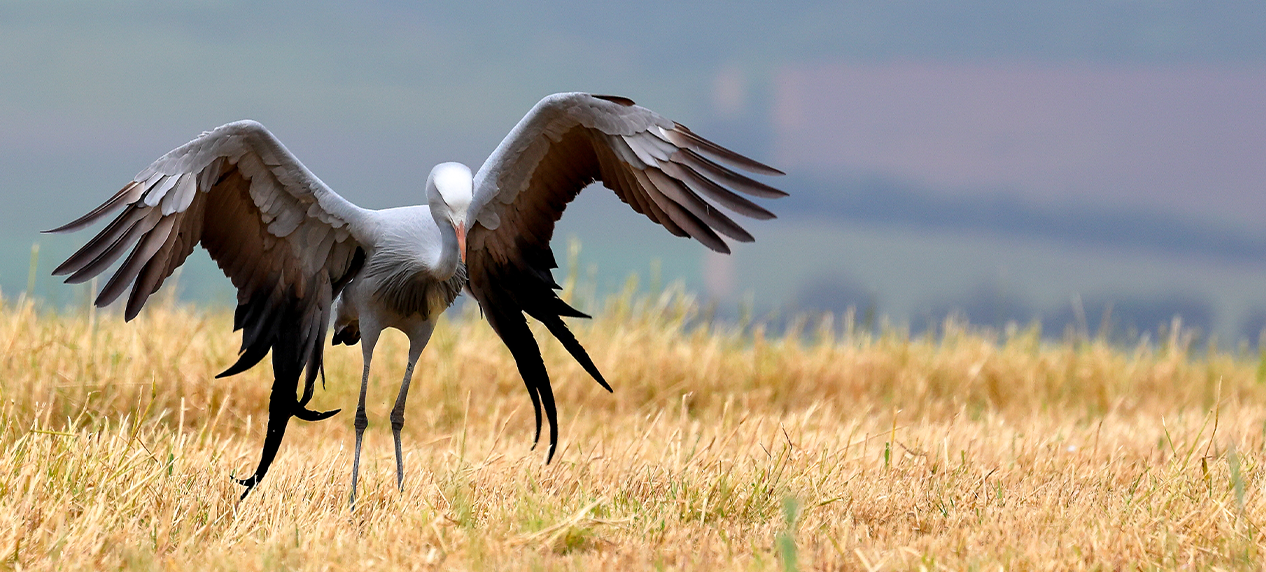


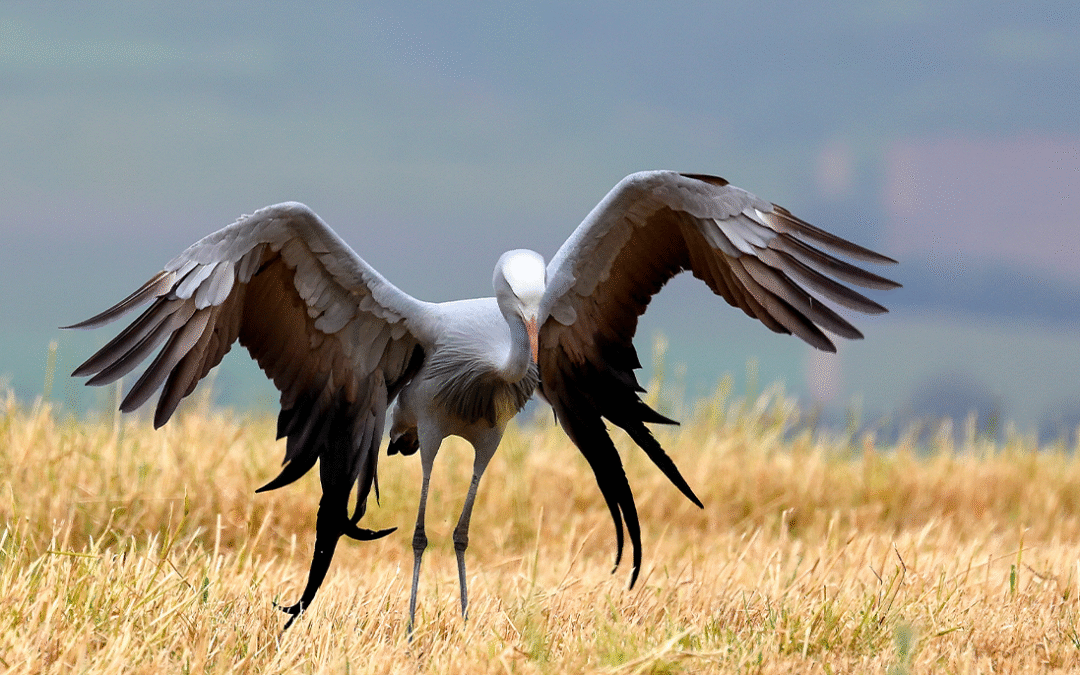
Blue Cranes in Western Cape farmlands as part of conservation efforts

Image Credit: Pieter Botha


September is Heritage Month in South Africa, a time when we focus not only on our cultural, but also natural heritage, most notably our National Bird, the Blue Crane.

To ensure the continued survival of this species, and its growth in areas where it has shown decline in recent years, the Endangered Wildlife Trust (EWT), through our partnership with the International Crane Foundation (ICF), has increased its efforts to conserve the Blue Crane, with a strong focus on the Western Cape and Karoo.

Decades of successful conservation interventions have yielded positive results in KwaZulu-Natal and the Northern Cape, and attention is now being directed to populations in the Western Cape, with the same positive outcomes being targeted.

Blue Cranes are endemic to South Africa, with a small population found in Namibia, making these the world’ s most range-restricted crane. There are less than 30,000 of these birds left in the world.

As part of our Heritage Month celebrations, and to mark Heritage Day on 24 September,  the EWT/International Crane Foundation partnership is expanding its existing activities to safeguard the future of Blue Crane populations in the Western Cape, by intensifying our focus on habitat restoration with communities and farmers, and addressing threats posed by energy infrastructure.

The Blue Crane (Anthropoides paradiseus) is an important element of South Africa’ s natural heritage, serving as a flagship for conservation in agricultural landscapes, from the rolling grasslands of KwaZulu-Natal to the expansive plains of the Karoo, to the patchwork of crops and renosterveld in the Western Cape. 

Since 1994, the EWT/International Crane Foundation partnership has been committed to Blue Crane conservation in South Africa, running projects in the grasslands, Karoo and Western Cape. Over the last 10 years, the majority of our applied crane conservation work has focused on the Drakensberg region, where Blue Cranes have historically faced steep declines. With consistent conservation action, including natural habitat protection, powerline impact mitigation and community projects, Blue Crane numbers are now slowly increasing, testimony to the success of our conservation activities.

Until 2010, Blue Crane numbers were increasing and healthy in the Karoo and Western Cape. However, a recent PhD study supported by the EWT/ICF Partnership reveals that numbers have subsequently been declining in these areas, especially in the Overberg ,where counts have dropped by 44% between 2011 and 2025. For more info on the reasons for this decline, see our June press release.

This has sparked the need for renewed conservation effort underpinned by a multi-stakeholder conservation plan, which was developed with the help of the Conservation Planning Specialist Group, gathering inputs from NGO, industry, landowners, communities and government.   


The  conservation plan comprises four parts:

1: Habitat protection.

The partnership will continue its commitment to Blue Crane conservation in the Drakensberg through ongoing habitat protection and will expand this work from the Western Cape into the Karoo. 

2:  Addressing energy infrastructure impacts.

Because Blue Cranes are particularly susceptible to colliding with energy infrastructure, the relationship with energy suppliers is being expanded to address this issue through powerline mitigation and improved infrastructure routing.

3:  Crane Friendly Agriculture

Engagement with the agricultural industry is increasing to co-create solutions that allow Blue Cranes and other species using the agricultural matrix to thrive alongside agricultural production. Blue Cranes are especially dependent on agriculture in the Western Cape, but also use agricultural habitats in the Karoo and grasslands. Work in the agricultural sector will focus on addressing threats such as poisoning and breeding disturbance, as well as helping farmers address crop damage issues.

4:  Research and Monitoring:

This is an essential underpinning of any good evidence-driven conservation project. Through monitoring Crane numbers and breeding success, we will be able to gauge our impact. Without research, we wouldn’ t have known that Blue Cranes’ numbers were declining or why. Through continued research, we will keep abreast of changes in the Blue Crane population and in the landscapes that they depend on.

The implementation of this four-pronged approach creates certainty for the EWT/ICF that we can reverse the decline in the Blue Cranes populations in the Karoo and Western Cape, as we have done in the Drakensberg region. 

The EWT remains committed through the implementation of its Future Fit Strategy to working with partners throughout Africa to ensure the survival of crane species, particularly the Blue Crane. Grey Crowned Crane and Wattled Cranes.


**  The EWT/ICF projects are generously supported by the Leiden Conservation Foundation, Eskom, Hall Johnson Foundation, Indwe Risk services, Jacksonville Zoo and Gardens Zoo Neuwied, Safari West, Nashville Zoo and the Paul King Foundation
Blue Cranes uplisted to Vulnerable: A wake-up call for conservation

Blue Cranes uplisted to Vulnerable: A wake-up call for conservation

Blue Cranes uplisted to Vulnerable: A wake-up call for conservation


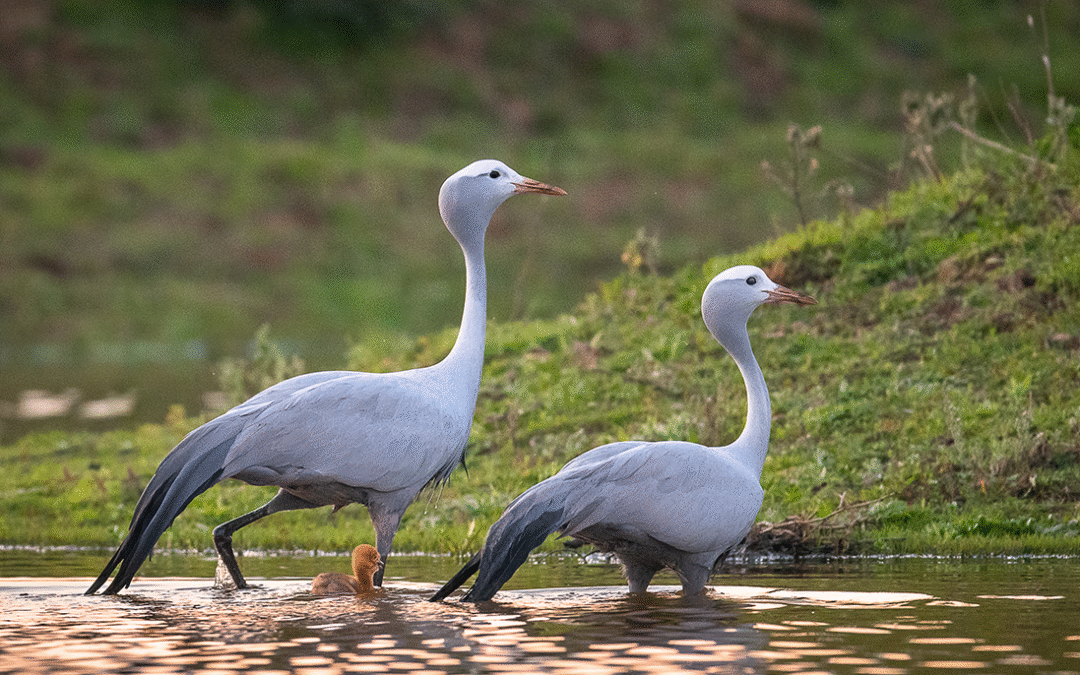
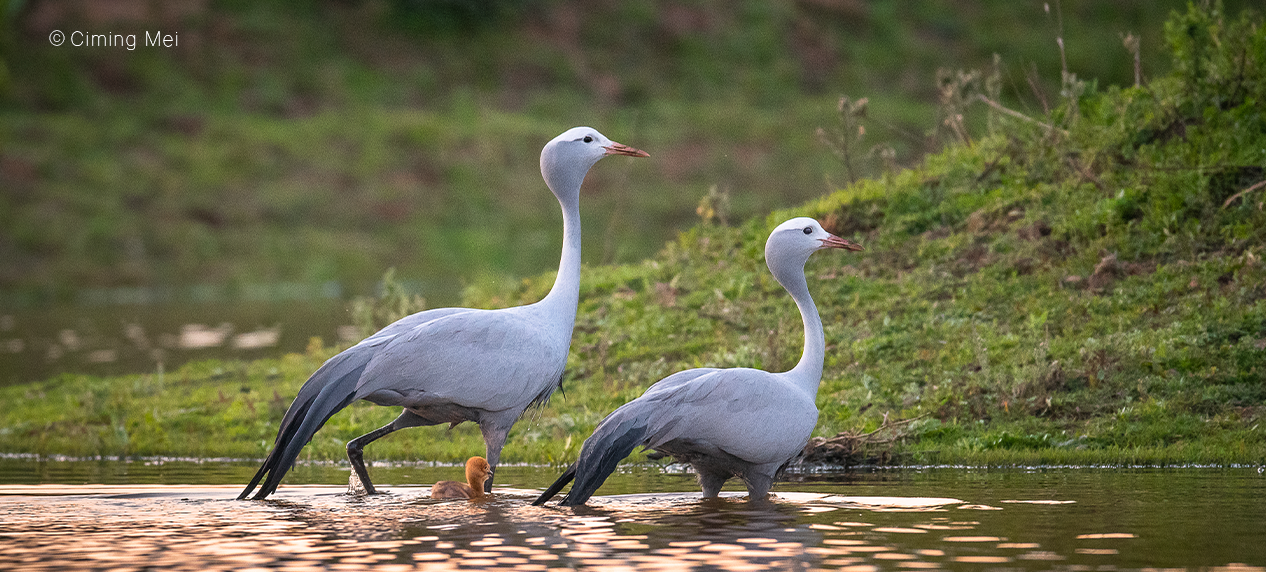
South Africa’ s national bird, the iconic Blue Crane, has officially been uplisted from Near Threatened to Vulnerable in the newly published Regional Red Data Book 2025.

The uplisting of the Blue Crane to Vulnerable in South Africa means that it faces a high risk of extinction in the wild in the medium term.

This reflects growing concern about the species’ future. Although the Karoo boasts the highest number of Blue Cranes in South Africa, the species’ decline is of particular concern in the Overberg region of the Western Cape where Blue Cranes occur at higher densities than anywhere else in the country.

Data from the long-running citizen science project, Coordinated Avifaunal Roadcounts (CAR), shows that the Overberg has seen an alarming 44% decline in Blue Crane numbers between 2011 and 2025. These figures are especially concerning given that this region once had a thriving Blue Crane population.  Prior to the decline, CAR accounts indicated that Blue Crane numbers had increased by 261% between 1994 and 2010.

In the Karoo, CAR figures showed that populations had declined prior to 2017. But, this data is dated given that CAR counts are no longer done in this region. To remedy this, BirdlifeSA has formed a CAR working group with the Endangered Wildlife Trust/International Crane Foundation partnership (EWT/ICF), Overberg Crane Group (OCG) and FitzPatrick Institute to reinvigorate the project, particularly in areas like the Karoo.

The citizen science project is conducted twice annually. It relies on dedicated volunteers who count birds along fixed routes creating one of the most robust long-term datasets for large terrestrial birds in the country. This data underpins vital conservation decisions, including the recent uplisting of the Blue Crane.

Why are Blue Cranes declining?

The reasons behind the dramatic decline in the Overberg over the past 14 years are unclear, but research has revealed some clues.  Recent research by EWT Conservation Scientist, Dr Christie Craig, into the species’ long-term viability revealed that breeding success in the Overberg has halved since the last published study 30 years ago. On average, pairs now raise just 0.55 fledglings – far below what’ s needed to sustain the population.

MSc student Michelle Bouwer has found that the key drivers of nest failure in the Overberg are disturbance and high temperatures. This is concerning given that climate change models predict significant drying and warming in the Western Cape. Fence entanglement also remains a threat to Blue Crane chicks that can’ t fly yet.

Since 1991 the OCG, along with partners such as CapeNature and the EWT/ICF have driven Blue Crane conservation efforts in the Overberg, engaging actively with landowners to raise awareness and ensure that farming and cranes coexist peacefully. Similar programs were initiated in the Karoo and Drakensberg, under the auspices of the South African Crane Working Group. It is because of the success of these interventions that the Blue Crane population increased and was regionally downlisted to Near Threatened in 2015, based on data up until 2010.

Since the Blue Crane population was doing well, conservation efforts for Blue Cranes were reduced in the Western Cape, and Karoo. This can be attributed to the fact that conservation resources are limited, and work needs to be prioritised to species that need it the most.

The Drakensberg region features all three crane species in South Africa—the Blue Crane, Wattled Crane and Grey Crowned Crane. Because of ongoing research and conservation efforts, all three species are increasing in KwaZulu-Natal.

The uplisting of Blue Cranes has demonstrated that this species is dependent on ongoing conservation efforts, especially as they occur almost entirely outside of protected areas.

Within the Overberg, Blue Cranes occur primarily in wheatlands. As new technologies are implemented, cultivars are developed and farming methods are adapted, Blue Crane populations are being affected.  Indications are that an increase in the practice of minimum till and increased canola production may have reduced the availability of suitable feeding and breeding areas for cranes. But, more research is needed to confirm this.

Blue Cranes have also become the secondary or unintended victims of poisoning in the Overberg and Swartland regions—often from substances intended for other species, such as geese or rodents. This further highlights the importance of conservation presence in the landscape to ensure that illegal poisonings don’ t go undetected, and to make certain that farmers have support to deal with crop damage problems.

Research showing that power line collisions in the Overberg had decreased in the last 15 years may be attributed to concerted efforts through the EWT/Eskom partnership to mark power lines. Nonetheless, collision with power lines remains the main threat to Blue Cranes, and ongoing mitigation is necessary, especially as new power lines are added to connect renewable energy to the grid. This is particularly a threat in the Renewable Energy Development Zones of the Overberg and Karoo.

The vital role of farmers

In order to ensure conservation success collective action including landowners, farmers, local municipalities, researchers, NGOs and community members, is required. Encouragingly, many farmers have already embraced their role as custodians of these birds, showing that agricultural productivity and biodiversity conservation can go hand in hand. Their commitment forms the backbone of South Africa’ s Blue Crane conservation efforts.

It is important to note that because Blue Cranes have a strong association with agriculture across their range in South Africa, a variety of conservation expertise is required to conserve the species.

With the help of the IUCN Conservation Planning Specialist Group, the EWT/ICF has coordinated a multi-stakeholder conservation planning process for Blue Crane. The stakeholders also include the OCG, CapeNature, Wool Growers Association, Kogelberg Biosphere Rehabilitation Centre, Ezemvelo KZN Wildlife, Eskom and Birdlife SA.

This conservation plan specifies several actions that will be implemented in the coming years. Among these is mitigating the impacts of power lines and poisoning, working with the agricultural sector to reduce threats, and protecting natural habitats that support Blue Cranes. We are confident that with coordinated, evidence-driven conservation action we can turn around the environmental status of the Blue Crane.