Help protect Africa's 

Hearing from our interns

Hearing from our interns

In the Field

Hearing from our interns


Karen Chiro was a Conservation Intern with the Endangered Wildlife Trust (EWT), having recently completed her MSc in Conservation Biology at the University of Cape Town.

As an avid conservationist, I have always admired the Endangered Wildlife Trust through its work on social media, so becoming part of the organisation was a dream come true.

During my internship with EWT’s Birds of Prey Unit, I developed a deep appreciation for vultures and the vital role they play in our ecosystems. I was involved in several activities, including vulture nest checks and monitoring. When I started my internship, I could identify vultures, but I had never really paid attention to their breeding ecology, where they nest, or the factors that influence their populations.

Taking part in nest checks gave me the opportunity to determine whether nests that had previously been detected and recorded were active during the current breeding season. I also gained a greater appreciation for the differences between White-backed and Hooded Vulture nests, particularly in terms of their size and location.

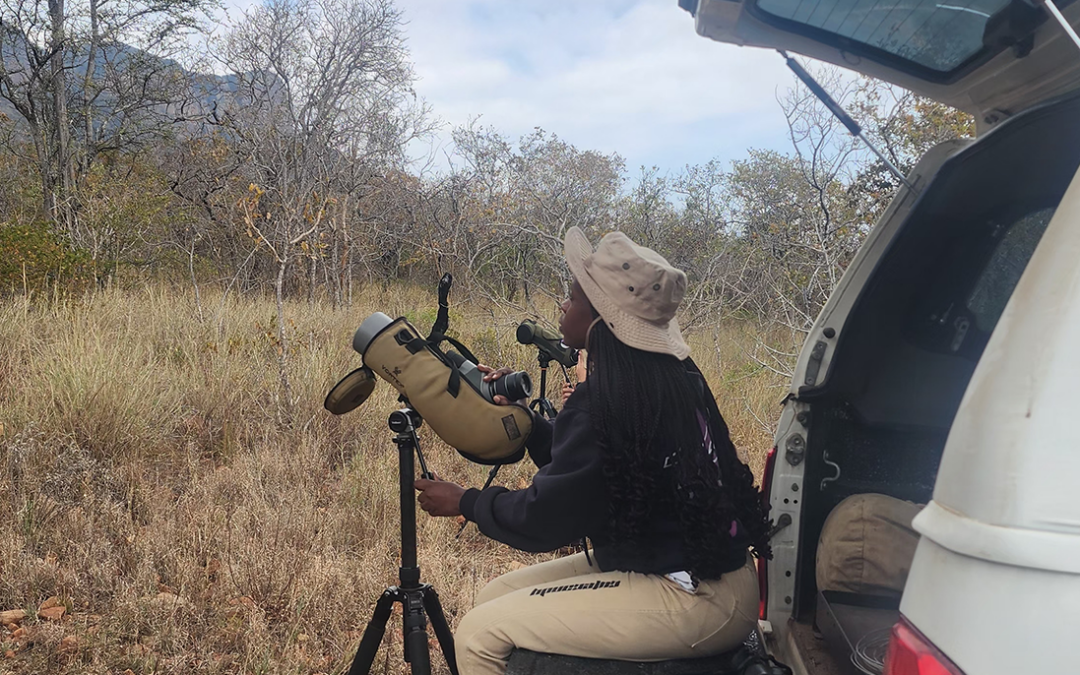
I also joined the Cape Vulture nest monitoring team, where I had the opportunity to use a telescope to observe and count nests on the cliffs. This experience helped me appreciate the scale and challenges involved in monitoring these species in the wild.

The highlight of my internship was undoubtedly vulture trapping. Having the opportunity to hold and release vultures was a truly surreal experience. Holding these magnificent birds made me realise just how large and powerful they are, while also giving me a deeper understanding of the conservation challenges contributing to their declining numbers.

I left the EWT with far more knowledge about vultures than I had when I arrived. More importantly, I left with a renewed appreciation for these remarkable birds and the work required to conserve them.

I am incredibly grateful to the EWT for welcoming me and providing such a wonderful learning experience, and to the Briandez Legacy Trust for making this internship opportunity possible.

“My technical and professional skills have been strengthened”
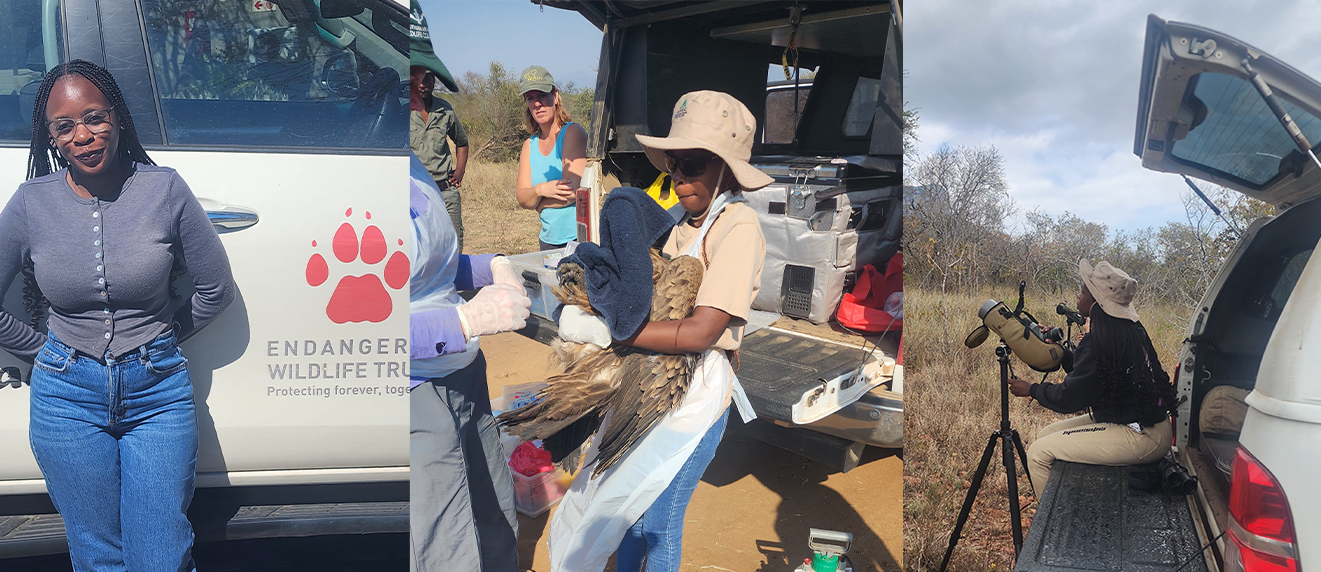
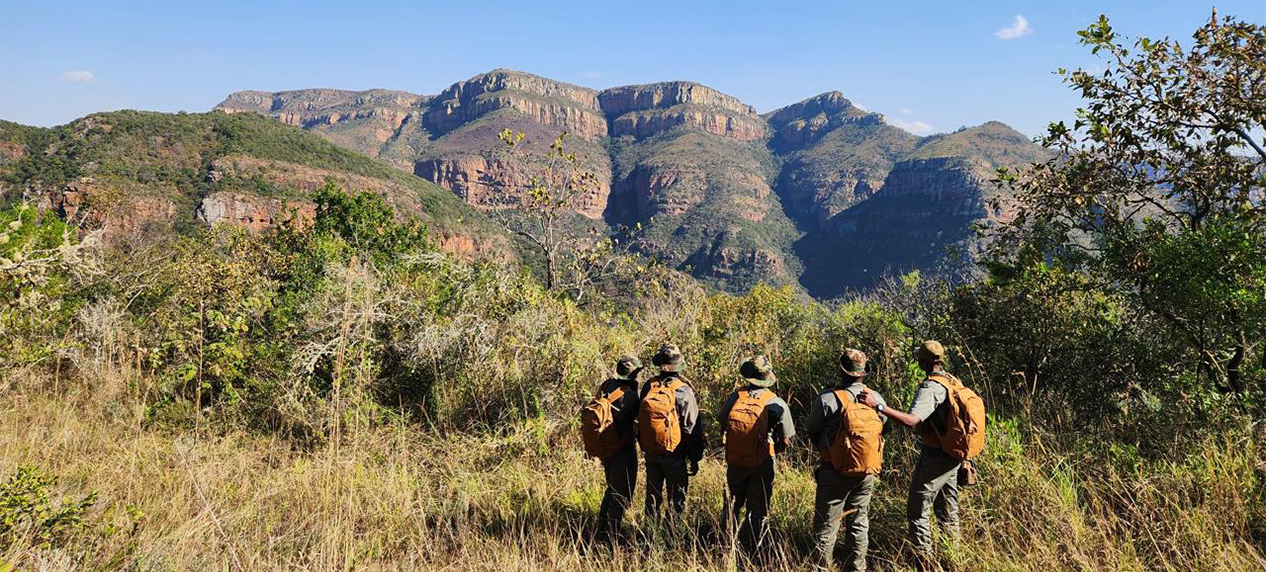
Conservation interns monitoring vulture nests with the EWT Birds of Prey Unit

Yasalde Massingue is a conservation officer for Limpilichi Wilderness, a company that has established a long-term management partnership of the protected areas in Niassa, northern Mozambique.  He recently spent time with the EWT’s Birds of Prey Unit to enhance his skills.

My time with the EWT team in Hoedspruit provided me with an important opportunity to strengthen my technical and professional skills in wildlife monitoring, with a particular focus on vulture conservation. Vultures play an essential role in ecosystem health by removing carcasses and helping to reduce the risk of disease transmission.

During my time in South Africa, I developed skills in identifying and monitoring nests of different raptor species. The work included observing nest structure, their location within tree canopies, preferred tree species for nesting, and the precautions required to minimise disturbance while collecting field data.

We monitored more than 300 raptor nests during field expeditions. I also took part on the patrols aimed at identifying potential snaring areas, checking feeding events, and investigating sites at risk of poisoning, which is one of the main threats facing vultures and other carnivores.

One of the most significant outcomes of my experience was participating in fitting tracking collars to 22 vultures from four species, as well as assembling 29 rings. This work provided me with practical experience in taking biometric measurements, including the foot, head, beak, wing and tail; determining the age of individual birds; and assessing their reproductive condition. The data collected will contribute to a better understanding of vulture movements, behaviour and conservation needs.

The programme  also included the release of 15 vultures that had been rehabilitated following a poisoning incident. More than 250 children from Hoedspruit attended the release, creating an important opportunity for environmental education and encouraging a new generation to value and protect these birds.

During my participation in a training course on vulture poisoning and rapid response, which was attended by conservation managers, veterinarians, researchers and wildlife-crime professionals, I learned about the importance of cooperation among sectors in responding effectively to threats to biodiversity.

The knowledge and experience I gained will be valuable for implementing a biodiversity conservation and monitoring program in Chipanje Chetu, the community where I work in the Limpilichi Wilderness area in Niassa, Mozambique.   There, our goal is to help establish the area as a model for wildlife conservation, scientific research, environmental monitoring and community engagement.
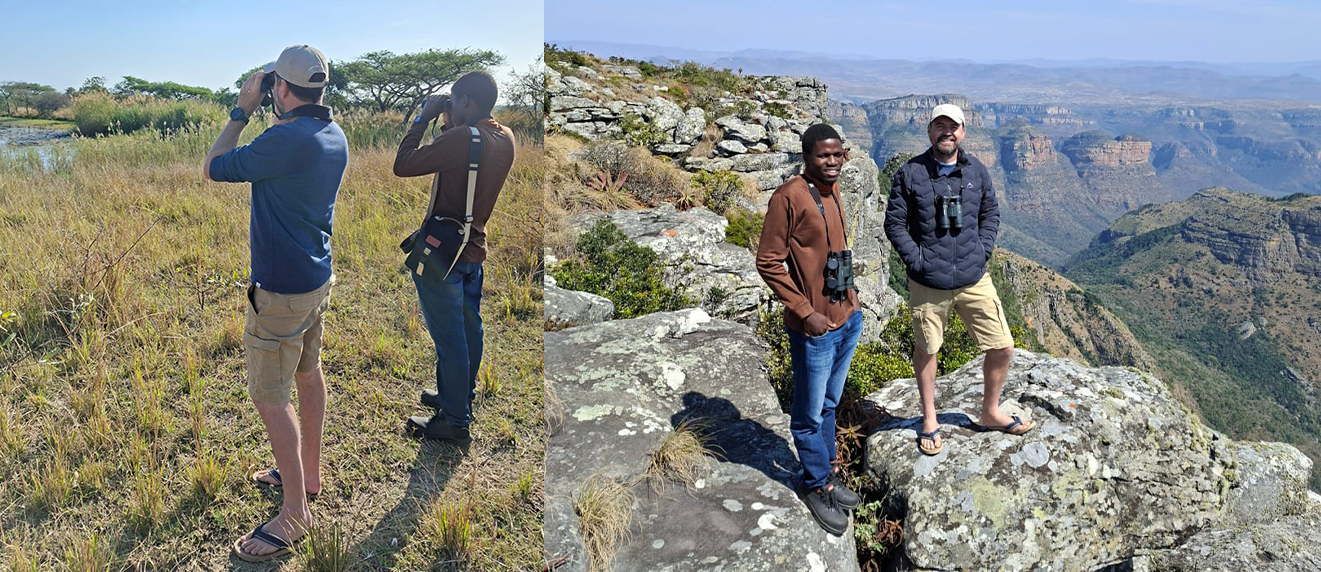
Young conservationists gaining practical experience in vulture conservation and wildlife monitoring

Olifants River Survey Monitors Ecological Threats to the system

Olifants River Survey Monitors Ecological Threats to the system

In the Field

Olifants River Survey Monitors Ecological Threats to the system

Liam Taylor, field officer in the Birds of Prey Unit


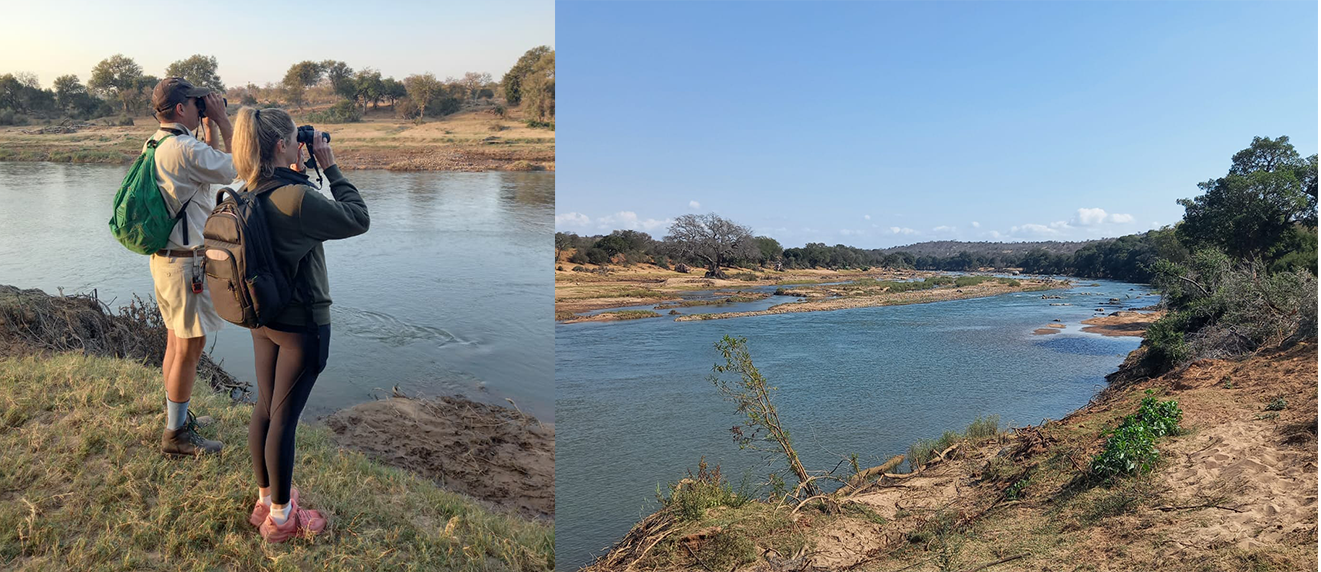
EWT researchers conducting an ecological survey along the Olifants River in the Lowveld

The Olifants River is one of the defining features of the Lowveld. Unfortunately, the last three decades brought with it extensive flood events that have had cataclysmic impacts on the river’s trees.

In addition, opposing drought impacts, flow regime changes from water abstraction and damming, and chemical and pesticide run-off from mining and agriculture, have all threatened the natural functioning of this system.

Recently, EWT researchers and field staff took part in an ongoing survey along the section of the Olifants River inside the Greater Balule Game Reserve region to monitor this vital habitat.

Organised by the EWT’s Birds of Prey Unit research and monitoring coordinator, Dr Lindy Thompson, the team included EWT project manager, Dr Darren Pietersen, field officer Liam Taylor, and Dr Carrie Hickman of the APNR Ground Hornbill Project, as well as numerous wardens and rangers from the various reserves along the river. The team was split into two, and each one walked over 50 km, on opposite banks, counting every single waterbird, crocodile and hippo they saw, allowing numbers and species to be compared to previous years. The trees were also scanned for both White-backed and Hooded Vulture nests, where incubating birds or chicks were recorded. This section is a major breeding stronghold for these Critically Endangered birds. These nests will be monitored until the chicks fledge in October. The search also included looking for the famous and elusive Pel’s Fishing Owl.

The impacts of the January 2026 mega-flood event were clear. Many trees and tracts of habitat were removed. The riparian forest is also classified as Endangered, making the losses extra worrisome. We made other additional ecological observations, including elephant herbivory on riparian trees, Pied Crow interactions with nests, and documented where human activity may jeopardise breeding success.

The survey did not have many challenges, but on one occasion, a pod of hippos came stampeding out of the bush back into the water, crashing through everything in their path. Fortunately, no researchers (or hippos!) were harmed, and we scored an exciting story to tell friends later around the braai.

These surveys are vital for long-term monitoring and identifying threats to ecology and Endangered species. Continued support for this work will help ensure that changes in the Olifants River system are detected early, that conservation responses are guided by reliable field data, and that this remarkable river can continue to sustain its wildlife. By maintaining regular monitoring and acting on what the river is telling us, we can help safeguard one of the Lowveld’s most important ecological areas.

A Race to Rescue Limpopo’s Vultures

A Race to Rescue Limpopo’s Vultures

In the Field

A Race to Rescue Limpopo’s Vultures

Dr Lindy Thompson, Birds of Prey Unit Research and Monitoring Coordinator


EWT Birds of Prey Unit releasing rehabilitated vultures on International Vulture Awareness Day

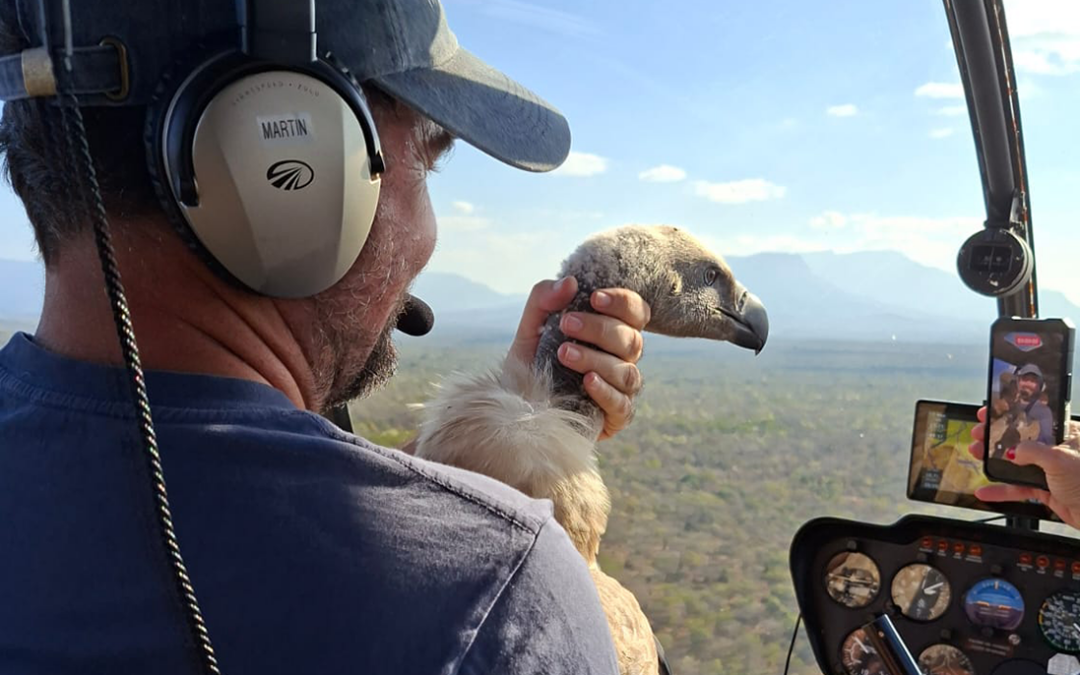
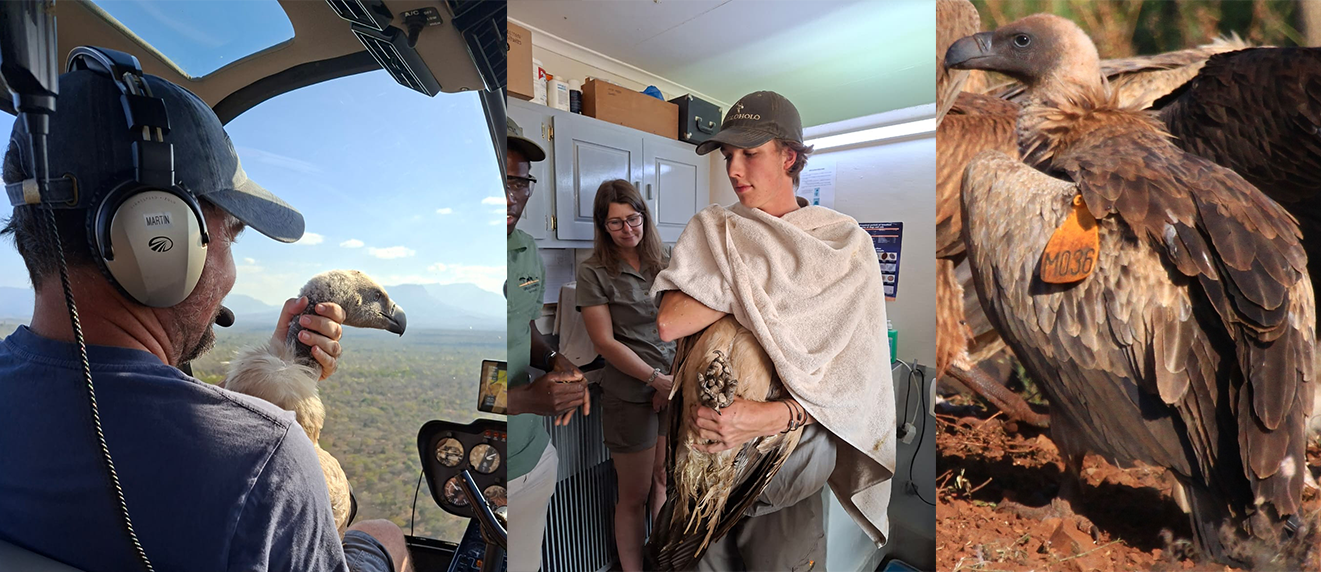
Left: A Cape Vulture being transported to Moholoholo Rehab Centre by helicopter. Center: Moholoholo clinic team treated the vultures.

On 28 August 2026, the EWT Birds of Prey Unit received an urgent notification that a number of vultures had been found unable to fly on a property in Limpopo.

With the assistance of the Hoedspruit Endangered Species Centre, these birds were quickly collected and transported to Moholoholo Wildlife Rehabilitation Centre.

Pilot Jana Meyer from Hope for Wildlife also joined the rescue effort, flying us in her helicopter to search the surrounding area for any other grounded vultures.

In total, 18 vultures were taken to Moholoholo, where they received first aid and expert care from the clinic team. Rehabilitating vultures is intensive work, requiring round-the-clock care during the first 48 hours while the birds are stabilised, until they are out of the woods. We have the greatest respect for the Moholoholo team, whose experience and dedication gave these birds the best possible chance of recovery. Sadly, one bird died on arrival and another died that night, but the remaining 16 recovered well and were ready to return to the wild about a week later.

The timing of their release could not have been more fitting: the 16 survivors (three Critically Endangered Hooded Vultures, 12 Critically Endangered White-backed Vultures, and one Vulnerable Cape Vulture)  were released at Moholoholo on 5 September – International Vulture Awareness Day.

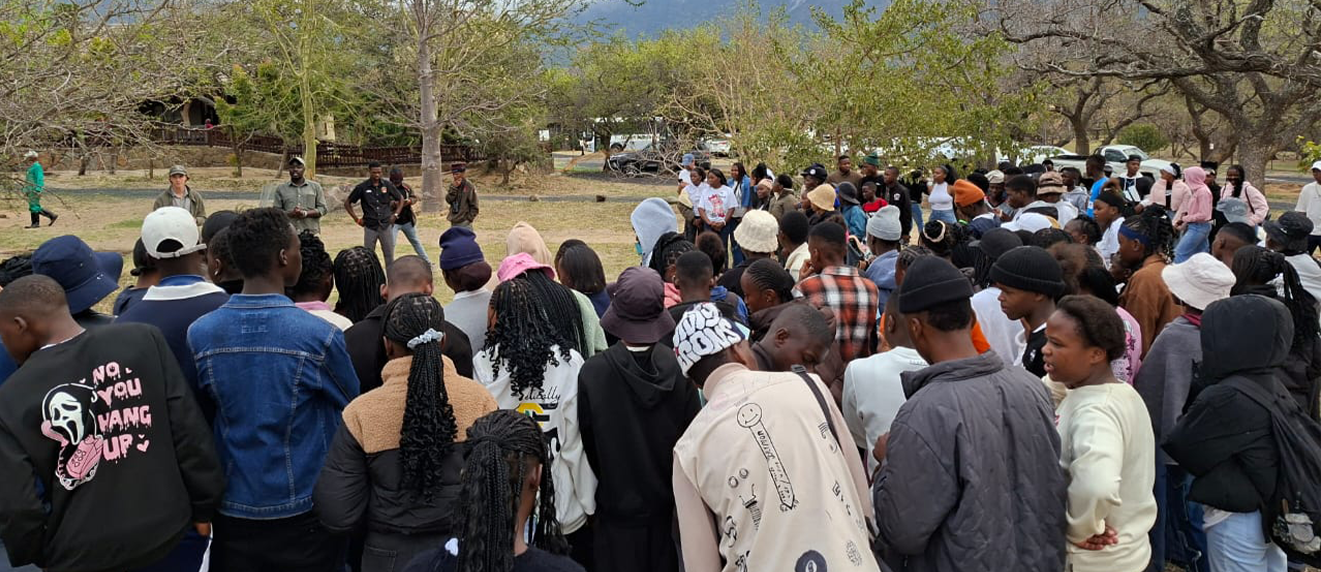
To make the occasion even more special, the EWT supported 250 learners to visit the Cape Vulture Nature Reserve before travelling to Moholoholo to witness the release. For these young people, seeing the vultures take to the skies was a powerful opportunity to connect with these remarkable and highly threatened birds.

It was also particularly important that the adult vultures got home quickly, as winter is the breeding season and most of the rescued birds had brood patches, indicating that they had chicks waiting for them in their nests. Both male and female vultures share responsibility for incubating and raising their young, so every day away from their chicks mattered. Thankfully, the tracked birds gave us the best news possible: they returned to their nests straight away.

What began as an urgent rescue ended with 16 vultures back in the wild, their chicks waiting for them, and 250 young conservationists watching them take flight; a wonderful reminder of why every vulture matters.

1. Young learners watching rescued vultures return to the wild at Moholoholo

The vultures were released at Moholoholo on International Vulture Awareness Day

** This work is made possible by Critical Ecosystems Partnership Fund (CEPF) Rapid Response to Conservation Crises (R2C2).

Beyond Fences: How Vulture Safe Zone Alliance may be the missing piece to halting the rapid decline of Africa’s vulture populations

Beyond Fences: How Vulture Safe Zone Alliance may be the missing piece to halting the rapid decline of Africa’s vulture populations

Beyond Fences: How Vulture Safe Zone Alliance may be the missing piece to halting the rapid decline of Africa’s vulture populations

Danielle du Toit, Field Officer for the Birds of Prey Unit


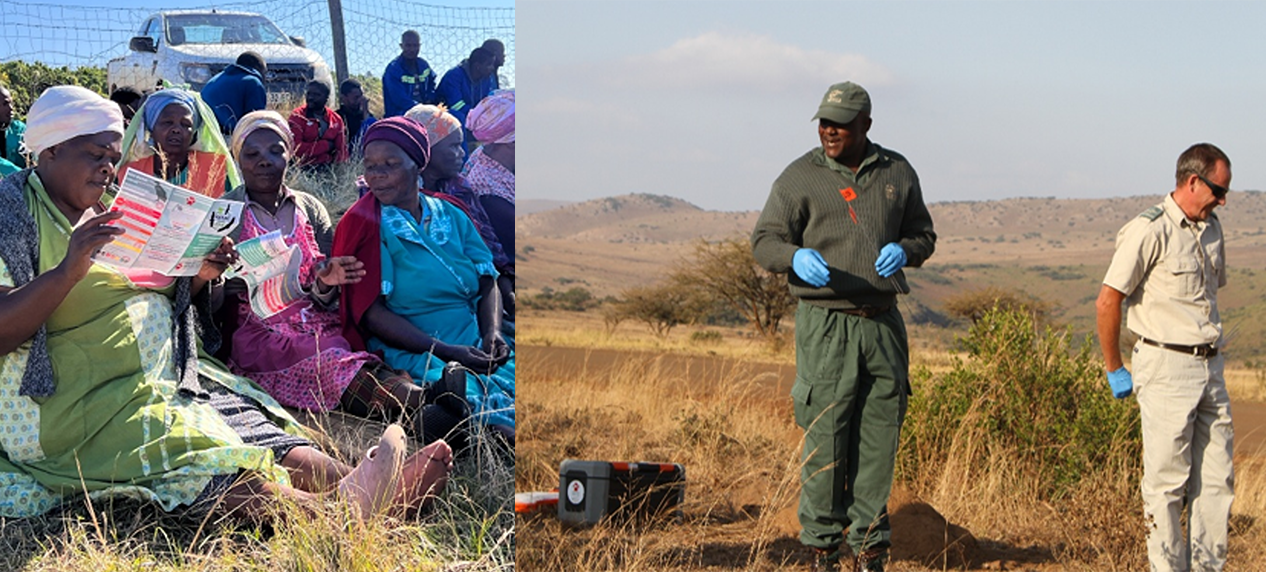
Vulture Safe Zones protecting threatened vultures across farms, reserves and communal land

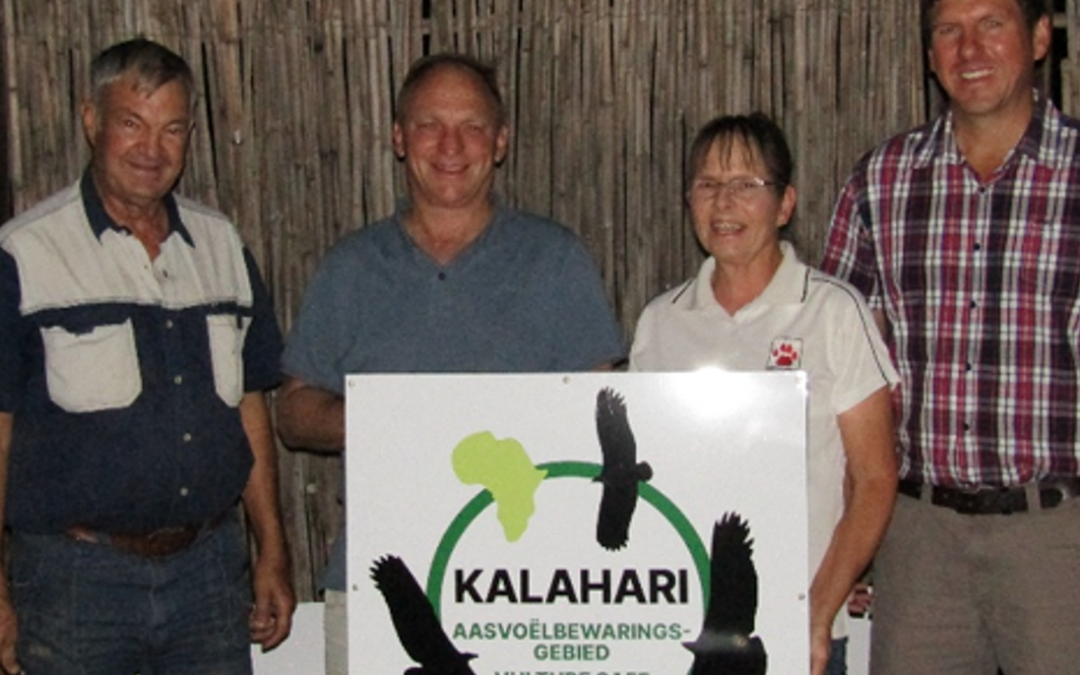
left: The EWT’s Ronelle Visagie handing over VSZ signboards

The image conjured up of nature conservation in Africa usually includes a reserve, fences, and rangers in camouflage uniforms. Powerful as that may be, Africa’s vultures need more.

Vulture populations across the continent have declined drastically over the last three decades, and several of these species are on the brink of extinction. The leading driver of these declines is poisoning, both direct and indirect. Poisons laid out on a carcass for various reasons can kill dozens, if not hundreds, of birds in a single feeding event. Add electrocution and collisions on power lines, drowning in cement reservoirs, unintentional poisoning through lead ammunition or veterinary drug contamination in carcasses, and the loss of nesting habitat, and what arises is an array of threats that turn up, either in total or individually on any type of land across Southern Africa.

The problem is that vultures on the wing can cover hundreds of kilometres in a day. They may roost on a power line on one property, bathe in a dam on another, and feed on a carcass on a third, crossing communal land, commercial farms, formally protected areas and even country borders. The fences between these properties play no role in where they decide to go, and yet, most of our approaches use protected areas as a core principle in the conservation of these species.

As such, conservationists need to address threats to these vultures at a transboundary landscape level to truly halt their declines, which has felt like an impossible task. Until now.

Vulture Safe Zones: They answer to landscape level threat reduction

A Vulture Safe Zone (VSZ) is an appropriately sized area where targeted conservation measures deal with the key threats facing the vulture species associated with that area. The goal is to support the survival of wild populations, by reducing threats, thus creating a landscape in which their numbers are sustained and, ultimately, increase.

The concept arose to address the Non-Steroidal Anti-Inflammatory Drug (NSAID) poisoning which caused the Asian Vulture Crisis. The foundational principles of these VSZs were to reduce the threat of NSAID poisoning in vultures through regional bans of vulture-toxic NSAIDs and shifts to safer alternatives. However, the threats to African Vultures are varied and require different mitigation approaches.

The requirements for the African context are:

  • The area must be poison-free, and carcasses must not contain harmful contaminants like veterinary drugs or lead;
  • Power lines and associated infrastructure must be retrofitted to reduce collision and electrocution risk;
  • Reservoirs are covered or modified so birds, and other wildlife can’t fall in and drown and;
  • Breeding and roosting sites are protected from disturbance.

The core feature of a VSZ is that it isn’t defined by land tenure. A protected area like a national park or a private reserve can be a VSZ, but so can a patchwork of livestock farms, or tracts of communal grazing land. What counts is whether the threats are being dealt with. More than two million hectares of southern Africa are now covered by VSZs, and yet the approach remains one of the most overlooked tools we have.

Vulture Safe Zone Alliance connecting safer landscapes for vultures across southern Africa

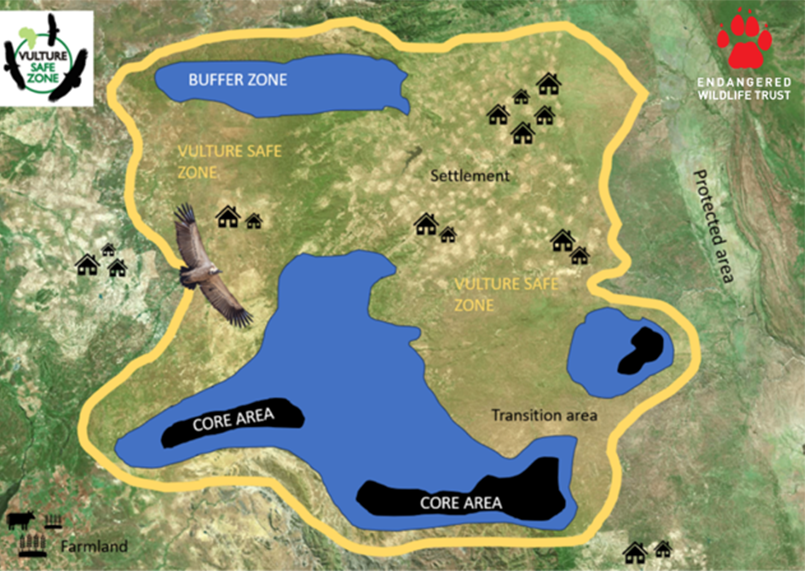
This image shows the spatial layout of VSZs. Black = Areas of high vulture importance (breeding or roosting sites) where formal protection to reduce risk of habitat disturbance or unsustainable development could be applied. Blue = Surrounding spaces where targeted threat mitigation must be prioritised and reduce likelihood of disturbances that can leak into core areas, but don’t necessarily require formal protection. Yellow = general demarcated area for VSZ certification under varying land use types. Threats should be identified and addressed as needed. 


The EWT is among a small group of NGOs that have spearheaded VSZs in South Africa, and our two flagship zones show how the approach works. The Karoo Vulture Safe Zone Project has more than 730,000 ha committed to becoming Vulture Safe, including three national parks and the Mountain Zebra Camdeboo Protected Environment. The Karoo VSZ has been built farm by farm as more and more landowners commit to reducing threats on their own land.

The Kalahari VSZ covers more than 271,000 ha of Vulture Safe land and monitoring there suggests that the African White-backed Vulture breeding numbers in the area are increasing. At the beginning of 2026, years of work with SANParks culminated in Mokala National Park being certified the first South African national park as a Vulture Safe Zone. In partnership with Eskom, we have ensured that power lines in the conservation area are safe, while SANParks Honorary Rangers has donated nets to cover dams and prevent drownings.

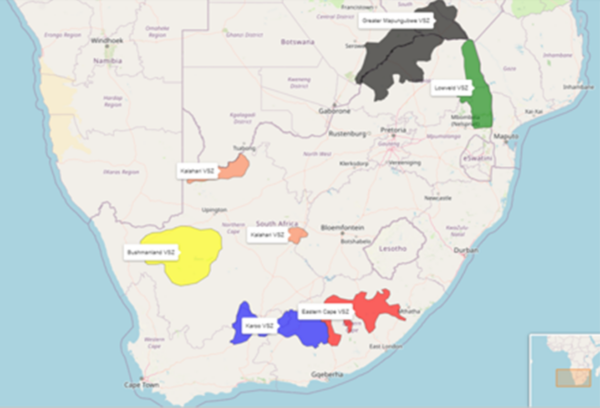
map showing The EWT Karoo & Kalahari VSZs, and other areas intended as future VSZs.

The EWT Karoo & Kalahari VSZs, and other areas intended as future VSZs.

The lesson from this is simple: vultures are conserved by relationships as much as they are by science.

Threats are reduced when farmers agree to cover farm dams or stop using poisons for predator control, when park management mitigates unsafe infrastructure, utility companies commit to retrofit powerlines to reduce collision or electrocution risk, or when communities report poaching or illegal activities. Science tells us where and what the threats are, but it is the actions by the people on the ground that actively reduce them and support the populations of vultures there.

The Vulture Safe Zone Alliance models the kind of collaboration that can achieve the landscape level threat mitigation needed to conserve vultures across the region.

The protected area model asks the question of how to safeguard a portion of land to conserve the species and processes that depend on it, but vultures force us to change our approach towards making a whole landscape survivable. A bird that ranges across dozens of properties can’t be saved by one well-managed reserve if it is poisoned, electrocuted or drowned the moment it leaves. Conserving vultures means tackling threats wherever they occur, whoever owns the land and however it is used.

Until recently, VSZs across the region were implemented by different organisations, each with its own approach. That flexibility drove innovation, but it also raised fair questions in conservation circles about what makes a safe zone genuinely safe, and whether zones are large enough to matter. This is where the Vulture Safe Zone Alliance (VSZA) comes in.

The EWT is one of nine organisations from six countries that have joined forces to solidify VSZs as the foundational approach to conserving our continents vultures. The VSZA’s first major product is a set of shared Vulture Safe Zone Guidelines, giving the region a common framework for identifying, establishing and monitoring these areas.

The members of the Alliance all agree that our conservation actions need to be aligned with the spatial utilisation of these birds and not driven by boundaries on the ground, and that can only happen through connected efforts, sharing what works (or what doesn’t), and linking safe spaces across large landscapes.

Vultures do not distinguish between protected or unprotected land, and neither should conservation. This reframing is what makes VSZs powerful, and the Alliance is what lets them scale. It treats farmers, communities and land managers as partners in conservation rather than obstacles to it. It gives every zone a shared standard, so results can be compared and trusted. And by linking zones, it starts building corridors of safety that match the spatial movements and land use of vultures, rather than cornering off certain areas in the hopes they might remain there.

It is not a silver bullet. Intentional sentinel and belief-based poisoning remain a serious problem in parts of the region, and no zone can fully stop a determined poisoner, because the sad reality is that all illegal activities continue despite the existence of the law. But the alternative, protecting isolated pockets of land while the spaces between them stay riddled with threats, is not working.

What does this Alliance mean for the public?

Vultures do work that people rarely notice. They clear carcasses quickly, helping to limit the spread of disease and the risks that decaying carcasses pose to livestock and communities. A BirdLife study valued the ecosystem services vultures provide in southern Africa at about $1.8 billion a year. When vultures disappear, someone pays the bill.

You can help by:

  • Reporting suspected poisonings and injured birds your local provincial conservation authority or the EWT.
  • If you own or manage land: cover reservoirs, use lead-free ammunition and make sure carcasses are free of contaminants and harmful drugs.
  • If you own property or farm in areas where vultures frequent, talk to our Birds of Prey team about getting involved in our VSZ projects by contacting danielled@ewt.org
  • Report injuries or mortalities caused by powerlines to our Wildlife and Infrastructure Unit at wep@ewt.org

The Alliance won’t turn the tide overnight. But for the first time, the region has a shared plan, a common standard and a growing network built on what the species needs to survive.

Community members working together to protect Afrian Vultures

Release of two rehabilitated Vultures at Mokala National Park

Release of two rehabilitated Vultures at Mokala National Park

In the Field:

Release of two rehabilitated Vultures at Mokala National Park

By Ronelle Visagie, Field Officer in the Birds of Prey Unit


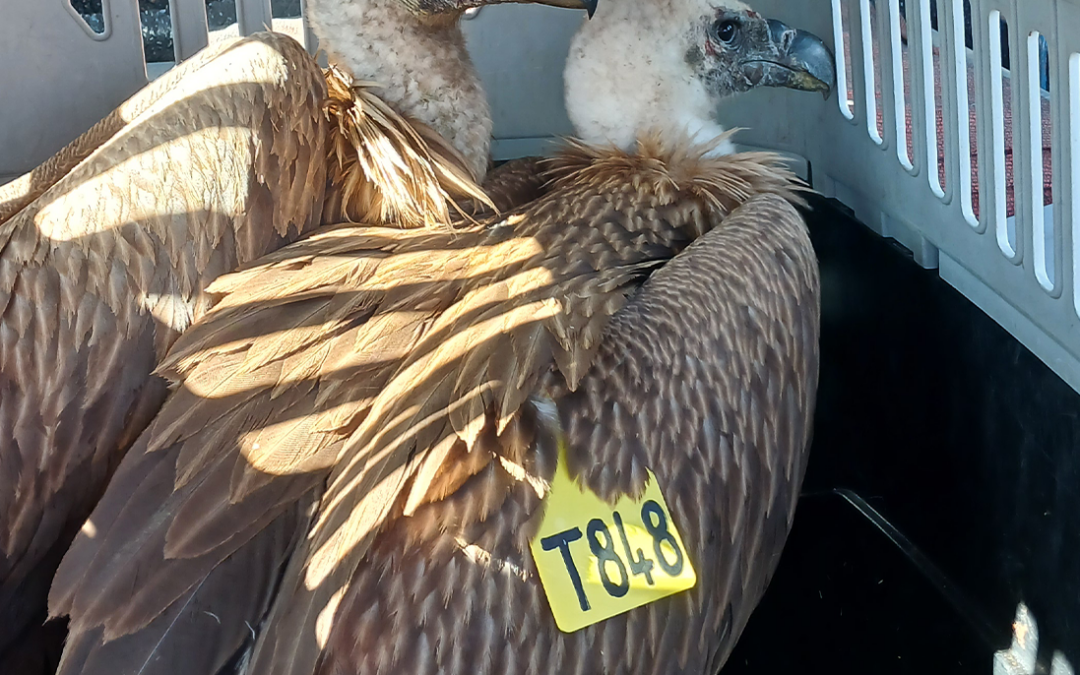
Two rehabilitated White-backed Vultures being released into the wild at Mokala National Park.

At the end of March 2026 a White-backed Vulture landed at a home in in Keidebees, Upington.  The owner of the house, Mike Knoetze, cared for the bird for a couple of days and fed it delicious steak while searching for someone to collect the bird. I was contacted about the bird and drove to Upington to fetch it.

On 22 April Danielle du Toit, Field Officer for the Birds of Prey Unit, was contacted in Graaff-Reinet about a White-backed Vulture that was sitting on the roof of a local church. When it landed on the ground Danielle was there to capture it. She took it to the veterinarian for a check-up and got permission from the local Nature Conservation authorities to transport it to the border of the Northern Cape where I could pick it up.

Both these young vultures were very hungry and had probably got lost from adult birds that could find food for them. When the juvenile vultures cannot find food, they quite often go to people or land at farmyards. If people feed them, they will follow them around and appear to be tame. But, when the juvenile vultures are properly fed and have gained enough weight, their natural wild instinct returns.

After two months of feeding the young vultures as much food as they could eat, they were ready to return to the open skies where they belong. They had become very restless in the aviary and wanted to get out.   Before their release back into the wild, both were ringed and fitted with wing tags for identification purposes and so that their flight paths can be monitored.

In early June I drove went to Mokala National Park near Kimberley and released both the vultures at the breeding colony where they could find adult birds to guide them.  

Note:  If people see tagged vultures, they can report them to Safring or on the email address resightings@ewt.org