Help protect Africa's 

Raptors in Decline: What One Researcher’s Roadside Observations Revealed

Raptors in Decline: What One Researcher’s Roadside Observations Revealed

Raptors in Decline: What One Researcher’ s Roadside Observations Revealed

By Ronelle Visagie, Birds of Prey Unit
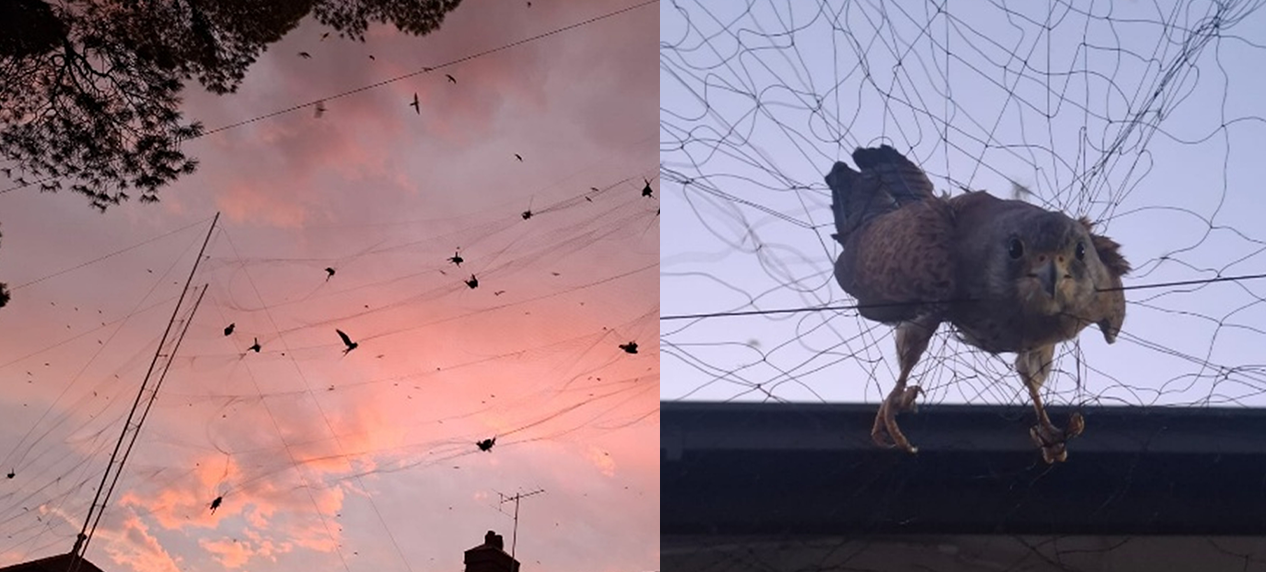
 

Left: Jackal Buzzards in Middelburg district. Right: Data tracking

Left: Jackal Buzzards in Middelburg district. Right: Data tracking

A study of long-term road surveys undertaken by Ronelle Visagie, field officer in the Birds of Prey Unit, has been referenced in a new research report revealing widespread declines in South Africa’ s raptors and other large birds.  Ronelle co-authored the report published by the University of Cape Town.

How did the survey come about?  Here is Ronelle’ s story:

I was recently asked to share the story behind a study I co-authored that revealed widespread declines in raptor numbers across South Africa. The data behind the research came from an unexpected source: the many kilometres I’ ve driven while working for the Endangered Wildlife Trust (EWT).

My work involves a lot of time on the road. I regularly travel long distances to investigate power line incidents involving birds, and in 2019 I began monitoring 400 vulture nests in the Kalahari. From my home to Askam—where that fieldwork begins—is about 600 km. Much of the monitoring takes place along the Kuruman and Molopo Rivers and near Van Zylsrus. I’ ve also spent years travelling through the region for the Vulture Safe Zone project.

Because I often drove the same long routes, I started looking for something productive to do while travelling. I realised that I could record the raptors I saw along the roads. Using the CyberTracker app on my phone, I began logging every bird of prey I encountered. The system is simple and effective: it allows you to record the species, age class and behaviour of each bird, while automatically storing the GPS coordinates.

From that point on, every work trip became an opportunity to collect data. Whenever I drove anywhere, I recorded the raptors I saw along the way. I also noted roadkills, which can provide insight into wildlife populations and threats. Interestingly, I’ ve noticed that roadkills seem to have decreased over time, possibly because people increasingly collect them for food.

Over the years, the kilometres added up. Between 2009 and 2025, I drove over 500,000 km for my work with the EWT. Along the way, I built up a large dataset of roadside raptor observations.

A few years ago, I presented this dataset at the EWT’ s Birds of Prey Conference in Swadini, Limpopo. In the audience was Assistant Professor Arjun Amar from the University of Cape Town. After the talk, he approached me and asked whether one of his students, Santiago Zuluaga, could analyse the data and develop it into a scientific paper.
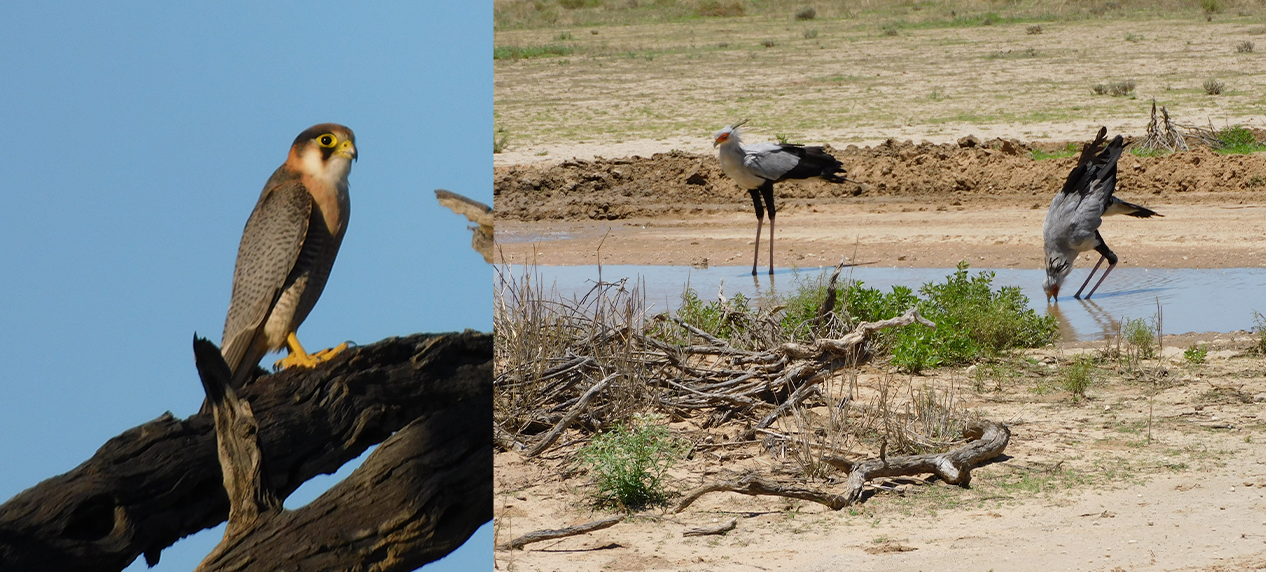
Red-necked Falcon in KNP and Secretary birds drinking water in the road

Left: Red-necked Falcon in KNP. Right: Secretary birds drinking water in the road

The results were sobering. The analysis showed that half of the raptor species I recorded had declined over the study period.

This matters because raptors play a critical role in ecosystems. They help regulate populations of animals such as rodents and dassies, preventing these species from becoming overly abundant. Vultures perform an equally essential service by removing carcasses from the landscape, helping to limit the spread of disease.

Some of the declines we observed are likely linked to human activities. In parts of the Northern Cape and Free State, certain raptors are persecuted because they occasionally catch chickens or lambs. Poisoning is also a growing threat, and unfortunately poisons are often easy to obtain. Owls appear to be particularly affected by this.

Addressing these challenges requires working with the people who share the landscape with these birds. When I travel through farming areas, I spend time talking with farmers to understand their concerns and look for ways to help reduce conflict. I also visit schools to talk to children about why raptors are important and the threats they face.

Studies like this help highlight the scale of the problem. Raptors are declining, and yet they provide vital services that keep ecosystems functioning. The more we understand these trends, the better we can work together to protect these remarkable birds.

The article can be accessed here: https://doi.org/10.1016/j.biocon.2026.111764.
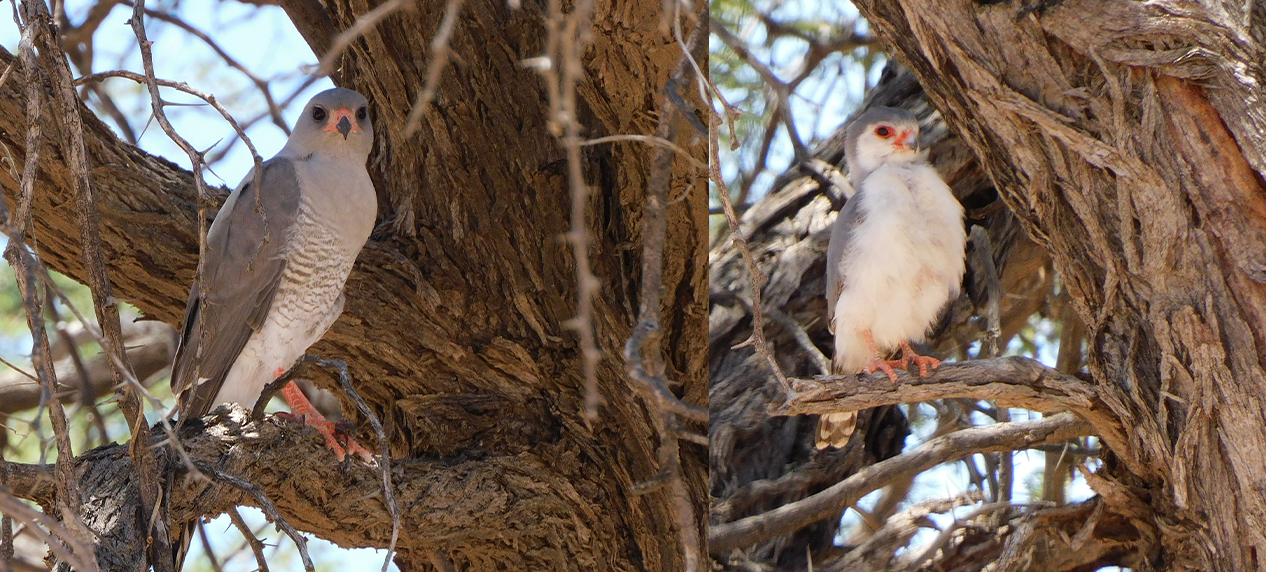
Left: Gabar Goshawk in KNP. Right: Pygmy Falcon in KNP

Left: Gabar Goshawk in KNP. Right: Pygmy Falcon in KNP
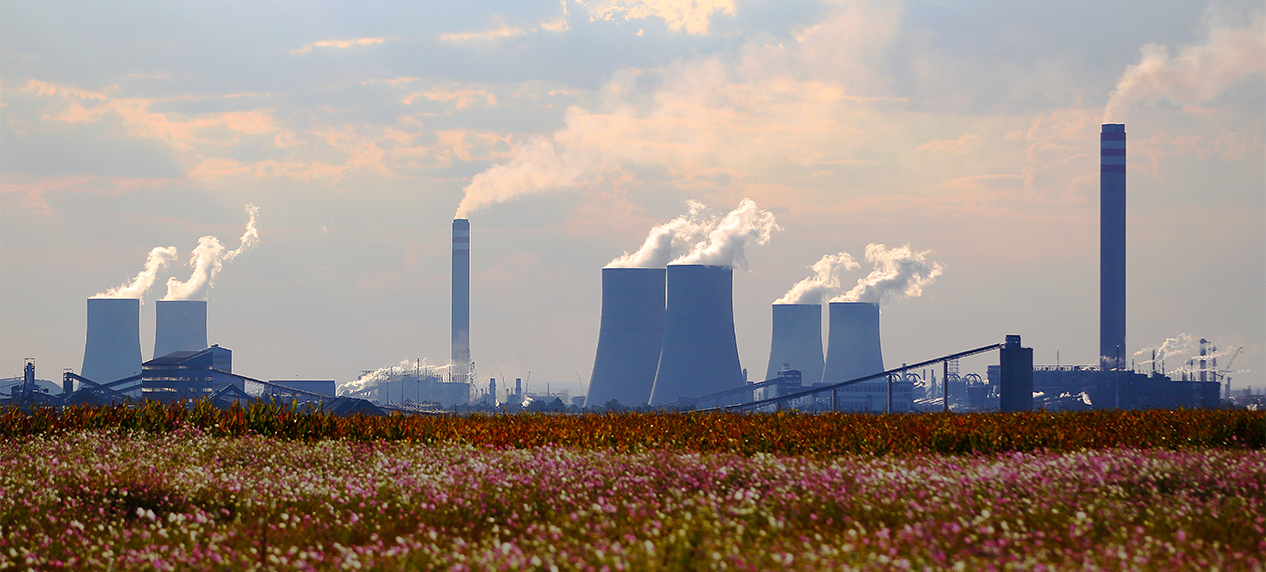
Global Risks Report 2025: A Decade of Challenges Ahead

Global Risks Report 2025: A Decade of Challenges Ahead


Global Risks Report 2025:
A Decade of Challenges Ahead

By Eleanor Momberg


The 20th edition of the Global Risks Report 2025 (GRPS) shows an increasingly fractured global landscape where escalating geopolitical, environmental, societal and technological challenges threaten stability and progress.

The report comprises insights from 900 experts worldwide, analysing global risks through three timeframes. It assists decision-makers to only balance existing crises, but also to set their longer-term priorities.

It identifies state-based armed conflict as the most pressing immediate global risk for 2025.

Misinformation and disinformation remain top short-term risks for the second consecutive year, underlining their persistent threat to societal cohesion and governance by eroding trust and exacerbating divisions within and between nations. Other leading short-term risks include extreme weather events, societal polarisation, cyber-espionage and warfare.

Environmental risks dominate the longer-term outlook, with extreme weather events, biodiversity loss and ecosystem collapse, critical change to Earth systems and natural resources shortages leading the 10-year risk rankings. The fifth environmental risk in the top 10 is pollution, which is also perceived as a leading risk in the short term. Its sixth-place ranking in the short term reflects a growing recognition of the serious health and ecosystem impacts of a wide range of pollutants across air, water and land. Overall, extreme weather events were identified prominently as immediate, short-term and long-term risks.

The long-term landscape up to 2035 is also clouded by technological risks related to misinformation, disinformation and adverse outcomes of AI technologies.

The authors point out that the global outlook at the start of 2025 is increasingly fractured across geopolitical, environmental, societal, economic and technological domains. Besides the expansion and escalation of conflicts, there has been a multitude of extreme weather events amplified by climate change, widespread societal and political polarisation, and continued technological advancements accelerating the spread of false or misleading information.

There is clear concern about the urgent reality linked to the rise in environmental risks in the long term.

The report states that the impacts of environmental risks have worsened in intensity and frequency since the Global Risks Report was launched in 2006. The outlook for environmental risks over the next decade is alarming, says the authors. While the 33 identified risks in the GRPS are expected to worsen in severity from the two-year to the 10-year time horizon, environmental risks present the most significant deterioration.

Extreme weather events are anticipated to become even more of a concern, with this risk being top ranked in the 10-year risk list for the second year running. Biodiversity loss and ecosystem collapse ranks #2 over the 10-year horizon, with a significant deterioration compared to its two-year ranking.

The GRPS shows generational divergence when it comes to risk perceptions related to environmental issues, with younger survey respondents being more concerned about this over the next 10 years than older age groups. Take Pollution, for example, which the under 30s rank as the #3 most severe risk in 2035, the highest of any age group surveyed.

As noted in last year’ s Global Risks Report, there is also divergence in how Pollution is ranked by stakeholders, with the public sector placing Pollution as a top 10 risk in the 10-year ranking, but not the private sector.

In its call to immediate action, the GRPS questions whether consensus is possible in a world where deepening divisions and increasing fragmentation are reshaping international relations, and calling into question whether existing structures are equipped to tackle the challenges collectively confronting all peoples.

Levels of global cooperation across many areas of geopolitics and humanitarian issues, economic relations, and environmental, societal and technological challenges may reach new lows in the coming years, the report states, adding that key countries appear to be turning inward, focusing on mounting domestic economic or societal concerns, just when they should be seeking to strengthen multilateral ties to confront shared challenges.

The decade ahead will be pivotal as leaders will be confronted with increasingly complex global risks. But to prevent a downward spiral in which citizens worldwide will be worse off than before, ultimately there is no option other than to find avenues for dialogue and collaboration, the report states.


First comprehensive meta-analysis shows conservation action contributes to reversing and halting biodiversity loss

First comprehensive meta-analysis shows conservation action contributes to reversing and halting biodiversity loss

First comprehensive meta-analysis shows conservation action contributes to reversing and halting biodiversity loss

By Eleanor Momberg

A new study published in the scientific journal Science provides the strongest evidence yet that environmental conservation is not only successful, but that scaling up conservation interventions will contribute to reversing and halting biodiversity loss.

“We have shown that across a full suite of conservation actions and intervention types, multiple levels and metrics of biodiversity, and over a century of action, conservation has improved the state of biodiversity—or at least slowed its decline—compared with no conservation action,” the report states.

The findings of the first-ever comprehensive meta-analysis of the impact of conservation action are critical as more than 44,000 species are listed as being at the risk of extinction. This holds tremendous consequences for ecosystems that stabilise the climate and which provide millions of people worldwide with a number of ecosystem services, including clean water and supporting livelihoods.

The research, funded through the International Union for Conservation of Nature (IUCN) by the Global Environment Facility, points to the recent adoption by government of the Global Biodiversity Framework aimed at reversing and halting biodiversity loss adding this made it even more critical to understand whether conservation actions are working.

Lead author of the study and executive vice president of Re:wild, Penny Langhammer, said: “If you look only at the trend of species declines, it would be easy to think that we’ re failing to protect biodiversity, but you would not be looking at the full picture. What we show with this paper is that conservation is, in fact, working to halt and reverse biodiversity loss. It is clear that conservation must be prioritised and receive significant additional resources and political will globally, while we simultaneously address the systemic drivers of biodiversity loss, such as overconsumption and production.”

The report in Science indicates that although many papers look at individual conservation projects and interventions and their impact compared to no action taken, these papers have never been pulled into a single analysis to see how and whether conservation action is working overall.

Lauren Waller, the EWT’ s Regional Planning Coordinator in the Conservation and Science Planning Unit said a meta-analysis of 186 case studies, including more than 665 trials, was conducted to determine the impact of the various conservation interventions undertaken globally. These were compared with what would or could have happened without any conservation interventions.

“The study showed that conservation improved the state of biodiversity, or slowed the decline in biodiversity loss. It also showed that species-targeted interventions were particularly effective,” said Waller, who is also the IUCN SSC Conservation Planning Specialist Group (CPSG) Regional Resource Centre Convenor for Southern and East Africa.

Among the key findings are that in two-thirds of cases, conservation either improved the state of biodiversity or at least slowed declines and that interventions targeted at species and ecosystems, such as invasive species control, habitat loss reduction and restoration, protected areas, and sustainable management, are highly effective and have large effect sizes. This provides the strongest evidence to date that conservation actions are successful but require transformational scaling up to meet global targets, the report states.

Robust impact assessment using a counterfactual approach revealed that conservation action has prevented extinctions and reduced extinction risk for species across taxonomic groups compared with an absence of conservation action. There has been an increase over the last decade in studies evaluating the impact of specific conservation actions from global to local scales using counterfactual comparisons, including effects of protected areas, payments for environmental services, invasive alien species (IAS) eradications and sustainable management of ecosystems.

“This paper is not only extremely important in providing robust evidence of the impact of conservation actions. It is also extremely timely in informing crucial international policy processes, including the establishment of a 20-year vision for IUCN, the development of an IPBES assessment of biodiversity monitoring, and the delivery of the action targets toward the outcome goals of the new Kunming-Montreal Global Biodiversity Framework,” Thomas Brooks, IUCN chief scientist and co-author of the study, said.

The paper also argues that there must be more investment specifically in the effective management of protected areas, which remain the cornerstone for many conservation actions. Consistent with other studies, this study finds that protected areas work very well on the whole. And what other studies have shown is that when protected areas are not working, it is typically the result of a lack of effective management and adequate resourcing. Protected areas will be even more effective at reducing biodiversity loss if they are well-resourced and well-managed.

Protected areas have been shown to be effective in reducing conversion of natural land cover, terrestrial habitat loss, coral loss, tropical forest fires, species extinction risk, and in increasing biomass and density of marine organisms. The results, however concur that while their effectiveness is not universal, protected areas are an important tool for achieving conservation outcomes. Well-resourced and well-managed protected areas are needed to effectively reduce biodiversity loss, the paper states.

Dr Sam Ferreira, SANParks large mammal ecologist said at the South African National Satellite Event of the World Species Congress, that the global biodiversity crisis, driven primarily by human activity, was accelerating at unprecedented rates.

Human-driven threats such as poaching, habitat destruction, and human-wildlife conflict are increasing with growing human populations, leading to alarming declines in animal populations and ranges. This crisis, irreversible in nature, poses one of the most serious environmental threats to the planet. The interconnectedness of species within ecosystems underscores the significance of biodiversity, with the extinction of one species disrupting the delicate balance of entire ecosystems. For instance, the decline of bee pollinators due to habitat loss, pesticide use, and climate change threatens not only plant species but also other species dependent on them, illustrating the cascading effects of species loss on the web of life, including humans.

“Urgent action is needed to mitigate these threats and preserve biodiversity for the health of ecosystems and human well-being,” said Ferreira.

The meta-analysis adds that although the state of biodiversity is declining across the globe in absolute terms, conservation actions work most of the time. The challenge now is to expand these to the scale necessary to reverse the global biodiversity crisis. That is, conservation interventions are working but there are simply not enough conservation actions implemented or in the right places.

Realising the highly ambitious vision of the GBF will require ongoing assessment of the impact of specific conservation interventions to inform adaptive management with evidence. Importantly, it will require substantially scaled-up funding and commitment for implementation of demonstrably effective conservation interventions—a real transformational change—which in turn depends on increased political will and investment.

Such an increase in conservation action and associated outcomes will require expanded implementation and significant additional investment across many sectors of society, particularly beyond the traditional conservation sector, the report said.

The authors of a meta-analysis contend that more and better counterfactual studies are needed for a wider range of conservation interventions and geographic regions. Particular gaps include assessments of pollution control, climate change adaptation, sustainable use of species, habitat loss reduction (beyond protected areas), actions targeting species and genetic diversity, and conservation actions in the Global South.