Help protect Africa's 

Celebrating Africa’ s Medicinal Plant Heritage

Celebrating Africa’ s Medicinal Plant Heritage

Celebrating Africa’ s Medicinal Plant Heritage

By Jenny Botha, People in Conservation unit manager
 

indigenous knowledge medicinal plants Africa

Africa’ s landscapes are home to some of the world’ s most powerful medicinal plants. The Pepper‑bark Tree, Wild Ginger, Fever Tree, and African Potato are just some of the many species within a rich African pharmacopeia that has evolved over thousands of years of accumulated knowledge and wisdom and shared across generations to support Traditional Health Practitioners to heal their patients.

Today, human activities threaten the survival of hundreds of medicinal plant species worldwide. Plants are often lost in the wild through high harvesting levels and the transformation of habitats through agriculture, mining and other human activities. The slower, less visible impacts of climate change are also increasingly affecting wildlife.

The good news is that there is a resurgence of support to conserve medicinal plants with people across sectors contributing to their improved protection and long-term survival. To succeed, these efforts need to be embedded not only in the conservation of biodiversity but also in culture, sustainability, and community empowerment. We also need to recognise that meaningful change requires sustained effort over time.

The Endangered Wildlife Trust’ s contribution

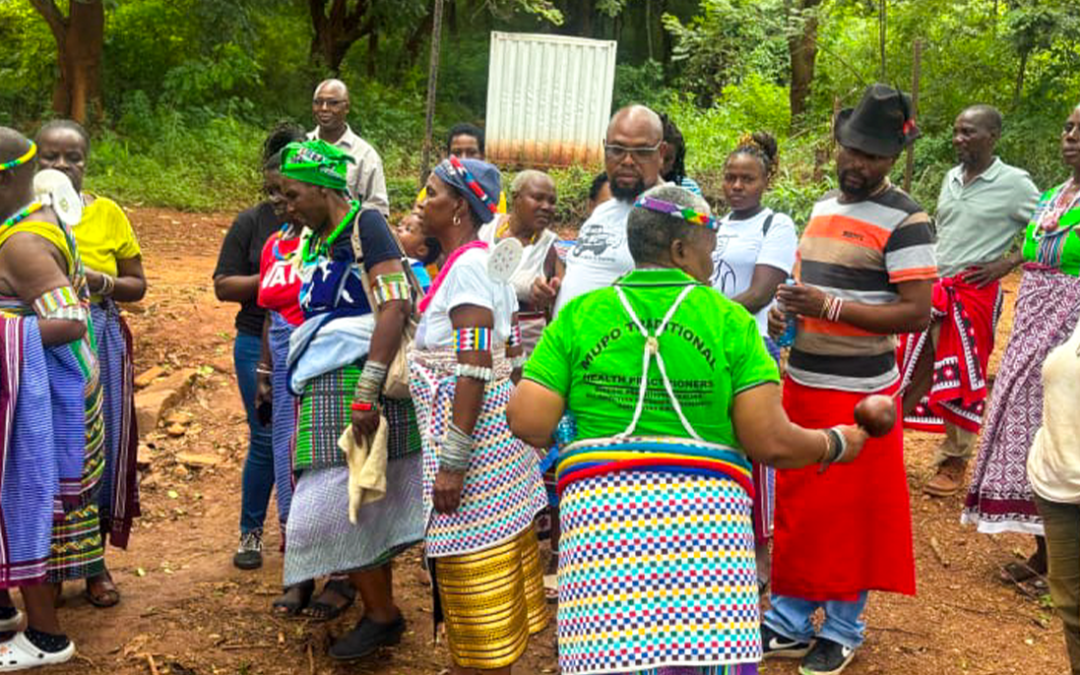
To protect this biocultural heritage, the Endangered Wildlife Trust is working alongside Traditional Health Practitioners, communities, traders, and harvesters to develop sustainable, legal sources of medicinal plants. Our starting point is to explore the challenges we all face through biodiversity loss and by sharing ideas and potential strategies to address them, in this case focusing on medicinal plants.

Cultivation has the potential to reduce the volumes of plants that are harvested from the wild if we can achieve scale and minimise production costs. In collaboration with the South African Biodiversity Institute and regional conservation agencies, the EWT has hosted seven training courses since March 2025, reaching nearly 350 participants in both rural and urban areas. Because medicinal plants hold deep cultural and spiritual meaning, cultivation needs to be carried out with care, recognising and honouring the cultural and spiritual protocols that are traditionally carried out when these plants are handled and used.

We also need to ensure that we adhere to both international and national legislation. Many medicinal plant species are protected by law due to the significant threats to their long‑term survival. Since regulations governing medicinal plants can be complex, we work with national and regional conservation authorities to support Traditional Health Practitioners and other stakeholders understand legislation and navigate legal compliance.

We are also supporting communities and Traditional Health Practitioners to monitor wild medicinal plant populations growing in their areas and, over time, exploring approaches to strengthen controls. This includes working with South African police officials and local leaders, as well as engaging with communities to raise awareness of wildlife legislation and explore options to address the underlying drivers of illegal wildlife activities where possible.

While the challenges are significant, we are encouraged by the growing support and renewed collaboration between conservation organisations, Traditional Health Practitioners, and other stakeholders. By working together to protect medicinal plants while ensuring they remain accessible for traditional medicine, we can help secure a thriving African pharmacopeia for the health and well‑being of people now and for generations to come.

** Funded by the UK Government through the Illegal Wildlife Trade Challenge Fund.
ICF/EWT Partnership Shines at IUCN’ s first Africa Conservation Forum

ICF/EWT Partnership Shines at IUCN’ s first Africa Conservation Forum


ICF/EWT Partnership Shines at IUCN’ s first Africa Conservation Forum

By Dr Adalbert Aineo-mucunguzi, EWT/ICF Parnership East African regional manager, African Crane Conservation Programme

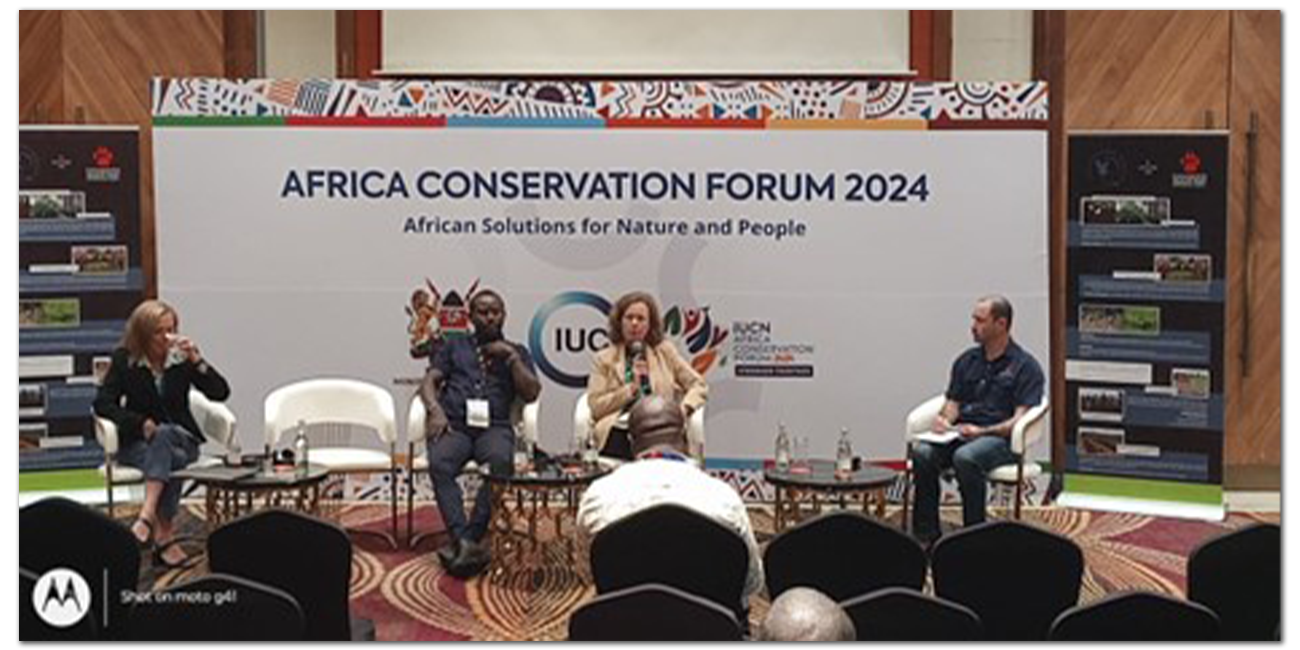
From left to right:  Dr Harriet Davies-Mostert, Dr Mwangi Joseph,  Ms Kerryn Morrison and Dr Ian Little


In June 2024, the International Union for Conservation of Nature (IUCN) convened the Africa Conservation Forum (ACF), one of the leading regional platforms to strategically influence the sustainability agenda and biodiversity conservation. The Forum provided an avenue for sharing information and knowledge, building partnerships, and connecting key stakeholders from different parts of Africa. The IUCN Africa Conservation Forum was organised by the three IUCN offices according to sub-regions in Africa: West and Central Africa (PACO), North Africa (Centre for Mediterranean Cooperation – MED), and Eastern and Southern Africa (ESARO).

During the forum, the International Crane Foundation/Endangered Wildlife Trust (ICF/EWT) Partnership hosted a side event workshop titled “Nature-based Solutions for effective community conservation and climate action”. This event brought together conservation practitioners, researchers and policy makers from ESARO, PACO and MED regions of Africa to share the benefits, challenges and lessons learnt about implementation of Nature-based Solutions (NbS) to enhance conservation and climate action.

Moderated by our own Head of Conservation, Dr. Ian Little, the one and half hour workshop was dominated by presentations from ICF/EWT staff. Our East Africa regional Director, Dr Adalbert Aine-omucunguzi gave the opening presentation on the “what and why of Nature-based Solutions in conservation, climate action and livelihoods” largely drawing examples from our work across East Africa. This was followed by a panel discussion where Dr Mwangi Joseph, our Kenya Country Manager, discussed Nature-based solutions in agricultural landscapes and how they benefit conservation and climate action, while Ms Kerryn Morrison, the VP International-Director for Africa, discussed the opportunities for scaling up Nature-based Solutions across the continent. The other panelist, Dr Harriet Davies-Mostert, former Head of Conservation at EWT, and currently the Regional Vice Chair for IUCN’ s World Commission on Protected Areas, discussed the effectiveness of Protected and Conserved Areas as Nature-based Solutions.

From left to right:  Dr Harriet Davies-Mostert, Dr Mwangi Joseph,  Ms Kerryn Morrison and Dr Ian Little

During the question and answer session, participants shared insights and experiences about scalable NbS that enhance ecosystem conservation and climate action and discussed best practices for unlocking the potential of NbS across different ecosystems on the African continent. During this discussion new collaborations within the NbS space were also formed.

The event emphasised the need for conservation organisations to acknowledge that most NbS have been practiced by local communities over generations and they thus have rich indigenous knowledge to utilise in the execution of their projects and programmes. It was also agreed that scientist should not assume that communities lack this knowledge and that, if proper community engagement is done, nature-based solutions can offer integrated avenues for addressing biodiversity loss and climate change challenges while advancing sustainable development goals. They have the potential to simultaneously address the root causes of climate change, bolster resilience against its impacts, and foster adaptability across social, environmental, and economic domains.