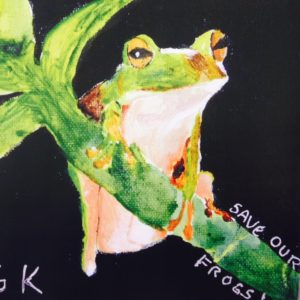
In 2012, volunteer and Public Relations expert Carmen Curtayne and I wanted to do something to highlight both the importance of amphibians in South Africa and the severe threats they face. After much brainstorming, we devised the ‘Leap Day for Frogs’ campaign.
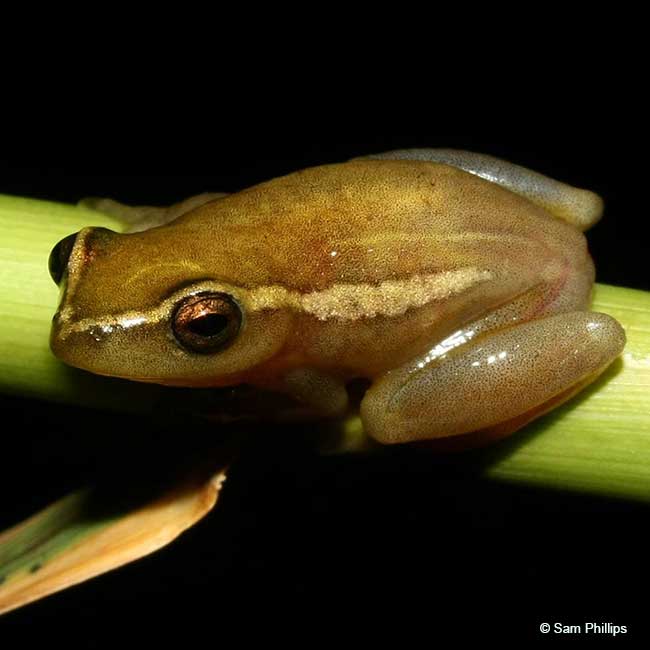
The idea was to create an annual national awareness day on 28 February – tying together the themes of Leap Year, leaping frogs, and taking a leap of faith (doing something demonstrable for frog conservation). We wanted to bring much-needed attention to frogs and their extinction threat. We also wanted to have fun in the name of frogs, encourage the public to get involved in science (citizen science), and celebrate South Africa’ s incredible variety of frog species. With almost half of the world’ s amphibian species experiencing some level of decline, bringing as much attention to frogs as possible has never been more important. South Africa is home to over 130 species – from the Giant Bullfrog (the size of a dinner plate!) to the Micro Frog (the size of your thumbnail), and all shapes and sizes in between. This enormous diversity is mirrored in the wide range of landscapes that frogs inhabit – from coastal wetlands to montane grasslands, gardens, forests, and even deserts.
Frogs are not just long-limbed, leapers. These water-loving amphibians play important roles in our ecosystems by feeding a wide array of other animals and eating vast quantities of insects – i.e. incredible free pest control! They are also important bio-indicators due to their sensitive skins and bi-phasic lifestyles. In other words, if they are around, our environment is healthy. These barometers of life are now the most threatened group of species on Earth, surely a sign of a planet in trouble.
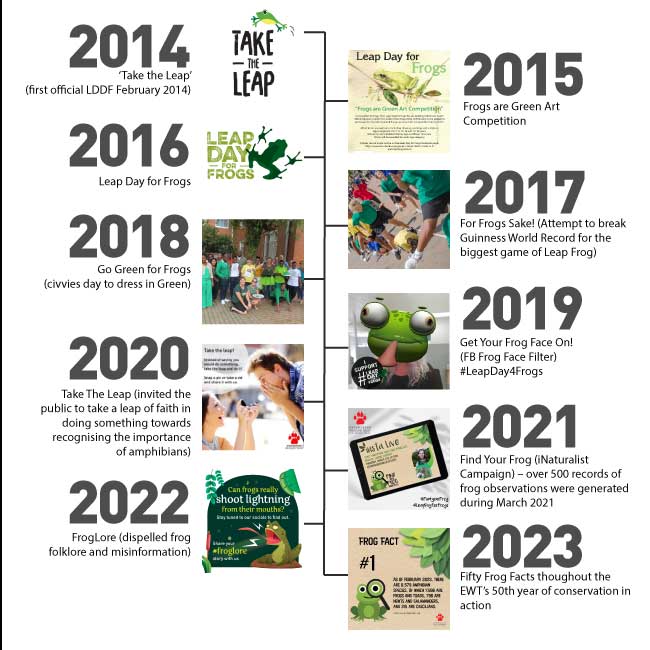
To bring awareness to these very important and beautiful yet threatened creatures, we have devised annual themes over the past ten years for Leap Day for Frogs.
Ten years celebrating Leap Day for Frogs
We celebrated the 10th Leap Day for Frogs this year, which coincides with EWT’ s 50th anniversary. As part of the latter, EWT will share a fun frog fact each Friday throughout the year.
Our theme this February was #CelebrateFrogs, and we reached over 3,000 people directly through over 15 events and outings, with over 165,000 people engaged through the social media campaign. Once again, we partnered with Kloof Conservancy and Iphithi Nature Reserve in Gillitts KZN, where over 150 people participated in various fun learning activities, despite very soggy conditions. We also gave lessons on the importance of wetlands to school learners based close to some project sites, receiving pledges from over 220 children to reduce impacts on frogs and freshwater. We also enjoyed a peaceful evening at the Mount Moreland wetlands, home to the Endangered Pickersgill’ s Reed Frog, with several nature lovers, and a talk and walk at Simbithi Eco-Estate. uShaka Marine World, Joburg Zoo and the National Zoological Gardens in Pretoria hosted educational stands and activities over the weekend of 25 February, engaging over 1,800 people. Other events were held in Bloemfontein, Plettenberg Bay and Howick.
We’ ve designed social media filters and run citizen science observation projects, and in total, reached well over 16,000 people directly through events run either by the EWT or through several partnering organisations, including SANBI, uShaka SeaWorld, North-West University, various KZN Conservancies, University of the Free State, Bloemfontein Botanical Garden and Johannesburg Zoo Amphibian Research Project. Occasionally, we have even had international events – from Wales to Zambia! Our online reach through social media exceeded hundreds of thousands of people and hopefully inspires the next generation of amphibian conservation biologists – or at the very least, highlights some simple behaviour changes that can benefit frogs and freshwater habitats.
Rough Moss Frog (Arthroleptella rugosa). Photo credit: Johan du Plessis
The Rough Moss Frog (Arthroleptella rugosa) is a Critically Endangered frog species found only on a single mountain range, the Klein Swartberg, in the Overberg district of the Western Cape, South Africa. In 2020 we realized that this little frog was in big trouble. Its habitat was being degraded rapidly by alien invasive vegetation to such an extent that the survival of the only known population of this species was uncertain.
With this realization, the Endangered Wildlife Trust (EWT) approached the IUCN Save Our Species fund for support to implement a critical rapid action intervention to save this population. In 2021, the IUCN Save Our Species answered the plea for assistance with co-funding from the European Union. This support allowed us to develop a firebreak system around this original population of Rough Moss Frogs. This critical intervention supported the planning of an ecological burn in 2022 as a tool to manage an extensive pine infestation that was damaging the population’ s seepage habitat. This was a novel approach to amphibian species conservation on the Klein Swartberg Mountain, not least globally.
During the surveys supported by the SOS project, an additional three populations of this species were recorded on the Klein Swartberg by project partner Bionerds PTY Ltd. This was a welcome discovery, bringing the known populations to four. Two of these newly discovered populations were in well-managed natural habitats, also good news for the species!
On 16 March 2022, the firebreaks and planning for the ecological fire were completed by our contractor, Enviro Wildfire, through the employment of an alien vegetation clearing team from the local community of Caledon. The planned ecological burn took place during the week of 28 March 2022. The ecological burn was intended to eradicate invasive pine trees and allow for the recovery of natural fynbos vegetation, not only for the conservation of the Rough Moss Frog population but also for various other Endangered plants and animals. This intervention will also benefit the local community living in the catchment zone below the Klein Swartberg by increasing the water yield from the mountain draining into the aquatic systems in the seeps and rivers and the agricultural community reliant on these water resources.
Team preparing firebreaks in the Klein Swartberg, Western Cape, South Africa. Photo credit: Johan du Plessis
The burn was successful, with very few invasive alien pine trees remaining. And those that survived will be cleared mechanically in the coming months, alongside the development of a long-term alien vegetation clearing plan covering the full extent of the mountain and supported by project partners, the Klein Swartberg Conservancy and the Fynbos Trust. In addition to the 800 ha planned for the burn, over 4,500 ha of the mountain also burnt, including the three additional Rough Moss Frog population sites discovered during the project. Post-fire monitoring by the team has happily confirmed the presence of Rough Moss Frogs at one of the burn sites. These populations will be continuously monitored over the coming breeding season (June onwards). This monitoring will include post-fire bioacoustics monitoring (recording of frog calls) to compare with pre-fire recordings to document the recovery of these populations in the coming years as habitat is restored.
Southern slope after ecological burn in the Klein Swartberg, Western Cape, South Africa. Photo credit: Johan du Plessis
The project not only achieved its objective of significantly reducing the threat of invasive vegetation to the original population but also forged partnerships, discovered previously unknown populations of a Critically Endangered species and initiated formal habitat protection processes for five properties where the species is now known to occur.
This project is supported by IUCN Save Our Species and co-funded by the European Union. The contents of this publication are the sole responsibility of the Endangered Wildlife Trust and do not necessarily reflect the views of IUCN or the European Union.
Courtney Maiden, Endangered Wildlife Trust MSc Student
Over 750,000 km of roads crisscross South Africa, and the country’ s natural habitats and wildlife are gravely threatened by further road development. Furthermore, with the anticipated increase of vehicles on the roads over the coming years, the likelihood of more wildlife-vehicle collisions is worrying. The Vervet Monkey (Chlorocebus pygerythrus) has adapted to thrive in human-altered landscapes. However, this also means they face many risks from humans and their activities. Vervet monkeys face daily challenges living in an urban environment due to increasing habitat loss and fragmentation. The clearing of treed areas for roads and other purposes forces monkeys to the ground, increasing their risk of being hit by vehicles. An important first step in reducing this outcome is the design of safe and cost-effective structures by which animals can safely cross the road.
Over the past two decades, wildlife crossing structures have been installed to facilitate wildlife movement over or under roads and railways to connect habitats and reduce roadkill. These structures are often custom-designed for each site and according to the needs of the targeted species. Yet, less than a handful of studies look at the effectiveness of different measures in reducing wildlife‐vehicle collisions in South Africa. Moreover, systematic assessments on designing safe and cost‐effective crossing structures for wildlife have not been carried out to date in our country, despite their importance in preventing Vervet Monkeys and other animals from becoming roadkill.
In March 2022, Courtney Maiden from the Endangered Wildlife Trust tested three different canopy bridge designs for Vervet Monkeys to identify one standardised design for the benefit of free‐ranging Vervet Monkey troops. The observational experiments took place at the Centre for the Rehabilitation of Wildlife (CROW) in Durban, where the three bridge designs were installed in two Vervet Monkey enclosures. Testing different canopy bridge designs in an ex-situ environment such as CROW allows us to establish design guidelines that can be used for free-ranging Vervet Monkeys in-situ (in their natural habitat). These ex-situ experiments are vital for understanding how Vervet Monkeys behave on different canopy bridge designs and identifying the most suitable bridge design to increase the likelihood of the bridges being used in the wild.
The bridges were made using polypropylene rope and recycled plastic. The design is adaptable to varying installation lengths, heights, and crossing environments. By observing the monkeys directly and using camera trap footage, we found that the ladder bridge was used most often and showed great potential for being the most suitable design.The positioning of any wildlife crossing structure is equally as important as its design. As the Vervet Monkey is a territorial species with daily foraging paths, installing canopy bridges along preferred movement pathways is vital for maximum benefit. Examining troop territories, crossing areas, and frequency of use can inform the best bridge location. Through the EWT-WTP student mentorship and with help from Wendy Collinson-Jonker (EWT) and Sandra Jacobson (US Forest Service Wildlife Biologist), Courtney has visited potential bridge installation sites in KwaZulu Natal and is currently studying road crossing hotspots to determine where bridges would be most likely to be used as intended.
Once suitable sites have been identified, we can begin the exciting part – testing the design identified as most suitable (the ladder bridge) on free-ranging monkeys. Watch this space for updates! All information and research updates can also be found on Instagram (@wildways_sa), Facebook (Wild Ways South Africa), and EWT platforms.
Dr Jeanne Tarrant, EWT Threatened Amphibian Programme Manager, jeannet@ewt.org.za
April 2022
Frogs and folklore go hand-in-hand. Countless children’ s stories and fairy tales feature frogs and toads, and these amphibians have appeared in proverbs, rituals, and myths and have been interwoven into cultures across the world for centuries. Often, these stories represent frogs as important symbols of good fortune, fertility, and abundance. For example, each year, numerous frogs appear with the flooding of the Nile. These floods were vital to agriculture because they provided water for growing crops. Frogs represented abundance and became a symbol for the number hufnu, which meant 100,000. Many native cultures place small frog coins in their purses because they believe the coins will help them keep their money. The nature of the complete transformation of frogs from tadpoles also conjures a wide range of possible representations, including the option of transforming again into something even more wonderful, as in the traditional fairies about frogs turning into princes. The idea that a frog could be a prince – or anything else – makes them excellent fictional characters. Their metamorphosis from tadpole to frog can be seen as a form of “magic” and is relatable to young readers’ transformations, from toddler to child or child to teenager. Frogs symbolise hope in these stories.
In other cultures, toads represent less favourable symbols. In medieval Europe, for example, toads were considered evil creatures whose body parts had strange powers. Some of these views were articulated by authors from Classical Rome and Greece, whose writings had an immense influence on public opinion. Shakespeare’ s play “As You Like It” alludes to a widely held superstition about a jewel that was supposed to be found inside the head of the toad. Once placed in a ring or necklace, this jewel, known as “toad-stone”, would warm up or change colour in the presence of venom, protecting the wearer from possible danger and foul play. Additionally, toads took on the role of evil spirits who assisted witches in their evil designs. In South Africa, frogs form part of similar cultural beliefs associated with witchcraft.
These myths and legends, and all stories really, are part of our journeys to better understand the world around us and are often derived as ways of protecting or warning us. Wanting to learn more about our local stories associated with frogs, we created the #FrogLore social media campaign for this year’ s Leap Day for Frogs.
The Endangered Wildlife Trust’ s annual Leap Day for Frogs campaign has been running for eight years, highlighting how important, interesting, and under threat frogs are.
Globally, amphibians remain the most threatened backboned animals on Earth, with 41% of species threatened with extinction. This 41% is a huge proportion of an ancient group of animals that have been successful for 300 million years, inhabiting all corners of the planet – except those too cold, too hot, or inaccessible to frogs, such as the Galapagos Islands. But now, because of habitat destruction, freshwater pollution, and a deadly fungus (which incidentally is having a way bigger impact on many more species than Covid-19), amphibians are facing a very real and rapid demise. It is a warning that our changing planet cannot support life in the way it should.
These sobering statistics are not cause for celebration, so why have fun in the name of frogs? While Leap Day for Frogs does highlight the threats to these creatures, it also celebrates them and creates an appreciation for them, which is the first step towards recognising their importance. Leap Day for Frogs invites members of the public to get involved however and wherever they like – be this by creating frog art or poetry at schools, cleaning up a local wetland, learning more about frogs, or playing a game of leapfrog!
Leap Day for Frogs event in Ipithi Nature Reserve on 26 February 2022
This year, in addition to the FrogLore campaign, we were fortunate to host in-person events again. We partnered with Kloof Conservancy to run a fun day of activities and a night frog walk at Ipithi Nature Reserve in Gillitts on 26 February, with over 300 people attending! We also joined forces with Hillcrest Conservancy, where 120 people joined a frog talk and walk at Springside Nature Reserve. Both amazing turnouts demonstrate that families are ready to get out to explore their local green spaces – in many instances, for the first time. Through our multiple partnerships and independent lessons, we also engaged over 700 school learners in 2022 already.
Through the FrogLore social media campaign, we reached over 34,000 people, and we received some stories – mostly related to lightning and frogs. One event participant mentioned a belief in eSwatini that if you dig up a frog, you will be struck by lightning! There is a fairly common association between frogs and weather events, which makes sense as frogs emerge during rain, and this natural occurrence may be at the root of many similar beliefs. Frogs also have very long tongues, which may explain why some think frogs shoot lightning from their mouths!What stories or beliefs about frogs have you heard?
Please share them with us via our social media platforms with #Froglore or email ewt@ewt.org.za.
The more we know about people’ s beliefs and attitudes towards frogs, the more we can promote positive interactions and save more frogs.
Herpetological Surveys Limpopo Province: The Quest for ‘Extinct’ Reptiles
Recent herpetological surveys Limpopo Province conducted by the Endangered Wildlife Trust’s Conservation Science Unit have shed new light on the Woodbush region’s remarkable reptile and amphibian diversity. While the team’s primary goal – rediscovering the officially extinct Eastwood’s Long-tailed Seps (Tetradactylus eastwoodae) – remains unfulfilled, the expedition yielded significant findings that reshape our understanding of this ecological hotspot.
Expedition Highlights
50 species recorded (10 amphibians, 40 reptiles)
Valuable DNA samples collected for 7 taxonomically uncertain species
Near Threatened Woodbush Legless Skink (Acontias rieppeli)
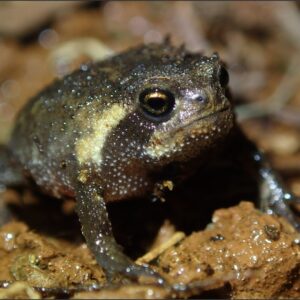
Northern Forest Rain Frog
Innovative Survey Methods
The team employed specialised trapping systems featuring:
Drift fencing (30m per trap)
Pitfall traps (5 per array)
Funnel traps (6 per array)
Daily monitoring following strict ethical protocols
“While we didn’t find our ‘Holy Grail’,” notes Dr Oliver Cowan, “we’ve significantly advanced knowledge of this understudied region and identified critical conservation priorities.”
Potential cryptic species awaiting genetic confirmation
Habitat requirements for endemic herpetofauna
Supported by Rand Merchant Bank Foundation, this work underscores the importance of continued herpetological surveys to protect its unique biodiversity.