Help protect Africa's 

Join the Pack. Protect What Matters.

Join the Pack. Protect What Matters.

Join the Pack. Protect What Matters.

At the Endangered Wildlife Trust, we know that conservation is a long-term commitment. Protecting endangered species, conserving habitats, and benefiting people doesn’t happen overnight. It takes dedication, perseverance, and the support of people who believe that nature is worth fighting for.

That is why we are excited to introduce The EWT Pack.

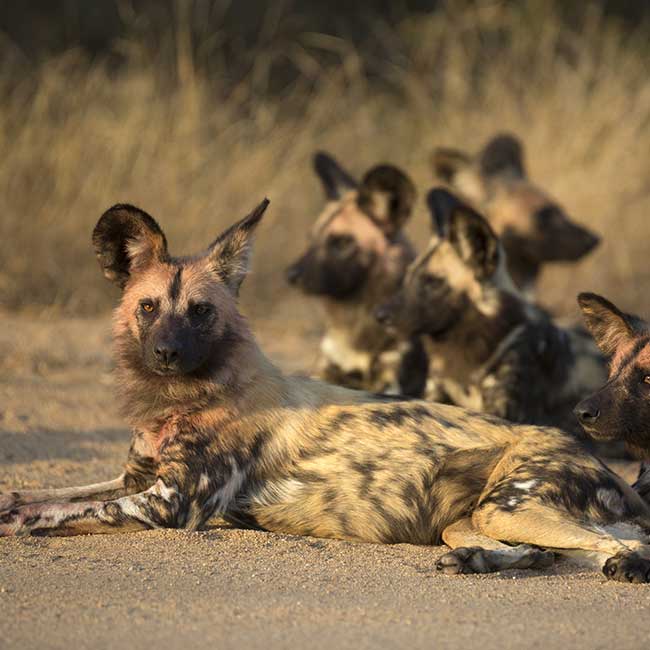
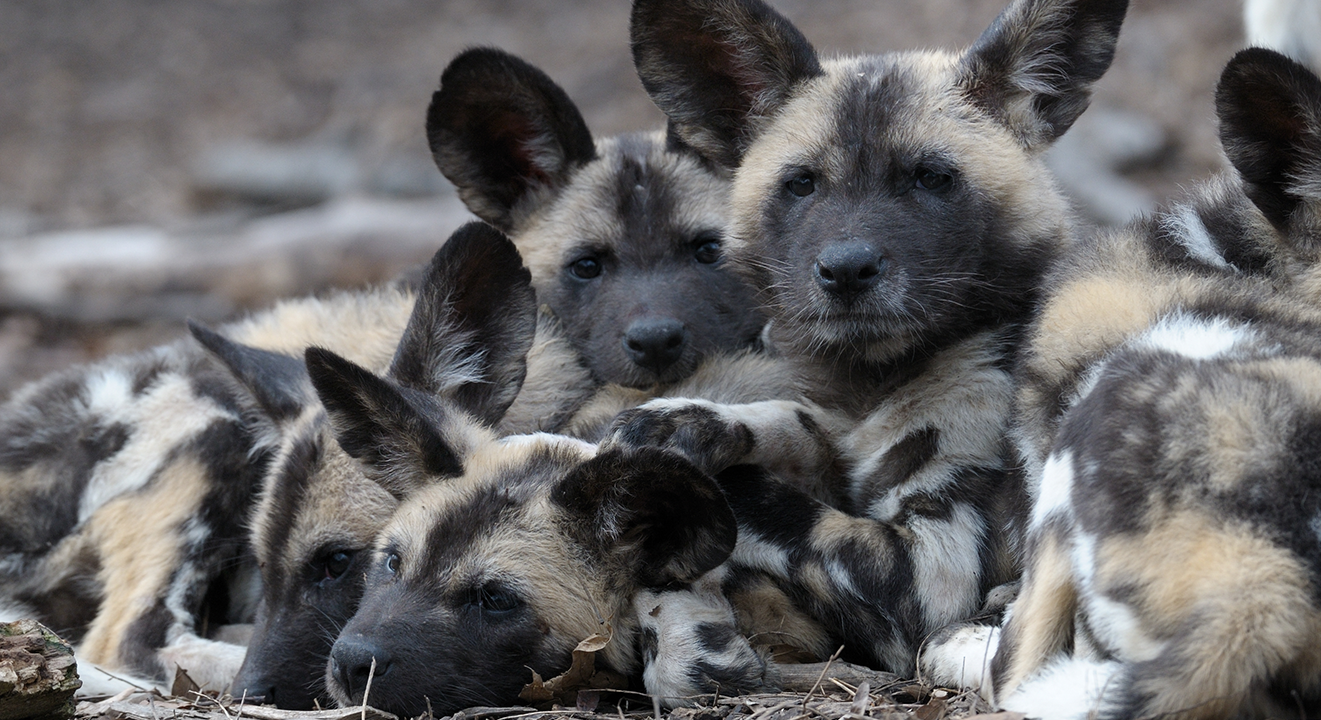
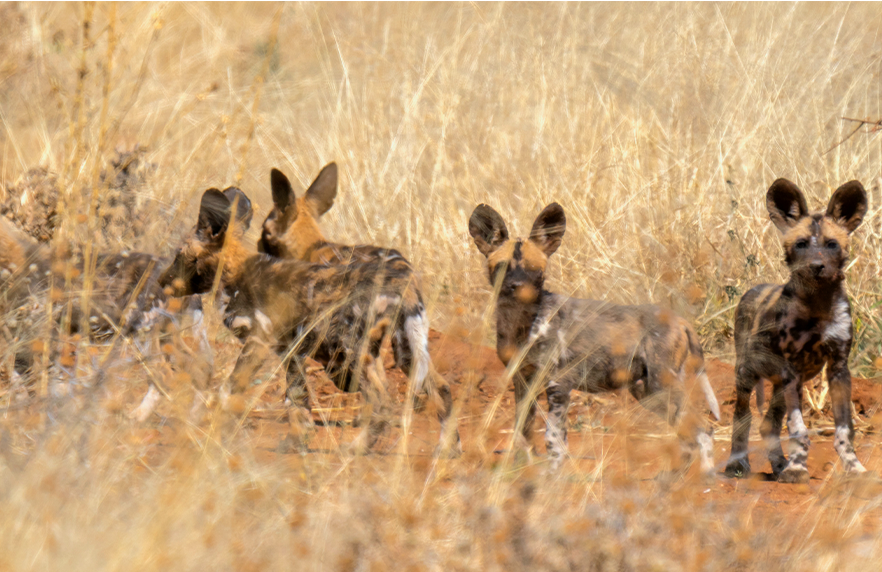
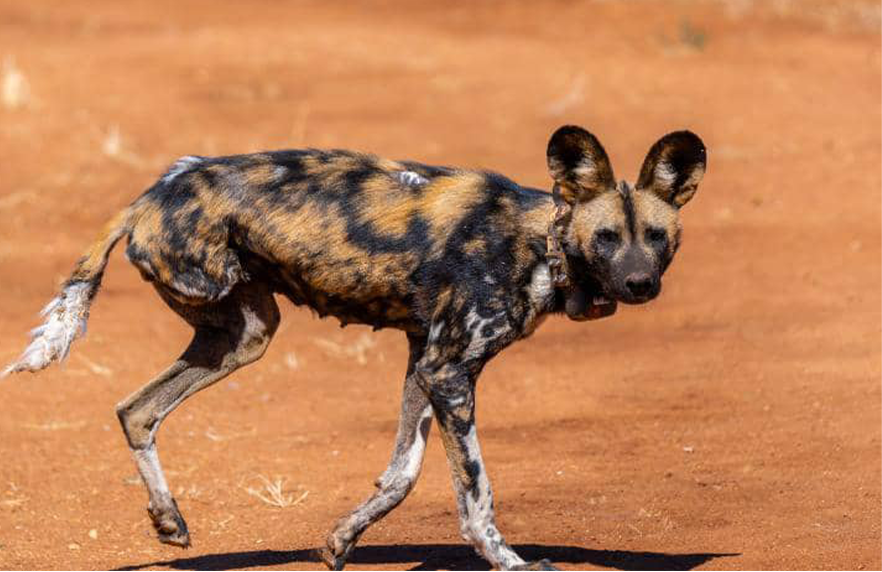
The EWT Pack is our community of monthly donors who have chosen to stand with us every step of the way. Like a wild dog pack working together to survive and thrive, our Pack members play an essential role in helping us protect South Africa’s wildlife and natural heritage. The African Wild Dog is one of Africa’s most endangered carnivores, making it a fitting symbol for a group united by strength, commitment, and teamwork.

By becoming a Pack member, your contribution is automatically made every month, providing EWT with reliable, predictable funding that helps us plan ahead, respond to conservation challenges quickly, and sustain critical projects throughout the year.

While once-off gifts are always appreciated, recurring donations provide something equally valuable: stability.

Monthly giving allows us to:

  • Plan conservation interventions with confidence.
  • Support long-term species recovery programmes.
  • Respond rapidly to wildlife emergencies.
  • Invest in communities living alongside wildlife.
  • Ensure that vital conservation work continues, even during uncertain times.

Most importantly, it means that every month, you are making a difference.

No matter the size of your contribution, when combined with the generosity of fellow Pack members, your impact grows. Together, we become a powerful force for conservation.

By joining The EWT Pack, you are not just donating. You are becoming part of a passionate community of wildlife champions who believe that future generations deserve to inherit a world where wildlife still roams free and ecosystems continue to thrive.

Join The EWT Pack today and help create a safer future for South Africa’s wildlife, one month at a time.

Become a Pack Member: https://www.backabuddy.co.za/campaign/the-ewt-pack

Together, we are stronger. Together, we are The EWT Pack. 🐾

Suggested call-out box for the newsletter:

Why Monthly Giving Matters

  • Provides reliable support throughout the year
  • Helps EWT plan and budget effectively
  • Sustains long-term conservation projects
  • Allows rapid response to conservation emergencies
  • Creates lasting impact for wildlife and people

Become a Pack Member today and help keep conservation moving forward every single month.

In Memorium: Gus Mills leaves an indelible mark on carnivore conservation

In Memorium: Gus Mills leaves an indelible mark on carnivore conservation

In Memorium

Gus Mills leaves an indelible mark on carnivore conservation

By Eleanor Momberg


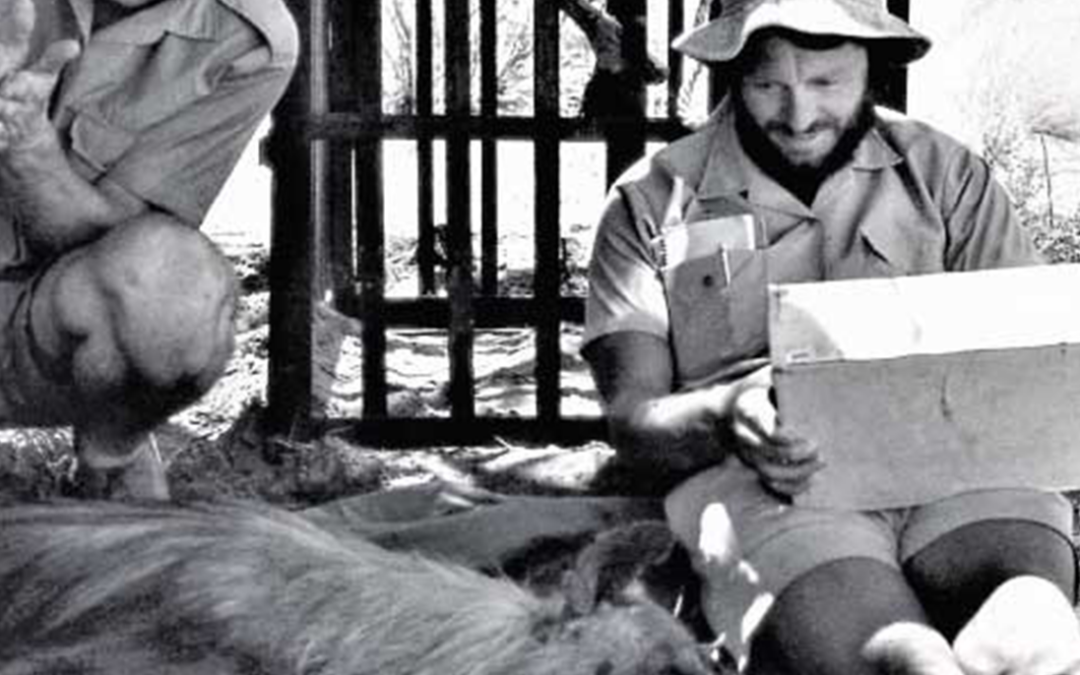
Dr Gus Mills conducting carnivore research in the Kalahari.

In July 2026, the Endangered Wildlife Trust joined conservationists and researchers worldwide in mourning the death of Dr Gus Mills, a renowned Brown Hyaena, Cheetah and African Wild Dog specialist, and author.

Gus left an indelible mark on carnivore conservation in South Africa, and through a variety of international bodies on which he shared his expertise about nature’ s apex predators, including canids and big cats.  This included serving as a senior member of the IUCN Carnivore Specialist Groups. He was a former chair of the Hyaena Specialist Group and member of the steering committees of the Cat Specialist Group and the Canid Specialist Group.  Gus was the founder of the Endangered Wildlife Trust’s Carnivore Conservation Group.

Gus’ s first introduction to the EWT was when he undertook research in the Kalahari into Brown Hyaena in 1973, the year the EWT was established by South African conservationist and artist, Clive Walker, James Clarke and Neville Anderson. A year later, the EWT funded some equipment for the project run by the then MSc student at the University of Pretoria. This was the EWT’ s third sponsorship.

Describing Gus as a “wonderful human being”, Clive Walker, founder of the EWT, said: “He was second researcher the EWT invested in back in the 1970’ s and one of the finest who devoted his life to conservation”.

Gus continued his research about Brown Hyaenas and Spotted Hyaenas for 15 years, publishing Kalahari Hyenas: the comparative behavioural ecology of two species in 1990.

In 1996, he was asked by the then Director of the EWT, Dr John Ledger, to form the EWT’ s Carnivore Conservation Group. This was achieved through a partnership with SANParks which allowed him to work full-time on carnivores while establishing and running the EWT’ s Carnivore Conservation Group and working for SANParks. Funding for this unique arrangement was provided by the Lewis Foundation.

The EWT’ s Carnivore Conservation Unit is today recognised as a leader in lion population research, the metapopulation management of Cheetah and African Wild Dog throughout southern Africa, and addressing threats to carnivores through human-wildlife conflict and the illegal wildlife trade.

During his time at SANParks, Gus researched Cheetah, African Wild Dog, Honey Badgers, Brown Hyena, and lions. He introduced the concept of metapopulation management of wild dogs and with the assistance of the late Pat Fletcher, pulled together numerous agencies and landowners to achieve genetic management of scattered populations through the Wild Dog Advisory Group.

Derek van der Merwe, manager of the EWT’ s Carnivore Conservation Unit, said: “It is remarkable to reflect on how much has changed since those early days, when Gus would fly over the Kruger National Park in a small EWT aircraft equipped with telemetry equipment, tracking African wild dogs from the air. Those pioneering efforts helped establish many of the approaches that underpin carnivore conservation today”.

Cole du Plessis, project manager in the Carnivore Conservation Unit said: “Long before GPS collars and big datasets, there were people like Gus patiently building our understanding of Africa’s carnivores, one observation at a time.  He was also ahead of his time. He encouraged visitors to Kruger National Park to photograph wild dogs and cheetahs because every individual has a unique coat pattern. Those photographs became one of South Africa’s earliest citizen science programmes, and remarkably, that project still contributes to carnivore conservation today”.

Cole believes what made Gus so remarkable was that he fundamentally changed the way we understand Africa’s carnivores. “He wasn’t simply observing animals – he was curious. He spent decades asking and answering the questions that have shaped how we understand Africa’s carnivores today”.

“His work on lions, cheetahs, hyaenas and African wild dogs laid much of the scientific foundation that modern carnivore conservation is built upon. But perhaps just as importantly, Gus had an incredible ability to connect science with the natural world. He showed that good science and a deep appreciation for nature could go hand in hand.”  said Cole who believes his greatest impact was how Gus did his science.

 “I actually think that may be his greatest legacy. Scientific papers are incredibly important, but they only go so far. Gus invested in people. He mentored students, encouraged young researchers, and inspired countless conservationists through his generosity, humility and willingness to share his knowledge. If you look across Africa today, many of the people leading carnivore conservation were either directly mentored by Gus or influenced by his research. His legacy isn’t just in the knowledge he created—it’s in the people who continue that work every single day”  said Cole.

Gus retired from SANParks in 2006 after 40 years of service.  Based in the Kalahari, with his wife, Margie, Gus then embarked on a study of Cheetah that saw the publication of A Natural History Guide to the Arid Kalahari in 2014,  four years after the release of what remains one of his most memorable books Hyena Nights and Kalahari Days.  This book continues to raise awareness about this often misunderstood species.

“Gus was an excellent public speaker and presenter. His talks to EWT members at the Johannesburg Country Club were always ‘full-house’ occasions. His charming personality drew people towards him and his passion for carnivore conservation was admired by many EWT supporters. Some of the latter, like Stuart Bromfield and Norman Stein became generous donors to EWT carnivore projects,”  said John Ledger.

Derek described Gus as a quiet, yet immensely influential presence in conservation.

“There are few people whose authenticity, humility, and dedication matched his. His writings, particularly Cry of the Kalahari, captured not only the science of conservation, but also the wonder and privilege of sharing the landscape with Africa’s wildlife. His contributions to the conservation of lions, Cheetahs, African Wild Dogs, and hyaenas extended far beyond the EWT, influencing generations of researchers and practitioners around the world,” he said.

“For those of us who now have the privilege of carrying this work forward, we do so standing on the shoulders of pioneers like Gus. His legacy lives on not only through his extraordinary scientific contributions, but through the countless people he inspired and the conservation programmes he helped set in motion,”  said Derek.

Yolan Friedmann, CEO of the EWT, described the immense influence Gus had on her career.

“I had the privilege of getting into the field with Gus as an early-stage career conservationist, and to watch with wonder how he tracked Wild Dogs; I remember with fondness bumping around in the back of bakkies as we tore after these extraordinary carnivores in pursuit of their pray. Gus instilled in me a love for Wild Dogs and I worked with Gus to develop the first project to develop a sustainable Wild Dog population outside of the Kruger National Park through range expansion into KwaZulu-Natal, in the early 2000s. I loved our debates about the philosophical lines between animal welfare and conservation and the role of the individual versus the population. Gus taught me so much and made a lasting impression on my conservation career. His legend will live on in the lives he touched wherever he went,” she said.

Gus will be remembered as was a dedicated conservationist who believed that the youth and local communities had an important role to play in the future of all species. His mark on conservation will always be remembered. His wife Margie worked alongside Gus in the field in the Kalahari, enduring hardships in remote areas and contributing to their joint books in a remarkable partnership that endured for more than half a century. We share the grief of losing of this special man with Margie, their biologist son Michael, daughter Debbie and the grandchildren.

South Africa’s Threatened Species XI: A World Cup Starting Lineup You Can’t Afford to Lose

South Africa’s Threatened Species XI: A World Cup Starting Lineup You Can’t Afford to Lose

The Soccer World Cup

South Africa’s Threatened Species XI: A World Cup Starting Lineup You Can’t Afford to Lose


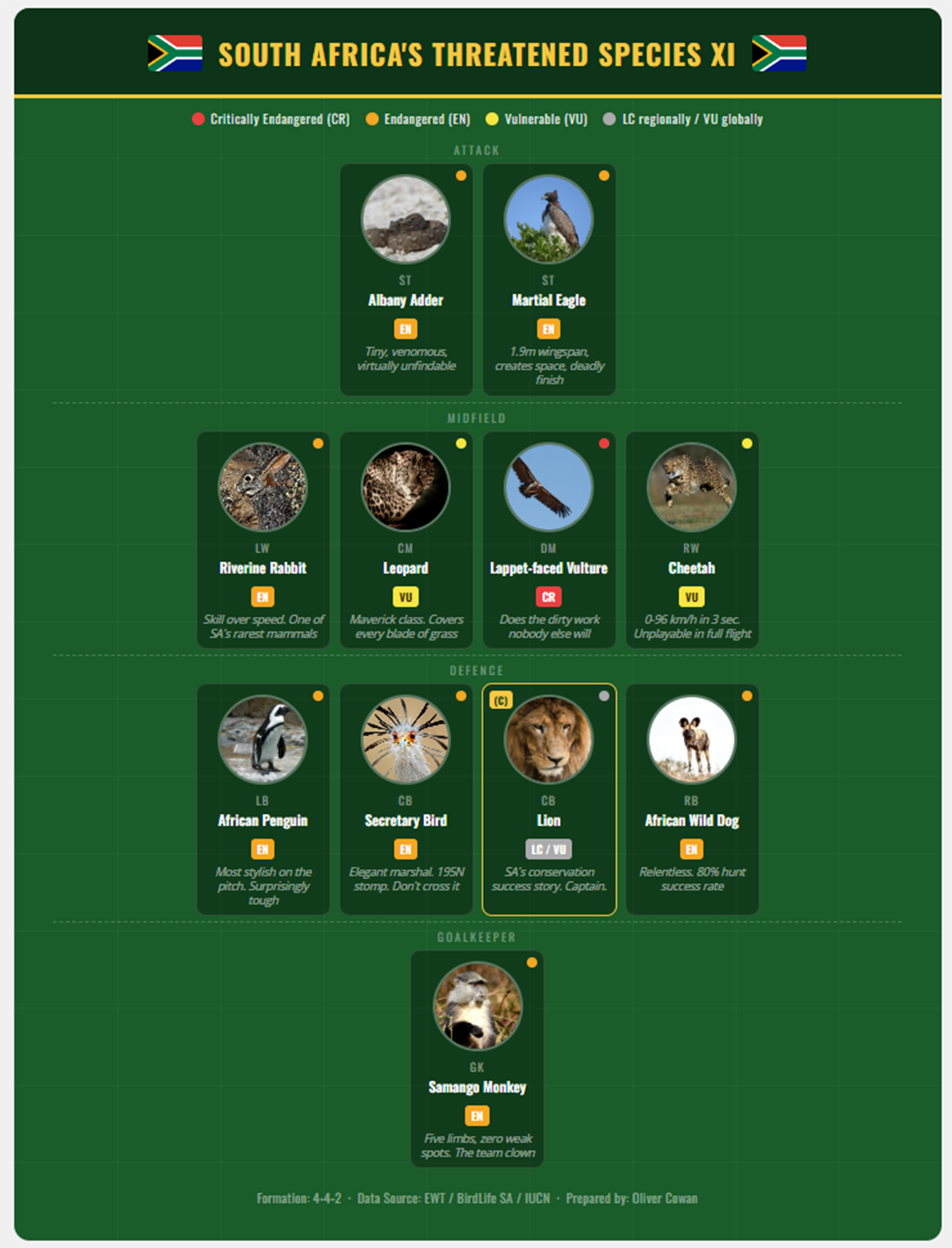
Formation: 4-4-2 | Manager: Mother Nature | Status: Urgently needs your support

Announcer:  Oliver Cowan, Conservation and Data Scientist (and keen Bafana Bafana supporter)

The FIFA World Cup has given us no shortage of dream teams, fantasy XIs, and heated debates about who deserves to wear the shirt. But, as football fever grips the globe, we’d like to propose a starting lineup that makes the Messi vs Ronaldo  debate look trivial by comparison (it’ s Messi, by the way). This is South Africa’s Threatened Species XI – eleven species that represent some of the most extraordinary wildlife on the planet, all of them fighting for survival against a very unforgiving opposition.

All eleven feature on South Africa’s Regional Red List of Threatened Species. The squad includes one Critically Endangered, seven Endangered, and two Vulnerable players, and is captained by one lion-hearted wildcard who leads the team by example. The bad news? Unlike a football team, there are no substitutes waiting in the wings; however, with your support the Endangered Wildlife Trust is actively working towards safeguarding their futures.

The Lineup 
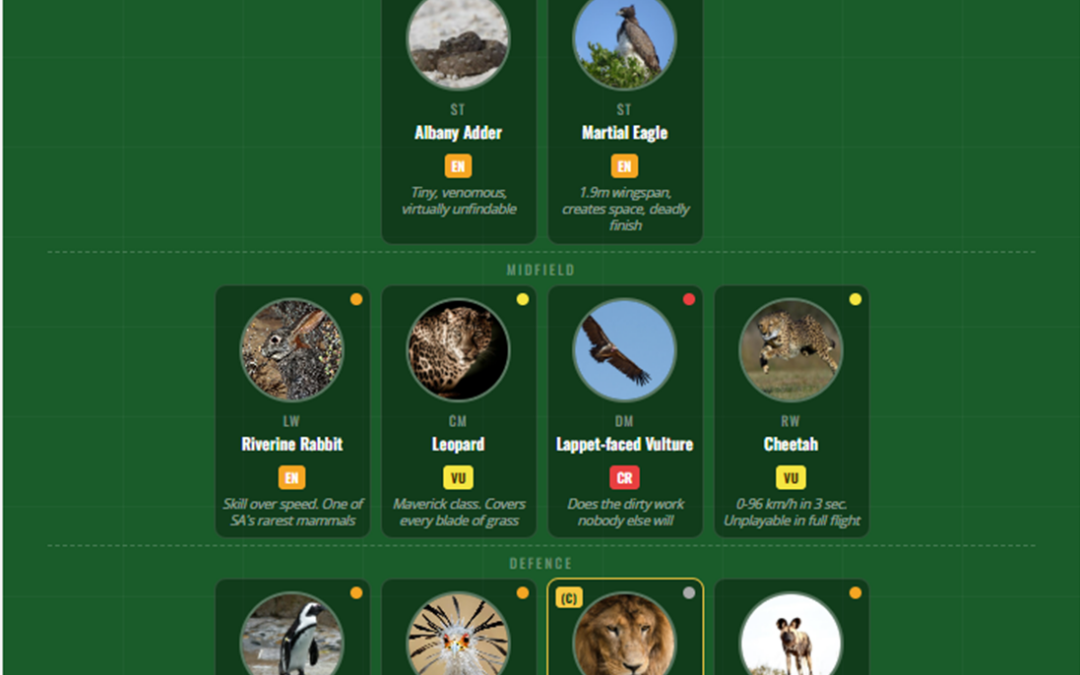
South Africa threatened species XI conservation football lineup concept

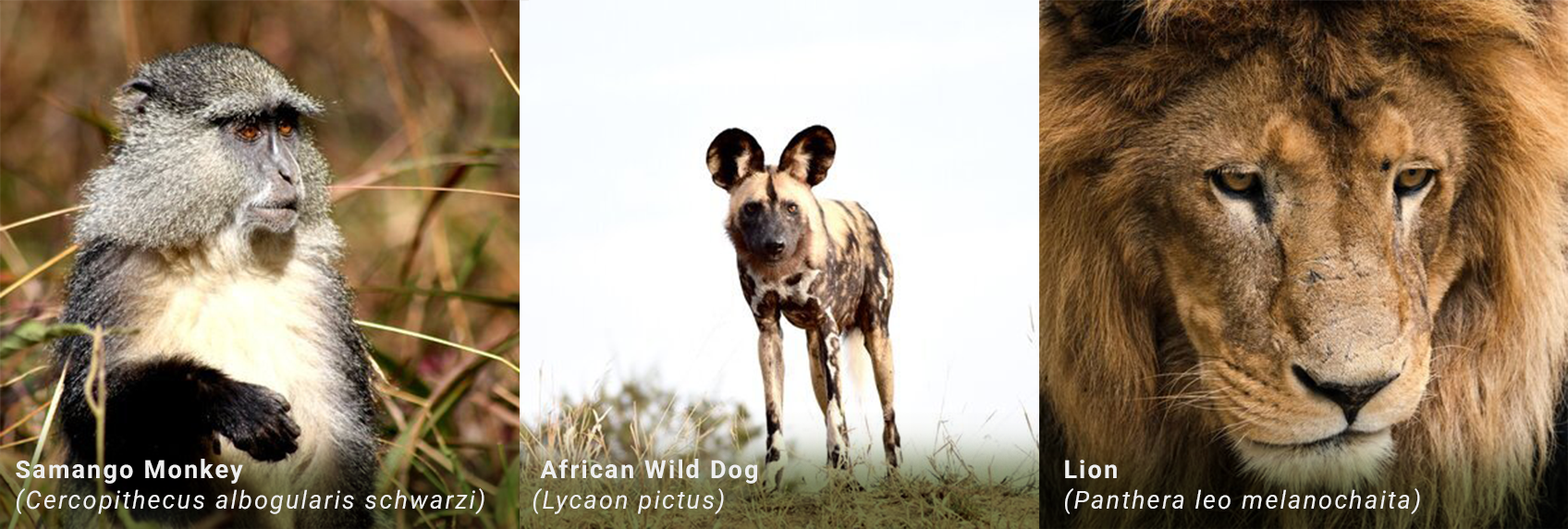
Goalkeeper: Samango Monkey (Cercopithecus albogularis schwarzi) – Endangered

Every great team needs a goalkeeper who makes the impossible look routine, and the Samango Monkey delivers in spades. Five effective limbs – four plus a tail a third of its total body length – give this forest-dwelling primate a range and agility that makes the goal look very, very small from the opposition’s perspective. A communicator of rare skill, the Samango reads danger before anyone else sees it coming and lets the whole team know about it loudly. The team clown between the sticks, and absolutely indispensable.

Right Back: African Wild Dog (Lycaon pictus) – Endangered

Energy. Loyalty. An 80% hunt success rate that puts every other predator on the continent to shame. The African Wild Dog is the perfect right back: relentless in covering ground, utterly committed to the team cause, and possessed of a work rate that simply does not stop. Painted Wolves, as they are also known, are Africa’s second most endangered carnivore, having disappeared from 25 of the 39 countries they once roamed. Fewer than 1,400 breeding individuals remain. The EWT’s own African Wild Dog programme has secured over 1.5 million hectares of safe space for the species across southern Africa – proof that conservation investment pays dividends.

Centre Back (Captain): Lion (Panthera leo melanochaita) – Least Concern (SA) / Vulnerable (global)

Not every captain needs to be the most embattled player in the dressing room. Sometimes the armband belongs to the one who has been to the brink and come back – the one who knows what the fight costs and what it looks like to win it. South Africa’s Lion population, decimated by hunting and habitat loss through the 19th and 20th centuries, has been managed so effectively that it now stands at around 2,007 mature wild individuals and is classified as Least Concern on South Africa’s Regional Red List of Threatened Species. That is a conservation achievement of genuine significance, and it earns the Lion its captaincy.

But the captain does not let the team forget the wider picture. Globally, the Southern Lion (P. l. melanochaita) is Vulnerable, its range having contracted by 33% over three generations. Emerging threats – the lion bone trade, poaching, retaliatory killing – require continued vigilance. This is not a species that has been saved. It is a species that is being saved, one protected area and one community engagement at a time. The armband is a reminder of both how far we have come and how much further there is to go.
Wildlife conservation storytelling Red List species South Africa

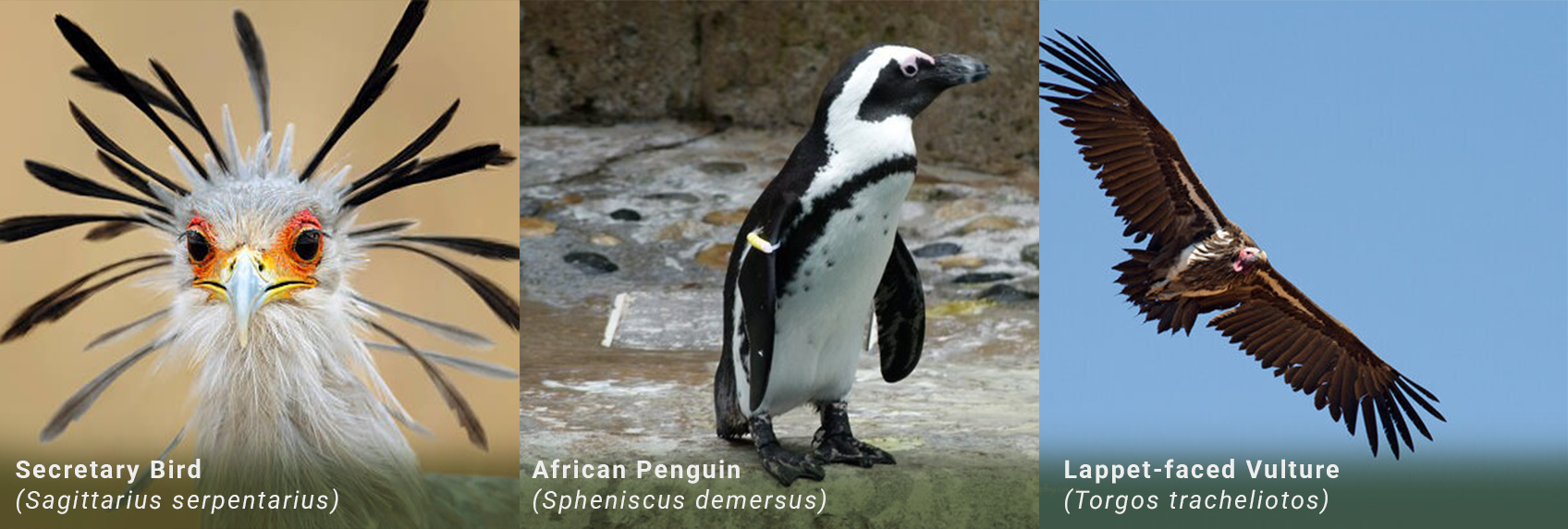
Centre Back: Secretary Bird (Sagittarius serpentarius) – Endangered

The Secretary Bird strides the pitch on impossibly long legs with an authority that brooks no dissent, organising the defensive line with quiet, imperious calm. But cross it, and you discover that those elegant legs can deliver a stomp carrying up to 195 Newtons of force – enough to kill a cobra in a single strike. Uplisted from Vulnerable to Endangered in the 2025 BirdLife South Africa Red Data Book, this iconic raptor is declining across its range.

Left Back: African Penguin (Spheniscus demersus) – Endangered (regional) / Critically Endangered (global)

The most stylish player on the pitch, and that tuxedo is absolutely non-negotiable. What the African Penguin offers beyond impeccable dress sense is surprising toughness – capable of swimming at 20 km/h and covering enormous distances in pursuit of sardines and anchovies. Regionally Endangered in South Africa thanks to focused local conservation efforts, but uplisted to Critically Endangered globally by the IUCN in October 2024, with fewer than 10,000 breeding pairs remaining. A landmark High Court ruling in March 2025 secured 10-year fishing exclusion zones around six key breeding colonies. A rare piece of good news for a species that badly needed it.

Defensive Midfielder: Lappet-faced Vulture (Torgos tracheliotos) – Critically Endangered (SA) / Endangered (global)

Every great team has a player who does the jobs nobody else wants. The Lappet-faced Vulture is Africa’s largest vulture and the enforcer of this midfield – cleaning up, breaking up play, and doing the filthy, essential work that keeps the whole ecosystem functioning. There is no glamour in what it does. There is also no team without it. Uplisted to Critically Endangered in the 2025 BirdLife South Africa Red Data Book, decimated by poisoning, collisions with energy infrastructure, and habitat loss. Vultures are irreplaceable. So is this player.
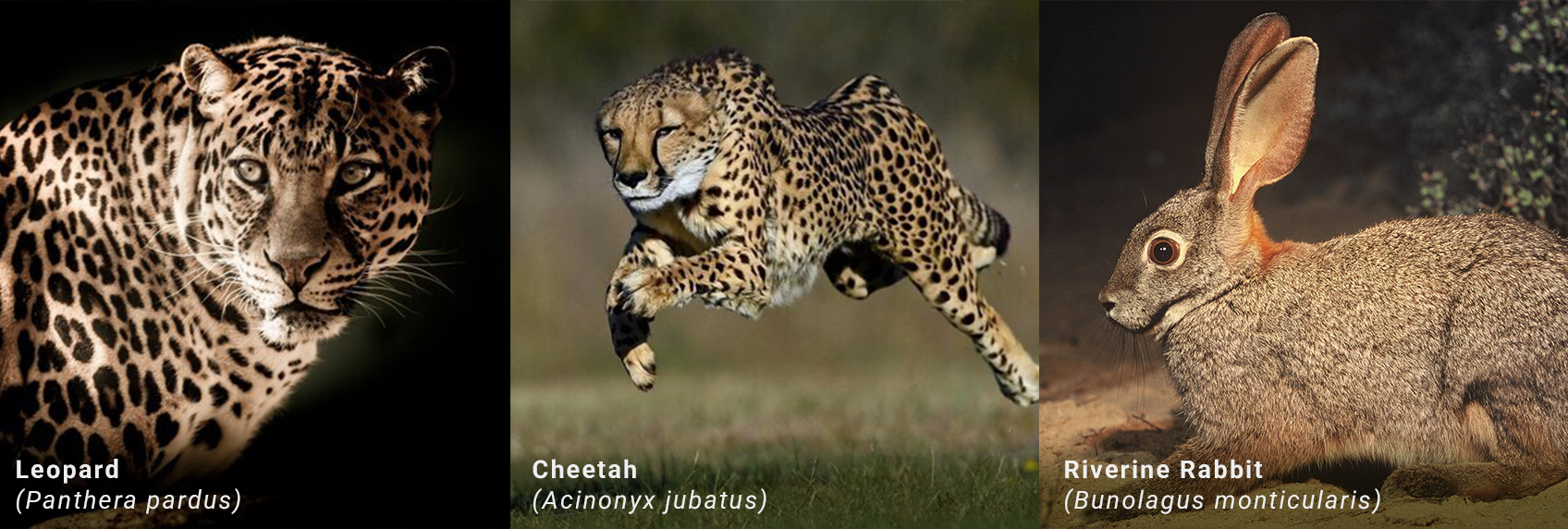
Cheetah sprinting in open grassland, Leopard resting in tree branch habitat

Centre Midfielder: Leopard (Panthera pardus) – Vulnerable

The maverick you simply cannot drop, no matter how many team meetings he skips. Famously solitary – don’t expect him at the post-match dinner – but the quality on the ball is undeniable. The Leopard is the most adaptable of the big cats, equally at home in dense bush, open savanna, rocky koppies, or suburban fringes; day or night; alone or outgunned. Regionally Vulnerable, with 68% of suitable habitat falling outside protected areas and ongoing pressure from retaliatory killing and illegal harvest for cultural regalia.

Right Wing: Cheetah (Acinonyx jubatus) – Vulnerable

There is nothing subtle about what the Cheetah brings to this team. Zero to 96 km/h in under three seconds. No defensive line on Earth handles that. The trade-off – it offers very little tracking back – is one the manager has long since accepted, because when the Cheetah gets the ball in behind, it is simply over. Regionally Vulnerable and under sustained pressure from habitat fragmentation, human-wildlife conflict, and loss of prey. A luxury player in the truest sense: irreplaceable, spectacular, and frighteningly easy to take for granted.

Left Wing: Riverine Rabbit (Bunolagus monticularis) – Endangered

Where the Cheetah relies on blistering pace, its winger counterpart on the opposite flank is all about skill. The Riverine Rabbit is elusive, deceptively explosive from a standing start, and almost impossible to pin down in tight spaces. A flagship species of the Karoo, threatened by habitat degradation and climate change. Every time the Riverine Rabbit gets the ball and ghosts past a defender, it is worth savouring. There may not be many more chances.
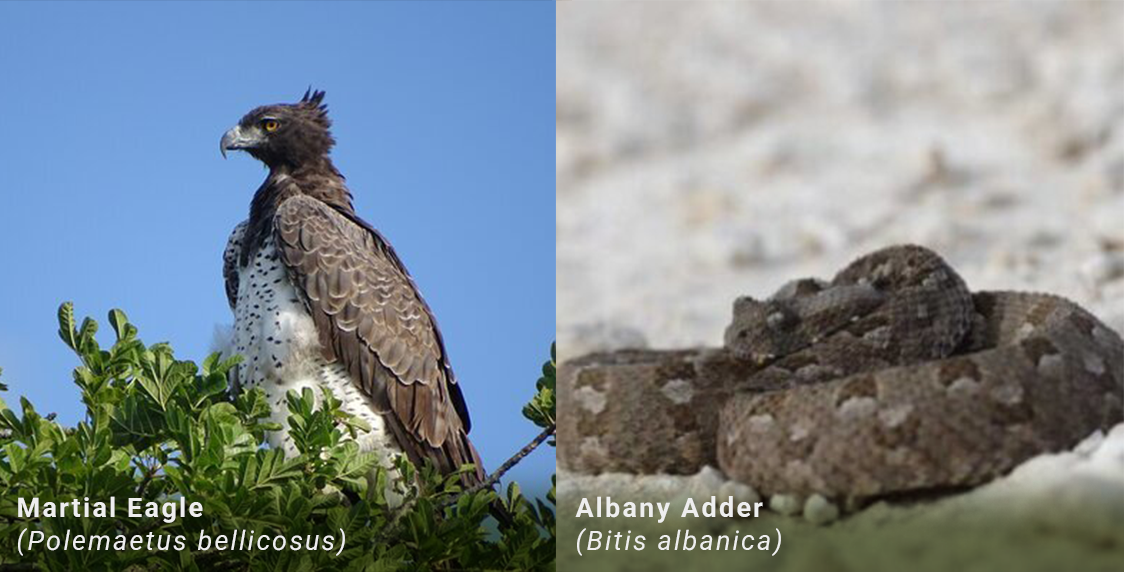
Albany adder rare snake Eastern Cape habitat

Striker: Albany Adder (Bitis albanica) – Endangered

We’ ve gone with the classic ‘big man, little man’ formation up front. If the Martial Eagle is the target man who fills the box, the Albany Adder is the striker who nobody sees coming – until it is far too late. South Africa’s most endangered snake and one of the rarest reptiles on Earth, the Albany Adder has an entire known range within the Algoa Bay area of the Eastern Cape. Less than 20 individuals have ever been recorded in the wild since the species was first described in 1937. It is virtually unfindable, and when it does strike, it does so with a precision that leaves no doubt. The EWT has led active conservation efforts for this species for years, just don’t bother asking for a photo – there are almost none.

Striker: Martial Eagle (Polemaetus bellicosus) – Endangered

The ideal striking partner for its diminutive front-line companion. A 1.9-metre wingspan keeps defenders occupied and goalkeepers permanently unsettled, creating the space that allows the Albany Adder to do what it does best. Deadly when given a sniff of goal. Occupies vast territories bud sadly declining even inside South Africa’s largest protected areas, with reporting rates in Kruger National Park having dropped by over 50% in the past two decades. Uplisted to Endangered in the 2025 BirdLife South Africa Red Data Book.

The Final Whistle

This team has everything: pace, power, elegance, industry, genius, and grit. It also has something no football team should ever have – a genuine risk of not making it to the next tournament.

South Africa’s 2025 mammal and bird Red Lists of Threatened Species make sobering reading. Twenty percent of the region’s mammals are now threatened with extinction. Thirty-nine bird species were uplisted in this year’s assessment alone. The threats are well understood: habitat loss, climate change, poisoning, persecution, and the relentless pressure of a growing human footprint on a finite natural world.

But the same science that documents the decline also points the way forward. The African Penguin’s court victory. The African Wild Dog population’s recovery. The Hartmann’s Mountain Zebra’s downlisting after genuine population gains. Conservation works – when it is funded, when it is evidence-based, and when people care enough to demand it.

These 11 species are worth caring about. Not just because they are extraordinary animals, but because the health of South Africa’s biodiversity – and ultimately the health of the ecosystems that sustain all of us – depends on keeping them in the game.

Support the squad. Learn the names and tell the story.

  •  
South Africa threatened species XI conservation football lineup concept
An African Wild Dog rescue mission that ignited Wild Dog Conservation in Namibia.

An African Wild Dog rescue mission that ignited Wild Dog Conservation in Namibia.

An African Wild Dog rescue mission that ignited Wild Dog Conservation in Namibia.

By Cole du Plessis, Project Manager: Carnivore Range Expansion Project
 

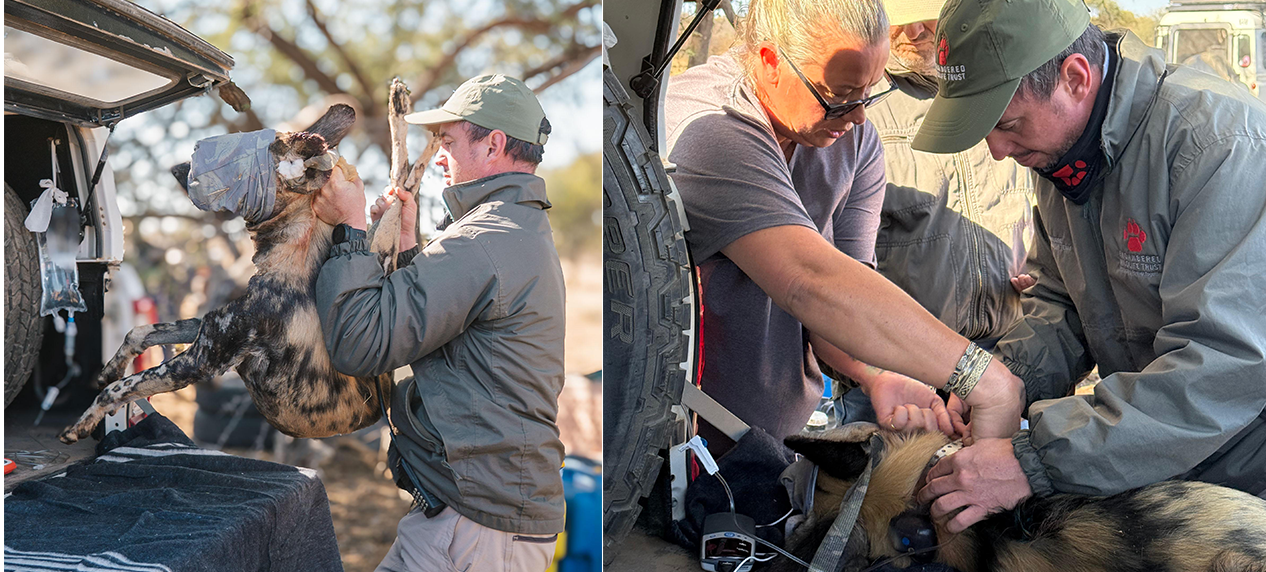
Wild Dog conservation mission in Namibia with veterinarians and volunteers

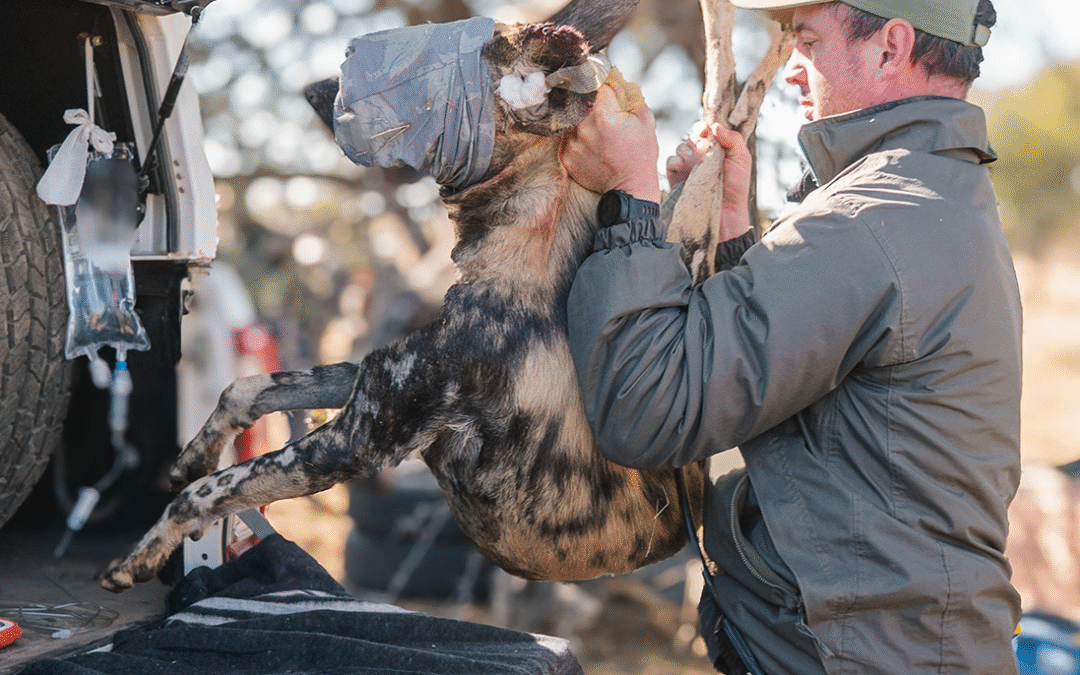
Relocating (left) and Collaring (right)


Working in the world of conservation is not easy.  Almost on a daily basis, we deal with animal welfare, multiple stakeholders, wide-ranging philosophies (and sometimes egos), legal requirements, decision-making processes, and the continuous urgency to fundraise in order to achieve high-impact results. The admin and emails slot in between these demands.

When we were travelling back from Botswana following a 24-hour African Wild Dog capture and relocation, we passed through the Martin’ s Drift border post.  It had been an intensive stint that involved hours of driving. We were relieved to be back in South Africa and looking forward to some time to rest and recover, but the world of Wild Dog conservation had other plans.

In the weeks leading up to the Botswana mission, I had been in touch with the Kalahari Wild Dog Project—a new and emerging organisation working in Namibia.  They had informed me of a Wild Dog that had been captured in a gin trap    set out by a farmer. Having been alerted to the situation, the team had immediately travelled to the farm where this Wild Dog had been captured, fully expecting to have to euthanise it on arrival. But it wasn’ t that simple.

Upon investigation, the team learned that the Wild Dog had, for three days, been contained in a cage outside a workshop area where there was a continuous flow of trucks and people. For a wild animal, this is nothing short of agonising.

To end the suffering, the veterinarian quickly immobilised the Wild Dog. A closer inspection revealed that the captured animal was a female—and she was lactating! This drastically changed the whole scenario, requiring not only the immediate treatment and relocation of the female to a clinic a few hours away, but also finding her pups.

Nadja le Roux, the founder of the Kalahari Wild Dog Project, phoned me and provided me with an update. In my time working with Wild Dogs, I have experienced some horrific physical injuries. However, my findings have shown that it is often emotional stress that takes the greatest toll on a Wild Dog. Physically, they are tough, but separate the individual from its pack, and it becomes weak.

This socially complex species suffers from ‘broken heart syndrome’ . All our conservation efforts in dealing with Wild Dogs factor in this crucial detail. This is the reason that their emotional sensitivity has been incorporated into our Standard Operating Procedures, and the findings have been documented.

The gin trap had gripped the Wild Dog on her back leg. Her cold foot and zero sensitivity between the pads indicated that she had lost the use of her leg, and infection was already setting in. The leg needed to be amputated. She also had a cracked rib.

When Nadja called me for advice, I was less concerned about the physical injuries than the dehydration and stress she was suffering. Every effort and available physical aid would be required to save this Wild Dog—fluids, antibiotics, anti-inflammatories, and warmth. It was touch-and-go, and if she did survive, the next steps would be complex. At this point, this female needed her pack to survive as much as they needed her to ensure their own survival.

Tracking and releasing African Wild Dog pack in Namibia sanctuary

Image credit: Be Wild

Though it had by then been four days without Mom, there was a chance that the pups were still alive. Returning her to where she had been captured was also not considered wise. It was then decided that the only way forward was to release her with a tracking collar and convince the farmer that this would provide us enough intelligence so the whole pack could be captured and removed to the safety of a suitable habitat. This would be done on condition that the farmer would remove his gin traps and potential poison. He obliged and agreed to allow the Wild Dogs the freedom to roam, but only for a short period.

Following surgery, the Wild Dog was released running around two kilometres before settling down.  Everyone waited in anticipation, wondering whether she was going to die or whether she had been reunited with her pack.

When Nadja returned to the area a few days later to survey the area using a drone, she found the female alive, with two other adults and what appeared at the time to be six pups.  It was a miracle.

After two weeks, the farmer was losing patience and one of the adult Wild Dogs had disappeared.  This raised concerns that the female would have to leave her pups to go hunting with the pack.  This was when Nadja called me for assistance.

Less than 24 hours later, I was on a flight to Windhoek.  A three-hour drive later, Nadja introduced me to the team comprising Namibian Government Officials, members of the Kalahari Wild Dog Project and the Cheetah Conservation Fund, veterinarians, a wildlife helicopter pilot and several volunteers.  After a briefing, we prepared to capture and move the adults and retrieve the pups the next day.

The aim was to move this pack to safety, away from threats such as gin traps, poisoning and snaring in a cattle farming area where conflict with people was inevitable.

This particular pack had had very little exposure to humans, and their den site was inaccessible. Because of their fear of vehicles, we opted to build a hide near the den and attempt to lure them in with ‘hoo’ calls and a carcass. But, this didn’ t work.  So, we decided to dart them from a helicopter.  Within an hour, the Alpha male and female had been darted and secured, loaded into crates, and taken to the selected sanctuary. We then needed to focus on the pups, which appeared to be between six and eight weeks old.

Locating the pups proved to be a challenge.  After hours of excavating at the site where we had spotted the Alpha pair the night before, we realised that the pack may have moved during the night to a spot where we had earlier darted the Alpha female.

That was when we stumbled upon several pups lying outside their new den. Frightened by our presence, they disappeared into a nearby hole. Careful excavation was  once again underway. It was a slow, tiring and gruelling task which became ever more difficult and dangerous as the tunnels deepened, and darkness fell. But by 11 pm, we had retrieved all the pups, eight in total, and had immediately taken them to the boma four hours away.

When we arrived at the sanctuary, we found that the two adults were doing well.  But, given how cold it was, it was decided that the pups’ crate needed to be taken to my room until sunrise.  At daybreak, we loaded the pups and the adults and took them to the boma, where the pups were placed into an artificial den (with sand from their old den and grass from their crates) before releasing the adults.  The two adults and all the pups survived the mission. A live camera at the den has confirmed that the adults are feeding and bringing food back to the pups.

A hearty development during the rescue has been the change in the farmer’ s outlook about Wild Dog after he voluntarily came to help the team locate and capture the pups.

Thank you to the wonderful Kalahari Wild Dog Project team, who never gave up on that little pack. Just this one critical experience has given rise to multiple major wins for conservation.  These include:

  • The survival of a heroic female Wild Dog and the rescue of her pack, which were saved from certain death.
  • This was the first capture of its kind in Namibia. The operational team, initially quite sceptical of whether the capture would work, were left feeling very excited, and we all learned and gained from this shared experience.
  • This was a collaborative operation with multiple Namibian partners eager to learn and contribute.
  • The Namibian government has indicated that it wants to do more for Wild Dog conservation and has promised representation at the Wild Dog Advisory Group.

A workshop is being held with numerous stakeholders to discuss the conservation and management of Namibia’ s Wild Dogs, with some exciting initiatives on the table.

The team sent the farmer photos of the release, and he has asked for the final video so that he can showcase it to his farming community. This is possibly the biggest win of all, as knowledge and understanding of our wildlife and the critical role that they play in our world is essential to their survival through the generations.

African Wild Dog rescue Namibia female and pups

**  Thank You to the Painted Wolf Foundation for your support