Help protect Africa's 

The Quiet Rise of Trade-Driven Poaching of Africa’ s Lions

The Quiet Rise of Trade-Driven Poaching of Africa’ s Lions

The Quiet Rise of Trade-Driven Poaching of Africa’ s Lions

Dr Samantha Nicholson, EWT Senior Carnivore Scientist,  & Dr Peter Lindsey, CEO of the African Lion Recovery Fund
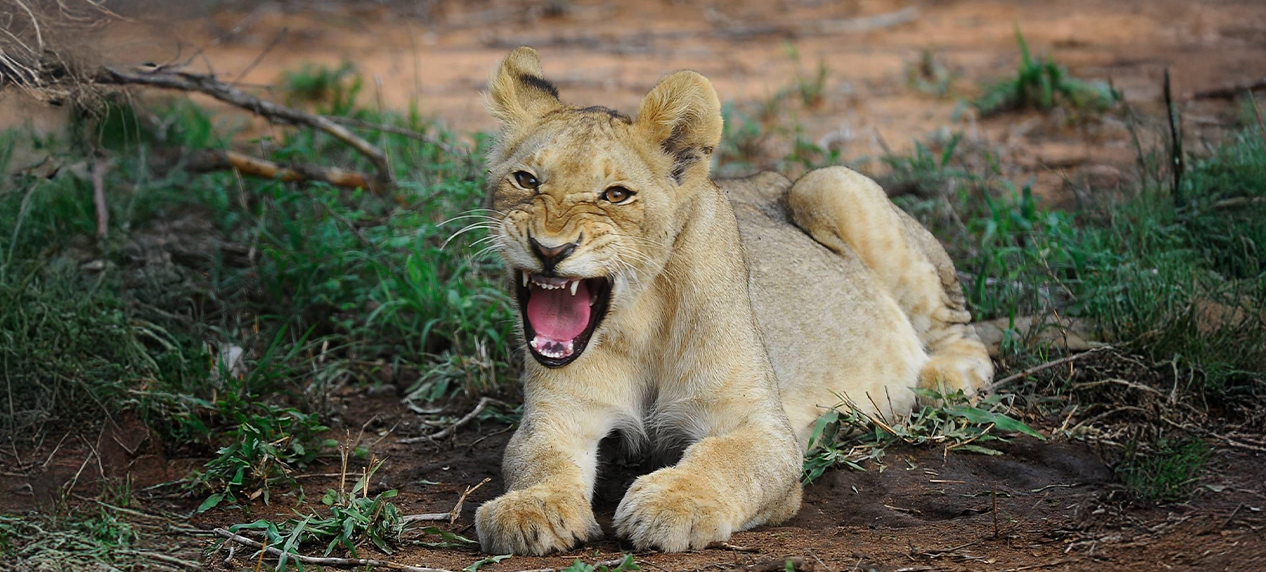
 

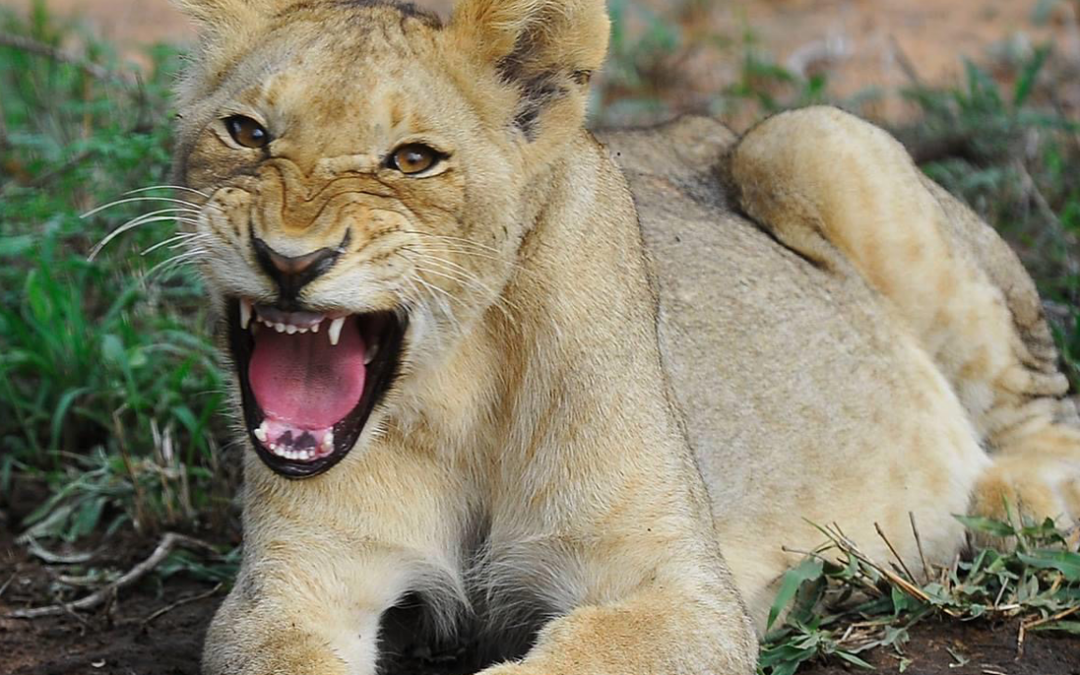
Young in the  Timbavati

Despite their iconic status, lions are threatened across much of their African range. Today, they occupy only a fraction of their historical distribution, and many populations are in decline. The continuing reduction in both lion numbers and range reflects a combination of recent losses and improved understanding of their status and has been severe enough for lions to be listed as Vulnerable on the IUCN Red List of Threatened Species.

Expanding human populations have transformed much of Africa’ s savannah into farmland, settlements, and infrastructure, shrinking and fragmenting wildlife habitat. As a result, lions increasingly come into contact with people and livestock, heightening the risk of conflict. This is further compounded by prey depletion, as widespread bushmeat hunting reduces the availability of wild prey and pushes lions to target livestock. In response, lions are often killed in retaliation, while many others are inadvertently caught in snares set for other species. These combined pressures continue to threaten populations and remain as key challenges for lion conservation.

In recent years, however, researchers and practitioners have become increasingly concerned about another, less visible threat; one that has the potential to undermine conservation gains if left unaddressed.

An Emerging Threat: Targeted Poaching for Body Parts

Alongside these long-standing pressures, a more targeted form of poaching has begun to occur with increasing frequency in several parts of Africa: the deliberate killing of lions for their body parts for the illegal wildlife trade.

Unlike conflict-related killings or accidental snaring, targeted poaching involves lions being intentionally killed to harvest specific body parts (such as bones, teeth, claws, skins, or fat) for the illegal wildlife trade. These parts are used for a range of purposes, including traditional medicine, spiritual practices, cultural rituals, and, in some cases, personal adornment. Demand originates both within Africa and from international markets, particularly in parts of Asia.

The use of lion body parts is not new. For centuries, lions have held cultural and spiritual significance in many societies. Historically, however, most use relied on opportunistic sources, such as lions that died naturally or were killed during conflict incidents. What is changing is the scale, organisation, and intent behind the trade.

In several countries, lions are now being actively targeted. Poachers may use poisoned carcasses to attract entire prides, killing multiple lions in a single event. In other cases, lions are caught in strategically placed snares or lured to baited sites.

There is also growing evidence that some of this trade is becoming more organised. Seizures of large quantities of lion body parts, sometimes alongside products from other trafficked species such as elephants or pangolins, suggest involvement by criminal networks operating across borders. These networks are often difficult to detect and disrupt, particularly in regions with limited law enforcement capacity.

Importantly, this threat does not replace existing pressures on lions – it compounds them. If targeted poaching becomes entrenched before effective responses are in place, it could spread rapidly across the species’ range and reverse recent conservation gains.

The threat is widespread

Mozambique has emerged as the epicentre of targeted lion poaching in southern Africa, with 426 human-related lion mortalities recorded between 2010 and 2023. Notably, incidents of targeted poaching for body parts increased sharply after 2017, rising from approximately one documented case per year to around seven annually. The involvement of organised criminal networks is underscored by large-scale seizures, including the interception of 300 kg of lion parts in Maputo in 2023 alongside other illicit wildlife products.

This pressure is now spilling across borders, with severe consequences for neighbouring populations. In South Africa’ s Kruger National Park, lion numbers in the northern 20% of the park have declined by up to 63% over the past 18 years, largely attributed to targeted poaching for body parts and incidental snaring. Reports describe increasingly sophisticated methods, including the use of meat lures and poisoned carcasses to kill and harvest parts from multiple lions simultaneously.

Similarly, in Gonarezhou National Park, targeted lion poaching has become an escalating threat, characterised by poisoning and the selective removal of body parts rather than opportunistic killing. These incidents are particularly alarming because they are occurring within a well-managed transboundary conservation landscape, demonstrating that even flagship protected areas are vulnerable to organised, trade-driven poaching.

Reports of incidents where lions have been targeted for parts are now being shared from across the species African range.
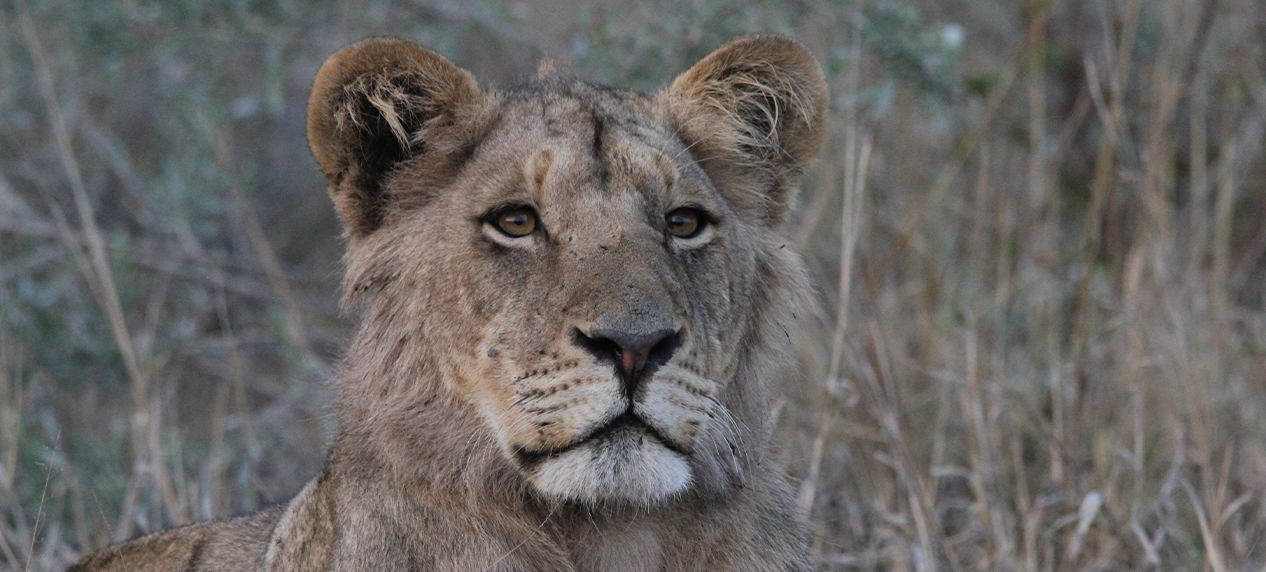
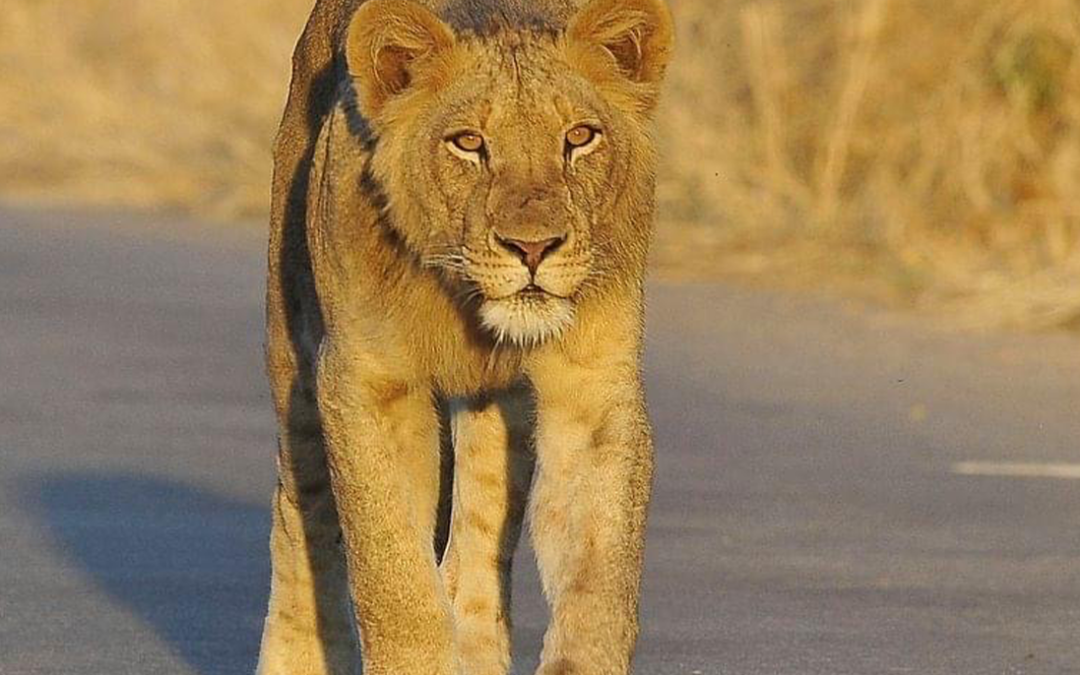
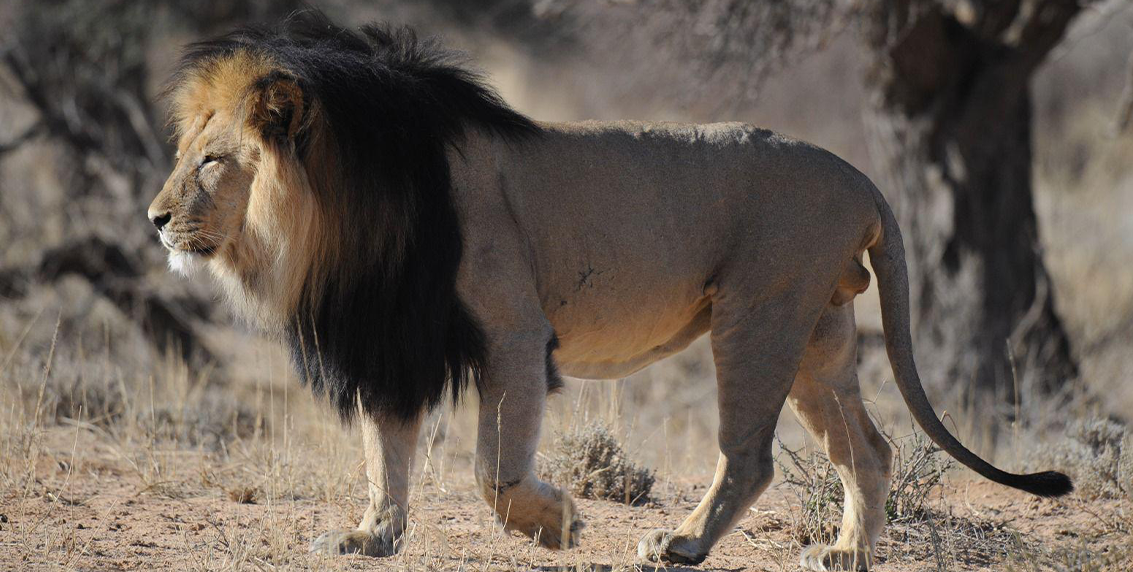
Young male African lion in savannah habitat

Preventing Entrenchment: Proposed Responses

Recognising the seriousness of this emerging threat, several priority areas for action have been identified. Together, these complementary strategies aim to reduce targeted poaching of lions for body parts and disrupt trade networks along the entire supply chain, from poaching to consumption.

  1. Strengthening Protection and Monitoring on the Ground

Effective lion conservation depends on well-managed, adequately resourced protected areas that can prevent poaching and respond rapidly to emerging threats. Focused monitoring of lion populations, combined with systematic recording of mortalities, enables early detection of emerging hotspots and supports proactive rather than reactive responses. A centralised database, such as the IUCN SSC Cat Specialist Group’ s African Lion Database (an initiative funded by the Lion Recovery Fund), allows trends to be tracked across landscapes and support evidence-based conservation action.

  1. Working More Closely with Local Communities

Communities living alongside lions play a decisive role in conservation outcomes, particularly where livestock losses and safety concerns are high. Addressing human–lion conflict, sharing benefits, and directly involving communities in conservation efforts reduces incentives for poaching and builds long-term support for lion persistence.

  1. Improving Understanding of the Trade

The trade in lion body parts remains poorly understood, limiting the effectiveness of interventions. Targeted research, including the use of genetic and forensic tools, can help clarify supply chains, identify source populations, and inform more strategic enforcement responses.

  1. Disrupting Trafficking Networks

Intelligence-led law enforcement and improved coordination among agencies are essential for interrupting trafficking routes. Targeting intermediaries and higher-level traffickers reduces profitability and weakens organised trade networks.

  1. Strengthening Legal Frameworks and Justice Systems

Robust legal frameworks, consistently applied, are critical for deterring wildlife crime. Effective investigations, well-prepared prosecutions, and the use of forensic evidence increase the likelihood of successful convictions and meaningful penalties.

  1. Reducing Demand for Lion Body Parts

Ultimately, poaching persists because demand exists. Carefully designed, culturally sensitive demand-reduction initiatives are essential to reduce pressure on wild lion populations and complement enforcement efforts.
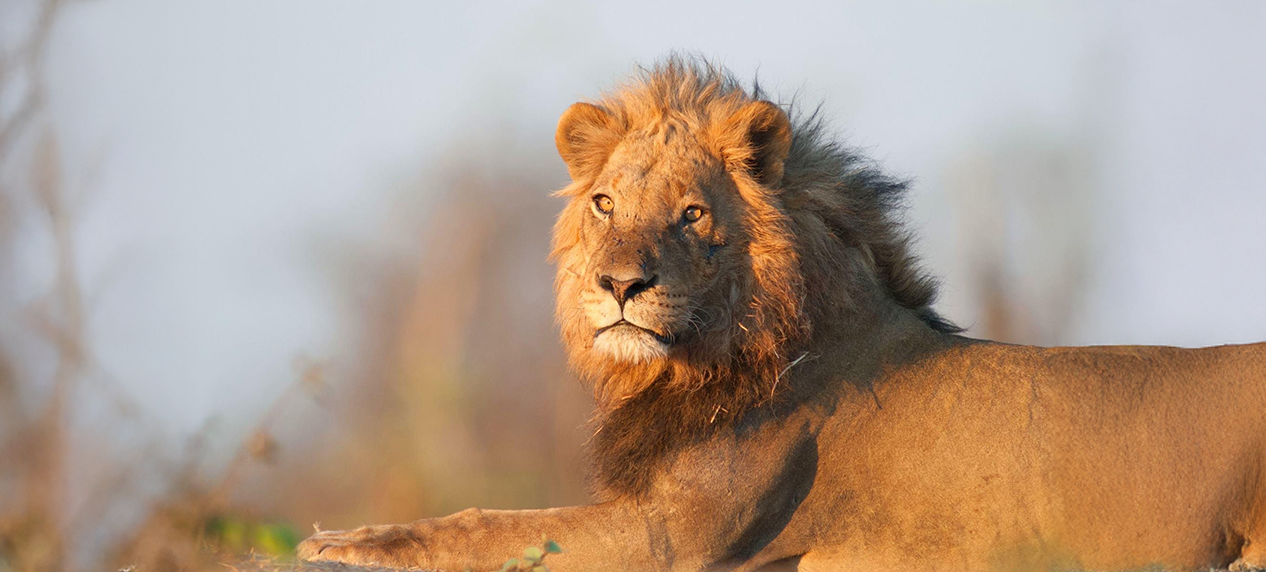
Male Lion in Botswana

Cautious Optimism

Lion conservation has never been simple, and the emergence of targeted poaching for body parts adds another layer of complexity. Yet there are reasons for cautious optimism.

Across Africa, governments, conservation organisations, researchers, and communities have demonstrated that lions can recover when threats are addressed and resources are invested strategically. Large areas of suitable habitat remain, and many protected areas could support substantially larger lion populations than they currently do.

It is imperative to act early and decisively. If targeted poaching is recognised as a serious, yet manageable threat and addressed through coordinated, evidence-based action, there remains a realistic opportunity to prevent it from becoming entrenched. Lions have coexisted with people for millennia, and with informed, collaborative action they can continue to do so, thus securing a resilient future for the species across much of its remaining range.

Lindsey P, Nicholson SK, Coals PG, Taylor WA, Becker MS, Rademeyer K, Briers‐Louw WD, Almeida J, Chase M, Dore A, Henschel P. Increasing Targeted Poaching of Lions for Trade Has the Potential to Pose an Existential Threat to the Species in Africa. Conservation Letters. 2026 Jan;19(1):e70014.Available at: https://conbio.onlinelibrary.wiley.com/doi/pdf/10.1111/con4.70014
From Conflict to Climate – What is Threatening Lions in Africa?

From Conflict to Climate – What is Threatening Lions in Africa?

Science snippet:

From Conflict to Climate – What is Threatening Lions in Africa?

By Erin Adams, Science Officer 


African lion in habitat highlighting threats to lions in Africa


Lions in Africa face a wide range of threats throughout their habitat, with both the type and intensity of these threats varying significantly by region.

Endangered Wildlife Trust (EWT) scientists recently published the results of a continent-wide study to assess to nature and severity of threats to lion populations, finding that these varied per region.

To gather data, researchers distributed an online survey to landscape managers and lion researchers working within 132 lion subpopulations, representing approximately 75% of the current lion range across Africa. The aim was to develop a global threat index, which considered factors such as civil unrest, armed conflict, climate change, and trophy hunting. A local threat index was also created, evaluating both direct and indirect threats, Direct threats included vehicle collisions, intentional poisoning, snaring by-catch, cultural killings, retaliatory killings, unregulated trophy hunting, and disease, and indirect threats, included habitat loss, infrastructure development within lion territories, and the expansion of agriculture and human settlements.

Additional contributing factors, such as ineffective population management, small and isolated populations vulnerable to local extinction, loss of natural prey due to poaching or habitat degradation, and inconsistent or insufficient funding for lion conservation areas were also assessed.

Based on responses from the questionnaires, lion populations are believed to be increasing in 38% of their range, are stable in 37%, and declining in 17%. Threat severity was perceived to be highest in Central Africa, while Southern Africa faced comparatively lower perceived threat severity. The highest threat indices were recorded in Angola, the Democratic Republic of Congo, Cameroon, and Ethiopia, whereas Rwanda, South Africa, and Namibia had the lowest. Key factors influencing threat severity were the presence of communities within lion habitats, livestock grazing and competition with wildlife, fencing practices, community engagement, and available management resources.

Across the continent, the most severe perceived threats to lions varied by region. Higher threat indices were significantly associated with several factors. These were not only the presence of communities living within lion habitats and livestock grazing within the area, but also competition between livestock and wildlife, and inadequate management resources. In contrast, subpopulations that were fully fenced reported significantly lower local threat severity scores. A major challenge noted across the continent was resource limitation, as almost half of the surveyed lion populations (49.24%) reportedly lacked sufficient resources to adequately reduce the illegal killing of lions.

In Central Africa, lions are perceived to be most severely impacted by human encroachment, the loss of prey due to poaching, and retaliatory or pre-emptive killings to protect livestock. In East Africa, the most pressing threats include inconsistent or insufficient funding for conservation, retaliatory or pre-emptive killings, and human encroachment into lion habitats. In southern Africa, lions face challenges from inconsistent or insufficient funding, human encroachment, and infrastructure development near or within their territories. Meanwhile, in West Africa, the most severe threats are the loss of natural prey due to poaching, targeted poaching of lions for their body parts, and the vulnerability of small, isolated populations.

On a global scale, climate change was considered the most significant perceived threat to lion populations in East and southern Africa. In Central Africa, civil unrest is perceived to pose a direct danger to lion populations. Similarly, in West Africa, civil unrest and local conflicts were seen as the greatest global threats due to their impact on the effectiveness of protected area management.

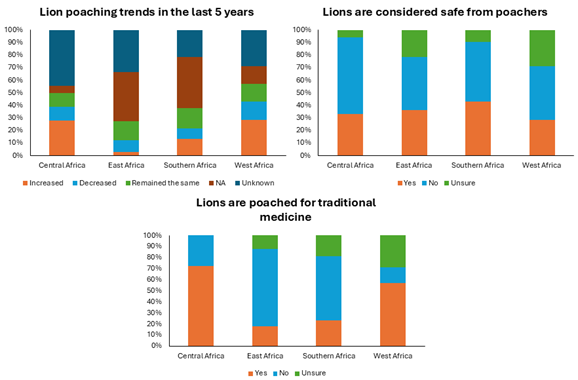
Another major threat to lions is poaching. This crime poses a multifaceted and significant threat to lion populations, encompassing both targeted killing for body parts and unintentional bycatch in snares. Lion populations are declining rapidly due to direct threats such as targeted poaching for body parts for the illegal wildlife trade. This practice is suspected to be driven by both local traditional medicinal practices and the international illegal wildlife trade, where lion bones are sometimes smuggled to the East as a substitute for dwindling tiger (Panthera tigris) parts. Lions were reported to be poached for parts in 30% of surveyed subpopulations (40 out of 132), with the most frequently sought parts being skin, claws, teeth, and fat. Uses for these parts, particularly in local markets, range from strengthening the body, curing diseases, increasing power, and improving the immune system.

conservation team monitoring lions in Africa

Figure 1. Responses to questions relating to poaching of lions per region in Africa (reported as percentages, n = 132) (Graphs adapted from Nicholson, S. K., Roxburgh, L., Bauer, H., Adams, E., Asfaw, T., Naude, V. N., & Slotow, R. (2025). African lion conservation requires adaption to regional anthropogenic threats and mitigation capacity. Global Ecology and Conservation, 62, e03760)

This study highlights the complex and region-specific challenges facing lions in Africa. Identifying the most severe threats at the population level is essential for developing targeted and effective conservation strategies. At the site level, this understanding allows managers to implement and enforce effective mitigation measures, such as utilising fencing, which was found to significantly lower local threat severity scores. These findings inform policymakers and multilateral conventions, guiding decisions and prioritising areas that require immediate, intensive conservation action. This prioritisation is vital for highly threatened areas like Angola, Cameroon, and Ethiopia, which face high threat severity alongside insufficient resources. Furthermore, identifying the most common resource limitations (such as a lack of consistent funding) is essential for generating greater investment to safeguard vulnerable lion populations, halt expected population declines, and achieve long-term conservation success.

*Nicholson, S. K., Roxburgh, L., Bauer, H., Adams, E., Asfaw, T., Naude, V. N., & Slotow, R. (2025). African lion conservation requires adaption to regional anthropogenic threats and mitigation capacity. Global Ecology and Conservation, 62, e03760.

Counting Lions: EWT Surveys Decline in Kruger’ s Northern Pride

Counting Lions: EWT Surveys Decline in Kruger’ s Northern Pride


Counting Lions: EWT Surveys Decline in Kruger’ s Northern Pride

By Marnus Roodbol

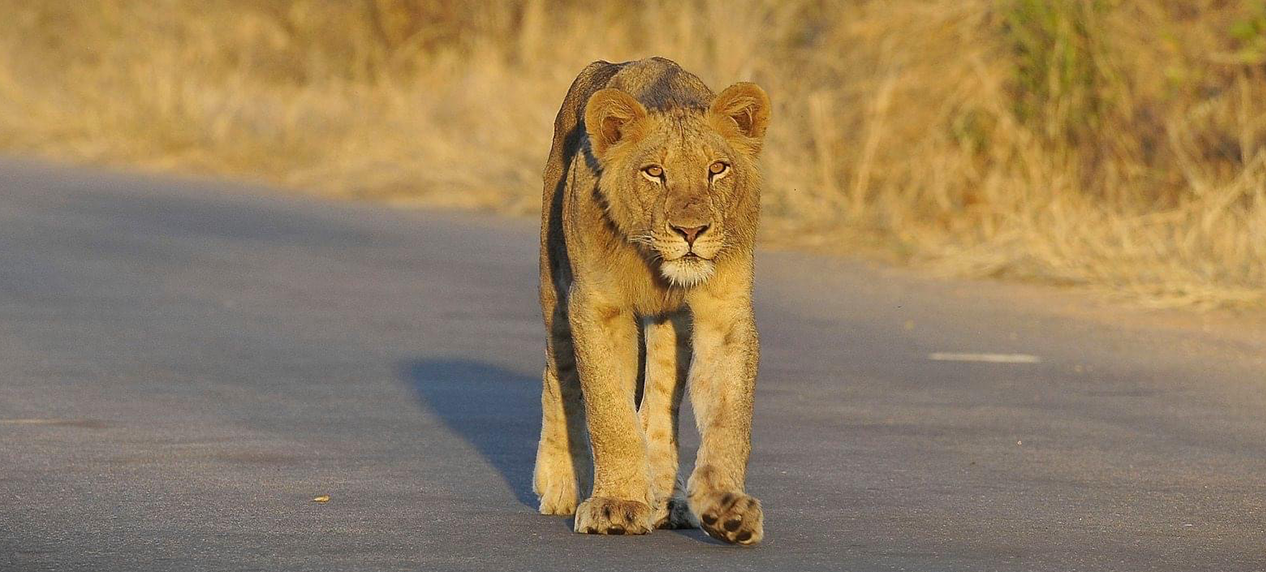
Juvenile Lion – KNP. Image by M Roodbol


The Great Limpopo Transfrontier Conservation Area (GLTFCA), which includes Kruger National Park, in South Africa, and Limpopo National Park, in Mozambique, is one of the last ten Lion strongholds in Africa. While these strongholds occur in formally protected areas and contain a stable or increasing population, indications are that the lion population in the northern reaches of the Kruger National Park are declining because of targeted poisonings and poaching.

In partnership with SANParks and the Lion Recovery Fund, the Endangered Wildlife Trust (EWT) has been monitoring lions across the landscape to understand their movements, habitat use and what measures are needed to alleviate threats to the iconic species.

From 17 September to 1 December 2023, a team from the EWT conducted a lion population survey in the Nxanatseni north region of the Kruger National Park. Spanning 5162 square kilometres, the area spanned the Pafuri, Vlakteplaas, Punda Maria, Shangoni, Woodlands and Shingwedzi sections of the Park.

Two field protocols – search encounter and camera traps – were used to collect data. These were designed to obtain high quality photographs that the team could zoom into and be able to individually identify lions through their unique whisker spots. All photographs taken of lions were inspected to try and identify individuals roaming the area.

Because it is not feasible to find every lion in the landscape, methods were used enabling the team to estimate the number of lions based on a sample of that population. To do this, advanced spatial capture-recapture models that are widely used for large carnivores globally were used. Due to the fact that lions less than one year old tend to suffer high mortality, they were excluded from the analysis.

Results

The EWT team drove 10,006 km and deployed camera traps for 2,684 trap nights over the survey period. Using the combined dataset, it was estimated that there were 105 lions in Nxanatseni North.

Our survey represents the fifth estimate of lions in the Nxanatseni North region of Kruger: In 2005, a call-up survey estimated 283 lions; a 2008 call-up survey with reduced sampling estimated 75 lions; the 2005 survey was replicated in 2015 and estimated a population of 119 lions and in 2023, the estimate was 122 lions. The EWT’ s estimate of 105 lions is similar to the latter two surveys.

All were conducted in the same region and are estimates of lions over the age of one year. This represents a possible 63% decline over the 18 years separating the surveys. The precise reasons for this have not been investigated, but anecdotal evidence suggests that there has been an increase in targeted poaching of lions, coupled with increased levels of general bushmeat poaching.

Our results show that lion density is lowest in the Pafuri and Punda Maria sections, areas that are thought to suffer from relatively high levels of snaring, poisoning, and general poaching.

The results also provide a clear signal that distance to water is an important factor explaining the variation in lion density across the landscape. Lion density was highest close to water. In recent times, artificial waterholes have been switched off in Kruger National Park, and this will likely have had an impact on lion numbers in the Nxanatseni North region, which has a semi-arid climate. Worth noting is that while lions are not dependent on water, their primary prey species typically are.

Conservation approaches typically encompass a range of approaches aimed at safeguarding their habitats, mitigating human-lion conflicts, combating poaching and illicit wildlife trade, and fostering harmonious coexistence between lions and local communities.

Identifying trends in lion numbers and demographics remains crucial for their conservation, as is investigating the factors that drive those trends.

We recommend that future conservation efforts are coupled with regular population monitoring in this region to inform conservation actions and assess their effectiveness, taking an adaptive management approach.


** The EWT would like to thank SA National Parks for permission of carry out the survey, AHA Hotels and Lodges for their logistical support and the Lion Recovery Fund for their generous support.