WORKING WITH WILDLIFE: SOME SNAPSHOTS OF 2020
Emily Taylor, Communications Officer, emilyt@ewt.org.za The year 2020 has undoubtedly been one for the history books. While much of what made this year extraordinary was directly or indirectly a result of COVID-19, it is important to remember the full picture: the limitations, disappointments, delays, and much, much loss, but also the achievements, innovative solutions, connections, and significant technological strides that have been made across the world. These innovations have enabled the continued functioning of many businesses by making working from home possible or developing online platforms or delivery services to survive the lockdown restrictions.
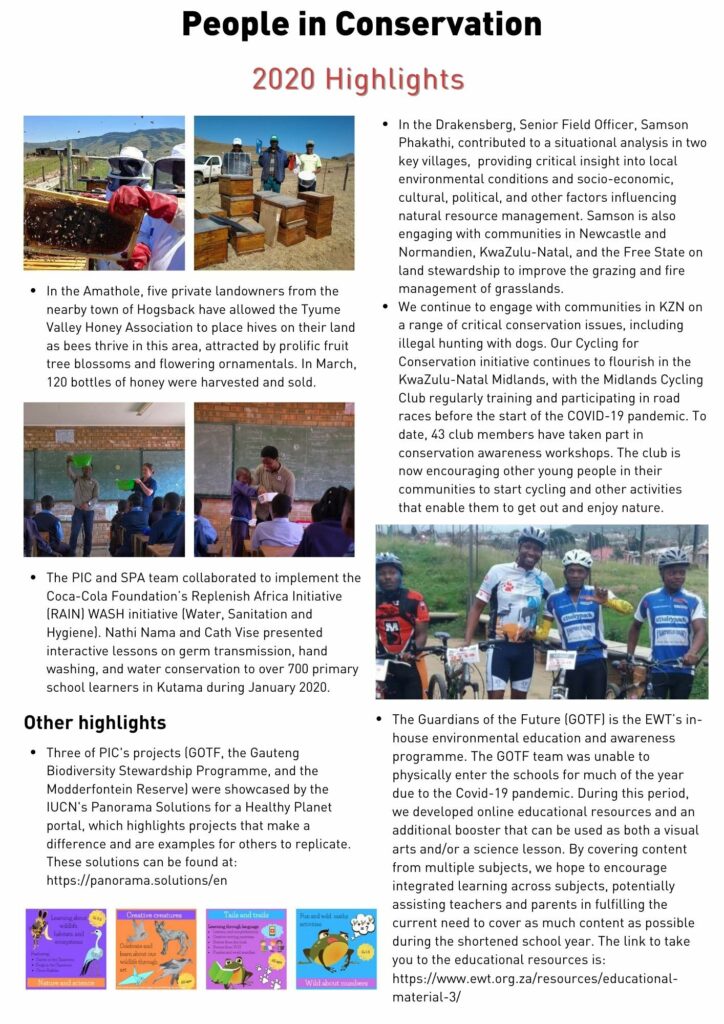
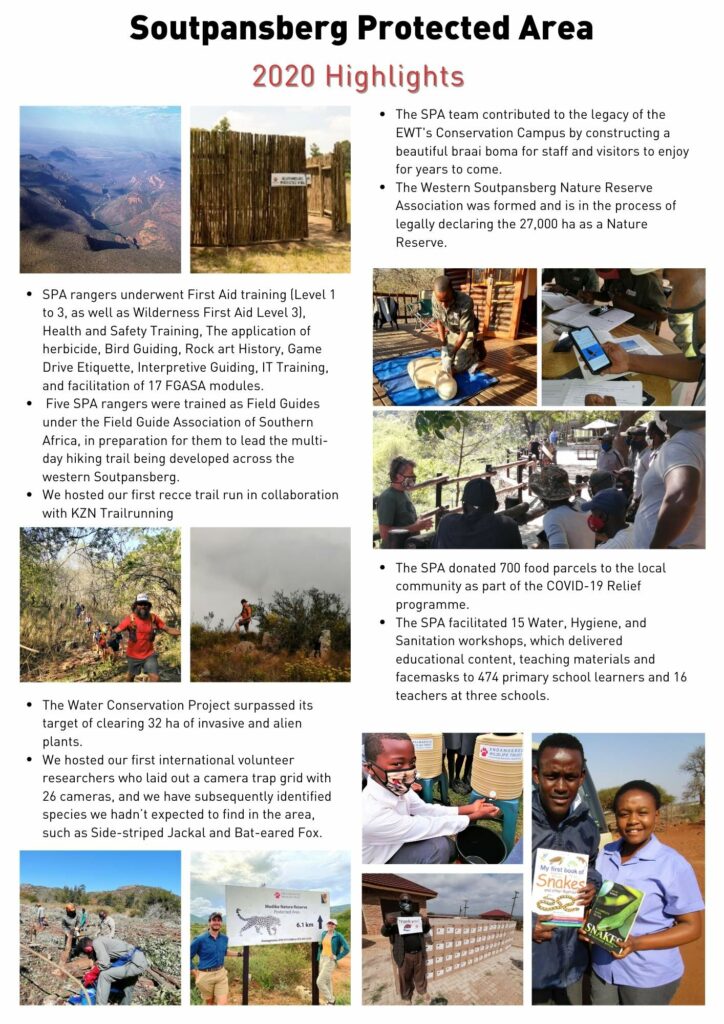
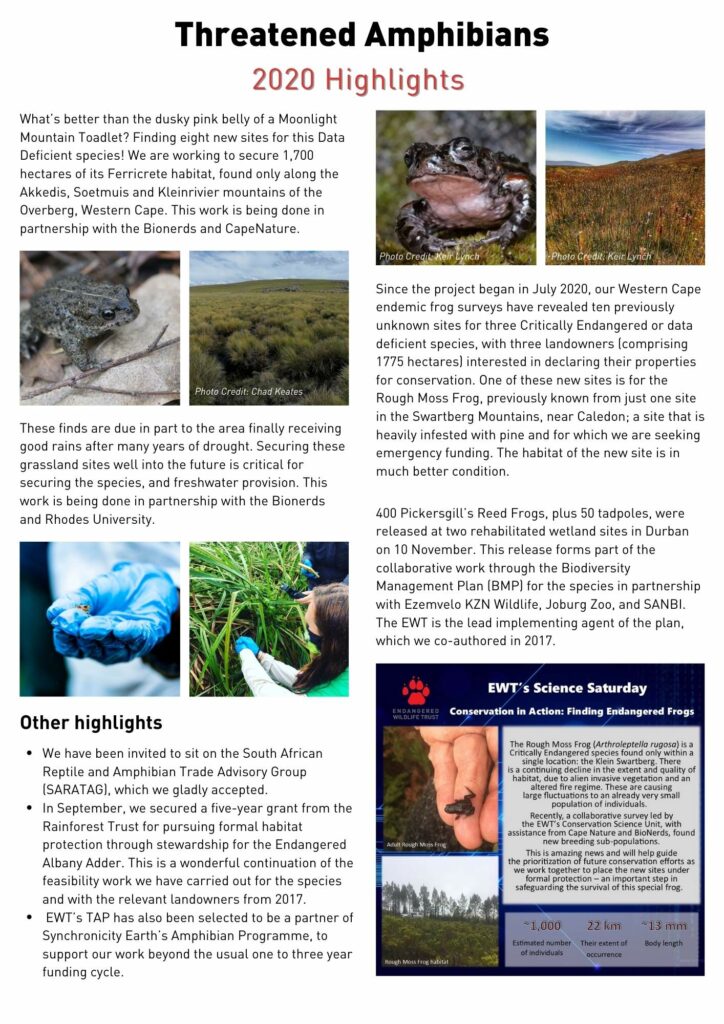
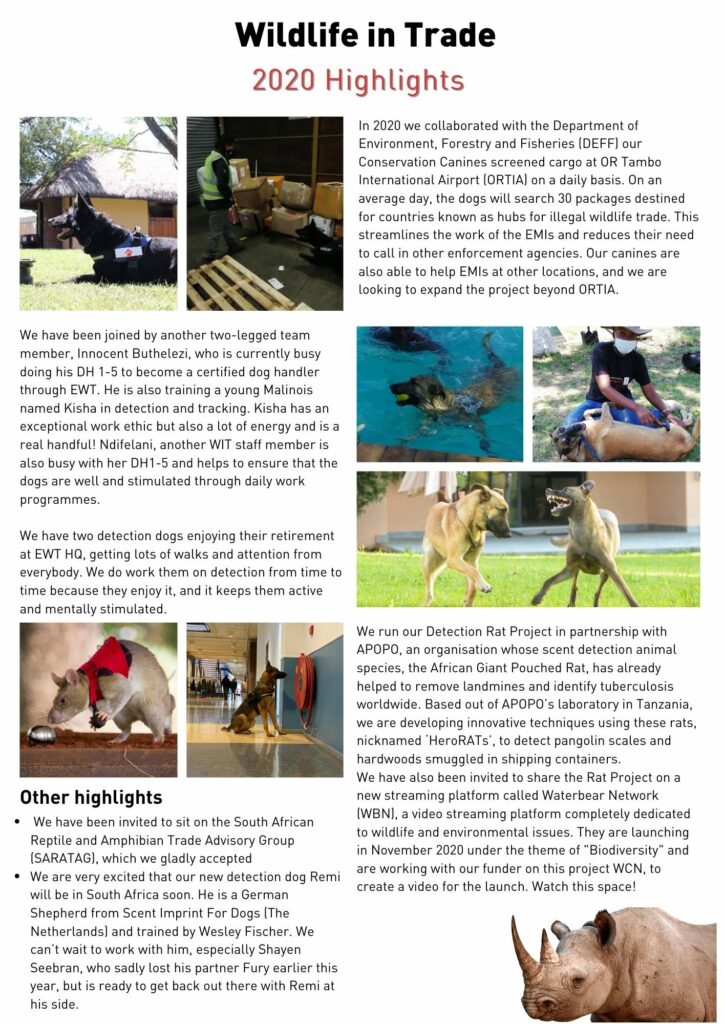
A year in the life of the EWT is never dull, and instead of slowing down during lockdown, we picked up the pace and made sure that despite the challenges, we found inventive ways to meet our conservation objectives, and we achieved great things for wildlife, landscapes, and people. Here are some snapshots from a few of our programmes’ highlights of working with wildlife in 2020

A WORD FROM THE CEO: THE EWT CALLS FOR THE URGENT REOPENING OF NATURE-BASED TOURISM IN THE NO-TOUCH ECONOMY
Yolan Friedmann, EWT CEO
yolanf@ewt.org.za
The coronavirus or COVID-19 global pandemic has affected every aspect of life as we know it. There is speculation about whether the world will return to ‘normal’ or if society will ever be the same again. However, we do know that the COVID-19 virus will not merely disappear and until a vaccine becomes available, or until human beings have developed a minimum immunity response rate, the world will not return to normal, if ever.
Despite job losses in major South African industries in recent years, the tourism sector has shown resilience. In 2017 the industry created 31,752 net new jobs, which was the most number of net new jobs generated by tourism within a year in at least the previous eight years.
“Africa’s unique diversity of wildlife and habitat has the potential to radically transform the continent’s economy” (UNEP, 2019).
There were 705,871 persons (or 4,5% of total employment) directly engaged in producing goods and services purchased by visitors in 2016, 681,619 persons (or 4,2% of total employment) in 2017, and 739,657 (or 4,5% of total employment) in 2018. (Tourism Satellite Account for South Africa, final 2016 and provisional 2017 and 2018/ Statistics South Africa). Over 60% of employed people in the sector are women (mostly in the areas of catering and accommodation) with a younger mean average age than all other sectors. Furthermore, Stats SA published data in 2018 show that one in every 22 working South Africans, and more than 2,892,303 people, are employed in the tourism sector.
The tourism industry in South Africa is heavily reliant on nature-based tourism, which is one of the main attractions for travellers in South Africa, as it is for 80% of foreign tourists (Saayman, 2017).
Nature-based tourism refers to all forms of tourism, where relatively undisturbed natural environments form the primary attraction or setting. The wildlife and nature-based sector specifically, supports a vast number of associated industries and sectors such as the conservation sector through generating income for park management, wildlife protection, anti-poaching, and to some degree border control through the management of human movement in transfrontier parks. For years, national and provincial conservation agencies have been generating significant revenue through nature-based tourism that contributes substantially to conservation management. The sector generates 40% more full-time employment than agriculture and provides greater opportunities for women than other sectors. (UNEP, 2019).
Game reserves in South Africa also generate significant benefits to the surrounding communities who contribute to goods and services consumed by visitors. In the absence of economic activity in these parks, there is an increased risk of poaching, illegal resource extraction and park invasion. It has taken years of stakeholder engagement and hard work for communities to have equitable access to benefits arising from conservation and nature-based tourism, and this will be for nothing if our protected areas lose their economic value to the communities who depend on them. To survive, these communities may resort to illegal resource use. It must be noted that many people employed in the nature-based tourism sector are unskilled/semi-skilled and are usually breadwinners in their families. Reopening local tourism ASAP will contribute to securing their employment and to safeguarding livelihoods in the most vulnerable households.
SANParks, as the custodian of approximately 70% of South Africa’s state-owned protected area network, derives 80% of its income from nature-based tourism activities. A significant component of this revenue funds park management, anti-poaching, management of marine protected areas, ranger patrol, and protection services, including the aircraft and associated rhino security technologies, as well as management of wildlife. Many community-owned reserves generate income for clinics, schools, community recreation facilities and contribute many jobs linked to goods and services associated with these reserves, including catering and accommodation. A number of these community-owned reserves are related to national and provincial parks and benefit from visitors to parks, or their own concessionaire managed lodges.
“To preserve their wildlife and wild places, governments should look at protected areas not only as environmental assets but economic ones as well, with the continent’s 8,400 protected areas producing US$48 billion in revenue.” (UNEP, 2019).
Tourism, and in particular wildlife and nature-based tourism, should, therefore, be prioritised in the measures to ease the economic impact of COVID-19. Nature-based tourism is also a major outlet for people who have been confined in urban areas. Many studies have shown a close link between human wellbeing and nature-based tourism. Approximately 70% of visitors to our national parks are local tourists, and the tourism sector can continue to support thousands of livelihoods, even before our borders reopen.
Other consumptive forms of nature-based tourism such as hunting for biltong and game meat also have a local market and might contribute to food security.
The consequences of any extended lockdown for the wildlife and nature-based tourism sector, and by extension to the entire tourism industry, will be dire and potentially devastating as a result of:
- significant job losses (in particular for those with a low skill base and less likelihood of finding alternative employment);
- revenue losses for the parks’ agencies, communities, NGOs, conservation authorities, and government (through taxes);
- eroded protection of South Africa’s biodiversity and protected areas;
- eroded infrastructure (fences, road networks, camp maintenance etc.);
- an increase in poaching, wildlife crime, and illicit wildlife trade;
- reduced benefits to communities whose land has been returned to them in the land restitution process;
- over-reliance on the unsustainable use of natural resources by rural communities;
- potential negative sentiment towards the protected area network should communities lose all the benefits derived from them; and
- reduced income for conservation NGOs who play a significant role in biodiversity conservation and community conservation in South Africa, and are major employers in the sector.
Most of our parks and game reserves are in areas that have lower infection rates and where economic activity could open faster than in metros. It is possible to introduce nature-based tourism into the economic recovery now, through a phased approach that sees this form of tourism being allowed to begin operating, under stable conditions and Standard Operating Procedures. This is based on the fact that:
- guests can participate in almost all nature-based tourism activities in semi-isolation and applying physical distancing principles. People could only visit the parks and reserves within their own provinces and limited numbers can be accommodated at any given time;
- wildlife and nature-based tourism offers guests the chance to self-drive, or go on game drives in open-air vehicles with reduced numbers of guests or family members only; providing a more exclusive and interactive experience;
- adventure tourism offers guests the opportunity to undertake outdoor activities such as hiking, trail running, mountain biking, canoeing/paddling, bird guiding and more, in semi-isolation states and with expert guides, thus reducing social interactions and in low numbers.
- Standard Operating Procedures have been developed for game reserves and parks, specifying acceptable sizes of groups for different activities, and enforcing strict protocol in restaurants and reception areas
The EWT believes that nature-based tourism not only offers guests the opportunities to have enjoyable, safe, and healthy vacation opportunities but is one of the few sectors that stands to revitalise our economy and bring much-needed income back into South African households in the short term.
Allowing a limited but early phased reopening of this sector offers the opportunity to increase the economic, mental and physical wellbeing of millions of people, and sustain the conservation of South Africa’s natural resources for future generations.
A WORD FROM THE CEO
Yolan Friedmann, EWT CEO
yolanf@ewt.org.za
In recent weeks there has been a flurry of social media posts around some proposed regulatory changes that would, if implemented, have a significant impact on the future management, wellbeing, and conservation value of our wildlife resources in South Africa. As with all news that goes viral, there will be some elements that are accurate and many that are not. Humans appear to need to amplify hard facts to get the attention that they want and perhaps in this day of extreme media overload and noise, this may well be a relevant strategy. Be that as it may, the EWT prides itself on being a science and fact based organisation whose contributions are credible, meaningful and evidence based. We have been inundated lately with messages across all platforms, asking what we are doing about, and what the public can do about, a series of proposed regulatory changes and the following is a brief description of the issues, our concern and our responses:
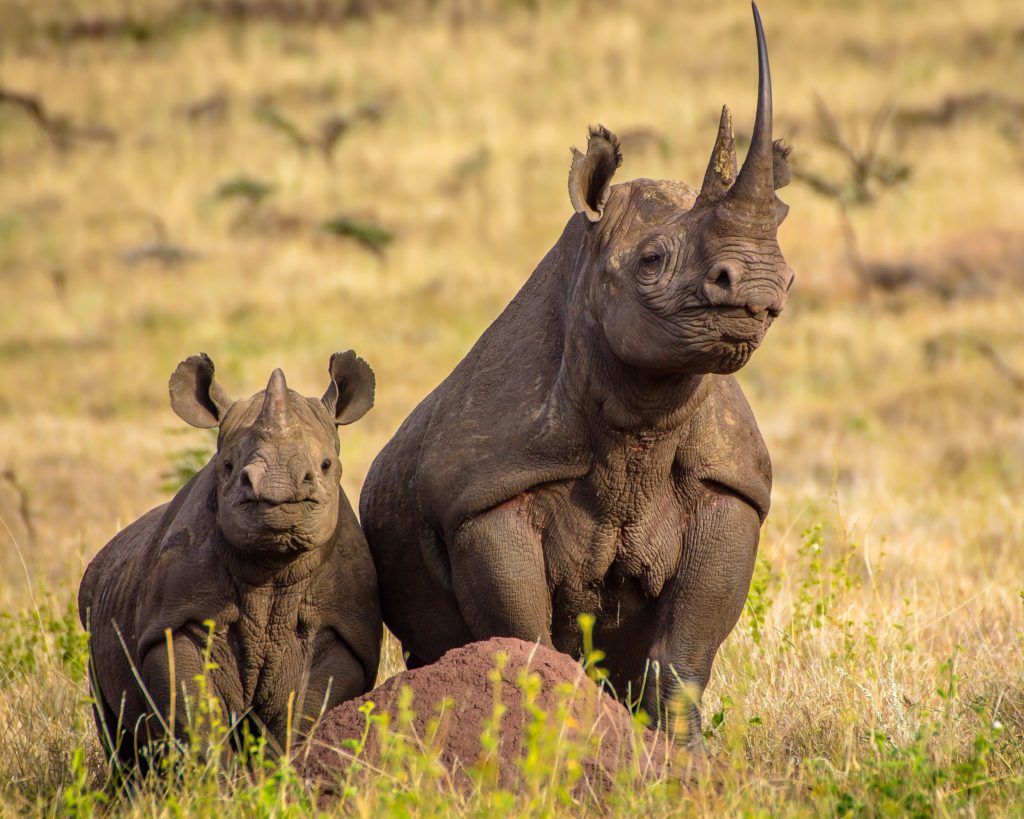
- The Animal Improvement Act – this act promotes the intensive and selective breeding and cross-breeding of animals. On 17 May 2019, a notice was published to include the following species as landrace breeds in terms of this Act: Lechwe, Giraffe, Zebra, White Rhinoceros, Black Rhinoceros, Lion and Cheetah. We have launched an application in the North Gauteng High Court, challenging and seeking the review of the decision to list wild animals in the Animal Improvement Act. Our grounds of review include legitimate concerns regarding the conservation value of breeding animals that are claimed to be genetically superior animals and the possible detrimental impact on natural selection and evolutionary processes.
- The Meat Safety Act – the amendment to the Meat Safety Act as read with the proposed regulations on game meat (if and when they are promulgated) aims to facilitate and regulate the processing of meat from game animals that have been hunted or culled. We have submitted extensive comments to the Department of Agriculture, Land Reform and Rural Development in this regard, holding that while we wholly support the move to create a legal framework to support the commercial sale of game meat from wild animals from natural free-living conditions, we do not support the intensive and selective breeding of wild animals in general, or for commercial meat production specifically.
- The Threatened or Protected Species Regulations of 2007 have been undergoing amendment since March 2015, when the public was afforded an opportunity to comment on proposed amendments. Early in 2020 we received information of the submission of a version of these regulations to the National Council of Provinces for their approval (the 2019 Amendments). We have extensively compared the 2015 version of Amendments with the 2019 version of Amendments, and found well over 200 changes between these two versions, 56 of which are substantial changes in our view. We have written to the Minister of Environment Forestry and Fisheries, raising concern about the lack of public participation in the finalization of the 2019 Amendments, considering this process has taken five years and the two versions are fundamentally different. We are awaiting feedback in this regard.
The EWT has an experienced and highly skilled team of experts who developed our submissions on all of these proposed regulations, and we are vigilantly watching the process to ensure that our concerns, as well as those of several other specialists, are considered. We will keep our readers updated. We cannot guarantee that our opinions will triumph, but our voice will be heard. Your support keeps the EWT in a position to engage with government and hopefully, improve the outcomes to the benefit of our wildlife. Please keep supporting the EWT during these times, every bit helps.Yolan Friedmann
CEO: Endangered Wildlife Trust
A WORD FROM THE CEO
Yolan Friedmann, EWT CEO
yolanf@ewt.org.za
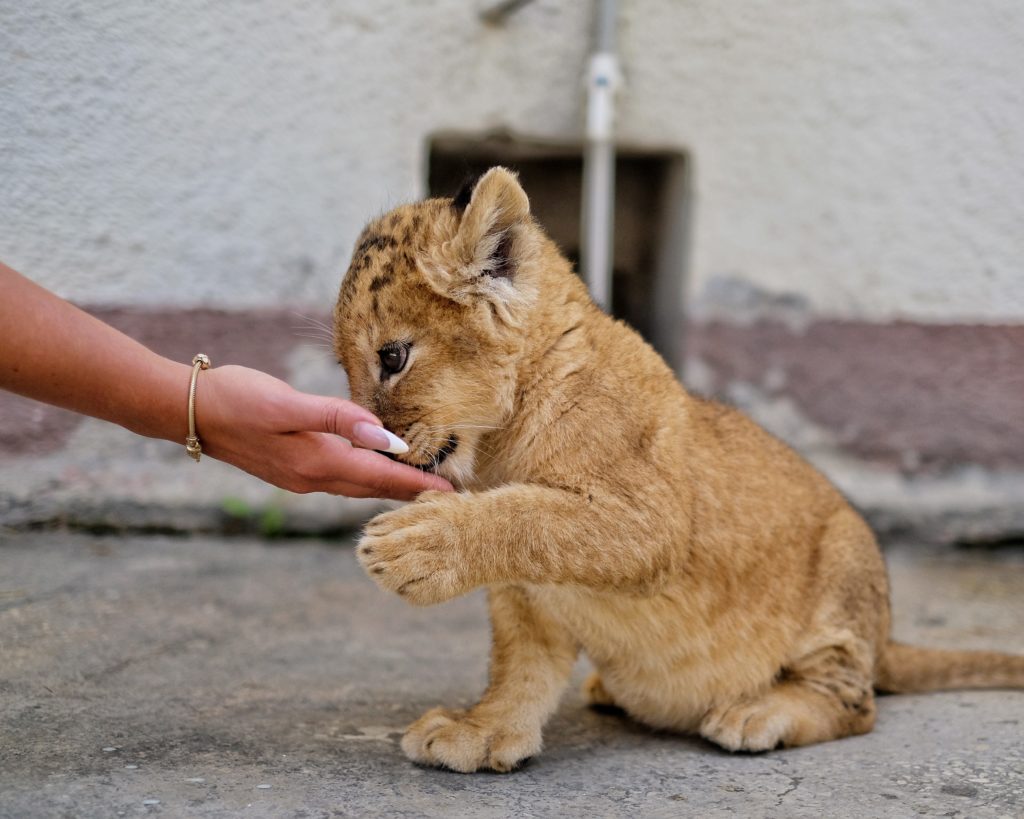
For a number of years, South Africa has seen an ongoing increase in in the number of facilities that claim to be wildlife rehabilitation or rescue centres, or even to have wildlife breeding ‘for conservation’ as their purpose. In the meantime, the majority of them are nothing more than commercial operations that masquerade as conservation centres, with financial gain for profit, being their main driver. The public has been duped into believing that lionesses frequently abandon perfectly healthy cubs, which then need to be rescued and bottle fed by well meaning, pound (or dollar) paying volunteers. The public has been paying for years to see camps of Cheetahs and Wild Dogs with the narrative being that they have been rescued from farmers who may have shot them, or from roads on which they may have been killed. The public has also been told that the always-present number of cubs and pups (and other wildlife offspring) is so that these new generations can be introduced into the wild to ‘save the species’ . And for all of this, the public has been asked to pay. Whether for ‘educational’ family visits or through donations and fundraising asks, the public has been supporting a large number of these institutions for decades.
The trouble is that many of these facilities are in fact breeding and selling wildlife for commercial gain, supplying a multitude of zoos, wildlife dealers and private collectors, globally. This in itself is not necessarily a problem for the EWT, and you may in fact ask why the EWT would even care, given that we are not a welfare organisation. The trouble is, these institutions do not tell the unsuspecting public the truth and they don’ t declare up front that the animals that they are paying to see are in fact often being bred or raised for sale to one of various institutions along the global wildlife supply chain. Furthermore, the so-called ‘rescue’ of animals that may have been shot or killed on roads is also problematic. The reality in South Africa today is that many wild species are exposed to being killed in human-wildlife conflict situations but removing them never solves the problem and certainly doesn’ t enhance the protection of the species when increased range and tolerant landowners is what needs to be the goal. Finally, there is no conservation plan for any carnivore species and almost no other wildlife species in our country that requires the intentional breeding of additional animals, for release.
The problem is in fact a lack of space for many, already-wild animals and captive bred animals compound the situation. So, consider the truth exposed when, as a result of the COVID induced national lockdown, and the closure of the borders and airlines, which have rendered many of these facilities unable to trade in their animals. Suddenly we are seeing packs of Wild Dogs, high numbers of Cheetahs and Lions and a range of other captive bred wildlife that cannot be traded and which are costing too much to keep and who may not be sold anytime soon, being offered for ‘conservation purposes’ , release or threatened with euthanasia. In some cases, the public is again being asked to help fund the upkeep of the animals. It is true that the facilities have also been hard-hit by the lack of gate takings and visitor income and it is also true that most facilities do in fact need to sell animals in order to cover costs. Again, the EWT is not necessarily against this. What we are, however, against is the lack of transparency, the lack of honesty about the destination of many of the animals being bred, the lack of accountability by some, as to the final destination of the animal (this may be at the end of its life and not just the end of its initial journey), and the ongoing misinformation to the public about the role of captive bred wildlife for genuine conservation value. What we are against is the use of wild caught animals to bolster the genetics of a captive population for commercial breeding purposes and what we are against is the rampant wildlife trade that exploits wildlife and the public, but lets everyone involved believe that they are saving a species.
If one thing stems from the COVID crisis, then let it be a more honest society that is more accountable for how we treat our natural world and its wildlife. It is not just the illicit wildlife trade that needs to be vanquished, but the legal trade must also be checked and better controlled in order to account for the impact it may have on wild populations, the impact on public funding and the impact on supporting markets that commodify wildlife with no benefit to the conservation of free living species. Until we have this in place, we urge the public to be aware that what you see may hide another truth that you also have a right to know.
The EWT is not against a legal, sustainable, and controlled trade in wildlife that benefits wild populations and their habitats. For more on our position on the matter see https://ewt.org/resources/perspectives/