Start30 July 2026
Saluting rangers protecting wildlife and conserving nature
As nature’s guardians, most rangers are the first line of defence against wildlife crime, as well as the protectors of our fragile and changing environment.
On 31 July, the Endangered Wildlife Trust (EWT) will celebrate thousands of rangers across the globe to mark World Ranger Day; a day on which rangers worldwide are heralded for their role in safeguarding our natural world and to honour colleagues who have lost their lives in the line of duty. This year’s theme A Legacy of Protection, Courage, and Service recognises that rangers are working in a world defined by climate extremes and biodiversity loss, increasing human-wildlife conflict, rampant organised wildlife crime, and shifting social and political landscapes. Amid these challenges, rangers continue to operate at the frontline to safeguard the future of our natural world.
Working at the forefront of conservation of wildlife and habitats, these passionate individuals often give up valuable personal time to ensure that our wildlife is protected from criminals, be they poachers or illegal traders in threatened plants. They also spend hundreds of hours removing invasive alien species, burning firebreaks to safeguard infrastructure, assisting with management burns to achieve specific ecological goals, monitoring threatened species, undertaking antipoaching patrols, and guiding guests safely, to ensure an unforgettable experience in nature, among a multitude of other tasks.
On the 20th anniversary of World Ranger Day, the EWT honours its newly-appointed Threat Protection Rangers and Restoration Rangers, alongside our existing team of rangers at the Medike Nature Reserve and the Restoration Rangers in the Soutpansberg Protected Area.
Threat Reduction Rangers
Illegal wildlife-related activities are placing mounting pressure on already vulnerable wildlife populations while simultaneously posing significant security risks to people living and working within affected landscapes.
To mitigate wildlife crime within the Greater Kruger area of Limpopo, the Endangered Wildlife Trust has appointed five Threat Reduction Rangers to directly focus on the reduction in illegal wildlife activities. This includes snaring in the Greater Kruger area in northern Limpopo – a buffer zone to the west of the Kruger National Park, and Great Limpopo Transfrontier Conservation Area.
The team, comprising a head ranger and four rangers, undertake regular patrols, remove snares, record illegal activity, monitor high-risk areas using camera traps and share information with landowners and conservation partners so that threats can be timeously detection and addressed immediately.
This Unit helps protect both wildlife and people. By removing snares and reducing illegal activities, Our approach extends well beyond removing snares. A core objective is to facilitate collaboration across property boundaries, uniting landowners and reserve managers to coordinate surveillance, share information, and respond collectively to illegal activities. We also conduct proactive surveillance using strategically placed camera traps to detect illegal entry points and enable a rapid response before snares can be set or wildlife is impacted.
In the longer term, we aim to complement these efforts with community outreach and environmental awareness initiatives to address the underlying drivers of snaring and promote lasting behavioural change.
The project being undertaken in potentially high-risk areas prioritises community and privately-owned land where enforcement capacity is limited, and thus vulnerable to illegal wildlife activities. The present focus is encourage these landowners and communities to participate in the initiative.
To achieve our conservation goals, we have partnered with the Kevin Richardson Foundation and Soldiers for Wildlife and Van Niekerk Wildlife has provided ranger training, with additional support being received from the Scales Conservation Fund, Phalaborwa Natural Heritage Foundation and Kendra Carano.
Restoration Rangers
In the heart of the Soutpansberg is a team of Restoration Rangers protecting the landscape and restoring it back to health, one tree at a time.
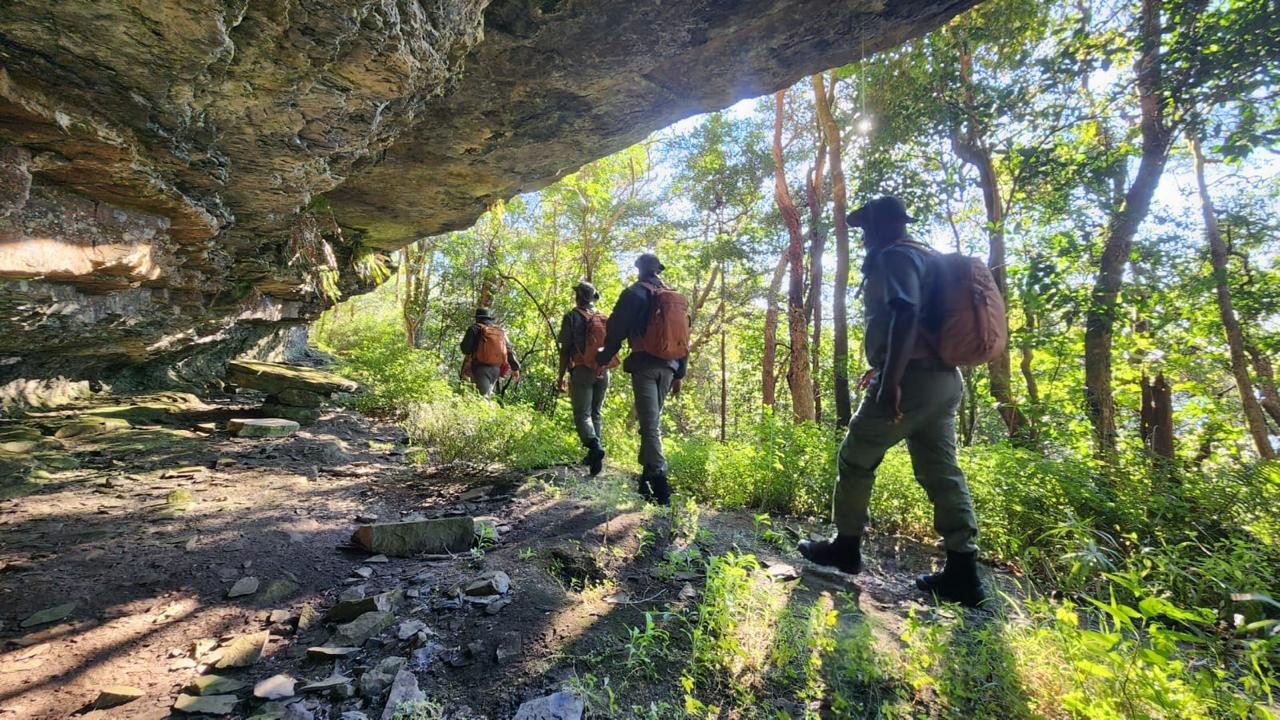
The EWT’s Restoration Rangers are working to reverse decades of environmental degradation caused by invasive alien plants. Their daily work often includes hiking on steep, inaccessible, remote mountain slopes carrying all their equipment and safety gear up to 8 kg per person. The specialised team focuses on removing invasive trees and plants that threaten one of South Africa’s most biologically diverse landscapes.
The Soutpansberg is recognised as one of the country’s unexplored biodiversity hotspots, supporting an extraordinary diversity of plants and animals, many of which occur nowhere else on Earth. However, invasive alien plants, particularly water-thirsty eucalyptus trees that take up to 260 litres per day, reduce streamflow, outcompete indigenous vegetation, increase wildfire intensity, and degrade vital habitats.
The Restoration Rangers, supported through the ReLISA project (Restoring Landscapes in South Africa) funded by Germany’s International Climate Initiative (IKI) and led by the United Nations Environment Programme, are helping to change this trajectory. Through strategic invasive plant control, follow-up clearing, wetland restoration, road and trail maintenance, and ongoing monitoring, they are restoring ecological processes that allow indigenous ecosystems to recover naturally. Their work contributes to healthier catchments, improved water security, greater resilience to climate change, and stronger habitat connectivity for wildlife.
This team consists of young people from neighbouring communities who receive practical ecological restoration training while gaining valuable work experience and developing skills that contribute to South Africa’s growing restoration economy.
Over the past year alone, the team has removed thousands of invasive plants across priority conservation areas, restored ecologically sensitive wetlands, maintained critical access routes for landowners and conservation partners, and supported collaborative restoration efforts across the Western Soutpansberg Nature Reserve. Every invasive tree removed represents more water remaining in the landscape, improved habitat for indigenous species, and another step towards restoring ecosystem health.
At the Medike Reserve in the Soutpansberg, the EWT’s Field Rangers are responsible for protecting and maintaining the ecological integrity of the 2,733 ha reserve. Three Field Rangers and four Conservation Interns run anti-poaching patrols, monitor threatened species, fix boreholes, control firebreaks, and maintain hiking trails and infrastructure, while participating in interpretive guiding, mentorship, and community awareness raising.
This team, like the Restoration Rangers, also clear water thirsty invasive plants such as Eucalyptus, Lantana, and Prickly Pear, which has returned millions of litres of water to the reserve’s catchments providing indigenous vegetation room to recover. Because of the continuous presence of rangers, snaring at Medike has declined from over 2,000 incidents a year in 2018/19 to just 145 in 2026/2027, and dog hunting from 100 incidents to 20. In this time, six poachers were caught and realised and their eight fishnets confiscated.
Rangers are the custodians of everyone’s natural heritage. Whether protecting Endangered wildlife or restoring degraded ecosystems, their work is essential to safeguarding South Africa’s biodiversity and supporting the communities that depend on healthy landscapes. Without functioning or healthy habitats, people and wildlife are unable to thrive.
This World Ranger Day, the EWT celebrates not only the bravery of rangers protecting wildlife but also the determination of those restoring ecosystems from the ground up. Their work reminds us that conservation is about more than protecting what remains – it is about restoring what has been lost and ensuring healthy landscapes for future generations.
END