Start9 June 2023
South Africa to play a pivotal role in achieving an ambitious new global goal to sustain life as we know it
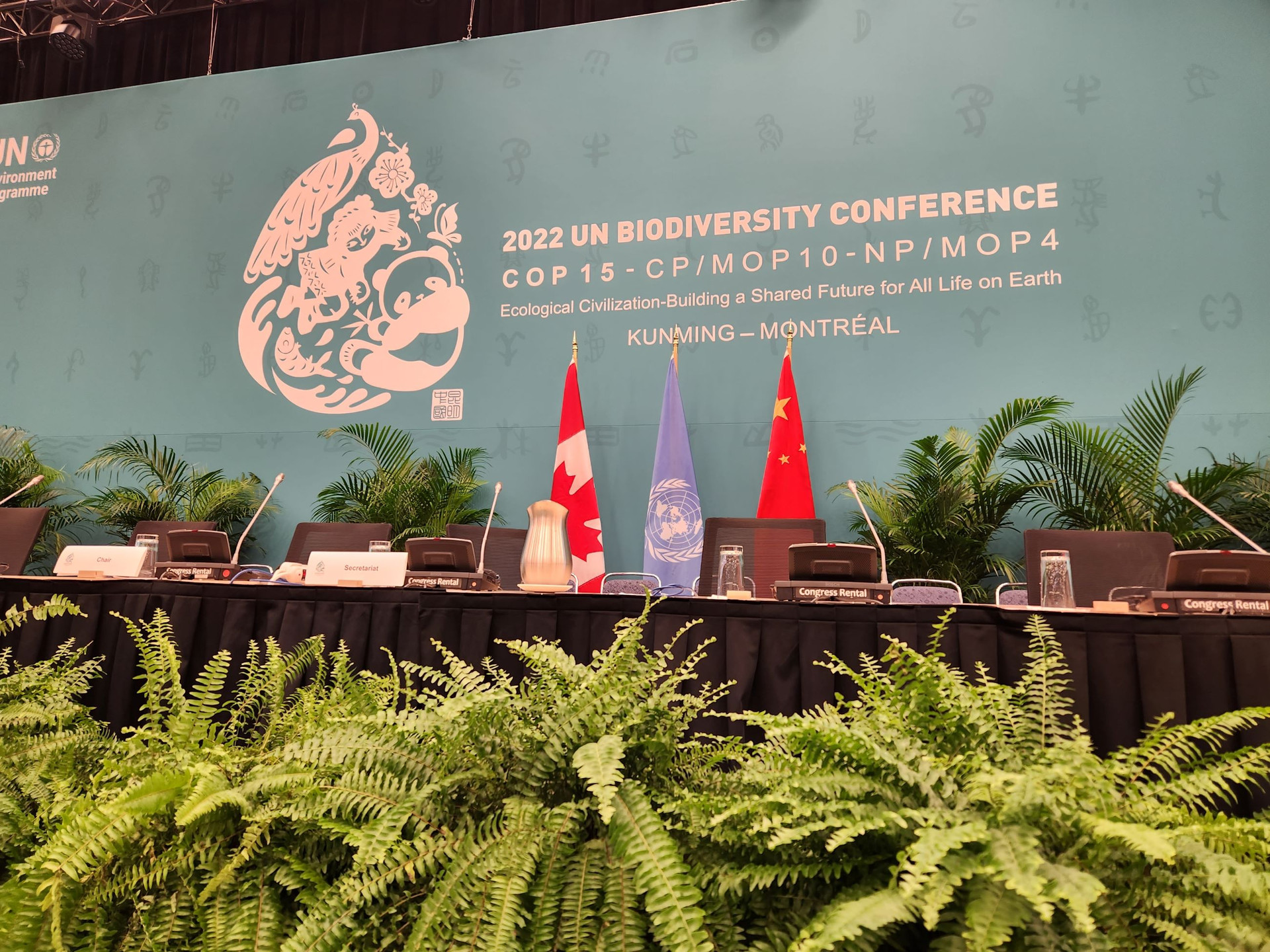
The Endangered Wildlife Trust’s (EWT) mission is to conserve threatened species and ecosystems in southern Africa to the benefit of all. We have published a perspective on the Kunming-Montreal Global Biodiversity Framework (GBF), a critical outcome of the United Nations Biodiversity Conference of the Parties (COP15) in 2022. Closely aligned with our mission, the vision of the GBF is a world in harmony with nature where: “By 2050, biodiversity is valued, conserved, restored and wisely used, maintaining ecosystem services, sustaining a healthy planet and delivering benefits essential for all people.”
South Africa, along with 196 other countries, is a signatory to the Convention on Biological Diversity and has therefore committed to implementing the GBF and its targets and goals. The GBF contains four global goals and 23 targets. “Target 3”, commonly referred to as the “30 by 30” target, succeeds the Strategic Plan for Biodiversity 2011-2020 (including the Aichi Biodiversity Targets). It is an ambitious global goal seen as the new roadmap towards humans living in harmony with nature and is considered as important as the 1.5°C climate target for sustaining life on Earth as we know it.
The target has attracted considerable attention in local and international media. It is worded as follows:
“Ensure and enable that by 2030 at least 30 percent of terrestrial, inland water, and of coastal and marine areas, especially areas of particular importance for biodiversity and ecosystem functions and services, are effectively conserved and managed.”
Kunming-Montreal Global Biodiversity Framework (GBF)
The EWT recognises the critical importance of Target 3 for the long-term conservation of terrestrial and marine systems and believes that, as one of only 17 megadiverse countries in the world and an established advocate for increasing our own marine and terrestrial protected areas, South Africa can and must play a pivotal role in achieving and exceeding the ‘30×30’ target at a global and national scale.
Our perspective document details our support of the Kunming-Montreal GBF goals and targets and our recommended actions to achieve them. In the pursuit of this target in South Africa, the EWT:
- Emphasises that the next revision of the NPAES must align with the ‘30×30’ targets of the GBF at a national scale by continuing to include Protected Areas (special nature reserves, national parks, nature reserves, marine protected areas, protected environments and world heritage sites) and additionally recognise the contribution of the IUCN’s Other Effective area-based Conservation Measures (OECM’s) and the land and territories of Indigenous People and Local Communities (IPLCs), that bring about “the effective and long-term in situ conservation of biodiversity, support associated ecosystem functions and services, and promote cultural, spiritual, socio-economic and other locally relevant values”.
- Highlights that as one of the world’s most biologically diverse countries, South Africa must protect at least 30% of our own land and marine mass in order to support the global ‘30×30’ target.
- Recognises the importance of private sector role players in achieving national targets and commits to working closely with private landowners, businesses and community landowners to assist them to contribute to relevant national targets through initiatives tailored to their specific impact and relevant opportunities.
- Acknowledges the value of, and opportunity to encourage the contribution from a variety of stakeholder groups, to enable the 30×30 conservation target to be met and exceeded. To undertake this effectively, candidate OECM sites can be assessed for biodiversity value across land owned, managed or governed by Indigenous People and Local Communities (IPLC), business and industry, private landowners and many state-owned entities. Once biodiversity value has been confirmed, the sites can then be reviewed for their governance capability, management, and effectiveness to ensure that these sites can be sustained into the long-term before proceeding to secure. Security can be attained through the stewardship of conservation areas (community lands and concessions; game reserves; private industry land; and private landowner land) or by securing sites through management agreements that have biodiversity value and fall outside of stewardship, including tourism sites (botanical gardens and outdoor art galleries etc.), national key point sites, state-owned entity land (energy, transport, forestry, academic institutions etc.) and other state-owned property (military, agriculture and forestry etc.).
- Encourages the Minister of Forestry, Fisheries and the Environment to adopt an approach towards achieving the ‘30×30’ target by removing key barriers to protected area expansion and unlocking opportunities to engage non-traditional stakeholders in the process. This will require strategic coordination between the various government departments with either aligned or competing agendas in the landscape, including but not limited to the Department of Mineral Resources and Energy (DMRE) and the Department of Agriculture, Land Reform and Rural Development (DALRRD).
- Stresses that protected area expansion does not occur solely through government processes and with public funds and is heavily supported by the NGO sector and private sector funding; we also recognise that resource mobilization from the global community is important for ramping up our ability to achieve the global targets.
- Underscores that there is currently poor political will, resource allocation and support at a provincial level for protected area expansion, which must be addressed to assist in achieving the 30X30 target.
- Emphasises the importance of increasing financial support for provincial conservation agencies to enable them to support protected area expansion and to effectively manage existing protected area networks.
- Highlights the importance of embracing a holistic and collaborative approach towards achieving protected area targets through supporting the co-creation and participatory co-management of new models of protected area expansion and management.
- Recognises that the DFFE and the South African National Biodiversity Institute (SANBI) are committed to securing Strategic Water Source Areas (SWSAs) for the protection of critical ecosystem services which enhance climate resilience, but also highlighting the challenges faced by poor resourcing, which hamper these efforts.
Highlights that there is scientific evidence to support that protecting and restoring ecosystems with a complete collective of wild animals which can fulfil their functional roles, enhances natural carbon capture and storage and ecosystem health. The restoration and conservation of wild animals, as ecosystem engineers, and their ecosystem roles present a critical option for addressing climate change by enhancing our ability to reduce climate warming beyond 1.5 °C.
The EWT encourages South Africa to take a bold approach towards achieving protected area expansion targets through enhanced collaboration, participation and the co-creation of a variety of biodiversity protection models with new stakeholders to achieve these important national targets, which will, in turn, benefit all through building sustainable livelihoods, enhancing climate resilience, supporting the green economy, and enabling social equity at a national scale. Read the perspective document here.
END