Start10 November 2026
Nine Lives and Counting… A lioness’s story of survival
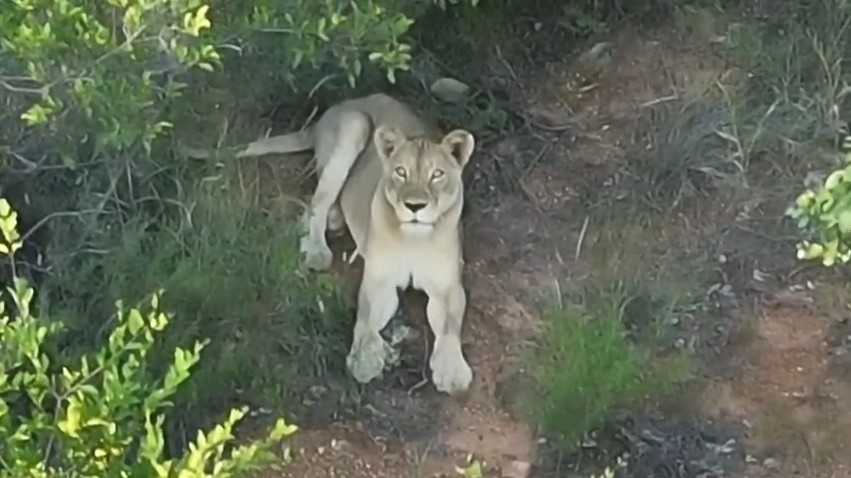
A lioness has undertaken an extraordinary journey that crossed international borders, saw her survive human-wildlife conflict and end her journey with a new beginning.
Originally captured on Mthimkhulu Game Reserve in Limpopo after coming into conflict with local communities and killing donkeys, the lioness faced an uncertain future. Lions that prey on livestock can be viewed as problem animals, with their prospects for survival often diminished by a number of threats, including snaring, poisoning or euthanasia.
With the safety of both the lioness and the surrounding communities in mind, the Endangered Wildlife Trust worked with the Limpopo department of economic development, environment and tourism (LEDET), SANParks, Mthimkhulu Game Reserve, Letaba Ranch and Wildscapes Veterinary Services to relocate her and her pride to the relative safety of the northern Kruger National Park.
For a few months, all seemed well. Then, as lionesses sometimes do, she had other plans.
She crossed the Limpopo River into Zimbabwe, where she spent months roaming through the Sengwe Corridor. Her movements eventually brought her back south towards the Musina area, where her presence resulted in further concerns about human–wildlife conflict on the Zimbabwean side of the border.
But, she decided to cross the flooded Limpopo River once again, making her way back into South Africa and onto Maremani Game Reserve.
Her challenges were far from over. When local communities became aware of her presence, concerns grew about such a large predator living in close proximity to people. Following consultation between SANParks and LEDET, it was decided that she should be returned to Kruger National Park.
Through the collaboration of dedicated veterinarians, landowners, government authorities and on-the-ground teams, the EWT successfully darted her and brought her safely back into Kruger.
And now, the most wonderful news. An EWT field officer has confirmed that she has a new litter of cubs – a sign that after all she had endured, this lioness has settled into her new home, successfully established a territory and is again raising a new generation.
The survival of this lioness and her contribution to the survival of her species, would not have been possible had she not been fitted with a GPS collar and closely monitored by the EWT’s field staff.
“Without the ability to track her movements, following her extraordinary journey across reserve boundaries and an international border would have been incredibly difficult. The collar helped us understand where she was, monitor her movements and coordinate the interventions needed to give her another chance. It is a powerful example of why investing in collars and monitoring technology is so important to carnivore conservation,” says the manager of the EWT’s Carnivore Conservation Unit, Derek van der Merwe.
Her journey is also a reminder that conservation is rarely straightforward. It takes patience, perseverance, difficult decisions and, above all, people willing to work together across political, geographical, social and organisational boundaries to give wildlife a chance. Their long-term survival depends on our ability to collaborate and find ways for people and wildlife to coexist.
Lions play a vital role as apex predators, helping to keep ecosystems healthy and balanced, and the birth of these cubs is a sign of hope, the sign of a possible new breeding population that can help secure the species’ future.
This journey was made possible with the generous support of the EWT’s donors, the Lion Recovery Fund and the Kevin Richardson Foundation, whose investment in lion conservation helps make stories like hers possible. Our sincere thanks also go to our collaborators and stakeholders: SANParks, SANParks Honorary Rangers, Painted Wolf Wines, LEDET, GKEPH, Gonarezhou National Park, Wildscapes Veterinary Services, Limpopo Dierekliniek, Maremani Game Reserve and Mthimkhulu Game Reserve. We are equally grateful to the dedicated veterinarians, landowners and on-the-ground teams who worked together to help secure her future.
END