Start3 March 2025
Innovative funding for conservation, crucial for people and planet
Alternate and innovative funding mechanisms for species conservation and habitat restoration are crucial, not just for future generations, but for the health of our planet.
In marking World Wildlife Day under the theme Wildlife Conservation Finance: Investing in People and Planet, the Endangered Wildlife Trust has embarked on a drive to enhance current funding sources and seek alternate funding mechanisms in line with the implementation of its new #FutureFit Strategy. To enable sustainable long-term conservation effort the EWT’s strategy is designed to address critical conservation needs for vulnerable communities, wildlife and ecosystems which can be and sustained through innovative finance, working towards bridging the funding gap in biodiversity conservation by leveraging public-private partnerships, innovative finance instruments and impact investments.
Financing conservation outcomes goes beyond addressing wildlife conservation and includes critical landscape level resilience and long-term benefits that improve livelihoods and ecosystem services at scale for indigenous people and local communities. Sustainable conservation financing hinges is on the critical need for long-term investments and measurable conservation and socio-ecological impacts, which require long-term commitment and are seldom feasible within short-term funding or political cycles.
Examples of sustainable finance mechanisms include the introduction of Wildlife Bonds and Carbon Credit projects to address climate change and other environmental factors related to doing business. In 2024, the EWT and the International Crane Foundation registered a carbon offsetting project in the Drakensberg using Voluntary Carbon Market Methodology and covering the widest geographical footprint in a country. The Carbon Management Entity is the developer, WeAct, from Australia.
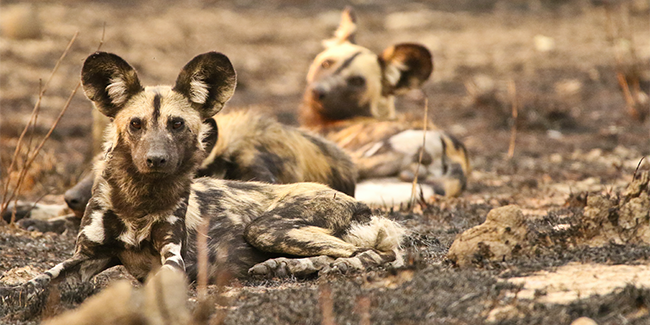
The EWT is working with Rand Merchant Bank to develop Wildlife Bonds for species with the aim of bringing in between R100 million to R150 million in funding for the conservation of Wild Dogs and Lions. A Wildlife Bond is a sustainable finance instrument that enables large funding to come from asset management investment to drive outcomes-based conservation that speaks to species-related work.
Through the #FutureFit Strategy, the EWT aims to enable large ecologically functional landscapes to thrive through, for instance, the implementation of Nature-based Solutions especially focused on habitat restoration to support climate adaptation and resilience across nine priority landscapes in East and southern Africa. Underpinning this long-term strategy is a number of ambitious metrics including the goal of protecting over two million hectares of important habitats, sequestering 3.75mill tons of soil carbon, improving the biodiversity footprint of a million hectares of important areas, building climate smart agricultural and conservation capacity within local communities, and providing targeted training interventions towards improved conservation impact in partner communities and range states.
Through dynamic wildlife management and rewilding of areas, and addressing the illegal trade and human-wildlife conflict, the aim is to increase wildlife populations across the continent, but in a manner that reduces unintentional consequences for communities and wildlife losses in priority areas by 2050.
The EWT’s long-term investment will be secured by working closely with the people that live and work in the priority landscapes, particularly Indigenous People and Local Community Groups through the establishment of sustainable living lands that support human resilience and well-being linked to Nature-based economic opportunities.
To secure impact for the long-term, we will focus on driving better policy and enforcement practices, and driving quantified biodiversity footprints of businesses that reduce over time. We will scale up the development and implementation of innovative tools that drive large-scale conservation impact, and work toward establishing sustainable financing mechanisms that can support long-term conservation efforts.
The United Nations Convention on the International Trade in Endangered Species of Wild Fauna and Flora (CITES), states that present financial flows “have proven insufficient for governments to meet their national biodiversity targets, especially in low-to-middle-income countries where the world’s biodiversity hotspots are located”. CITES, the UN-delegated facilitator of World Wildlife Day, says although USD 143 billion is invested annually in biodiversity conservation, of which 80-85 per cent comes from the public sector, “this amount falls significantly short of the estimated USD 824 billion needed each year to adequately protect and restore nature”.
CITES states that no single financial mechanism will fill all conservation funding gaps. Mobilising financial resources for wildlife at the scale required demands creating enabling conditions, building trust, and applying a collaborative, multi-pronged approach that involves governments, financial institutions, businesses, and civil society, and that considers the needs and expertise of indigenous peoples, local communities, women and youth.
The EWT thus supports the United Nations’ belief that investing in wildlife is not an aspiration, but a necessity. It is a collective responsibility as we work towards a future that is resilient for people and planet.
END