Start6 November 2025
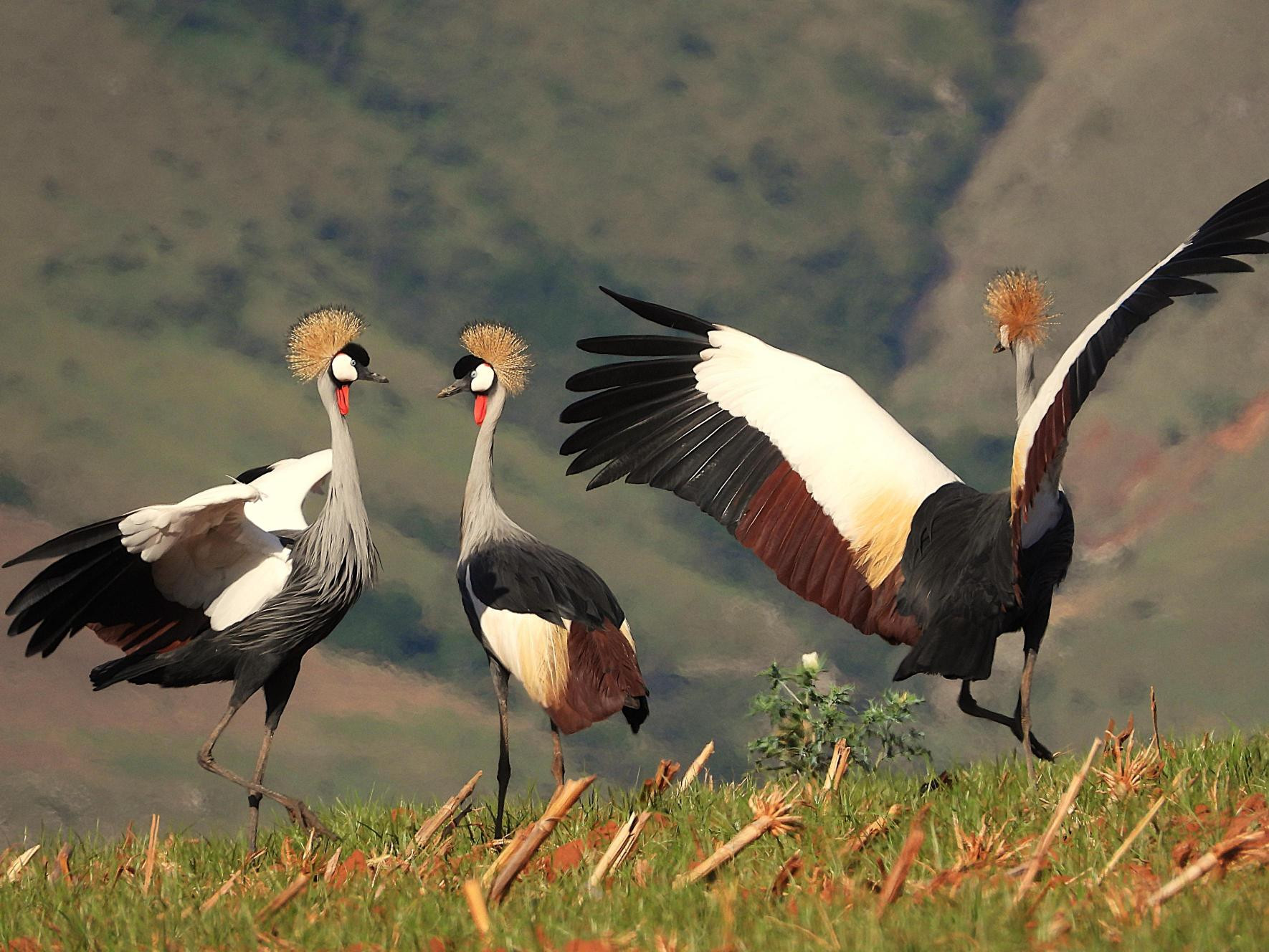
Endangered Grey Crowned Crane Conservation Improves Livelihoods and Saves Wetlands in Last Mile Communities Across Africa
AEWA CELEBRATES CONSERVATION SUCCESS STORY TO BE HIGHLIGHTED AT AEWA MOP9 NOV. 11-14 IN GERMANY
Africa – Nov. 6, 2025 – Human population growth and poor agricultural practices across Africa has strained critical wetland habitats as farmers have been forced to convert wetlands to agriculture to feed their growing families and to obtain the crop yields that they need . When
wetlands are cultivated, the loss of breeding habitats not only displaces the Endangered Grey
Crowned Crane and other wildlife, but also impacts the water resources of the entire region. The International Crane Foundation/Endangered Wildlife Trust Partnership has implemented
innovative solutions for communities, protecting habitats for cranes and providing lasting impact. Once abundant throughout Africa, the Grey Crowned Crane’s current population is estimated at between 30 000 and 37 000 and has been decreasing. As communities increase their dependence on wetlands and their resources, cranes come into more frequent contact with people, livestock, and dogs, resulting in more time watching for potential threats and less time nesting and caring for chicks. Other serious threats include collisions with powerlines, theft of crane eggs for food, capture of cranes for illegal wildlife trade, crane poisonings, and the spread of invasive species.
The health of crane populations is an indicator of the overall health of the wetlands. In healthy
wetlands with minimal agricultural encroachment, cranes have room to breed, leading to greater numbers of birds and improved productivity. Such wetlands are also in better condition to support community water requirements. This can only be achieved though if farming practices in the surrounding uplands are improved, and the resilience of local communities to changing climatic, social, and economic conditions is improved.
The partnership’s pioneering approach to conservation starts with community-based
conservation and research – first understanding the socioeconomic factors that have forced
people to encroach on wetlands – and then collaborating with community groups, local
governments, and other organizations to find real solutions. The conservation strategies include everything from improved landscape-level grazing management, sustainable, climate-smart agriculture programmes such as vertical organic gardens, enriched buffer zones that restore riparian habitat, incorporating added livelihood opportunities, mushroom and avocado farming, and beekeeping – to securing and protecting freshwater springs that provide clean water to hundreds of families, schools, churches and hospitals.
The partnership’s integrated public health and safety programmes provide separate latrines for boys and girls to help girls stay in school longer, and the rights-based approach to voluntary
family planning and other health-related programs offer choices for women to decide how many
children they want to have, and when. Results show decreased dependence on the wetlands.
Additionally, peer-to-peer programmes such as farmer field schools, educate community
ambassadors to train others in sustainable agricultural practices, and youth education programmes teach young people about crane and wetland conservation.
This successful approach to conservation will be shared by Kerryn Morrison, the partnership’s
Vice President of Africa Programs, during the 9th Session of the Meeting of the Parties to the
30th anniversary of the African- Eurasian Migratory Waterbird Agreement (AEWA MOP9) held
from Nov. 11-14 November in Bonn, Germany. The Meeting of the Parties is AEWA’s principal
decision-making body and first adopted the AEWA holds the International Single Species
Action Plan for the Conservation of the Grey Crowned Crane in 2015. The upcoming AEWA
Meeting in Bonn will consider a proposal to extend this Plan for a further 12 years – an
initiative first endorsed by the group in November 2016 and up for renewal this year. A
dedicated Grey Crowned Crane International Working Group has been established under
AEWA, which comprises this species’ Range States and is coordinated by Morrison.
“I’m honoured to present this success story during the event,” said Morrison. “Our innovative
programs depend upon community support and continue to be successful because the
community members decide what project will work best and have buy-in from the start. As they
gain sustainable livelihoods, they also become ambassadors for cranes and the wetlands”.
Morrison added: “For cranes to survive among the neglected “last mile” communities of East
Africa, we must continue to improve community well-being, reduce their dependency on
wetlands, and increase their resilience in a changing climatic and socio-economic world.”
“This community-based approach demonstrates how conservation can create lasting benefits
not only for the Grey Crowned Crane and the biodiversity in wetlands, but also for the people
who depend on these ecosystems for their livelihoods. It is not a top-down approach, but the
result of genuine dialogue and collaboration with local communities and stakeholders. I am
confident that this inclusive approach will, in the years ahead, strengthen both the well-being of communities and the conservation prospects of this magnificent yet endangered AEWA species in Africa,” said Jacques Trouvilliez, Executive Secretary of AEWA.
END