Start2 February 2026
Communities and Indigenous Knowledge at the Heart of Wetland Conservation
Wetlands are among South Africa’s most valuable natural assets—sustaining biodiversity, supporting rural livelihoods, and preserving deep cultural heritage. As the world marks World Wetlands Day under the theme “Wetlands and Traditional Knowledge: Celebrating Cultural Heritage,” the Endangered Wildlife Trust (EWT) honours the vital role communities and indigenous knowledge systems play in protecting these irreplaceable ecosystems.
Wetlands provide much more than water and wildlife habitat. They offer grazing for livestock, building materials, medicinal plants, and spaces for cultural practices. They are also reservoirs of unique biodiversity, supporting species adapted to these sensitive environments. The EWT works with communities nationwide to strengthen these systems so they can continue to thrive.
One of the most significant examples of the intertwining of natural and cultural heritage is iSimangaliso Wetland Park in KwaZulu-Natal—a Ramsar Site celebrated for its ecological, archaeological, and cultural importance. Here, traditional Zulu practices remain deeply connected to the land and sea, forming part of a living conservation model where indigenous knowledge strengthens modern environmental management.
Closer to Durban, the EWT’s long-term work at Adam’s Mission showcases the power of community-led conservation. Through rehabilitation and monitoring programmes at Adam’s Mission and the Widenham Wetland Protected Environment, the EWT is safeguarding habitat for the Endangered Pickersgill’s Reed Frog and several Critically Endangered wetland vegetation types. Alien clearing and waste management initiatives are improving ecosystem health while also delivering social benefits. Fourteen community members were employed as waste collectors and invasive plant controllers over a recent 12‑month period, demonstrating how conservation can strengthen socio‑ecological resilience and local economies.
Education and awareness efforts in the area are producing measurable results, including decreased residential encroachment in buffer zones, reductions in agricultural pressures, fewer invasive plants, and meaningful declines in illegal waste dumping.
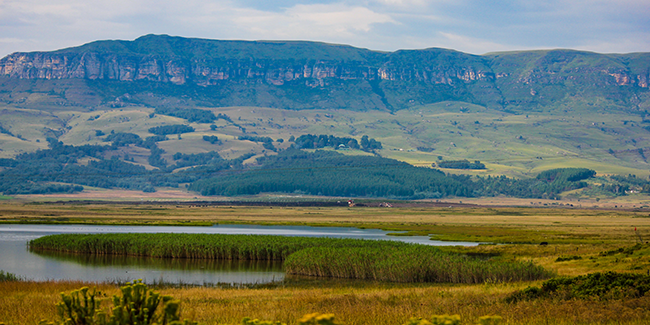
In the Drakensberg, the EWT–International Crane Foundation partnership is bringing clean, reliable spring water to the community of KwaMkhize—a service that reaches 2 445 people across 292 households, two schools, and a busy clinic. This initiative not only secures daily water for families but also protects critical wetland habitat relied on by South Africa’s iconic crane species.
Further inland, near Harrismith in the Free State, the EWT is restoring water availability in the Vaal River catchment by clearing invasive alien plants. To date, 286 hectares of invaded wetland and grassland have been rehabilitated, returning 929 megalitres of water to the environment and creating jobs for 24 previously unemployed community members.
South Africa is home to 30 Ramsar Sites, covering 574 000 hectares—many of which hold deep cultural significance. Through collaborative projects, especially with the African Crane Conservation Programme, the EWT continues to safeguard wetland habitats for species such as the Endangered Wattled Crane, Grey Crowned Crane, and the Critically Endangered Amatola Toad, which rely heavily on healthy wetlands and adjacent grasslands.
However, these ecosystems face mounting pressures—from habitat transformation and climate change to pollution, overgrazing, and the spread of invasive alien plants. In some regions, wetlands are still perceived as wastelands, resulting in their ecological importance being overlooked.
The EWT remains committed to partnering with communities living in and around wetland catchments—nature’s water purifiers—to ensure these vital landscapes remain resilient amid growing environmental threats.
Healthy wetlands mean healthy communities, heritage, and biodiversity. The EWT will continue championing community‑centred conservation to protect South Africa’s wetlands for generations to come.
END