Start2 March 2026
Celebrating the Voices of Indigenous Communities on Environmental Sustainability
Medicinal plants form the backbone of traditional healing practices and community health systems, and the decline or loss of these species holds far-reaching consequences for the environment and people.
On World Wildlife Day on 3 March, the Endangered Wildlife Trust joins the global community in celebrating a theme that underscores the close and inseparable relationship between traditional health systems and human well-being, particularly in communities where access to primary healthcare depends directly on the sustainable use of wild medicinal plants. This year’s theme is Medicinal and Aromatic Plants: Conserving Health, Heritage and Livelihoods – focusing on a health system that forms the backbone of medical care in South Africa’s rural and peri-urban communities. For these communities, traditional medicine, known as muthi, is an essential, trusted, and accessible form of healthcare.
Plants and their medicinal properties have their roots in indigenous and traditional knowledge systems, with traditional medicine informing modern medicine through aeons of traditional use of nature’s pharmacy.
Traditional healers and their patients are one South Africa’s primary biodiversity users, but their reliance on plants is threatened as, like much of Earth’s biodiversity, medicinal plants face the triple threat of climate change, habitat transformation and unsustainable use. While many species are artificially cultivated, others are harvested from the wild with over-exploitation threatening not only biodiversity, but also access to healthcare, cultural continuity, and economic security.
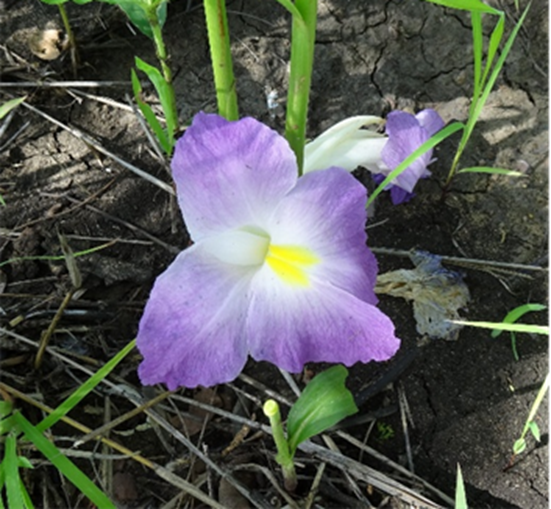
An example is Wild/African ginger or Indungulu (Siphonochilus aethiopicus), which is used to treat multiple ailments, but which has now become extinct in much of its known range due to unsustainable harvesting. As a result, the species is now Critically Endangered resulting in the species being protected by law and requiring a permit to harvest.
When ecosystems are degraded and medicinal plant populations are diminished, the impacts are felt immediately in reduced healthcare options and increased vulnerability. The loss of these plants will also impact indigenous knowledge systems and their contribution to health care for much of South Africa’s population.
Funded by the United Kingdom’s Illegal Wildlife Trade Challenge Fund and partnering with Nature Speaks and Responds, the EWT‘s Voices of Indigenous Communities on Environmental Sustainability Project (VOICES) is working with traditional healers to understand their lived realities of accessing plants. Key to this is to ensure that their voices and practices around sustainability are heard. By doing so, we can meaningfully include traditional healers’ voices in conservation and governance discussions. Central to this work is the recognition that ecosystem health and community health are deeply interconnected, and that conserving medicinal plants is both a biodiversity and a public health imperative.
The protection of cultural heritage is a key pillar of the VOICES Project. The initiative places strong emphasis on enabling traditional healers to share indigenous knowledge on their own terms, within a safe and respectful space. Traditional healing practices are recognised as living knowledge systems – rooted in place, culture, and intergenerational transmission. By deepening understanding of the cultural significance of medicinal plants, and the ways in which knowledge is preserved, adapted, and passed down, the project helps centre traditional knowledge systems as legitimate, valuable, and deserving of recognition within conservation and governance processes.
The VOICES Project also highlights the importance of livelihoods. For many traditional healers the use of medicinal plants is not only a cultural responsibility but a vital source of income that supports themselves and their families. Through the work of the EWT’s Wildlife in Trade Unit and Nature Speaks, the project examines how existing legal and regulatory frameworks shape the ability of healers to access and use medicinal plants in a lawful and sustainable manner. By documenting these lived experiences, the project underlines gaps and challenges within existing policy approaches generating evidence that can inform more inclusive, practical, and balanced solutions to legally and sustainably produce and access medicinal plants – supporting both biodiversity conservation and sustainable livelihoods.
As the world reflects on World Wildlife Day 2026, the EWT calls for conservation approaches that recognise the essential role of indigenous knowledge and medicinal plants in sustaining health, heritage, and livelihoods. Protecting these species requires both ecological action and meaningful engagement with the communities and knowledge holders who have stewarded them for generations.
END